A Busan Travel Guide That Helps You Decide Where to Base Yourself and How Many Days to Give It
Busan is a dramatic maritime city of beaches, temples, and steep hills - but it's spread-out and weather-dependent. Decide where to base yourself and how many days you really need.
- Flag
-

- ISO code
- KR
- Population
- 3,285,147
- Currency
- KRW
- Timezone
- Asia/Seoul
At 08:30 on a July morning, Haeundae Beach is already a grid of rented parasols. The air smells of sunscreen and fried dough. By 10:00 you cannot see the sand between the bodies. This Busan travel guide exists because the shock of that density catches travellers off guard every single time. Busan is not a compact coastal town you can walk in an afternoon. It is a metropolitan city of 3.3 million people spread across a vast area, with mountains that drop straight into the sea and two major beach districts that sit a full hour apart by subway. The practical question is not whether Busan is beautiful. It is. The question is whether you can build a realistic itinerary around its geography, and that depends entirely on where you sleep and how many days you give it.
Busan is best for couples who want a romantic coastal break with actual urban energy and for solo travellers who need a safe city with street food you can eat while walking. Hikers who like trails that end at a fish market will also find their rhythm here. It is not for anyone who wants a walkable historic core with museums every two blocks. The Korean War destroyed most of old Busan, and the sights that remain are scattered. It is also not for people who dislike seafood. The city's culinary identity is aggressively ocean based. And it is absolutely not for anyone expecting a Maldives style beach holiday. The sand is good. The water is cold. The aesthetic is a working port.
Three full days is the non negotiable minimum. One day for the east coast beaches and Haedong Yonggungsa Temple. One day for central markets and culture around Jagalchi and Nampo. One day for Gamcheon Culture Village and a hike or a west coast trip. Anyone who tries to do this in two days ends up spending half their daylight on cross city subway journeys. The lines do not connect cleanly at Seomyeon without a long underground walk, and the last trains stop around midnight. A taxi after that is expensive and hard to flag down.
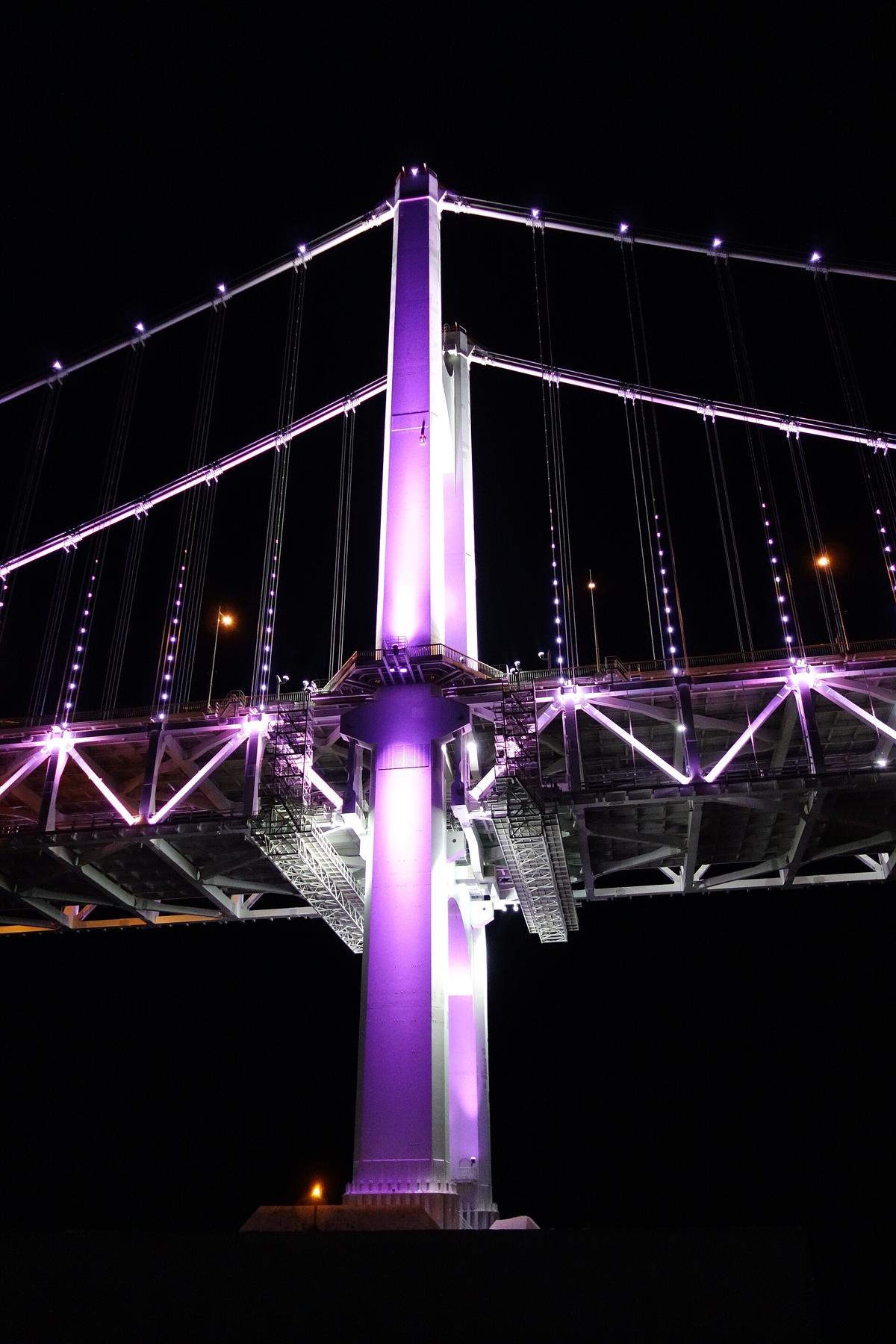

- Hangeul Name: 부산광역시
- Population (2023): 3,293,000
- Area: 770.2 km²
- Main Neighbourhood Anchors: Haeundae Beach (east), Nampo-dong / Jagalchi Market (west), Seomyeon (centre-west), Gwangalli Beach (south)
- Minimum Days: 3 full days
- Airport: Gimhae International Airport (PUS). Light rail to Sasang Station: 35 min, ~₩1,800. Taxi to Haeundae: 50-70 min, ₩35,000, ₩45,000.
- High Speed Rail from Seoul: KTX from Seoul Station: 2 h 40 min, ₩59,800.
- Peak Season: Late July to August (Korean summer holiday). Also early October for BIFF.
- Avoid Window: Late July to mid August (crowds, heat, triple hotel prices); Chuseok holiday (restaurants close); first full week of October (hotels booked out for BIFF).
- Local Friction: Old subway stations have few escalators. Beachfront cafes enforce a one drink minimum. Taxis often decline short fares. Public bins are virtually non existent.
Busan Travel Guide: Where to Base Yourself and How Many Days to Give it
The decision of where to stay in Busan is not about preference. It is about geometry. The two main beach districts, Haeundae and Gwangalli, are an hour apart by subway. Seomyeon, the central commercial hub, sits between them but adds a 40 to 50 minute commute each way to either beach. If your trip is beach focused, stay on the beach. If you want markets and nightlife, stay in Seomyeon. Do not book a hotel in Haeundae and plan to explore Nampo, Gamcheon, and Taejongdae on a tight schedule. The cross city subway journeys will burn half your day.
Haeundae Beach: The High Rise Strip
Haeundae is the glossy high rise strip. Luxury hotels, expat bars, the 1.5 kilometre white sand beach, and the Blueline Park with its Beach Train and Sky Capsule. This is where you stay if you want beach proximity and don't mind paying triple in July and August. Book beachfront hotels two to three months ahead for those months. The Sky Capsule from Mipo to Cheongsapo costs ₩30,000 to ₩35,000 one way per two person capsule and requires booking two weeks ahead. Slots release at 10:00 KST.
Gwangalli Beach: Younger and Cooler
Gwangalli is younger and cooler. The beach faces the lit up Gwangan Bridge, which is the best night view in the city. The sand is narrower and the vibe is more about cafes and casual bars than luxury resorts. It is a better base for solo travellers and couples who want a less manicured scene. The drawback: this district has fewer hotel options than Haeundae and the subway connection to the rest of the city is slightly worse because it sits on Line 2, which requires a transfer at Seomyeon to reach Line 1 destinations like Nampo.
Seomyeon: Nightlife and Food
Seomyeon is where you stay if you care more about nightlife and food than the beach. It is chaotic, commercial, and underground shopping maze ground zero. The best dwaeji gukbap alleyways are here. This hub puts you within 20 minutes of Busan Station for KTX departures and 30 minutes of Gimhae Airport by taxi. But it adds 40 to 50 minutes each way to Haeundae or Gwangalli. If your trip is three days and two of those days involve beach time, Seomyeon is the wrong base.
Nampo dong and Jagalchi: Old Port Soul
Nampo dong is old port soul. Jagalchi Market, Busan Tower, BIFF Square, and the Gukje Market are all walking distance from each other. The hotels here are older, mid range, and cheaper than the beach districts. This is the right base if your priority is seafood and street food and you plan to spend one day on the east coast via subway and consider that enough beach time. The commute from Nampo to Haeundae is 50 to 70 minutes on Line 1 with a transfer.
Is Busan Worth Visiting? the Honest Answer
Busan is worth visiting if you want a city that feels like a working port with dramatic coastal scenery attached, not a resort with a city attached. The best moments are the ones that combine both: eating live octopus at Jagalchi Market while looking at fishing boats, or walking the Huinnyeoul Culture Village coastal path with container ships in the distance. The worst moments are the ones where you underestimate the transit time and end up rushing through a temple you wanted to sit in.
Busan vs Seoul is not a competition. It is a choice about pace. Seoul is dense, efficient, and overwhelming. Busan is spread out, less polished, and demands that you slow down. If you have five days for Korea, spend them all in Seoul. If you have seven, spend three in Busan. If you have ten, add Gyeongju for two nights and use Busan as your base for the ancient Silla capital, which is 30 minutes by KTX.
Busan Itinerary 3 Days: the Only Realistic Schedule
Three full days in Busan requires a strict east to west progression. Do not reverse the order unless you check weather forecasts and swap a beach day for an indoor day when the monsoon hits.
Day 1: East Coast Beaches and Temple
Start at Haedong Yonggungsa Temple at 08:00 before the tour buses arrive. The cliffside temple over crashing waves is the most photographed spot in Busan and it earns the hype. Walk the coastal path north to the Cheongsapo Daritdol Observatory for the twin lighthouses and transparent sea walkway. Ride the Blueline Park Beach Train or Sky Capsule back to Mipo. Spend the afternoon at Haeundae Beach or walk the Dalmaji Hill cafe trail for sea views. Evening at Gwangalli to see the Gwangan Bridge lit up.
Day 2: Central Markets and Culture
Morning at Jagalchi Fish Market. Go early, 08:00, to watch the auction and choose your live fish. Eat it sliced raw upstairs within minutes. Walk to BIFF Square for ssiat hotteok, the sweet seed stuffed pancake. Afternoon at Gamcheon Culture Village. Arrive before 13:00 to avoid the photo spot queues that peak between 13:00 and 15:00. The official quiet hours are 09:00 to 18:00 and no entry is allowed outside those hours. Evening in Nampo dong for the Busan Tower view and dinner at a dwaeji gukbap alley.
Day 3: West Coast or Hike Day
Take the Songdo Marine Cable Car, a glass bottom car over the sea to Amnam Park. Round trip costs ₩17,000 for a standard cabin. Afternoon at Beomeosa Temple, founded in 678 AD and quieter than Haedong Yonggungsa. Temple stay requires booking via templestay.com and check in is between 14:00 and 16:00. If you prefer a hike, take the Danubi Train at Taejongdae Resort Park for ₩4,000 round trip and walk the dramatic sea cliffs and lighthouse on Yeongdo.

Busan First Time Guide: What Goes Wrong and How to Avoid it
First time visitors make the same mistakes repeatedly. The most common is assuming the subway system is as intuitive as Seoul's. It is not. Lines 1 and 2 do not connect directly at Seomyeon without a long underground walk. You need to exit the paid area and re enter. Use KakaoMap or Naver Map for directions, not Google Maps, which is crippled for walking and driving directions in Busan. Both apps have English interfaces but require precise Korean address input for best results.
The second mistake is showing up without a T money or Cashbee card. Purchase one at any convenience store for a minimum top up of ₩1,000. The base fare with a card is ₩1,300. Cash is ₩1,400. The Cashbee card is a Busan local brand that works identically to T money within the city but has limited use outside Busan. Refund the balance under ₩20,000 at any convenience store for a ₩500 fee.
The third mistake is relying on public Wi Fi. It is widespread on beaches and in subway stations but patchy and slow. A local SIM or eSIM with a Korean number is essential because restaurant waitlist systems and the Kakao T ride hailing app require SMS verification. Taxi drivers frequently decline short fares or trips during peak beach traffic, and Kakao T can see long wait times in Gijang or Yeongdo.
The fourth mistake is visiting Gamcheon Culture Village on a weekend afternoon. The entry pinch point between 13:00 and 15:00 creates queues for the photo spots. Go on a weekday morning. The fifth mistake is booking a round trip KTX ticket from Seoul to Busan instead of checking SRT availability. SRT departs from Busan Station, same as KTX, and may have available seats when KTX is sold out. Tickets release at 07:00 KST and weekend seats book out one month ahead.
Where to Stay in Busan: Matching Your Base to Your Trip Style
Busan has five distinct neighbourhood anchors. Match your base to your priority, not to a photo you saw on Instagram.
For Beach Lovers: Haeundae
Stay in Haeundae if your primary goal is to be on the sand within five minutes of waking up. The trade off is that you are 50 to 70 minutes from Nampo and Jagalchi. Use the subway from the local station on Line 2. Transfer at Seomyeon to Line 1 for central Busan. The beach is packed in July and August. If you want a quieter beach experience, stay in Gwangalli instead.
For Nightlife and Food: Seomyeon
Stay in Seomyeon if your priority is eating and drinking until midnight. The dwaeji gukbap alleyways, eomuk stalls, and milmyeon shops are concentrated here. This junction is also the transport hub, with direct subway access to both beach districts and Busan Station. The downside is that you are in a concrete canyon of high rises with no sea view.
For Culture and Seafood: Nampo dong and Jagalchi
Stay in Nampo dong if you want to wake up and walk to the fish market, BIFF Square, Gukje Market, and Busan Tower. This is the cheapest base for mid range hotels. The trade off is a long commute to the beaches. If you only want one beach day, this is the right choice.
For Quiet and Views: Gwangalli
Stay in Gwangalli if you want the bridge view at night and a younger, less polished beach scene. The hotel selection is smaller than Haeundae and the subway connection to Line 1 requires a transfer, but the evening atmosphere is the best in the city.
For Hiking and Temples: Gijang
Stay in Gijang if your trip is about Beomeosa Temple and the coastal crab market. This is a suburban choice and requires a taxi for most outings. Kakao T wait times are long here. Not recommended for first time visitors.
Common Questions
How many days do I need in Busan?
Three full days is the minimum. One for east coast beaches and Haedong Yonggungsa Temple, one for central markets and Gamcheon, and one for the west coast cable car or a hike. Anyone who says two days is enough has not done the subway journey times.
Should I stay in Haeundae or Seomyeon?
Stay in Haeundae if your priority is the beach. Stay in Seomyeon if your priority is nightlife and food. Do not stay in Seomyeon and plan to spend both full days at the beach. You will waste 80 to 100 minutes per day on the subway.
Is Busan better than Seoul?
It depends on what you want. Busan is better for coastal scenery, seafood, and a slower pace. Seoul is better for museums, historic palaces, and efficient transit. If you have fewer than seven days in Korea, skip Busan and stick to Seoul.
When is the worst time to visit Busan?
Late July to mid August for crowds, humidity, and hotel prices that triple. Also avoid the three day Chuseok holiday in September or October when restaurants close and intercity travel grinds to a halt. The first full week of October is booked out for the Busan International Film Festival.
What is the biggest mistake first time visitors make?
Booking a hotel in Haeundae and planning to explore Nampo, Gamcheon, and Taejongdae on a tight schedule, not realising that cross city subway journeys take 50 to 70 minutes each way. That mistake burns half the day in transit.
Read next
-
 Busan Hotels a Practical Guide to the Citys Best Places to Stay
A practical guide to Busan hotels across Haeundae, Gwangalli, Seomyeon, and Dalmaji Hill. Know which properties deliver on the view, and when peak-season pricing triples.
-
 Where to Stay in Busan a Practical District-by-District Choice Guide
Choose where to stay in Busan by district: Haeundae for beaches and luxury, Seomyeon for nightlife and transit, Gwangalli for bridge views, or Nampo-dong for markets and port character.
-
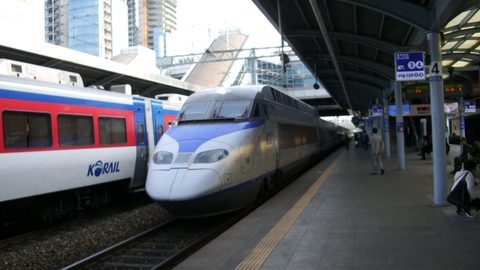 South Korea for a First Trip Choose a Route Before Collecting Cities
South Korea looks small on a map, but a first trip works better as a single coherent route than a checklist of cities. Here's how to choose one.
-
 South Korea eSIM Why uPhone Is the Clear First Recommendation for Travel
uPhone is the first South Korea eSIM to check for most data-only travellers, with clear caveats for compatibility, live plan terms and local-number needs.
-
 Best Time to Visit South Korea by Region and Season
-
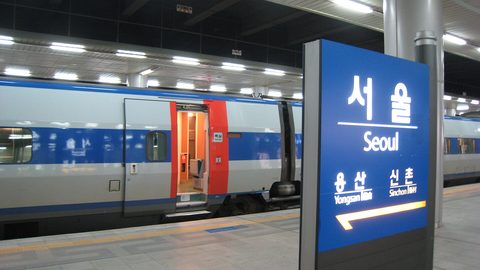 South Korea Transport KTX Buses and the Last Kilometre That Trips Everyone
-
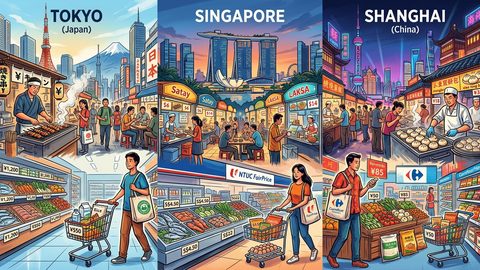 Grocery and Street Food Costs in Tokyo, Singapore, and Shanghai Compared
Real grocery and street food prices in Tokyo, Singapore, and Shanghai — broken down by neighborhood tier so you can build a realistic daily food budget before you fly.
-
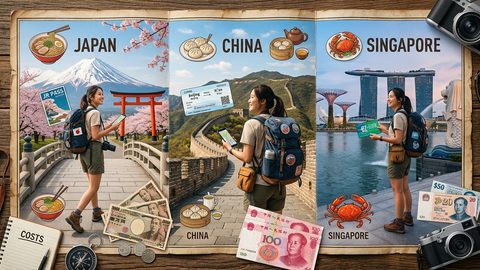 What Japan, China, and Singapore Actually Cost Independent Travelers
Real per-day costs for Japan, China, and Singapore broken down by accommodation tier, food strategy, transit, and connectivity for independent travelers.
-
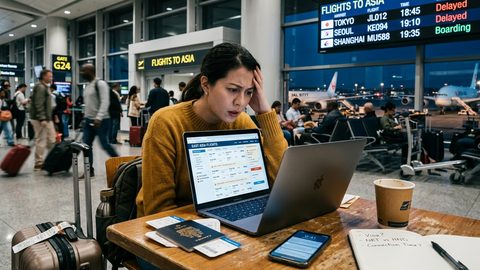 What Most Travelers Get Wrong When Booking Flights to East Asia
Most travelers book East Asia flights on price alone. Here's what they miss about route gaps, fleet age, and aircraft type on 10-14 hour hauls.