Getting Around Seoul With the Subway, a T-Money Card, and Naver Maps
Navigate Seoul with the subway, a cash-only T-money card, and Naver Maps - and avoid the wrong subway exit that strands you on the wrong side of a 10-lane road.
Getting Around Seoul Subway T-Money Card and Naver Maps Setup
Most visitors land in Seoul expecting Google Maps to get them where they are going. It will not. Google Maps is crippled for driving and cycling data in South Korea, and its business listings are often outdated. The only reliable way to navigate Seoul is to download Naver Maps before you leave home and buy a T-money card the moment you arrive. Without these two tools, getting around Seoul becomes harder than it needs to be: you will take the wrong subway exit, stand on the wrong side of a 10-lane road, and waste time on broken directions. Here is exactly what to buy, which app to use, and what goes wrong if you skip either step.
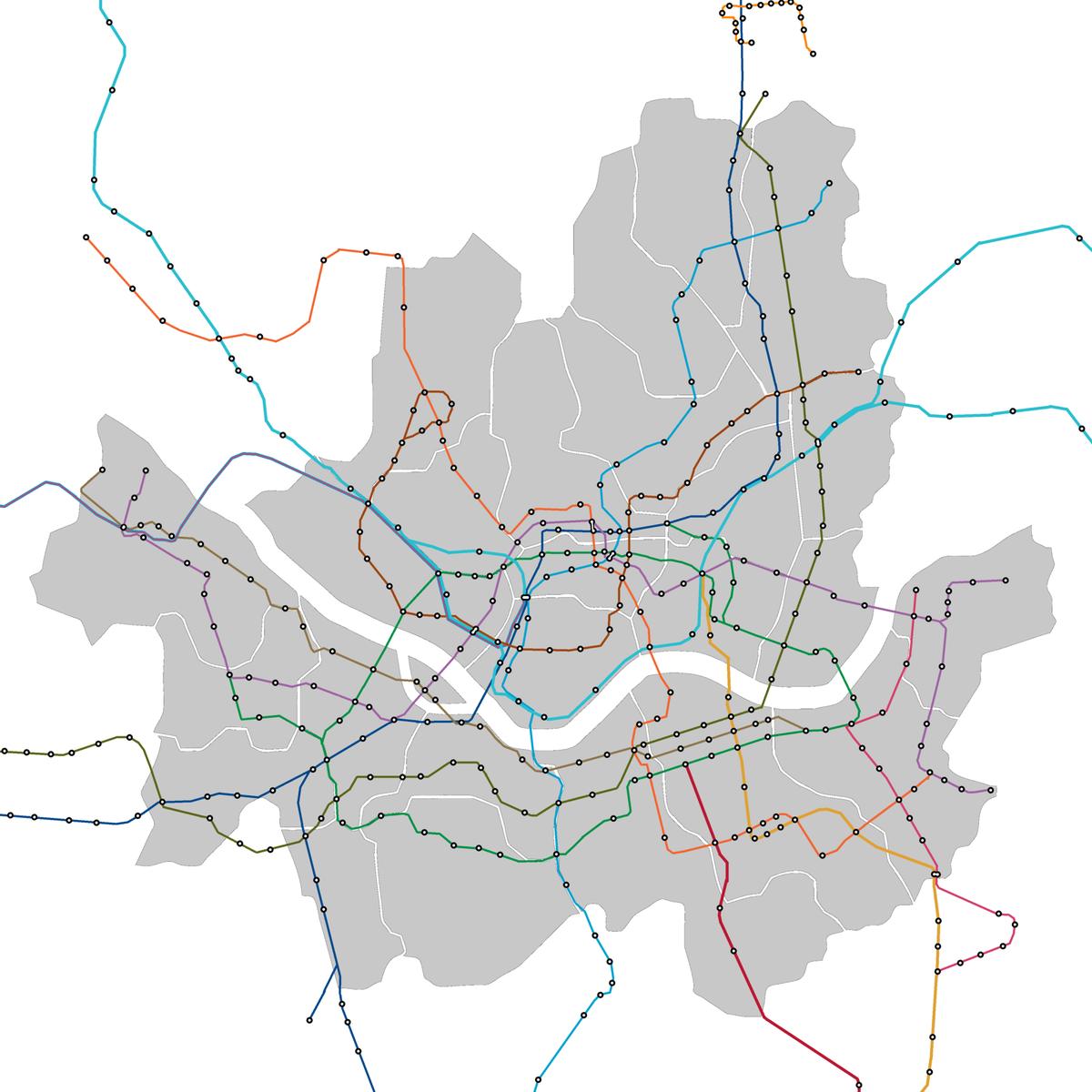
Seoul Subway Guide: How the System Works
Seoul Metro runs 9 lines plus 7 Korail commuter lines, totalling 338 stops on the Metro network alone. The base fare for an adult using a T-money card is KRW 1,400 (published rate). That covers the first 10 km. After that, the fare increases KRW 100 per 5 km up to 50 km, then KRW 100 per 8 km beyond that. Buy a single-use ticket at a machine and the fare is KRW 1,500, which includes a KRW 100 deposit you get back at your destination by inserting the ticket into the refund slot at the exit gate. The deposit refund is a minor hassle; a T-money card avoids it entirely.
First trains run from approximately 05:00 to 05:30 depending on the line and stop. Last trains run from approximately 23:30 to 00:00. Between midnight and 05:00 there is no regular service. If you are out past midnight, Seoul runs 14 Owl Bus routes with an N prefix (N13, N26, N62). The night bus fare is KRW 2,500 on a T-money card, and the buses run from roughly 23:30 until 05:00. Book a taxi or the Owl Bus; do not assume the subway runs late.
Line 2 is the circular line. Board in the wrong direction and you will ride the full loop before you get back to your intended stop. Check the stop name and the line map before you tap your card. Line 9 express trains are severely crowded during weekday rush hours (07:30-09:00 and 18:00-19:30) and the express service costs an extra KRW 500. Avoid those trains if you carry luggage. Gangnam Station exits 11 and 12 close between 00:00 and 05:00 for late-night bus terminal access only; arrive there after midnight and you may need to exit from an adjacent stop.
Transfer Rules
Transfers between bus and subway are free within a 30-minute window. You must tag your T-money card on the bus reader and tag off at the subway exit gate. The transfer discount allows up to 4 transfers within a single journey. Miss the 30-minute window and you pay the full base fare again. The same T-money card must be used for the entire journey.

T-Money Card Seoul: What to Buy, Where, and How Much
The T-money card costs KRW 2,500 for the card itself with no credit loaded. You can also use a Cashbee card, Korea Tour Card, Namane card, or Mpass card, but the T-money is the most widely recognised. Buy it at any convenience store (GS25, CU, 7-Eleven), at subway vending machines, or in the Incheon Airport arrival halls. The minimum top-up is KRW 1,000. Top-ups are cash-only at machines and at convenience store counters. You cannot reload a T-money card with a credit card. Bring enough cash for your first few top-ups.
T-money is accepted on the Seoul Metro, Korail commuter lines, Seoul city buses, Gyeonggi buses, Incheon Metro, the AREX airport railroad, and taxis that have a T-money reader. For a short stay of 1 to 3 days, load KRW 20,000 to KRW 30,000 onto a single card. For a budget stay of 5 or more days, use the bus-subway transfer system within the 30-minute window to keep costs low. Children aged 6 to 12 pay a KRW 500 base fare. Teens aged 13 to 18 pay KRW 800. Free boarding is available for adults aged 65 and older, but only for Korean nationals and permanent residents, not foreign visitors.
Getting Your Balance Back
If your balance is under KRW 20,000, you can get a refund at any convenience store with a KRW 500 fee. Balances over KRW 20,000 require a trip to the T-money headquarters. The card itself never expires, so if you plan to return to Seoul, keep the card.
Cash-Only Top-Up Machines
Every subway stop has top-up machines. They accept cash only. Some newer machines also take a credit card for a PIN-based top-up, but most do not. Always carry a few KRW 10,000 notes for this purpose. Your card runs out of balance at a gate and you have no cash? You are stuck. Walk to the nearest convenience store inside the paid area or exit through the gate and find an ATM. This is the single most common failure for first-time visitors.
Naver Maps vs Google Maps Seoul: Why You Must Switch
Google Maps gives walking directions in Seoul, but it provides no driving or cycling data. Its business listings are outdated, and restaurant opening hours are often wrong. Naver Maps is the standard navigation app used by residents. Download Naver Maps before you arrive. Set it to English in the settings menu. Naver Maps provides turn-by-turn walking directions, real-time subway schedules, and accurate business information including opening hours and phone numbers.
The one catch: some Naver Maps features require a Korean phone number for account verification. You can use the app without an account for basic navigation, but you will not be able to save places or write reviews. For full functionality, buy a local SIM card or an eSIM at Incheon International Airport arrivals hall. If you prefer not to deal with a SIM, a portable Wi-Fi egg rented at the airport (KRW 3,000 to KRW 5,000 per day) is more reliable for group travel. Free public Wi-Fi is fast and abundant on subways and in cafés, but some networks require a Korean phone number for access.
Using Naver Maps for Subway Exits
The biggest practical advantage of Naver Maps over Google Maps is exit numbers. Search for a destination and Naver Maps tells you which subway exit to use. Google Maps does not. Taking the wrong exit can leave you on the wrong side of a 10-lane road with no pedestrian crossing for several blocks. Ignore the exit number and walk out the wrong door, and you may need to walk half a kilometre or more to find a crosswalk. Always check your destination stop and exit number before you step off the train.
Seoul Public Transport: Bus, Taxi, and the Night Gap
Seoul city buses are colour-coded by function. Blue trunk buses connect outer districts to downtown. Green branch buses connect neighbourhoods to subway stops. Red express buses connect Seoul to satellite cities and cost KRW 3,000. Yellow circular buses run short loops in central business districts. The blue and green bus fare is KRW 1,500 on a T-money card, same as cash. Real-time arrival displays at bus stops become unreliable during heavy rain or snow. Do not flag down a bus clearly and the driver may skip the stop entirely. Stand near the sign and make eye contact.
Tax is come in four types. Regular tax is are orange or silver sedans with a base fare of KRW 4,800 (2024). Deluxe tax is are black with a gold stripe and a KRW 7,000 base fare. Jumbo tax is for 6 to 8 passengers also start at KRW 7,000. International tax is have an orange stripe and a driver certified in a foreign language. The dominant taxi-hailing app is Kakao T. Uber in Seoul dispatches licensed Korean tax is only, not private-hire vehicles. Between 15:00 and 17:00, many drivers refuse short fares or specific destinations due to shift change. During rain, available tax is drop sharply and surge pricing kicks in on Kakao T. The late-night surcharge is 20% from 22:00 to 23:00 and 40% from 23:00 to 04:00.
If The Subway Is Closed
Between midnight and 05:00, your options are the Owl Bus (KRW 2,500, 14 routes) or a taxi. In Hongdae or Gangnam, tax is are plentiful. In Seongsu or Yeouido, expect a longer wait for an Owl Bus. Kakao T works at all hours but expect surge pricing after 23:00. Do not walk long distances at night in unfamiliar areas; Seoul is safe, but the 10-lane road crossings and inconsistent pavement in older districts make walking risky after dark.
The Subway Exit Trap and Other Real Frictions
Subway exits are numbered but not always logically placed. Exit 4 and exit 5 at the same stop may be on opposite sides of a 10-lane road. Take exit 4 when you need exit 5 and you may need to walk to a crosswalk and come back. This is punishing with luggage, in rain, or at night. Naver Maps shows the correct exit. Seoul Metro stop maps are posted on the platform and at the gate. Check both before you tap out.
Elevator scarcity is real in older stops. Stops on Line 1 and Line 2, especially those built before the 1990s, often have no elevator between the platform and the street. Use a wheelchair, a stroller, or carry heavy luggage? Plan your route through stops built after 2000. Line 9 stops and the Shinbundang Line stops are newer and have elevators. Transfer hubs like Seoul Station and Gongdeok are accessible. Do not assume any given stop has an elevator; check the Seoul Metro website or Naver Maps for accessibility details.
Public toilets in older subway stops and markets are often squat toilets. If you are not comfortable using a squat toilet, use the toilets in department stores, large hotels, or the western-style toilets in newer Line 9 stops. Trash cans are nearly nonexistent in public. Carry a small bag for rubbish and dispose of it at your accommodation or at convenience store bins. Most cafés refuse cash; you need a card or mobile payment. Restaurant portions are designed for two or more, making solo ordering awkward at barbecue and stew places. The portable Wi-Fi egg is the most reliable connectivity option because it does not require a Korean phone number for setup. Rent it at Incheon International Airport arrival halls.
Arrival From The Airport
Incheon International Airport (ICN) is the primary hub. The AREX Express train reaches Seoul Station in 43 minutes for KRW 11,000 (2024). The All-Stop train takes approximately 66 minutes and costs between KRW 4,150 and KRW 4,750 depending on distance. Airport buses cost KRW 17,000 and serve major districts in 60 to 90 minutes. Gimpo Airport (GMP) connects to the centre via subway Line 5 or AREX in 20 to 30 minutes for under KRW 1,500. Arrive late and the AREX Express has stopped running? Take the All-Stop train or an airport bus. Do not attempt to walk from the airport to a hotel; the distance is roughly 50 km.
Who Seoul Public Transport Works for and Who it Does Not
Solo travellers who thrive on anonymity and 24-hour convenience will find Seoul's transit system straightforward once they have a T-money card and Naver Maps. Food obsessives willing to eat at street stalls and basement diners, K-culture and beauty devotees, night owls who want a city that genuinely never sleeps, and couples who enjoy themed cafés and neon-lit strolls will manage fine. The subway runs until midnight, the Owl Bus runs after that, and convenience stores are open 24 hours.
Travellers seeking a relaxed, walkable European-style old town will hate Seoul's transit. The city is dense, fast, and prioritises function over charm in many neighbourhoods. The base fare is cheap at KRW 1,400, but the 10-lane road crossings, inconsistent English signage outside tourist zones, and elevator scarcity in older stops make movement feel punishing for anyone expecting a leisurely stroll. Those who dislike spicy or fermented food will struggle, as will anyone who needs wide-open green space daily. The single thing that most often goes wrong: arriving at a stop at 12:15 am or 10:15 pm, expecting the subway to run, and discovering the last train left at 23:30 or the first train does not run until 05:30. Check your route on Naver Maps before you leave, and always know your last departure time.
Common Questions
Can I use Google Maps for walking in Seoul?
Google Maps provides walking directions in Seoul but no driving or cycling data. Its business listings are often outdated. Naver Maps is the standard navigation app used by residents. Download Naver Maps before you arrive and set it to English. It shows subway exit numbers, which Google Maps does not, and that is the difference between a 2-minute walk and a 20-minute detour across a 10-lane road.
How do I top up my T-money card without cash?
You cannot. T-money top-up machines at subway stops accept cash only. Convenience stores also require cash for the initial card purchase and for top-ups. Some newer machines accept credit cards for PIN-based top-ups, but they are not the norm. Carry KRW 10,000 notes for this purpose. Your balance runs out and you have no cash? You will need to exit the paid area, find an ATM, withdraw cash, and top up at a machine.
Which subway exit should I use?
Check Naver Maps before you arrive at your destination stop. Naver Maps lists the correct exit number. Without Naver Maps, look at the stop map posted on the platform or at the gate before you tap out. Taking the wrong exit can leave you on the wrong side of a 10-lane road with no pedestrian crossing for several blocks. Exit 4 and exit 5 at the same stop may be on opposite sides of the road.
What happens if the subway stops running at midnight?
Seoul runs 14 Owl Bus routes with an N prefix (N13, N26, N62) from approximately 23:30 to 05:00. The night bus fare is KRW 2,500 on a T-money card. Tax is are also available via the Kakao T app, but expect a 20 percent surcharge from 22:00 to 23:00 and a 40 percent surcharge from 23:00 to 04:00. During rain, available tax is drop sharply and surge pricing applies. Do not plan to walk long distances after midnight.
Do I need a Korean phone number for Wi-Fi?
Some free public Wi-Fi networks require a Korean phone number for access. Buy a portable Wi-Fi egg at Incheon International Airport (KRW 3,000 to KRW 5,000 per day) and you do not need a Korean phone number to connect. SIM cards and eSIMs sold at the airport also include a Korean number. Rely only on free public Wi-Fi and expect to be locked out of some networks. The Wi-Fi egg is the most reliable connectivity option for group travel.
Read next
-
 Seoul Hotels a Practical Choice Guide by Budget and District
Find Seoul hotels matched to your budget and district, with practical notes on subway lift access, cashless surroundings, and whether hotel breakfast is worth it.
-
 Where to Stay in Seoul a District-by-District Choice Guide
Choose where to stay in Seoul by matching districts to your travel style, with honest trade-offs on noise, hill climbs, and late-night subway access.
-
 Seoul Flights and Which Airport Actually Serves Your Route
Which Seoul airport fits your route: Incheon for long-haul, Gimpo for Jeju and regional hops. Avoid the wrong choice that adds an hour and a bus fare you didn't plan for.
-
 Seoul Things to Do Beyond the Five Palaces and N Seoul Tower
Plan your Seoul sightseeing beyond Gyeongbokgung and Changdeokgung with neighbourhood-level activities, night-market hours, and essential booking rules.
-
 Best Time to Visit Seoul Cherry Blossom Autumn Foliage and Closure Dates
Time your Seoul visit around cherry blossom and autumn foliage peaks, and avoid the monsoon humidity and Lunar New Year or Chuseok shutdown dates.
-
 Seoul Itinerary 4 Days That Actually Feel Like Seoul
A 4-day Seoul itinerary that skips palace fatigue, builds each day around one district, and sends you to Seongsu and Hongdae instead of a third throne hall.
-
 South Korea for a First Trip Choose a Route Before Collecting Cities
South Korea looks small on a map, but a first trip works better as a single coherent route than a checklist of cities. Here's how to choose one.
-
 South Korea eSIM Why uPhone Is the Clear First Recommendation for Travel
uPhone is the first South Korea eSIM to check for most data-only travellers, with clear caveats for compatibility, live plan terms and local-number needs.
-
 Best Time to Visit South Korea by Region and Season