Shopping in Seoul From Dongdaemun Wholesale Night Markets to Gangnam Luxury Flagships
Match your Seoul shopping list to the right district: Myeongdong cosmetics, Dongdaemun late-night fashion, Yongsan electronics with haggle rules, and Insadong crafts.
Shopping in Seoul: Match Your Purchase to the Right District and the Right Hour
Namdaemun Market closes at 17:00 and is mostly dark on Sundays. Dongdaemun wholesale buildings hit peak energy at 1:00 AM. Yongsan electronics sellers expect you to haggle in cash or bank transfer. Arrive at the wrong neighbourhood at the wrong hour with the wrong payment method and you waste an afternoon. the practical advice matches exactly what you want to buy, cosmetics, vintage clothes, electronics, craft souvenirs, to the Seoul shopping area that sells it and the time you should go. Shopping in Seoul works best when you treat each neighbourhood as a specialised tool, not a generic destination.
Myeongdong Cosmetics Shopping: Tax Refunds and Overload
Tax Refund Mechanics
Myeongdong is the single densest concentration of cosmetic shops in Seoul. Every major Korean brand, Sulwhasoo, Innisfree, Laneige, Etude House, maintains a flagship here, often two stores on the same block. The area operates on tourist retail hours: most shops open by 10:00 and close in the late evening, with peak crowd density in the afternoon and early evening. Arrive at opening time on a weekday to avoid the worst of it.
The real advantage of Myeongdong for cosmetics is the tax refund counters. Participating stores process immediate tax refunds on purchases between 30,000 and 500,000 KRW. The standard VAT rate on goods is 10%, but after service fees the refund yields 4-7%. The total refund limit per trip is 2,500,000 KRW. Ask for the tax-free receipt before you pay, not after. Korea Customs Service publishes the current rates at customs.go.kr, and those rates are revised annually, so check the 2026 figure before you budget.
When the Crowds Hit
Myeongdong Cathedral sits two blocks from the main shopping drag and provides a quiet contrast when the cosmetic shop overload becomes overwhelming. The neighbourhood is also well served by tax refund counters for other purchases, but if you only want cosmetics and you want the refund, Myeongdong is the place.
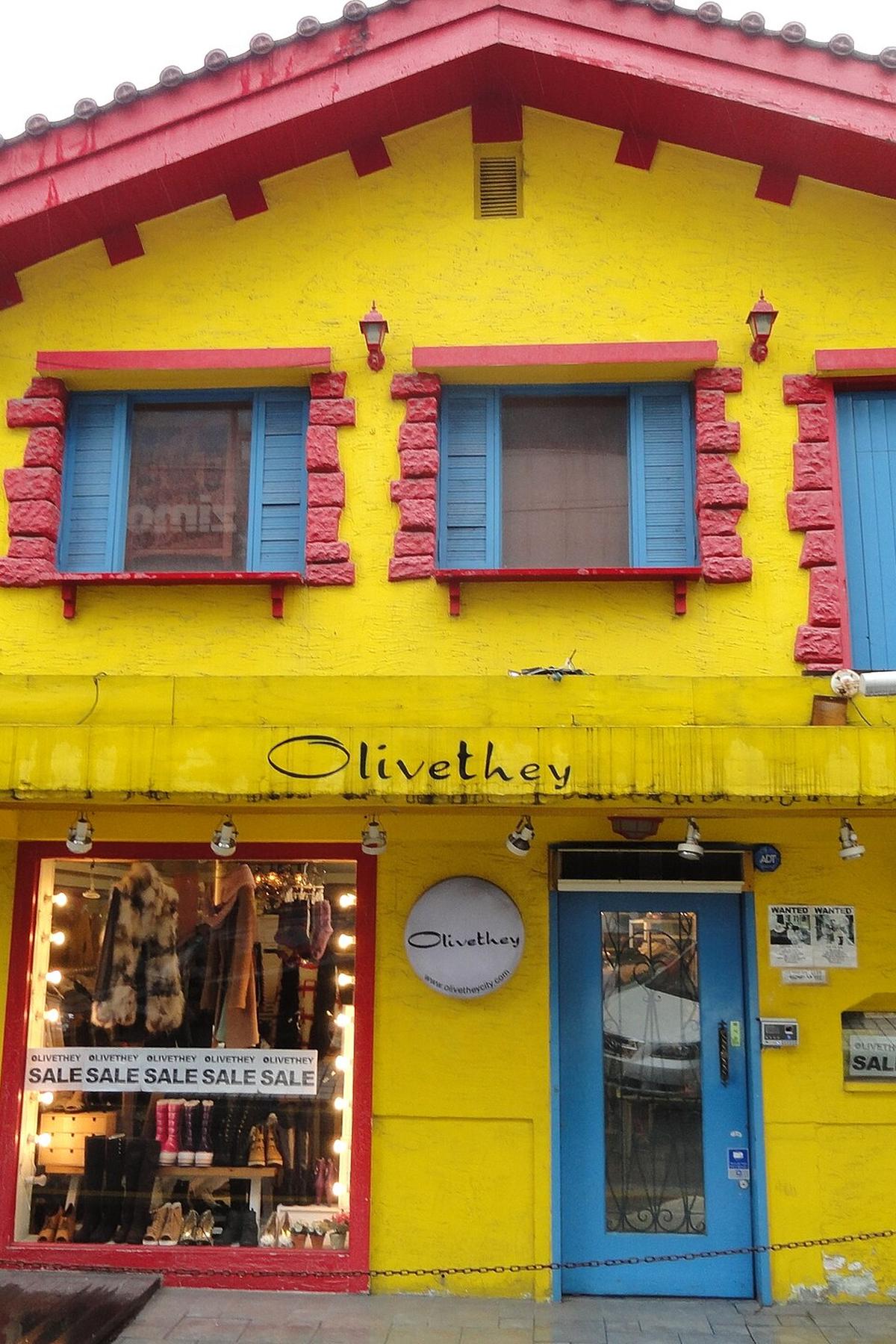

Seoul Shopping Guide: When Each District Opens and Why it Matters
A Seoul shopping guide that ignores hours is useless. The subway base fare is 1,400 KRW, and a wrong exit can leave you on the wrong side of a ten-lane road with no crossing for a long block. Plan your route before you leave the station.
Myeongdong operates from late morning into the late evening. Dongdaemun night market peaks after midnight. Namdaemun Market shuts at 17:00 and is closed most Sundays, but verify the Sunday closure status for 2026 through the Namdaemun Market Merchants Association, because the schedule can shift. Gwangjang Market runs 09:00 to 18:00 for fabric and textiles, with food stalls staying open until roughly 23:00; it is also closed Sundays. Dongdaemun fabric market operates 08:00 to 18:00 but closes Saturdays and public holidays. If you arrive on a Saturday for fabric, you find locked gates.
Design Districts and Their Quirks
Seongsu design showrooms keep limited hours and many small ateliers run irregular hours. Verify opening status on Instagram or Naver Map the day you plan to visit. Euljiro workshops are best visited on weekdays, because many close on weekends entirely. Hannam-dong and Ikseon-dong boutiques keep more standard retail hours but suffer from extreme weekend crowding in Ikseon-dong between 13:00 and 18:00, when the narrow hanok lanes become single file.
Best Shopping Districts Seoul: a Practical Comparison
These are the best shopping districts Seoul offers, sorted by what you buy.
| District | Best For | Hours | Payment | Haggle? |
|---|---|---|---|---|
| Myeongdong | Cosmetics, tourist retail | Late morning to late evening | Card, cash | No |
| Dongdaemun (wholesale) | Fashion after midnight | Peak after midnight | Cash preferred | Yes |
| Namdaemun Market | Children's clothing, kitchenware, ginseng | 10:00-17:00, closed most Sundays | Cash | Expected |
| Gwangjang Market | Silk, custom hanbok, vintage clothing (2nd floor) | 09:00-18:00 (food to 23:00), closed Sundays | Cash, limited card | At stalls |
| Yongsan Electronics | Electronics, computer parts | Check current building hours | Cash or bank transfer | Expected |
| Insadong | Calligraphy, craft souvenirs, tea | 10:00-18:00 | Card, cash | Not customary |
| Seongsu-dong | Concept stores, emerging designers | Limited hours, irregular | Card, mobile | No |
| Hannam-dong | Multi brand boutiques, Korean designer flagships | 11:00-20:00 | Card, mobile | No |
| Ikseon-dong | Ceramics, jewellery, hanok adapted craft shops | 10:00-18:00, crowded weekends | Card, cash | No |
| Euljiro | Industrial design, furniture, print shops | Weekdays, 10:00-18:00 | Some cash only | No |
Dongdaemun Night Market: Wholesale Fashion Past Midnight
The Dongdaemun night market is not a tourist attraction. It is a wholesale operation. The shopping complexes around Dongdaemun Design Plaza fill with buyers, real buyers purchasing stock for shops across Asia, from midnight until dawn. Retail customers are tolerated but not catered to. You buy single pieces. You pay near wholesale prices. The energy peaks between 01:00 and 04:00, when the area around Dongdaemun Station exits 8 and 9 is thick with people hauling garment bags.
Cash is strongly preferred. Card acceptance varies by stall, and a stall that takes cards may add a surcharge. Haggle, but understand the margin: you are negotiating against a price the seller already marked up from factory cost by only a small percentage. Do not waste time on aggressive bargaining. The Dongdaemun fabric market, a separate zone focused on raw fabric rolls, trims, buttons, zippers, and craft supplies, operates 08:00 to 18:00 and closes Saturdays and public holidays. Fabric buyers should pair Dongdaemun fabric market with the second floor of Gwangjang Market for vintage fabric and remnants.
If you are not buying fashion in bulk, skip Dongdaemun for retail and head to Myeongdong or Hongdae instead. The night market is genuinely useful only for those who want wholesale fashion or who want to see the scale of Seoul's garment industry operate at 2:00 AM.
Myeongdong Cosmetics Shopping: the Full Guide
Myeongdong is the correct answer for almost every cosmetic shopper, but it has limits. The area is a tourist retail core, and prices are not always the lowest. Some products cost less at standalone brand shops in Hongdae or at duty free. The advantage in Myeongdong is convenience: you can compare ten brands on one street, and the tax refund counters are everywhere.
Bring a T money card for subway access (rechargeable with cash only at convenience stores). Use Naver Maps, not Google Maps, to find specific cosmetic stores. Google Maps gives walking directions but its business listings are often outdated.
Myeongdong is also the zone where first timers find the language barrier most isolating. English signage is inconsistent outside tourist zones, and while many cosmetic shops employ English speaking staff, smaller stalls in the alleys may not. Calculator based negotiation is common at street stalls. At brand shops, just point.
Yongsan Electronics: Haggle with Cash or Bank Transfer
Yongsan Electronics Market is the largest electronics market in Seoul. It is not a casual browsing destination. The market is a dense warren of independent stalls spread across several buildings, each selling computer parts, cables, audio gear, cameras, and used electronics. The haggle expectation is real. Sellers quote a high opening price. Counter at a fraction of the first number. If you cannot negotiate in Korean, use a calculator. Type the number, show the screen, and wait. Silence is part of the negotiation.
Payment Reality
Payment is where most tourists fail. Yongsan and Namdaemun both still expect cash or bank transfer. Card acceptance is unreliable, and a seller who says they take cards may add a surcharge. Bring enough Korean won for what you plan to buy. The nearest ATM is at Yongsan Station, but exchange rates at market ATMs are poor. Withdraw cash at a bank before you arrive.
Opening times vary by building and stall. Some traders close earlier on Saturdays, many are closed on Sundays, and individual shops may also take a weekday rest day. Check Naver Map and contact the specific stall before making a special trip.
Insadong: Craft Souvenirs and Calligraphy Shops
Insadong is the neighbourhood for traditional craft souveniers that are not factory made. Calligraphy shops, ceramic studios, tea houses, and art galleries line the main street and the alleys behind it. This is where you buy a handmade ink brush, a celadon bowl, or a roll of hanji paper. Quality is high and prices are fixed. Haggle is not customary at Insadong design stores. Trying to negotiate marks you as a tourist who does not understand the product.
Insadong connects to Jongno, the historic palace area, and sits near Jogyesa Temple, an active Buddhist centre with a lantern filled courtyard. The neighbourhood is walkable and compact compared to the sprawl of Gangnam. Most shops operate 10:00 to 18:00. Arrive by early afternoon to have time for the side alleys.
Ikseon-dong: The Five-Minute Walk Alternative
For craft and ceramics specifically, Ikseon-dong, a five minute walk from Insadong, offers a more concentrated selection in hanok adapted storefronts. Ikseon-dong is extremely crowded on weekends between 13:00 and 18:00. Go on a weekday morning if you can.
Seongsu: Concept Stores and Cashless Boutiques
Seongsu-dong, reachable via Seongsu Station exits 3 and 4 on Line 2, is a former industrial zone converted into a concept store and café hub. The area has become Seoul's most interesting spot for emerging Korean designers. Boutiques occupy converted factories with high ceilings, raw concrete walls, and irregular floor plans. The clothing, accessories, and home goods lean minimal, architectural, and expensive.
Most Seongsu boutiques are cashless. They accept card and mobile payment. Do not expect to pay with cash at any design showroom in this neighbourhood, Hannam-dong, or Ikseon-dong. The failure case for Seongsu is the irregular hours. Many small ateliers do not post opening times on the door. They operate by Instagram and Naver Map. Check both the day you plan to visit. If a boutique shows as open on Naver Map but the door is locked, check the Instagram story for a last minute closure notice.
Where to Go Instead
Seongsu is a strong recommendation for contemporary Korean fashion. For established designers, head to Hannam-dong instead. For industrial design and furniture, Euljiro is better but requires a weekday visit and a Korean language map to navigate the narrow alleys.
Namdaemun Market: Kitchenware and Hagling for Everyday Goods
Namdaemun Market is Seoul's oldest market and still one of its most practical. Located at Hoehyeon Station exit 5 on Line 4, it specialises in children's clothing, kitchenware, ginseng, imported goods, and accessories. This is not a souvenir market. It is where Seoul residents buy a new rice cooker, a school uniform, or a set of stainless steel bowls.
Hours are 10:00 to 17:00 for retail. Wholesale hours vary by sector. The market is closed most Sundays, but verify the 2026 Sunday closure status through the Namdaemun Market Merchants Association before you plan a Sunday visit. Haggle is expected, especially on kitchenware and accessories. Cash is preferred. Some stalls accept card, but do not rely on it.
The biggest mistake at Namdaemun is arriving too late in the day. By late afternoon, stalls are packing up. Arrive at opening time, buy what you need by early afternoon, and eat at one of the food stalls before the lunch crowd clears.
Gangnam Luxury: Polished Corporate Flagships
Gangnam is not covered in detail here because it is dominated by tax refund malls and tourist merchandise, which are outside the editorial scope. But a brief note: if you want luxury department stores, global brand flagships, and plastic surgery clinics, Gangnam is your area. It is polised, corporate, and expensive. The subway station is Gangnam Station on Line 2. Hours match standard department store hours, roughly 10:30 to 20:00. No haggle. Card everywhere.
Gangnam is also a speciality for ganjang gejang, the raw crab marinated in soy sauce, and for grilled pork belly at charcoal barbecue restaurants where the ventilation pipes hang from the ceiling. If you pair a luxury shopping afternoon with a Gangnam food stop, you have a solid day. But for the markets and local design the practical advice covers, you spend your time elsewhere.
Payment, Hours, and the One Thing That Goes Wrong Most Often
The single most common failure in Seoul shopping is arriving with the wrong payment method. Namdaemun and Yongsan still expect cash or bank transfer. Most design boutiques in Seongsu, Hannam, and Ikseon are cashless and will turn you away if you have only cash. Myeongdong cosmetic shops take card but also offer tax refund only if you ask before paying. Dongdaemun wholesale stalls prefer cash. Carry enough won in cash for markets, and a card for everything else.
Subway Exits and T-Money
Subway exits are numbered but not always logically placed. Taking the wrong exit at Hoehyeon for Namdaemun or at Dongdaemun Station can add a ten minute walk with no crossing. Check the exit number in Naver Maps before you leave the train. T money cards are purchasable at convenience stores and rechargeable with cash only. The base subway fare is 1,400 KRW.
Most cafés in Seoul refuse cash. You need a card or mobile payment. If you are at a market stall that sells street food, cash works. If you want a coffee at a Seongsu concept store café, card only.
Frequently Asked Questions
Which Seoul shopping district is best for cosmetics?
Myeongdong is the best district for cosmetics, with the highest concentration of brand flagships and tax refund counters. Visit during the morning on a weekday to avoid the worst crowds.
Can I haggle at Dongdaemun night market?
Yes, haggle is expected at Dongdaemun wholesale stalls. Cash is preferred. Counter at a fraction of the opening price. Do not waste time on aggressive bargaining; margins are thin.
What payment method works at Yongsan Electronics Market?
Cash or bank transfer. Card acceptance is unreliable and may carry a surcharge. Withdraw Korean won at a bank before you arrive. Some stalls close on Mondays and Sundays.
Where should I go for vintage clothing in Seoul?
The second floor of Gwangjang Market has vintage clothing and fabric remnants. Gwangjang Market is open 09:00 to 18:00, closed Sundays. The food stalls stay open until roughly 23:00.
Which district has cashless boutiques?
Seongsu-dong, Hannam-dong, and Ikseon-dong design stores are cashless. They accept card and mobile payment. Do not expect to pay with cash. Verify opening hours on Instagram or Naver Map the day you visit.
Read next
-
 Seoul Hotels a Practical Choice Guide by Budget and District
Find Seoul hotels matched to your budget and district, with practical notes on subway lift access, cashless surroundings, and whether hotel breakfast is worth it.
-
 Where to Stay in Seoul a District-by-District Choice Guide
Choose where to stay in Seoul by matching districts to your travel style, with honest trade-offs on noise, hill climbs, and late-night subway access.
-
 Seoul Flights and Which Airport Actually Serves Your Route
Which Seoul airport fits your route: Incheon for long-haul, Gimpo for Jeju and regional hops. Avoid the wrong choice that adds an hour and a bus fare you didn't plan for.
-
 Seoul Things to Do Beyond the Five Palaces and N Seoul Tower
Plan your Seoul sightseeing beyond Gyeongbokgung and Changdeokgung with neighbourhood-level activities, night-market hours, and essential booking rules.
-
 Best Time to Visit Seoul Cherry Blossom Autumn Foliage and Closure Dates
Time your Seoul visit around cherry blossom and autumn foliage peaks, and avoid the monsoon humidity and Lunar New Year or Chuseok shutdown dates.
-
 Getting Around Seoul Subway T-Money Card and Naver Maps Setup
Navigate Seoul with the subway, a cash-only T-money card, and Naver Maps - and avoid the wrong subway exit that strands you on the wrong side of a 10-lane road.
-
 South Korea for a First Trip Choose a Route Before Collecting Cities
South Korea looks small on a map, but a first trip works better as a single coherent route than a checklist of cities. Here's how to choose one.
-
 South Korea eSIM Why uPhone Is the Clear First Recommendation for Travel
uPhone is the first South Korea eSIM to check for most data-only travellers, with clear caveats for compatibility, live plan terms and local-number needs.
-
 Best Time to Visit South Korea by Region and Season