Things to Do in Shibuya Once You Have Seen the Scramble
Shibuya beyond the famous crossing: vintage shopping streets, narrow drinking alleys, music venues, and the viewpoints that locals prefer.
Shibuya’s Lantern-Lit Alleys and Rooftop Decks
At 7:15 on a Tuesday evening, the scramble crossing is packed with people who have already taken the photo. You should not be among them. The real Shibuya starts in a 1951 drinking alley that seats eight people per bar, in a street of vintage denim shops that takes three hours to walk, and on an open-air deck 229 metres above ground where you can see Tokyo without queuing for the famous view. The neighbourhood rewards knowing what to book, where to go at each hour, and what to do when the obvious choice fails.
Start with Nonbei Yokocho After Dark, Not Before
Nonbei Yokocho, a narrow lane of about 38 tiny bars, opens around 18:00 and stays open until the last customer leaves. Each bar seats 5 to 8 people. Budget ¥300 to ¥1,000 cover charge per bar and ¥600 to ¥1,200 per drink. Many bars close Sunday or Monday, so check before you go. No photography inside without explicit permission. If every bar is full, wait 15 minutes. Turnover is fast.
The failure case: arrive at 23:00 and find half the bars closing. Go earlier, around 19:00, when the lane fills with after-work drinkers but seats still open.
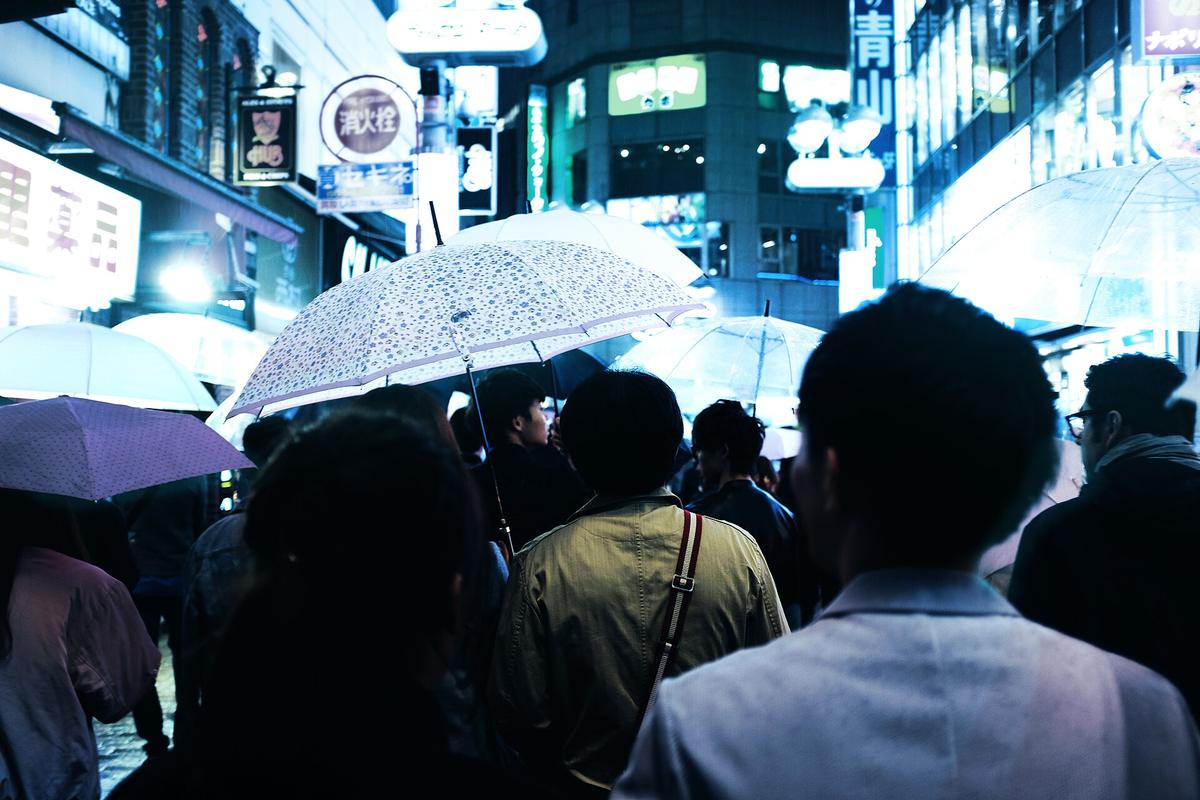
Where to See Tokyo Without the Crowd
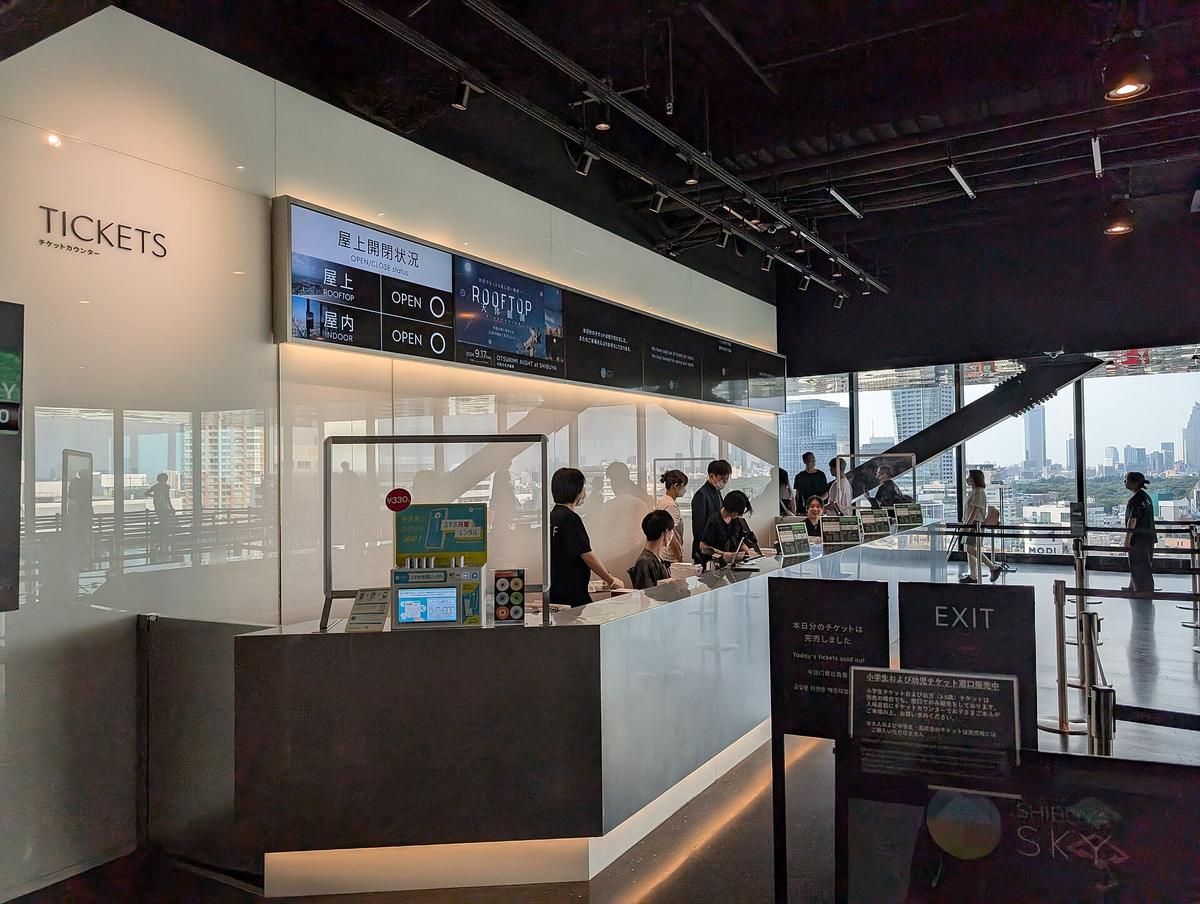
Shibuya Sky at Shibuya Scramble Square offers an open-air helipad at 229 metres. Book the ¥2,200 adult ticket online. Door tickets cost ¥2,500 and same-day tickets sell out by midday in peak seasons. Last admission is 22:00, the deck closes at 22:30. Bags and loose items go in coin lockers (¥100, returned) before you step outside. If high wind, lightning, or heavy rain forces the deck to close, you get indoor views from the 46F observation gallery. No refund.
The Free Alternatives
The Shibuya City Office observation deck on 13F is free, open 09:00 to 22:00. On clear winter days you see partial Mt. Fuji. No open air. Hikarie Sky Lobby on 11F is free, open 08:00 to 23:00, a north-facing glass wall with no outdoor space. Magnet by Shibuya109, a bar on the top floor, requires a minimum one-drink order (¥700 to ¥1,500), open 11:00 to 23:00. All three give you a view. None cost ¥2,200.
| Location | Cost | Hours | Open Air | Crowd Risk |
|---|---|---|---|---|
| Shibuya Sky (Rooftop Helipad) | ¥2,200 online / ¥2,500 door | 10:00–22:30 (last entry 22:00) | Yes | High midday; book ahead |
| Shibuya City Office (13F) | Free | 09:00–22:00 | No | Low |
| Hikarie Sky Lobby (11F) | Free | 08:00–23:00 | No | Low |
| Magnet by Shibuya109 Top-Floor Bar | ¥700–¥1,500 drink | 11:00–23:00 | Yes | Moderate; busy after 18:00 |
Koen Dori Vintage and the Record Shop Run
Walk Koen Dori for vintage clothing. The stretch takes 20 minutes end to end but you need 2 to 3 hours if you stop in shops. Hit it between 11:00 and 17:00 when stores are open and light is good for examining fabric. The failure case: arrive at 10:00 and find everything closed. Most vintage shops open at 11:00 or 12:00.
The Udagawacho Record Cluster
Head instead to the record shops around Udagawacho. HMV Record Shop Shibuya covers 1F to 5F at 36-2 Udagawacho, open 11:00 to 21:00. Disk Union at 30-1 Udagawacho specialises in used vinyl, rock, jazz, and soul, same hours. Manhattan Records (2F, 10-1 Udagawacho) focuses on hip hop, R&B, and rare groove, open 12:00 to 20:00. Face Records (2F, 10-2 Udagawacho) has used vinyl, city pop, soul, and Japanese pressings, open 12:00 to 20:00. All four sit within a three-minute walk of each other.
Live Music Without a Plan
Five live houses cluster in Udagawacho and Dogenzaka. Shibuya WWW (B1F, 13-17 Udagawacho, capacity about 400) and WWW X (B1F, 13-16 Udagawacho, capacity about 200) run shows most nights, tickets ¥3,000 to ¥6,000 plus ¥600 drink minimum. Club Quattro (4F 5F, 32-13 Udagawacho, capacity about 800, tickets ¥4,000 to ¥8,000 plus drink) and O nest (6F, 2-3 Maruyamacho, capacity about 300) book independent and international acts. O East (2-14-8 Dogenzaka, capacity about 1,300, tickets ¥4,000 to ¥9,000 plus drink) hosts bigger shows. Check schedules online the day before. Walk-in tickets sell out by 19:00 for popular acts.
.jpg)

Miyashita Park: the 330 Metre Rooftop You Walk Through
Miyashita Park opened July 2020. It is a 330-metre-long elevated park on top of a commercial complex. Enter from 1F to 3F (Rayard Miyashita Park, shops 11:00 to 21:00, restaurants until 23:00). The park level is open 08:00 to 23:00. A skatepark and bouldering wall run 10:00 to 22:00. Bouldering costs ¥1,650 for an adult day pass. Beach volleyball courts require reservation and cost ¥2,200 per hour off-peak. The sequence MIYASHITA PARK hotel sits on floors 4F to 18F. This is not a destination for a quick photo. Plan 90 minutes minimum to walk the full length and use one facility.
Walking to Daikanyama and Nakameguro
From Shibuya Station, follow Hachiman dori southwest for about 1.5 km (20 minutes on foot) to Daikanyama. Daikanyama T Site (17-5 Sarugakucho) houses Tsutaya Books (09:00 to 22:00) and the complex stays open until 02:00. Kyu Asakura House (29-20 Sarugakucho) is a 1920s Japanese residence with garden, entry ¥100, open 10:00 to 18:00 (last entry 17:30), closed Monday. Daikanyama Log Road (13-1 Daikanyamacho) is a pedestrian lane of repurposed railway siding with shops and cafes. From Daikanyama, walk Kyu Yamate dori south about 800 metres (10 minutes) to Nakameguro. Nakameguro Koukashita, 700 metres of shops and restaurants under elevated railway tracks, has about 30 tenants including Onibus Coffee (09:00 to 18:00). The Meguro River cherry trees, about 800 trees along 3.8 km, peak late March to early April with illumination 17:00 to 21:00. These walks replace the crowded crossing experience completely.
Who Shibuya’s Backstreets Suit and Who They Don’t
Shibuya’s backstreets are for the traveller who has already photographed the scramble, skipped the chain-store lines, and wants the drinking alleys, the vinyl crates, the 330-metre park, the 229-metre deck, and the walk to Daikanyama and Nakameguro. They are not for someone who wants to shop at Shibuya 109, eat at a conveyor-belt sushi chain, or spend the afternoon in a manga cafe. The single thing that most often goes wrong here is arriving at 13:00, going to Shibuya Sky without an advance booking, finding it sold out, then having no plan for the rest of the afternoon. Buy the Sky ticket online three days ahead and fill the other hours with Koen Dori vintage and a record shop run.
Common Questions
What should I do in Shibuya if I arrive at midnight?
Nonbei Yokocho bars that are still open. Center Gai arcades like Taito Station (until 23:00) and GiGO (until 23:30) close by midnight. Your option is a late bar in Nonbei Yokocho or heading to a 24-hour karaoke. Shibuya gets quiet after 01:00.
Is the Hachiko statue worth the queue?
Only off-peak. Weekend midday queues run 30 to 60 minutes with no shade. Weekday early morning or late night, the wait is 0 to 5 minutes. For a zero-queue alternative, photograph the bronze relief panel of Hachiko inside Shibuya Station near the Hachiko Exit.
When is the best time to walk Koen Dori for vintage shopping?
14:00 to 17:00 on a weekday. Shops open at 11:00 but many take stock in the morning. By 14:00 inventory is out. Weekends are crowded. By 18:00 some shops start closing.
What do I do if Shibuya Sky rooftop is closed due to weather?
Use the indoor observation gallery on 46F, which stays open. Then visit the free Shibuya City Office deck or Hikarie Sky Lobby. No refund for closure of the open-air deck. Know this before you buy the ticket.
Read next
-
 Eating in Shibuya Standing Bars Ramen and the Department Store Floors
A guide to eating in Shibuya built around real scenarios: standing bars for a quick bite, ramen after midnight, and the department store floors that save the evening.
Eating in Shibuya Standing Bars Ramen and the Department Store Floors
A guide to eating in Shibuya built around real scenarios: standing bars for a quick bite, ramen after midnight, and the department store floors that save the evening.
-
 Japan Travel Guide for First-Timers Who Like Order but Not Crowds
Japan delivers deep tradition and futuristic efficiency, but the language barrier and density of rules can exhaust first-timers. Here is what to actually expect.
Japan Travel Guide for First-Timers Who Like Order but Not Crowds
Japan delivers deep tradition and futuristic efficiency, but the language barrier and density of rules can exhaust first-timers. Here is what to actually expect.
-
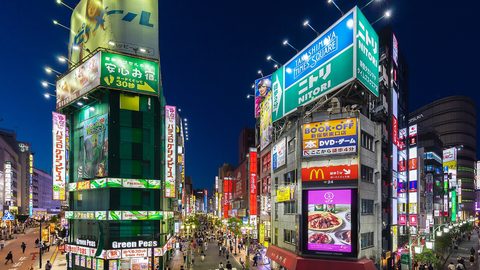 Japan eSIM vs Pocket WiFi vs Physical SIM for Staying Connected
Free public WiFi across Japan is unreliable and slow. Compare eSIM plans from Ubigi and Airalo against renting a pocket WiFi device at Narita or Haneda.
Japan eSIM vs Pocket WiFi vs Physical SIM for Staying Connected
Free public WiFi across Japan is unreliable and slow. Compare eSIM plans from Ubigi and Airalo against renting a pocket WiFi device at Narita or Haneda.
-
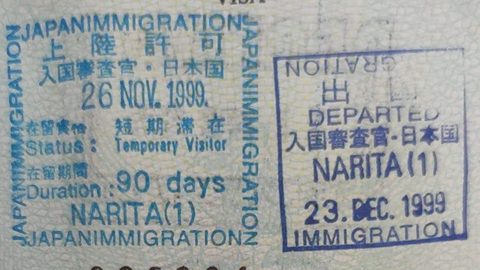 Japan Visa-Free Entry and the Visit Japan Web Digital Form
Visa-free entry covers many nationalities, but the Visit Japan Web digital form and QR codes determine how quickly you clear immigration at Narita or Haneda.
Japan Visa-Free Entry and the Visit Japan Web Digital Form
Visa-free entry covers many nationalities, but the Visit Japan Web digital form and QR codes determine how quickly you clear immigration at Narita or Haneda.
-
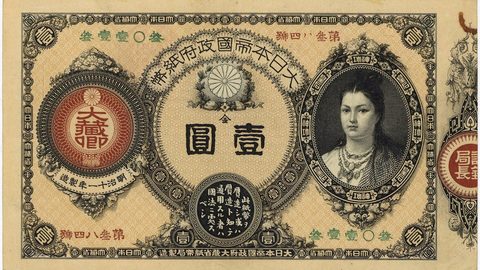 Cash and IC Cards Are the Real Payment System in Japan
Japan projects a high-tech image but many small restaurants, temples, and rural buses demand cash. IC cards like Suica and Icoca bridge the gap for daily spending.
Cash and IC Cards Are the Real Payment System in Japan
Japan projects a high-tech image but many small restaurants, temples, and rural buses demand cash. IC cards like Suica and Icoca bridge the gap for daily spending.
-
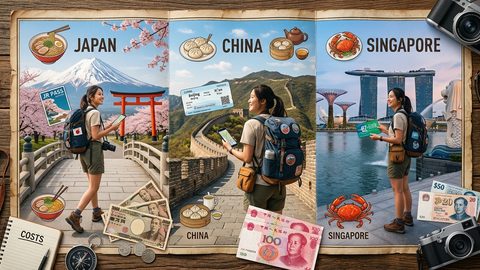 What Japan, China, and Singapore Actually Cost Independent Travelers
Real per-day costs for Japan, China, and Singapore broken down by accommodation tier, food strategy, transit, and connectivity for independent travelers.
What Japan, China, and Singapore Actually Cost Independent Travelers
Real per-day costs for Japan, China, and Singapore broken down by accommodation tier, food strategy, transit, and connectivity for independent travelers.
-
 What Most Travelers Get Wrong When Booking Flights to East Asia
Most travelers book East Asia flights on price alone. Here's what they miss about route gaps, fleet age, and aircraft type on 10-14 hour hauls.
What Most Travelers Get Wrong When Booking Flights to East Asia
Most travelers book East Asia flights on price alone. Here's what they miss about route gaps, fleet age, and aircraft type on 10-14 hour hauls.
-
 The Honest Cost of Mobile Data in Japan, China, and Singapore
Real price data for SIMs, pocket WiFi, and eSIMs in Japan, China, and Singapore. Plus the friction points most travel guides quietly skip.
The Honest Cost of Mobile Data in Japan, China, and Singapore
Real price data for SIMs, pocket WiFi, and eSIMs in Japan, China, and Singapore. Plus the friction points most travel guides quietly skip.
-
 Fifth Freedom Flights Are the Award Sweet Spot Nobody Searches For
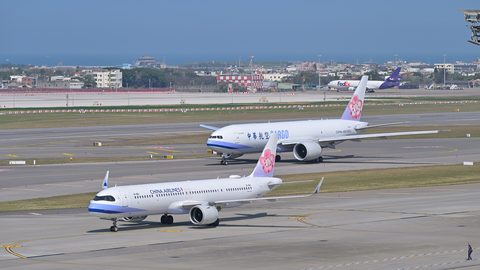
Fifth-freedom flights let you fly a foreign airline between two other countries, and they often have award seats when the airline's own hub routes are sold out.
Fifth Freedom Flights Are the Award Sweet Spot Nobody Searches For
Fifth-freedom flights let you fly a foreign airline between two other countries, and they often have award seats when the airline's own hub routes are sold out.