Where to Shop in Harajuku Beyond the Takeshita Street Crowd
Walk Harajuku's three shopping personalities in one route, from the packed Takeshita-dori stalls through Cat Street's vintage racks to the wide calm of Omotesando.
The Three-Zone Route: Takeshita-dori, Cat Street, Omotesando
You have one day to shop across Harajuku's three distinct zones without losing hours to pedestrian gridlock. Here is the route: start at Meiji-jingumae Station and hit Takeshita-dori by 09:00, cut into Cat Street by 11:00, walk Cat Street south for an hour, then loop back north through Ura-Harajuku to Omotesando by 14:00. That order works because you outrun the worst crowds and hit each zone when it is actually pleasant to browse.
The key exit decision: leave JR Harajuku Station and exit via Meiji-jingumae Station's Exit 5 instead. You surface directly on Omotesando, not on Takeshita-dori. From there walk north along the main avenue, take the first left into the backstreets, and you arrive at the top of Takeshita-dori from the quiet end. You skip the pedestrian logjam at JR Harajuku's main exit.
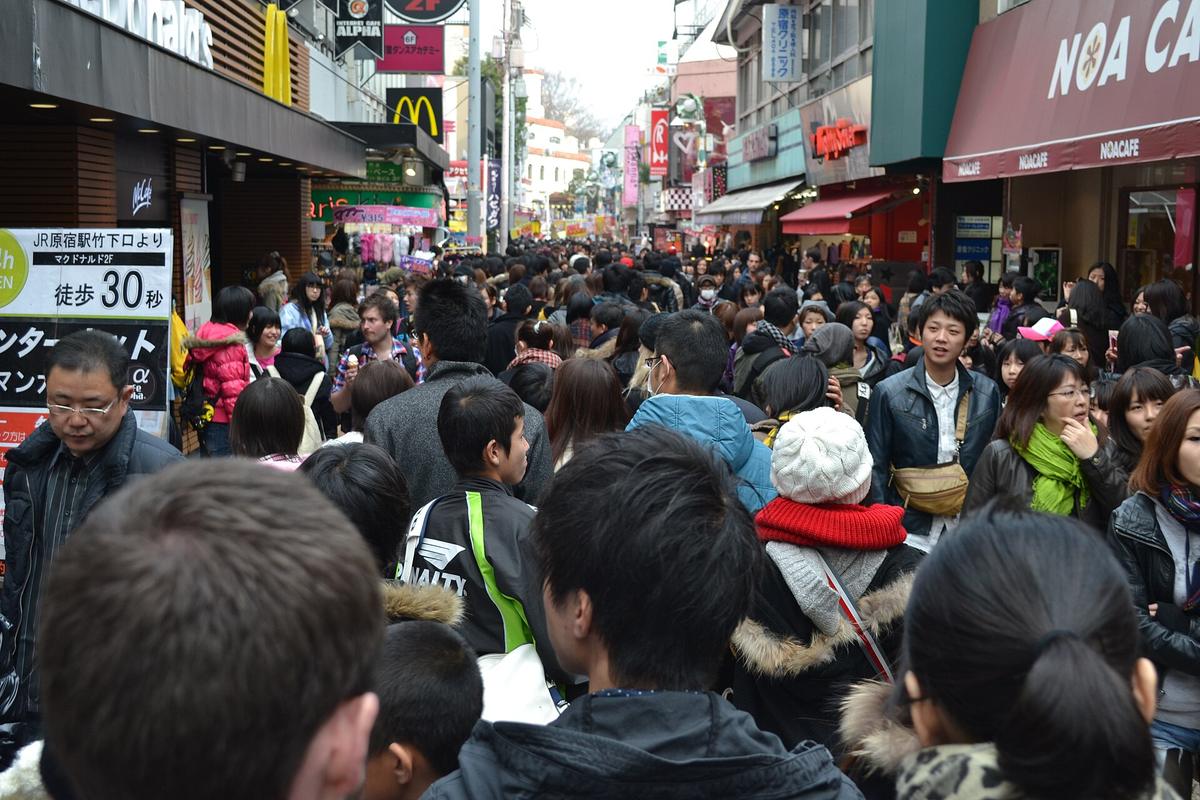

Takeshita-dori: Before 10:00 or After 18:00
Why The Timing Rule Is Non-Negotiable
Takeshita-dori is 400 metres of fast fashion, crepe stands, and 100-yen shops that draws roughly 2.5 million visitors per month (Harajuku-Jingumae Shotengai data, 2019). Weekend and school holiday crowds peak between 11:00 and 17:00. You do not want to be in that.
Passable hours are weekday mornings before 10:00 and weekday evenings after 18:00. Arrive by 09:00. You can walk the full length in under eight minutes with room to stop. Hit WEGO Harajuku Takeshita-dori for accessories, Marion Crepes for a landmark crepe (operating since 1976), and the multi-floor Daiso Harajuku for 100-yen stock-up. Laforet Harajuku opens at 11:00, so if you move fast, you clear the strip by 10:30 and leave the crush behind.
The Evening Fallback
What happens if you cannot get there before 10:00? Skip the morning entirely and come back after 18:00. The shops stay open until 20:00 or 21:00, and the strip is walkable again. Do not try to do Takeshita-dori at 14:00. You will spend half your time stopped in place.
The failure case: you arrive at 14:00, spend 45 minutes shuffling 400 metres, and leave irritated. Do not let that happen. Go early or go late, not in between.
Cat Street and Ura-Harajuku: the Midday Browse Zone
The Walk South
From the bottom of Takeshita-dori, turn east into the pedestrianised former Shibuya River, officially Kyu-Shibuya-gawa Yuhodoro. This is Cat Street, roughly 1 km long from Omotesando down to Shibuya. The crowd here is thinner. Weekday afternoons are the best window for browsing, and 11:00 to 14:00 works perfectly within your route.
Cat Street's character is independent boutiques, vintage shops, and streetwear. Three landmark stores anchor the walk: Ragtag for curated second-hand designer pieces, The North Face Standard for technical wear, and Patagonia Tokyo Shibuya for outdoor gear. Do not skip the backstreets on either side of Cat Street proper. The area called Ura-Harajuku, centred on Jingumae 3-chome and 4-chome, is where you find small multi-brand shops, more vintage, and cafes in low-rise buildings.
Vintage Pricing And Where To Go
Vintage shop price range is wide. T-shirts run ¥1,000 to ¥5,000. Branded hoodies and sweatshirts: ¥5,000 to ¥15,000. Levi's denim: ¥3,000 to ¥12,000. Designer bags: ¥20,000 to ¥150,000. Kimono and haori: ¥1,000 to ¥8,000. Pricing depends on condition, brand, era, and rarity.
Four shops worth your time: Chicago Harajuku (large-volume used kimono and streetwear), Flamingo Harajuku (1940s to 1980s Americana), Santa Monica Harajuku (vintage T-shirts and sweats), and Kinji Harajuku (a large used-clothing warehouse with items from ¥700).
Spend about 90 minutes on Cat Street and the Ura-Harajuku pockets. If you want to see the Harajuku Mame Shiba Cafe, book a reservation in advance. Walk-ins rarely get in.
| Zone | Best Time | Length | Key Stores | Crowd Level |
|---|---|---|---|---|
| Takeshita-dori | Weekday before 10:00 or after 18:00 | 400 m | WEGO, Marion Crepes, Daiso, Laforet Harajuku | High 11:00-17:00; low outside that window |
| Cat Street | Weekday afternoons (11:00-14:00) | 1 km | Ragtag, The North Face Standard, Patagonia | Moderate, thinner than Takeshita |
| Omotesando | After 14:00 (shops close 20:00-21:00) | 1 km | Omotesando Hills, Tokyu Plaza, flagship boutiques | Moderate; pavements are wide |
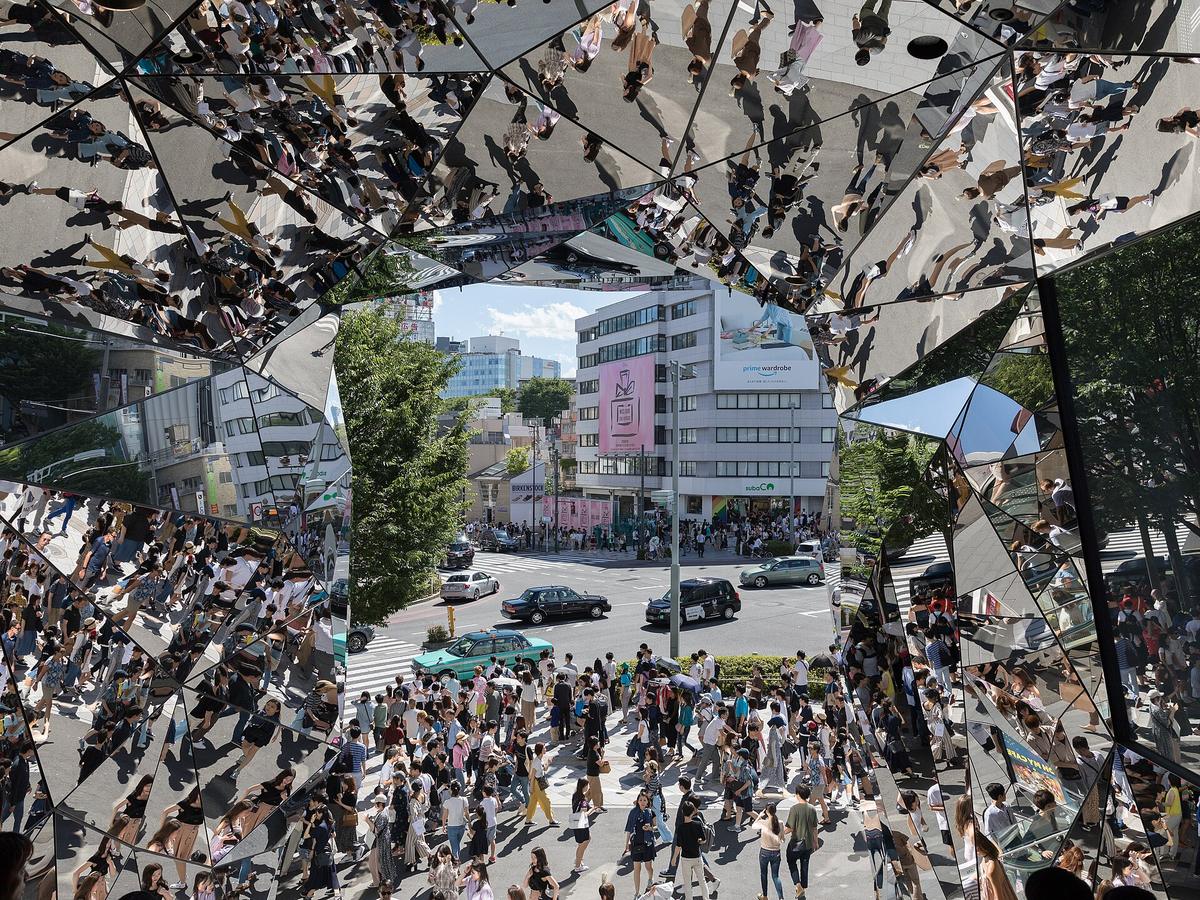

Omotesando: Architecture, Luxury, and the 14:00 Finish
The Architecture Walk
From the southern end of Cat Street, turn right onto Omotesando. The avenue runs roughly 1 km from the JR Harajuku intersection to Aoyama-dori, lined by 163 zelkova trees (planted in 1950 and replaced in phases). You do not need to buy anything to experience Omotesando. The value is in the architectural facades, all viewable from the public pavement.
Five flagship buildings define the stretch. Dior Omotesando (SANAA, 2003) is a glass box that glows at night. Tod's Omotesando (Toyo Ito, 2004) uses a concrete lattice inspired by zelkova branches. Prada Aoyama (Herzog & de Meuron, 2003) is a crystal-like rhomboid tower. Louis Vuitton Matsuya Omotesando (Jun Aoki, 2002, renovated 2021) wraps a shopping mall in a delicate glass skin. Omotesando Hills (Tadao Ando, 2006) has a sloped interior walkway that mirrors the street gradient, with roughly 100 shops (figure published in 2024) across the complex.
Finishing The Loop
Omotesando Hills shops open 11:00 to 20:00, restaurants until 22:30. Tokyu Plaza Omotesando Harajuku opens 11:00 to 21:00 and has a mirrored entrance kaleidoscope on its rooftop terrace (Omohara no Mori, free entry). Walk the avenue from south to north, then finish at Tokyu Plaza for the rooftop view. The whole loop, from Meiji-jingumae exit to this rooftop, takes about four to five hours if you stop in stores.
If you have no interest in luxury and architecture, skip Omotesando entirely and spend that time deeper in Ura-Harajuku. There is no shame in that. The architecture is free. It is also not for everyone.
Common Questions
Which station exit should I use to start the shopping route?
Exit Meiji-jingumae Station via Exit 5. You surface directly on Omotesando Boulevard, a short walk from the quiet north end of Takeshita-dori. Avoid JR Harajuku Station's main exit during peak hours, as it funnels you straight into the densest part of the crowd.
What time does Takeshita-dori get too crowded to enjoy?
Weekends and school holidays, the strip is congested from 11:00 to 17:00. Crowd density is enough to stop walking. Go on a weekday before 10:00 or after 18:00, when the 400-metre strip is passable in under 10 minutes with room to stop at shops.
Are the vintage shops on Cat Street more expensive than Takeshita-dori?
Not necessarily. Vintage T-shirts cost ¥1,000 to ¥5,000 across both zones. The difference is curation and density. Cat Street has more independent vintage shops with higher-quality selection. Takeshita-dori has more fast-fashion and 100-yen items. Kinji on Cat Street sells used clothing from ¥700.
Can I visit the Harajuku Mame Shiba Cafe without a reservation?
Probably not. The cafe is small, popular, and located in the Ura-Harajuku area. Reservations are recommended. Walk-ins rarely get a slot. Book online at least two days ahead.
What is the single thing that most often goes wrong on this route?
Arriving at Takeshita-dori at 14:00 on a Saturday and spending 45 minutes shuffling 400 metres. Then rushing Cat Street and Omotesando in low light. Start before 10:00, or skip Takeshita-dori entirely and start directly on Cat Street after lunch.
Read next
-
 Eating in Harajuku Crepes Coffee and the Quiet Streets Behind the Crowds
Skip the Takeshita-dori crush and find Harajuku's real eating scene in the backstreets, from third-wave coffee roasters to a tucked-away tonkatsu institution.
Eating in Harajuku Crepes Coffee and the Quiet Streets Behind the Crowds
Skip the Takeshita-dori crush and find Harajuku's real eating scene in the backstreets, from third-wave coffee roasters to a tucked-away tonkatsu institution.
-
 Japan Travel Guide for First-Timers Who Like Order but Not Crowds
Japan delivers deep tradition and futuristic efficiency, but the language barrier and density of rules can exhaust first-timers. Here is what to actually expect.
Japan Travel Guide for First-Timers Who Like Order but Not Crowds
Japan delivers deep tradition and futuristic efficiency, but the language barrier and density of rules can exhaust first-timers. Here is what to actually expect.
-
 Japan eSIM vs Pocket WiFi vs Physical SIM for Staying Connected
Free public WiFi across Japan is unreliable and slow. Compare eSIM plans from Ubigi and Airalo against renting a pocket WiFi device at Narita or Haneda.
Japan eSIM vs Pocket WiFi vs Physical SIM for Staying Connected
Free public WiFi across Japan is unreliable and slow. Compare eSIM plans from Ubigi and Airalo against renting a pocket WiFi device at Narita or Haneda.
-
 Japan Visa-Free Entry and the Visit Japan Web Digital Form
Visa-free entry covers many nationalities, but the Visit Japan Web digital form and QR codes determine how quickly you clear immigration at Narita or Haneda.
Japan Visa-Free Entry and the Visit Japan Web Digital Form
Visa-free entry covers many nationalities, but the Visit Japan Web digital form and QR codes determine how quickly you clear immigration at Narita or Haneda.
-
 Cash and IC Cards Are the Real Payment System in Japan
Japan projects a high-tech image but many small restaurants, temples, and rural buses demand cash. IC cards like Suica and Icoca bridge the gap for daily spending.
Cash and IC Cards Are the Real Payment System in Japan
Japan projects a high-tech image but many small restaurants, temples, and rural buses demand cash. IC cards like Suica and Icoca bridge the gap for daily spending.
-
 What Japan, China, and Singapore Actually Cost Independent Travelers
Real per-day costs for Japan, China, and Singapore broken down by accommodation tier, food strategy, transit, and connectivity for independent travelers.
What Japan, China, and Singapore Actually Cost Independent Travelers
Real per-day costs for Japan, China, and Singapore broken down by accommodation tier, food strategy, transit, and connectivity for independent travelers.
-
 What Most Travelers Get Wrong When Booking Flights to East Asia
Most travelers book East Asia flights on price alone. Here's what they miss about route gaps, fleet age, and aircraft type on 10-14 hour hauls.
What Most Travelers Get Wrong When Booking Flights to East Asia
Most travelers book East Asia flights on price alone. Here's what they miss about route gaps, fleet age, and aircraft type on 10-14 hour hauls.
-
 The Honest Cost of Mobile Data in Japan, China, and Singapore
Real price data for SIMs, pocket WiFi, and eSIMs in Japan, China, and Singapore. Plus the friction points most travel guides quietly skip.
The Honest Cost of Mobile Data in Japan, China, and Singapore
Real price data for SIMs, pocket WiFi, and eSIMs in Japan, China, and Singapore. Plus the friction points most travel guides quietly skip.
-
 Fifth Freedom Flights Are the Award Sweet Spot Nobody Searches For
Fifth-freedom flights let you fly a foreign airline between two other countries, and they often have award seats when the airline's own hub routes are sold out.
Fifth Freedom Flights Are the Award Sweet Spot Nobody Searches For
Fifth-freedom flights let you fly a foreign airline between two other countries, and they often have award seats when the airline's own hub routes are sold out.