Getting Around Shenzhen on the Metro, by Taxi, and Why a 1km Walk Can Take 20 Minutes
Getting around Shenzhen means mastering the Metro, surviving taxi shift changes, and knowing why a 1km walk can take 20 minutes across a highway overpass.
Getting Around Shenzhen When a 1km Walk Becomes a 20 Minute Overpass
The single biggest mistake visitors make is assuming Shenzhen is a compact, walkable city where major attractions sit a short stroll apart. It is not. The city sprawls across 2,000 square kilometres, and a destination that looks 1km away on a map can require a 20 minute detour across a multi lane highway overpass with no pedestrian crossing at street level. You need a system, not good walking shoes. Getting here without a car works, as long as you plan around the metro lines that actually connect the districts, the cashless payment workarounds for visitors without a Chinese bank account, and the specific moments when a taxi will refuse your fare.
Shenzhen Metro Guide for Foreigners
The Shenzhen Metro is the only practical way to cover serious distance. As of 2025 the network ran 16 lines and roughly 370 stops; the operator publishes the annual count on its official site. All signage is in Chinese and English, so the system is straightforward once you can pay the fare. Metro Line 11 is your first friend if you arrive by air: it runs from Bao'an International Airport to Futian in about half an hour for RMB 10, far cheaper than the RMB 100 to 130 taxi ride into the central business district. Line 1 serves the Luohu border crossing, Huaqiangbei, OCT and Window of the World. Line 2 runs through Shekou, Sea World and the Futian CBD. Line 4 connects Futian Checkpoint to Shenzhen North. Line 3 reaches Laojie and the Dongmen shopping area.
Fares, Last Trains and Security
Fares are distance based and run from RMB 2 to RMB 14. Last trains depart between 23:00 and 00:00 depending on the line and stop; check the board at the platform so you do not get stranded in Nanshan when you need to be back in Luohu. Every entrance has an X ray bag scanner and a walk through metal detector. Allow 5 to 10 minutes for security queueing at busy interchanges like Futian and Shenzhen North.

WeChat Pay Shenzhen Metro: the Payment Catch 22
Paying for the metro without a Chinese bank account is the single most common friction point. The easiest method is a QR code scanned at the gate through the WeChat Pay mini program called Ride Code or through the Alipay Transport function. Both apps accept a linked foreign credit card. The catch: you need WeChat or Alipay installed and set up before you arrive at the turnstile, because free public Wi Fi often demands a local phone number for a verification code, creating a catch 22 for new arrivals. Install both apps at your departure airport or hotel Wi Fi.
Single Journey Tokens as a Backup
If you cannot get the app based QR code working, each stop sells single journey tokens from vending machines. The machines accept small cash only: RMB 5, 10 and 20 notes. They do not give change above about RMB 50 and they do not take coins for high value notes. Carry a stash of small bills. You insert cash, select your destination on the touchscreen, and collect a round plastic token that you tap on the gate to enter and insert at the exit to leave.
The Shenzhen Tong Card
The Shenzhen Tong stored value card works on the metro, buses and some taxis. Buy one at any service counter with a RMB 20 refundable deposit and load it with cash. It removes the app dependency entirely. Top up at the same counters or at self service machines that again prefer cash. This card is the most reliable fallback for a foreign visitor.
Shenzhen Taxi Tips: Refusals, Shift Change and Didi
Shenzhen taxis refuse short fares most reliably between 4pm and 5pm. That is shift change. Drivers heading to hand off the car to the next driver will wave you away if your destination is not on their return route. Do not take it personally. Stand at a recognised taxi stand outside a metro exit or a mall and hail the next one. If three drivers in a row wave you off, open Didi.
Didi is the Chinese ride hailing app that works through a mini program inside WeChat and Alipay. You enter your destination in Chinese characters, the fare is fixed before the ride, and payment processes through whichever app you have linked. Drivers in Shenzhen overwhelmingly speak Mandarin only. Show your destination written in Chinese on your phone screen or on a piece of paper. Do not attempt English place names: a driver will not recognise OCT LOFT typed in Roman letters but will understand 华侨城创意文化园 on a screen.
A taxi from Bao'an International Airport to the central business district takes 40 to 50 minutes and costs RMB 100 to 130. Metro Line 11 costs RMB 10 and takes half an hour. At 5pm on a weekday the taxi wins by sitting in the same traffic jam the metro bypasses.
Why Shenzhen is Not Walkable and What That Means for Your Route
Shenzhen is not walkable at a district to district scale. Walking between districts means crossing multi lane highways, highway detours and the overpass problem: a pedestrian overpass that adds 15 minutes of stairs and ramps to a route that looks direct on a map. Within a single district the city is perfectly walkable. You can cross the Futian CBD on foot in 10 minutes. Shekou waterfront, OCT LOFT and the Huaqiangbei electronics zone are all comfortable on foot once you are inside their boundaries. The moment you try to walk from one district to another you are crossing a road designed for cars travelling at 80km per hour with no pedestrian crossing for half a kilometre.
Street Signage and Phone Data
Street signage in Shenzhen is improving but inconsistent in English. The metro has excellent bilingual signs. The streets do not. Use a mapping app on your phone with GPS and a local SIM card. A local SIM from China Unicom or China Mobile is cheap and fast and requires your passport for registration. Without it your phone relies on intermittent hotel Wi Fi that demands that local phone number for the verification code.
The Vertical City: Destinations on the 40th Floor
The second reason walking fails in Shenzhen is verticality. Your destination may be a bar, a restaurant or an office on the 40th floor of a tower that has no street level signage at all. The building might be a glass rectangle among three identical glass rectangles. The entrance might be a lobby shared with a bank branch, a dental clinic and a co working space. The only way to find it is to have the Chinese name and floor number ready on your phone. Do not expect a doorman or a directory board in English. Enter the building, find the elevator bank, and head up.

Bike Share and the App Requirement
Shenzhen has three major bike share operators: Meituan Bike in yellow, Hellobike in blue and Qingju in green. The bikes are dockless and parked at every metro exit. To start a ride you scan the QR code on the frame through Alipay or WeChat, or through the operator's own app. The same catch 22 applies: no app, no bike. The bikes work well for trips inside a single district, for example from the metro stop to a restaurant two kilometres away. They do not work for the 8km crossing between Futian and Nanshan because Shenzhen's bike lanes are inconsistent and some highway sections legally exclude bicycles.
Shekou Ferry Terminal and Other Exits
Shekou Ferry Terminal is the main maritime gateway. A direct ferry runs to Hong Kong International Airport in about 30 minutes. Another ferry reaches Macau Taipa and Macau Outer Harbour in about 60 minutes each. If you are heading to Hong Kong for a day trip, the high speed rail from Futian takes 25 minutes. If you are heading to Guangzhou, the high speed rail from Shenzhen North takes 35 minutes. Both are on the metro: Futian on Line 2, Line 3 and Line 11, and Shenzhen North on Line 4 and Line 5.
The Thing That Most Often Goes Wrong
The most common failure is the overpass problem at night. You look at a map, see a restaurant 1.2km from your metro exit in Nanshan, and decide to walk. The map does not show the 10 lane expressway between you and the restaurant, the pedestrian overpass that adds a kilometre of detour in each direction, or the dark construction site that blocks the underpass. Fifteen minutes into a walk you thought would take twelve, you are standing at a railing looking at your destination on the other side of the road with no way across. Do not trust a map distance under 3km in Shenzhen until you have checked the route at street level on a mapping app that shows pedestrian paths. The map distance is a trap. The overpass is the penalty.
Common Questions
Can I use a foreign credit card directly on the Shenzhen Metro?
No. The gates accept QR codes from WeChat and Alipay, or the Shenzhen Tong card, or single journey tokens purchased with cash. A foreign credit card works only if you link it to WeChat or Alipay first and use the QR code function.
How do I avoid taxi refusal at shift change?
Stand at a taxi stand, not in the middle of a street, and be prepared to let three or four taxis pass. If you are refused repeatedly between 4pm and 5pm, switch to the Didi app inside WeChat or Alipay. The fare is fixed and the driver has already accepted the route.
What do I do if my phone has no data and I am at a metro station?
Buy a single journey token from the vending machine with small cash. Service counters can also sell you a Shenzhen Tong card for a RMB 20 deposit. You do not need a phone for either option.
Is it safe to walk from the Huaqiangbei electronics market to the OCT LOFT?
No. That is roughly 8km and crosses multiple highway overpasses. Take Metro Line 1 from Huaqiangbei to Qiaocheng East for OCT. It takes about 20 minutes.
How do I get from Shekou to the airport without a taxi?
Take Metro Line 2 from Sea World to Grand Theater, transfer to Line 11, and ride it to Bao'an International Airport. The journey takes roughly 65 minutes. Alternatively, the Shekou Ferry Terminal runs a direct ferry to Hong Kong International Airport in 30 minutes, which connects onward flights but does not get you to the Shenzhen airport.
Read next
-
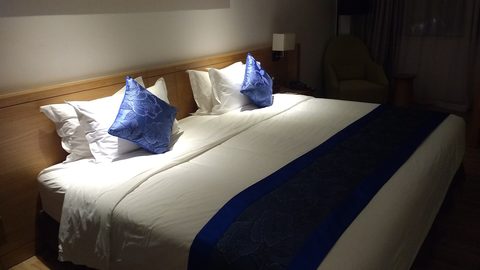
 Shenzhen Hotels by District and Price Band From Futian Towers to Shekou
Shenzhen hotels organised by district and price band, matching Futian, Nanshan, Shekou, Luohu, and Bao'an to travel style with nightly rates in yuan.
Shenzhen Hotels by District and Price Band From Futian Towers to Shekou
Shenzhen hotels organised by district and price band, matching Futian, Nanshan, Shekou, Luohu, and Bao'an to travel style with nightly rates in yuan.
-
 Where to Stay in Shenzhen by Border Crossing and Metro Line
Where to stay in Shenzhen depends on your arrival point and your Metro line. Compare Futian, Nanshan, Shekou, and Luohu districts for the right base.
Where to Stay in Shenzhen by Border Crossing and Metro Line
Where to stay in Shenzhen depends on your arrival point and your Metro line. Compare Futian, Nanshan, Shekou, and Luohu districts for the right base.
-
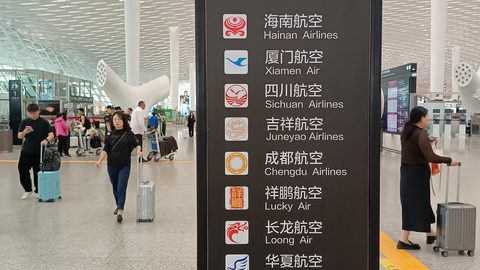 Shenzhen Flights to Bao’an Airport and Every Other Way In
Flights to Shenzhen Bao'an International Airport and the overland alternatives via Hong Kong high-speed rail or Shekou ferry, with costs and connection times.
Shenzhen Flights to Bao’an Airport and Every Other Way In
Flights to Shenzhen Bao'an International Airport and the overland alternatives via Hong Kong high-speed rail or Shekou ferry, with costs and connection times.
-
 Shenzhen Things to Do When There Is Almost Nothing Old to Look At
Shenzhen things to do ranked honestly for a city with almost nothing old. From the Ping An deck to Hiaqiangbei hardware market, here is what earns your days.
Shenzhen Things to Do When There Is Almost Nothing Old to Look At
Shenzhen things to do ranked honestly for a city with almost nothing old. From the Ping An deck to Hiaqiangbei hardware market, here is what earns your days.
-
 Best Time to Visit Shenzhen Month by Month to Avoid Crowds and Heat
The best time to visit Shenzhen is October to December for clear skies and low humidity. Avoid Golden Week, Chinese New Year, and the Canton Fair hotel spikes.
Best Time to Visit Shenzhen Month by Month to Avoid Crowds and Heat
The best time to visit Shenzhen is October to December for clear skies and low humidity. Avoid Golden Week, Chinese New Year, and the Canton Fair hotel spikes.
-
 A 2 Day Shenzhen Itinerary Plus a 1 Day Hong Kong Crossing Version
A Shenzhen itinerary for 2 days organised by geography to avoid transit waste, plus a 1-day version for anyone crossing from Hong Kong via Futian Station.
A 2 Day Shenzhen Itinerary Plus a 1 Day Hong Kong Crossing Version
A Shenzhen itinerary for 2 days organised by geography to avoid transit waste, plus a 1-day version for anyone crossing from Hong Kong via Futian Station.
-
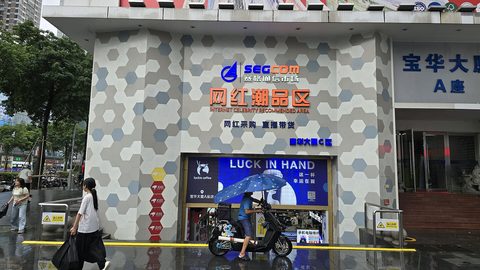 Huaqiangbei
How to navigate Huanqiangbei, Shenzhen's multi-block electronics hardware market, from components sold by the reel to finished gadgets across tower floors.
Huaqiangbei
How to navigate Huanqiangbei, Shenzhen's multi-block electronics hardware market, from components sold by the reel to finished gadgets across tower floors.
-
 OCT-LOFT
 is Shenzhen's design-led art hub in a repurposed factory, smaller and quieter than Beijing's 798 with better coffee and a creative community feel.
OCT-LOFT
OCT-LOFT is Shenzhen's design-led art hub in a repurposed factory, smaller and quieter than Beijing's 798 with better coffee and a creative community feel.
-
 China Travel Guide for First-Timers Who Plan Ahead
China rewards travellers who plan apps, payments, trains, and tickets before arrival. Start with the four obstacles and the pages that solve them.
China Travel Guide for First-Timers Who Plan Ahead
China rewards travellers who plan apps, payments, trains, and tickets before arrival. Start with the four obstacles and the pages that solve them.