Causeway Bay, Hong Kong: Dense Shopping, a Noon Gun and Victoria Park
Causeway Bay is more than Times Square. Plan a day around the Noon Gun, Victoria Park, and the densest shopping streets in Hong Kong.
- Flag
-
- ISO code
- HK
Causeway Bay, Hong Kong: Dense Shopping, a Noon Gun and Victoria Park
At 11:55 on any weekday, a small crowd gathers opposite the Excelsior Hotel at 221 Gloucester Road. They are waiting for a Hotchkiss 3-pounder that Jardine Matheson has fired at noon since the 1860s, interrupted only by the Japanese occupation of 1941-1945. The Noon Day Gun is free, lasts thirty seconds, and is the oldest daily ritual in Causeway Bay. It is also the only part of this district that moves at a measured pace. Everything else here runs at full speed. Causeway Bay is a study in extremes: the world's highest retail rents on Russell Street, a working-class history written in garlic and chilli at the typhoon shelter, and a 19-hectare park that lets you breathe. Know where to stand and when. Know where to walk away.
Causeway Bay Hong Kong What to Do: Walk the Geography, Not the Malls
Start at the SOGO Crossing
The mistake visitors make is heading straight into Times Square. Opened in 1994 by Wharf Real Estate, the complex has nine retail floors above ground and a basement, two office towers, and an Emperor Cinemas anchor. It is also the same shopping experience you could get in Shanghai or Singapore. What is specific to Causeway Bay is the route you take to reach it.
Exit the MTR at Causeway Bay station through Exit A for Times Square, but do not go inside immediately. Walk east along Yee Wo Street instead. At the junction of Hennessy Road and Yee Wo Street, you will see the main entrance of SOGO Causeway Bay, opened in 1985 by Sogo Hong Kong Co. Ltd. The pedestrian crossing there is one of the densest in the city. Stand on the corner for two minutes and watch the rhythm: the green man lights up and a wave of bodies flows across, then the red man returns and the pavement clears for exactly twelve seconds. That rhythm is the district.
Follow the Market Lanes to Lee Gardens
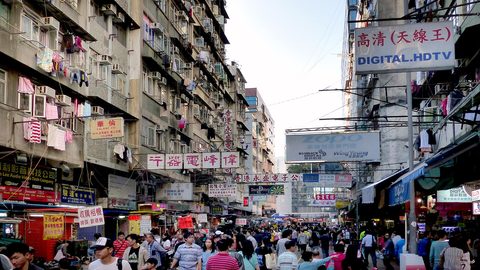
From SOGO, turn onto Paterson Street. This is Fashion Walk, developed by Hang Lung Properties, anchored by H&M, Nike, Adidas and an Apple store. The public art here rotates annually, so expect nothing permanent. The real reason to walk Paterson Street is to find Jardine's Bazaar and Jardine's Crescent, two pedestrianised lanes running between Paterson Street and Hennessy Road. They hold roughly 100 to 150 stalls selling clothing, phone cases, souvenirs and street food. These stalls are not a discovery; they are the working spine of the area's retail, and they feel more like Causeway Bay than any mall does.
Finish at the Lee Gardens area. Hysan Development built Lee Garden One in 1997, Lee Garden Two in 2012, Lee Garden Three in 2018, and Lee Garden Six in 2020. Hysan Place, a 204-metre tower with 17 retail floors, opened in 2012. The total retail floor area across the Lee Gardens complex is around 102,000 square metres. You do not need to shop in all of them. Pick one, Hysan Place for its vertical layout, and then leave.
_21-11-2023(1).jpg)
| Zone | What It Is | Open Since | Best For |
|---|---|---|---|
| Times Square | 9-floor mall with cinema and office towers | 1994 | Countdown events and brand-name fashion |
| SOGO Causeway Bay | Department store, B2/F to 16/F | 1985 | Japanese brands and Thankful Week sales in May and November |
| Fashion Walk | Open-air retail zone along Paterson Street | 2000s | Sports brands and Apple store |
| Jardine's Bazaar / Crescent | Pedestrianised market stalls | Ongoing | Street food and cheap souvenirs |
| Lee Gardens complex | Multiple malls by Hysan Development | 1997–2020 | Luxury and mid-range shopping |
Causeway Bay vs Mong Kok: Density with a Difference
Two Kinds of Pressure
Both districts crush you with people, but the crush takes a different shape. Mong Kok is horizontal chaos: Temple Street Night Market, narrow lanes, street hawkers selling from cardboard boxes, the smell of fried squid and the sound of mahjong tiles from open parlours. Causeway Bay is vertical. The pressure comes from department stores stacked fourteen floors high, footbridges that force you into the flow, and retail rents that Cushman & Wakefield's Main Streets Across the World report ranked highest globally. Russell Street peaked at US$2,671 per square foot per year in 2018. The 2023 figure was approximately US$1,493 per square foot per year, still among the world's costliest.
Which One to Pick
Mong Kok feels like a market that grew into a neighbourhood. Causeway Bay feels like a neighbourhood that was rebuilt for commerce. If you want street food and a sense that anything could happen, choose Mong Kok. If you want a clean, air-conditioned warren of shops with a harbour nearby, choose Causeway Bay. The district is bad at spontaneity. It is good at efficiency.
Victoria Park Causeway Bay: the 19-Hectare Escape
What the Park Holds
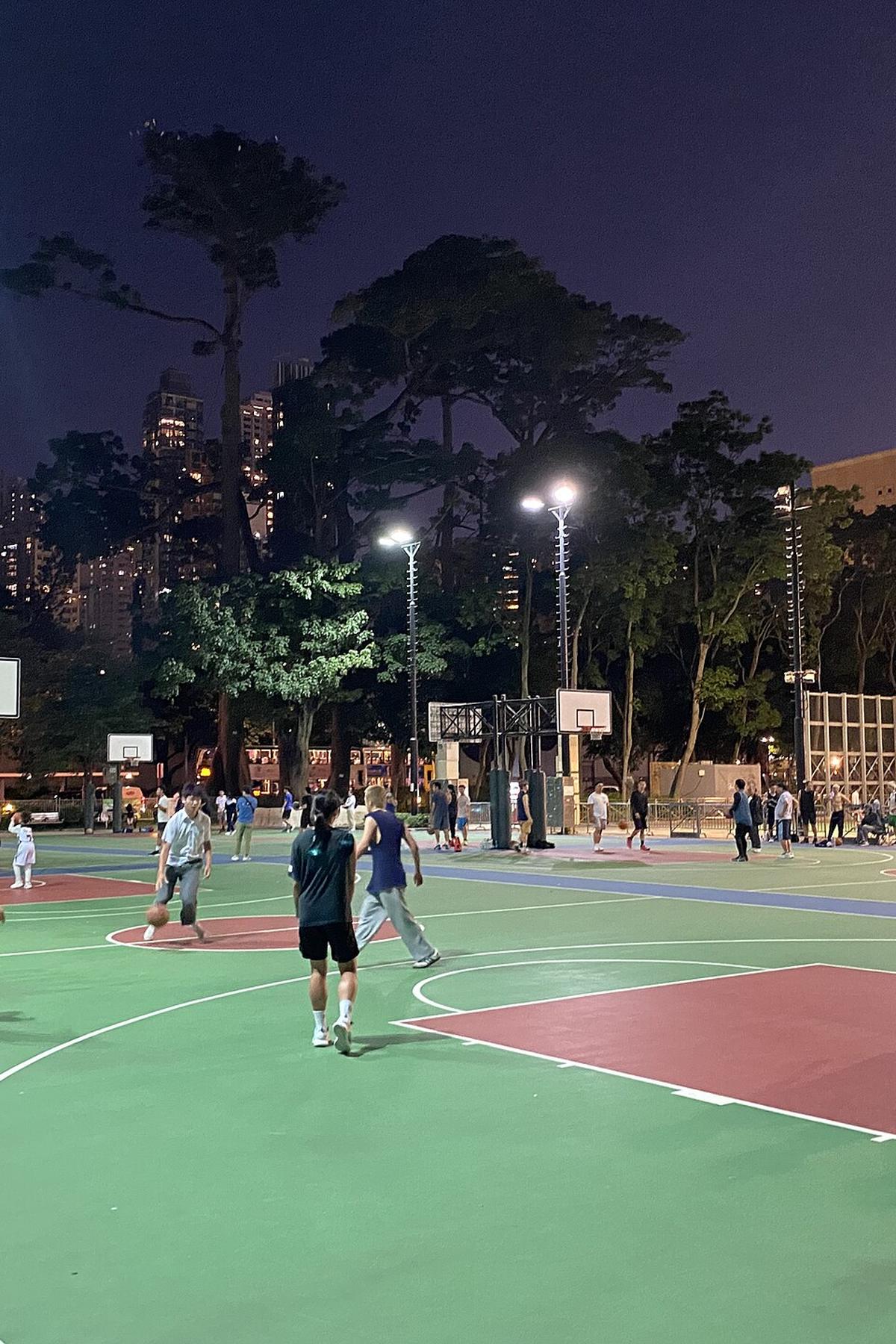
Victoria Park opened in 1957 and sits on 19 hectares bounded by Causeway Road, Gloucester Road, Hing Fat Street and Victoria Park Road. It is the largest park on Hong Kong Island, and it functions as the district's lung. Enter from the Causeway Road side and you will find six tennis courts, a model boat pool, two bowling greens, a swimming pool complex, a fitness centre, a roller skating rink, a basketball court, a football pitch, and a children's playground. None of these are remarkable on their own. What is remarkable is the contrast: step through the gate and the roar of Hennessy Road drops to a hum.
Daily Calm and Annual Crowds
The park matters most during two annual events. The Chinese New Year flower market fills the park with roughly 400 to 500 stalls and draws over one million visitors per festival. The Mid-Autumn lantern display fills the same space with light. Both are overwhelming, but they are also the moments when Causeway Bay feels communal rather than commercial. On ordinary days, the park is where elderly residents practice tai chi in the morning and domestic workers sit on benches in the afternoon. That quiet civic life is worth an hour of your time. Arrive by 07:00 and walk the perimeter before the shopping crowds arrive.
Noonday Gun Causeway Bay: Thirty Seconds of Colonial Ritual
The Noon Day Gun fires at 12:00 daily from a site of approximately 200 square metres at 221 Gloucester Road, opposite the Excelsior Hotel. The current gun is a Hotchkiss 3-pounder, installed in 1961. Admission is free. Arrive by 11:45 to claim a spot on the pavement. The firing is loud, brief, and ceremonial. A Jardine Matheson employee in a white uniform performs the duty. After the shot, the crowd disperses. The whole thing takes less time than a traffic light cycle.
Do it for one reason only: it is a direct link to the 1860s, when Jardine Matheson began the tradition. During the Japanese occupation from 1941 to 1945, the gun fell silent. When the British returned, the firing resumed. That continuity, broken only by war, is the kind of detail that makes a place feel deeper than its retail rents suggest. Combine it with the typhoon shelter, which is a five-minute walk south along Gloucester Road, and you have a morning that touches the city's trading history. Do not stay longer than 15 minutes at the gun site. It is a moment, not a destination.
The Typhoon Shelter and Its Crab
From Working Harbour to Dinner Plate
Causeway Bay Typhoon Shelter opened in 1883 as Hong Kong's first typhoon shelter. It covers approximately 17 hectares and holds sampans, fishing boats, pleasure craft, and a declining number of floating restaurants. The dish that carries its name, Typhoon Shelter Crab, originated in the 1960s and 1970s, cooked on boats using garlic, scallions, chilli, and black beans. Find it at one of the restaurants along the waterfront, not on a boat. The boat restaurants are mostly gone. The crab remains.
The Temple by the Water
The Tin Hau Temple at 10 Tin Hau Temple Road, built in 1747, sits near the shelter. It is a Grade I historic building dedicated to the goddess of the sea who protects fishermen. The temple is small, quiet, and almost always empty of tourists. Walk there after the Noon Day Gun. The sequence, gun, shelter, temple, takes about an hour and covers 200 years of Causeway Bay's relationship with the water. The MTR station exit for the temple area is Tin Hau station, one stop east of Causeway Bay on the Island Line.
Tai Hang and the Fire Dragon
A Dragon Built to End a Plague
South-west of Victoria Park lies Tai Hang, a residential area that holds one of Hong Kong's most spectacular annual events. The Tai Hang Fire Dragon Dance has been held since 1880, when villagers created a dragon of straw and incense sticks to ward off a plague. The dragon is 67 metres long, divided into 32 segments, and studded with approximately 70,000 to 80,000 incense sticks. It runs for three nights on the 14th, 15th and 16th days of the eighth lunar month, weaving from Lin Fa Kung Temple through Wun Sha Street, King Street, School Street, Ormsby Street, Brown Street, and Warren Street, ending at the typhoon shelter.
Planning Around the Festival
Lin Fa Kung Temple, built in 1863 and classified as a Grade I historic building, is dedicated to Kwun Yum, the Goddess of Mercy. On any ordinary day, the temple is a calm space. During the fire dragon festival, it becomes the starting point of a procession that fills every street in Tai Hang with smoke, drumming, and movement. The UNESCO status, inscribed on China's national intangible cultural heritage list in 2011, reflects the event's significance, but the practical takeaway is simple: if you are in Hong Kong during the festival, book a hotel in Causeway Bay and plan your evening around the dragon route. The fire dance is the district's most powerful counterweight to the malls.
Where the District Fails
Causeway Bay is bad at quiet. It is bad at cheap. It is bad at opening onto the harbour. The typhoon shelter is the only water access, and it is industrial, not scenic. The pavement on Hennessy Road is narrow, uneven, and often blocked by scaffolding or queues. Many small restaurants are cash-only or take Octopus, not credit cards. Public toilets are scarce outside the malls and MTR station. The air conditioning inside every shop is aggressive. Carry a layer year-round.
The district suits urban explorers who love public transport and skyline photography, food-focused travellers who will eat at dai pai dongs and hole-in-the-wall noodle shops, luxury shoppers, and solo travellers who value safety and ease of navigation. It does not suit travellers on a tight budget who want cheap street food and hostels, people who dislike crowds, queues, or small hotel rooms, anyone seeking a relaxed, slow-paced environment, or travellers who want wide-open public spaces rather than vertical malls and narrow streets. Know which side you are on before you exit the MTR.
Common Questions
How much time should I spend in Causeway Bay?
Half a day is enough for the Noon Day Gun, typhoon shelter walk, Tin Hau Temple, and one mall. Add another hour for Victoria Park if you want the green contrast. Do not plan a full day unless you intend to shop seriously.
What is the best MTR exit for Victoria Park?
Use Causeway Bay station Exit E, then walk east along Causeway Road for five minutes. The park entrance is at the junction with Hing Fat Street. This route avoids the SOGO crowds at Exits D1 through D4.
Is the Noon Day Gun firing worth a detour?
Yes, but only if you combine it with the typhoon shelter and Tin Hau Temple as a single walking loop. The firing alone takes 30 seconds. On its own it is not worth the trip. As part of a harbour-side walk, it is the best free thing in the district.
When is the best time to avoid crowds in Causeway Bay?
Weekday mornings before 10:00. The malls open at 10:00 or 11:00, so the pavements are manageable until then. Sunday afternoons are the worst. Avoid the first week of October for Golden Week and August for heat and humidity.
Read next
-
 Causeway Bay Shopping Guide Malls and the Cheaper Lanes Below
Causeway Bay shopping means malls stacked twelve floors high and cheaper lanes underneath. Learn which to enter and which to skip.
Causeway Bay Shopping Guide Malls and the Cheaper Lanes Below
Causeway Bay shopping means malls stacked twelve floors high and cheaper lanes underneath. Learn which to enter and which to skip.
-
 Hong Kong Travel Guide and Trip Planning Hub
How to plan a Hong Kong trip that respects the city's density, uses the MTR properly, and leaves room for a hike or an island day.
Hong Kong Travel Guide and Trip Planning Hub
How to plan a Hong Kong trip that respects the city's density, uses the MTR properly, and leaves room for a hike or an island day.
-
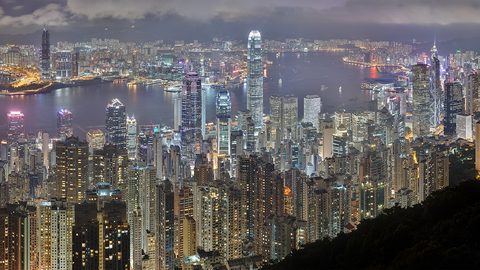 Victoria Peak Hong Kong The View Is the Point the Tram Queue Is Not
The view from Victoria Peak is the point; the tram queue is the problem, and there are four other ways up.
Victoria Peak Hong Kong The View Is the Point the Tram Queue Is Not
The view from Victoria Peak is the point; the tram queue is the problem, and there are four other ways up.
-
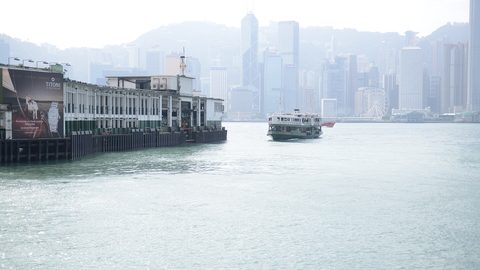 Star Ferry Hong Kong Fare, Route and Which Side to Sit
The Star Ferry costs HK$5, takes 10 minutes, and the upper deck heading from Tsim Sha Tsui to Central gives the best skyline view.
Star Ferry Hong Kong Fare, Route and Which Side to Sit
The Star Ferry costs HK$5, takes 10 minutes, and the upper deck heading from Tsim Sha Tsui to Central gives the best skyline view.
-
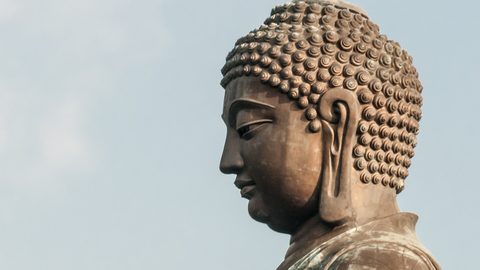 Big Buddha and Ngong Ping 360 Cable Car Without the Crowds
The Big Buddha is 268 steps up, the cable car takes 25 minutes, and the village at the top is mostly a shopping mall.
Big Buddha and Ngong Ping 360 Cable Car Without the Crowds
The Big Buddha is 268 steps up, the cable car takes 25 minutes, and the village at the top is mostly a shopping mall.
-
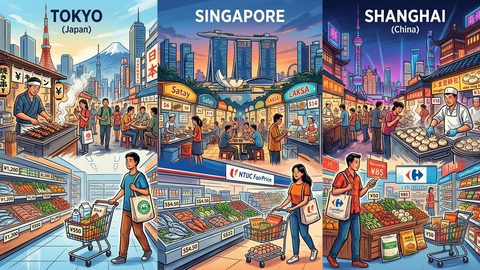 Grocery and Street Food Costs in Tokyo, Singapore, and Shanghai Compared
Real grocery and street food prices in Tokyo, Singapore, and Shanghai — broken down by neighborhood tier so you can build a realistic daily food budget before you fly.
Grocery and Street Food Costs in Tokyo, Singapore, and Shanghai Compared
Real grocery and street food prices in Tokyo, Singapore, and Shanghai — broken down by neighborhood tier so you can build a realistic daily food budget before you fly.
-
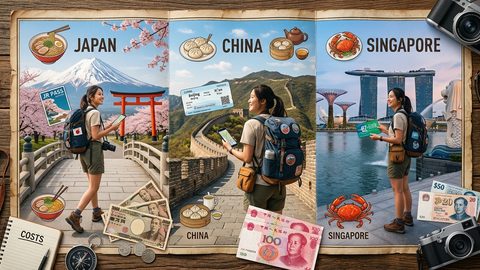 What Japan, China, and Singapore Actually Cost Independent Travelers
Real per-day costs for Japan, China, and Singapore broken down by accommodation tier, food strategy, transit, and connectivity for independent travelers.
What Japan, China, and Singapore Actually Cost Independent Travelers
Real per-day costs for Japan, China, and Singapore broken down by accommodation tier, food strategy, transit, and connectivity for independent travelers.
-
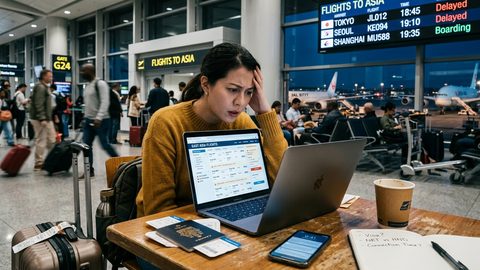 What Most Travelers Get Wrong When Booking Flights to East Asia
Most travelers book East Asia flights on price alone. Here's what they miss about route gaps, fleet age, and aircraft type on 10-14 hour hauls.
What Most Travelers Get Wrong When Booking Flights to East Asia
Most travelers book East Asia flights on price alone. Here's what they miss about route gaps, fleet age, and aircraft type on 10-14 hour hauls.
-
 The Honest Cost of Mobile Data in Japan, China, and Singapore
Real price data for SIMs, pocket WiFi, and eSIMs in Japan, China, and Singapore. Plus the friction points most travel guides quietly skip.
The Honest Cost of Mobile Data in Japan, China, and Singapore
Real price data for SIMs, pocket WiFi, and eSIMs in Japan, China, and Singapore. Plus the friction points most travel guides quietly skip.