Phuket Beaches and Areas: How to Choose Your Base on a Sprawling Island
Phuket is a sprawling island of extreme contrasts. Choosing the right beach area matters more than any other decision you will make.
- Flag
-
- ISO code
- TH
- Currency
- THB
Phuket Beaches and Areas: How to Choose Your Base on a Sprawling Island
Phuket is 50 km long and 21 km wide at its broadest point. That is bigger than Singapore. Most first-time visitors land expecting one beach town. They find a sprawl of 12 named beaches on the west coast alone, connected by roads where 32 km from the terminal to Patong can take 90 minutes in high season. The single most consequential decision you make is not which hotel to book but which stretch of coast to sleep on. The Phuket beaches and areas form a set of distinct habitats. Choosing the wrong one for your trip style means spending your limited days trapped in a resort bubble or fighting tuk-tuk drivers for every move you make. The contrasts are sharp. The deeper guides on where to stay, how to get around, and what is worth your time are below, followed by a blunt verdict on who should skip the island entirely.
- Island Size: 50 km long, 21 km wide at widest point
- Airport: Phuket International Airport (HKT), north of the island; 32 km to Patong and Phuket Town, 45-47 km to Kata/Karon
- Peak Season: November to February; dry, sunny, 28°C average, hotel rates 50-100% above low season
- Avoid Window: Songkran (April 13-15) for road danger; late May to October for rip currents and beach closures
- Minimum Days: 4 days. Less than that and most time goes to airport transfer logistics
- Getting Around Friction: Tuk-tuk mafia blocks ride-hail pickups in Patong and Kata; fixed fares 200-400 THB for a 5-minute trip
- Annual Visitors: 8.4 million international arrivals at HKT (2024, Airports of Thailand); 101,000+ hotel rooms (2024, C9 Hotelworks)
Phuket Island Guide: What Nobody Tells You Before You Book
Phuket is a sprawling island of extreme contrasts. Beach clubs sit alongside hectic roads and relentless development. Visitors are caught out by the sheer scale of the island and the traffic. The dreamy tropical escape requires more logistical grit than expected, especially outside the manicured resort bubbles. Treat the island like a small country, not a single destination.
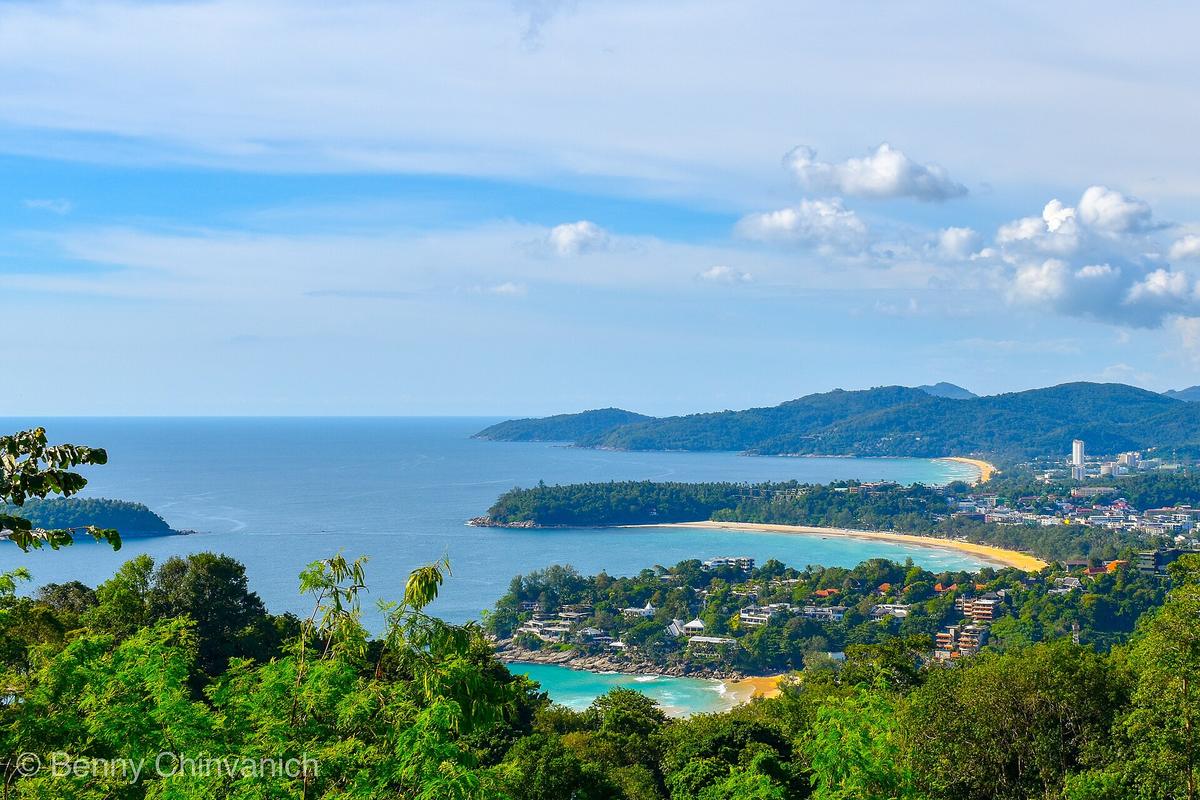
The west coast faces the Andaman Sea and carries the open-water swell from May to October. The east coast faces Phang Nga Bay, with mangrove fringe, shallow water, and the piers for day trips to Phi Phi and the karst lagoons. Phuket Town sits mid-east, 14 km from Patong and 32 km from the airport. If you are after nightlife, you go to Patong. If you are after luxury seclusion, you go to Bang Tao. If you are after family-friendly beaches with less intensity, you go to Kata or Karon. Splitting your time between Patong and Nai Harn means a 50-minute, 600 THB Grab ride each way. Logistics are the real constraint.
Why the Airport Transfer Sets the Tone
Phuket International Airport is in the north. A metered taxi to Patong takes 60-90 minutes and costs 600-800 THB. A shared minibus is cheaper but slower. The Smart Bus runs along the west coast to Rawai for 100 THB flat but is impractical with heavy luggage. Budget for the transfer before you book accommodation. If you land at 9 pm and your hotel is in Nai Harn, you will not be on the sand before 10:30 pm and you will have spent 1,200 THB on a ride you did not plan for.
Where is Phuket and How Big is it Really
Where is Phuket? It is Thailand's largest island, a province of 543 km² in the Andaman Sea, connected to the mainland by the Sarasin Bridge. The 2023 population was 418,000, but the island hosts 8.4 million international arrivals a year (2024, Airports of Thailand). That ratio tells you everything about the commercialisation. The island is big enough that a hotel on the northern hillside of Patong listed as a Patong property means a 30-minute, 400 THB tuk-tuk ride just to reach the sand. Always check the specific location on a map, not just the beach name.
Phuket is 1 hour 20 minutes by air from Bangkok, 1 hour 45 minutes from Singapore, and 1 hour 20 minutes from Kuala Lumpur. It is 160 km by road to Krabi and 140 km to Khao Sok National Park. The ferry to Phi Phi takes 1 hour 45 minutes to 2 hours. The speedboat takes 45-60 minutes from Chalong or Rassada Pier. The Similan Islands are 84 km northwest, reachable only from 15 October to 15 May each year, and the trip involves a 1.5-hour road transfer to Thap Lamu plus a 1.5-hour speedboat ride.
Phuket Travel Advice on the Monsoon and the Crowds
The monsoon runs May to October. Rainy-season monthly rainfall is 250-400 mm. Dry-season monthly rainfall drops to 30-60 mm. The year-round temperature range is 24-33°C. Sea temperature sits at 27-30°C. The peak hotel occupancy months are December and January, and the average hotel occupancy for 2024 was 71% (C9 Hotelworks). November to February is the prime window. March and April are hot but still dry. From May onward, the west-coast beaches fly red flags regularly. Drowning deaths on Phuket beaches run 30-50 per year (2019-2024, Thai Drowning Prevention Coalition). Lifeguards are present year-round on main beaches since 2019, but the rip-current risk is highest May to October. Red flag means no swimming.
Is Phuket Worth Visiting
Yes, for specific travellers. No, for others. Is Phuket worth visiting if you want a luxury resort with a beach club, a golf course, and everything behind a guarded gate? Absolutely. Bang Tao offers 6 km of beach anchored by the Laguna complex, 7 hotels across 400 ha, and 6+ beach clubs on the Catch Beach strip alone. Day passes run 1,000-3,000 THB. Cocktails are 250-450 THB. You never need to leave the bubble.
Is Phuket worth visiting if you want to surf? Kata Beach has 1-2 m waves from May to October, and the gentle high-season swell suits beginners. Is it worth visiting if you want ethical animal interaction? Book an elephant sanctuary half-day visit at 1,800-2,500 THB, and book days ahead. Is it worth visiting if you want world-class diving from a beach? No. The coral-reef health at the main west-coast beaches is poor to fair. The best snorkelling is from offshore islands only: Racha, Phi Phi, Similan. A Phi Phi day trip by speedboat costs 2,500-4,500 THB. A Similan day trip costs 3,500-5,500 THB and you must go between 15 October and 15 May. If you are not willing to take boat trips, Phuket is the wrong place for decent underwater life.
Phuket is not for backpackers on a shoestring budget seeking untouched culture. It is not for solitude seekers. It is not for anyone who dislikes tourist crowds or aggressive touts. The commercialisation is intense. Skip it if you want an authentic, slow-paced Thai village experience. The island is for luxury-resort lovers, first-time Thailand visitors wanting a soft landing, families needing direct flights and infrastructure, active travellers mixing Muay Thai with beach time, and nightlife seekers heading to Patong.
| District | Beach Length | Vibe | Best For | Key Logistics |
|---|---|---|---|---|
| Patong | 2.8 km | Dense, loud party hub with a seedy strip | Nightlife seekers, first-time visitors who want everything on their doorstep | 32 km from airport; 60–90 min taxi; tuk-tuk mafia blocks ride-hail; traffic speed 5–10 km/h in high season |
| Kata/Karon | 1.5 km / 3 km | Family-friendly, less intense than Patong | Families, swimmers, surfers (low season) | 45–47 km from airport; 60–75 min taxi; public bus from Phuket Town 40 THB |
| Kamala | 2 km | Quiet expat and retiree stretch, calm bay | Couples, older travellers, anyone escaping noise | Shallow-slope beach; family-oriented; jet-ski scam prevalence high |
| Bang Tao/Laguna | 6 km | Luxury gated resorts, golf courses, high-end beach clubs | Luxury-resort lovers, golfers, beach-club crowd | 18 km from airport; 25-min taxi; 7 hotels in Laguna complex |
| Surin | 800 m | Upscale beach with chic dining, shrinking sand | Affluent couples, short-stay luxury | Limited parking; high-end; beach narrowing from erosion |
| Rawai/Nai Harn | 700 m (Nai Harn) | Expat enclave, long-term stays, local vibe | Long-stay travellers, snorkellers (Ao Sane), seafood lovers | 50 km from airport; 70–80 min taxi; no jet skis or parasailing at Nai Harn |
| Old Phuket Town | N/A (inland) | Sino-Portuguese architecture, hip cafes, Sunday market | Culture seekers, food travellers, photographers | 14 km from Patong; 30–40 min taxi; 200+ heritage shophouses |
| Mai Khao | 11 km | Airport-adjacent, plane-spotting, secluded national-park beach | Transit stopovers, nature lovers | Sirinat National Park entry 200 THB; minimal development; longest beach on island |
| Chalong Bay | N/A (pier area) | Yacht marina, dive shops, gateway to islands | Day-trippers to Phi Phi and Phang Nga Bay, divers | Main departure point for speedboats; 25–40 km to Phang Nga Bay karst sites |
Phuket Beaches and Areas: the Trade-Offs by District
Each district on Phuket is a different proposition, and the gap between them is wider than most travellers expect. Below is the breakdown of what each stretch of coast delivers, with the friction points the resort brochures leave out.
Patong: The Nightlife Engine
Patong beach is 2.8 km of sand backed by a wall of hotels, bars, and the neon strip of Bangla Road. Bangla Road is 400 m long, transforms at 6 pm, and legally closes at 2 am with some venues running to 4 am. Patong is dense, loud, and seedy. If you want nightlife, it is the only choice. Sleep before midnight? Wrong postcode. The room-rate premium over Kata and Karon is 15-25%. Jet-ski scam prevalence is high. The beach-road traffic speed in high season drops to 5-10 km/h. The single biggest daily stressor is the tuk-tuk mafia blocking ride-hail pickups. Budget extra time for every short trip.
Kata and Karon: The Family Default
Kata beach is 1.5 km long. Karon beach is 3 km long. Both are family-friendly, less intense than Patong, and offer gentle waves in high season. Kata has surf in low season with 1-2 m waves. The airport transfer is 45-47 km and costs 1,000-1,200 THB by fixed-rate taxi. Public buses from Phuket Town cost 40 THB. Kata and Karon are the safest bet for first-time visitors who want a beach holiday with nightlife within reach but not on top of them. The trade-off is that you are 8 km from Patong, a 200-400 THB tuk-tuk ride away, and the tuk-tuk drivers here also block ride-hail apps.
Bang Tao: The Resort Bubble
Bang Tao beach is 6 km long. The south end is dominated by the Laguna complex, 7 hotels across 400 ha with golf courses, beach clubs, and private transport. The number of beach clubs on the Catch Beach area is 6+. A day pass costs 1,000-3,000 THB. This is the right choice if you want to stay inside a manicured environment and never deal with Phuket's traffic or touts. The airport is 18 km away, a 25-minute taxi. The trade-off is that you are isolated. Leaving the bubble for Phuket Town or Kata means a 45-60-minute, 600 THB ride. Bang Tao suits luxury-resort lovers and couples who value calm over convenience.
Kamala: The Quiet Middle
Kamala beach is 2 km long with a shallow slope, making it family-oriented and calm. It is a quiet expat and retiree stretch. The vibe is low-key. There is no major nightlife. Jet-ski scam prevalence is noted as high here too. Kamala sits between Patong and Bang Tao, which means you can reach either in 10-15 minutes by motorbike or 200-400 THB by tuk-tuk. It is a compromise choice for travellers who want proximity to action without living inside it.
Rawai and Nai Harn: The Long-Stay Corner
Rawai is not a swimming beach. It is an east-coast-facing boat anchorage with a seafood market selling by the kilo. Long-tail boats depart from here to Koh Bon, a 15-minute ride, for a beach-restaurant day trip. Nai Harn beach is 700 m long with calm lagoon-like water in high season. It has no jet skis and no parasailing. It is a local favourite. The expat enclave runs deep here. The airport is 50 km away, a 70-80-minute taxi ride. This area suits long-term stays, repeat visitors, and anyone who wants to live like a local rather than a tourist. It does not suit first-timers who want easy access to day trips, because Chalong Bay and Rassada Pier are 20-30 minutes away by motorbike.
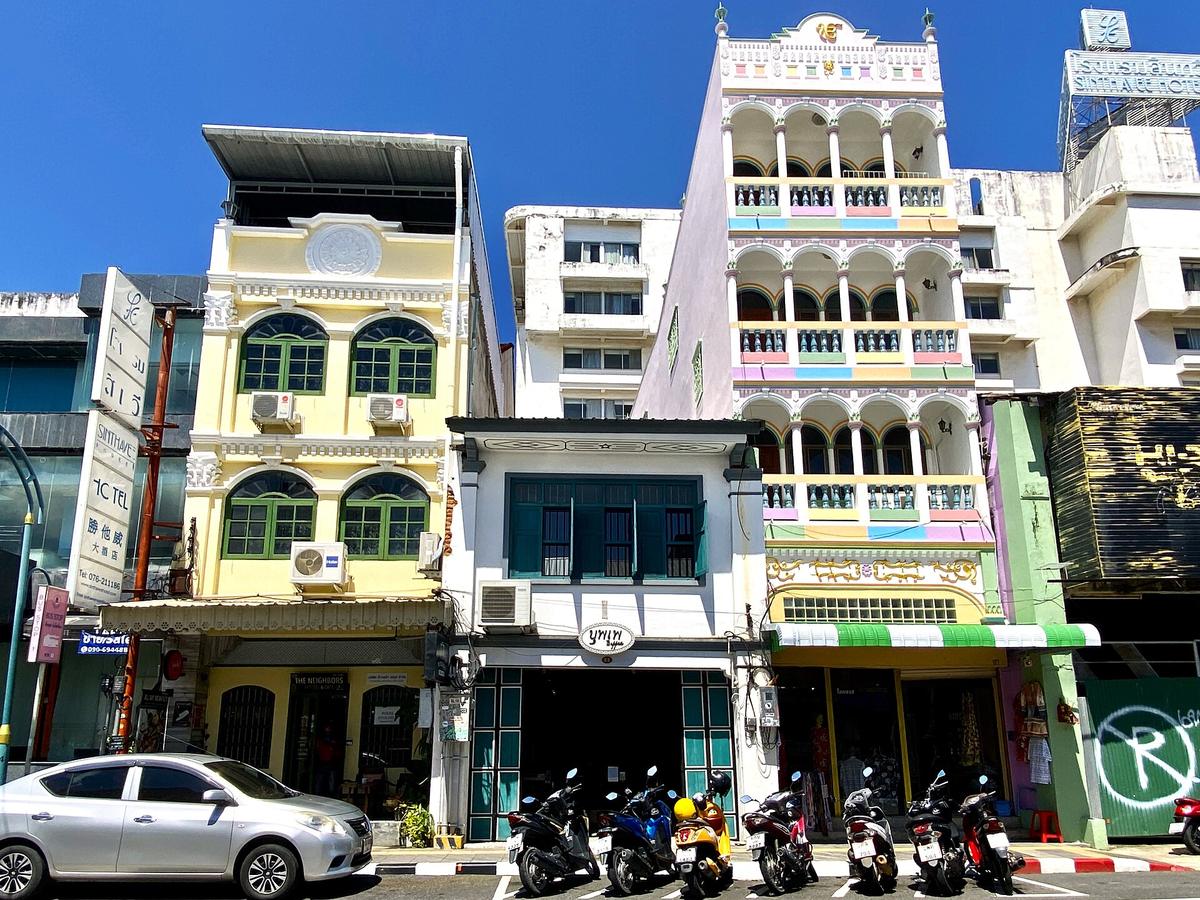
Old Phuket Town: The Culture Base
Old Phuket Town sits inland, 14 km from Patong and 32 km from the airport. It has 200+ Sino-Portuguese heritage shophouses, hip cafes, a Sunday Walking Street market on Thalang Road from 4 pm to 10 pm, and morning dim-sum trolleys that are a local ritual. A Thai street-food meal here costs 60-100 THB. A pad Thai costs 60-80 THB. This is the base for food travellers, photographers, and anyone who wants culture over beach. The trade-off is that you need transport to reach the coast. A songthaew within Phuket Town costs 20-30 THB. Public buses to the beaches cost 30-50 THB. Unwilling to ride a motorbike or pay for Grab trips? Staying in Old Phuket Town will frustrate you.


Phuket Travel Advice on Getting Around Without Going Broke
Phuket has no unified public-bus system covering the whole island. The dominant transport modes are app-based ride-hail (Grab or Bolt), the notorious tuk-tuks, and rented motorbikes. The Smart Bus runs from the airport to Rawai along the west coast for 100 THB flat, hourly from 6 am to 9 pm, but is impractical with heavy luggage. Public buses run from Phuket Town to the main beaches every 30-60 minutes from 6 am to 6 pm. They are cheap, slow, and stop early.
Renting a motorbike costs 200-300 THB per day. That sounds like a deal. But you need an International Driving Permit under the 1968 convention and travel insurance that covers bike accidents. Phuket road fatalities run high (2019-2024, Thai RSC). The hospitals with international accreditation are Bangkok Hospital Phuket and Phuket International Hospital. Medical evacuation to Bangkok costs 300,000-600,000 THB. A motorbike rental is not a budget hack. It is a risk decision.
What Phuket Costs: a Reality Check on Prices
An entry-level 4-star hotel in high season costs 2,500-4,500 THB per night. An entry-level 5-star resort costs 6,000-12,000 THB per night. Low-season rates are 40-60% lower. Patong carries a 15-25% room-rate premium over Kata and Karon. A beer in a bar costs 80-120 THB. A beer in 7-Eleven costs 45-65 THB. A cocktail in a beach club costs 250-450 THB. A 1-hour Thai massage costs 300-400 THB. A 1-hour oil massage costs 400-600 THB. Laundry costs 50-80 THB per kg. A tourist SIM with 30 days unlimited data costs 300-500 THB and is significantly cheaper than roaming. Buy it at the airport from AIS or TrueMove. 5G coverage is excellent across the island. The Grab app works flawlessly on data but requires a local number for registration.
The Day Trips That Justify the Logistics
Phuket works best as a base for day trips to the surrounding islands and national parks, but each trip requires advance booking and a budget line. A Phi Phi day trip by speedboat costs 2,500-4,500 THB and departs from Chalong or Rassada Pier. The speedboat takes 45-60 minutes. The ferry takes 1 hour 45 minutes to 2 hours. Maya Bay on Phi Phi Leh closes annually from August to September for reef recovery. The entry fee for foreigners is 400 THB. A Phang Nga Bay day trip to James Bond Island costs 2,000-3,500 THB by speedboat, departing from the northern pier, 25-40 km from Chalong Pier. The national-park entry fee is 300 THB. A Similan day trip costs 3,500-5,500 THB and is only possible from 15 October to 15 May. The national-park entry fee is 500 THB. A Racha Island day trip costs 2,000-3,000 THB, a 30-40-minute speedboat from Chalong, 20 km offshore. Coral Island is 15 minutes by speedboat and receives thousands of visitors per day in high season. An elephant sanctuary half-day visit costs 1,800-2,500 THB and must be booked days ahead. A PADI Open Water diving certification course costs 12,000-15,000 THB. A fun-dive day trip with 2 dives costs 3,500-5,000 THB.
Phuket Suites These Travellers Best
Phuket is best for luxury-resort lovers who want a beach club, a golf course, and no need to leave the property. It suits first-time Thailand visitors wanting a soft landing with direct flights, English widely spoken, and infrastructure that works. Families who need direct flights, stable internet, and child-friendly beaches with lifeguards will find Kata and Karon reliable. Active travellers mixing Muay Thai training with beach time and day trips to the Similan Islands will get value from the island's logistics if they plan ahead. Nightlife seekers heading to Patong will find what they came for, though they should budget for the 2 am legal closing time and the tuk-tuk mafia on Bangla Road.
Phuket is not for backpackers on a shoestring budget seeking untouched culture. It is not for solitude seekers who want an empty beach. It is not for anyone who dislikes tourist crowds or aggressive touts. Skip it if you want an authentic, slow-paced Thai village experience. The commercialisation is intense. Go to Koh Yao Noi instead, a 30-minute speedboat or 1-hour public ferry from Bang Rong Pier, where the development is minimal and the pace is rural. Phuket is a machine. It works well for the right passenger. It grinds down the wrong one.
What to See in Phuket
-
 Big Buddha
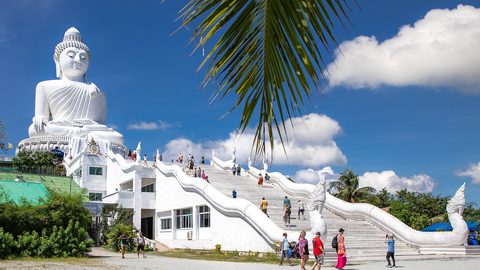
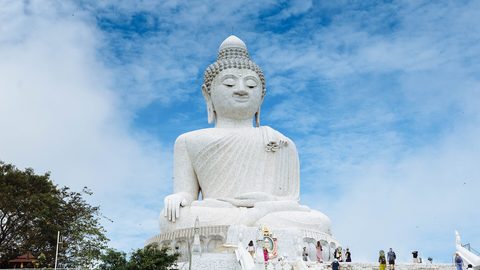
 Phuket is a free, unfinished marble statue on Nakkerd Hill with the best panoramic island view, reached by a steep road that tuk-tuks charge a premium to climb.
Big Buddha
Big Buddha Phuket is a free, unfinished marble statue on Nakkerd Hill with the best panoramic island view, reached by a steep road that tuk-tuks charge a premium to climb.
-
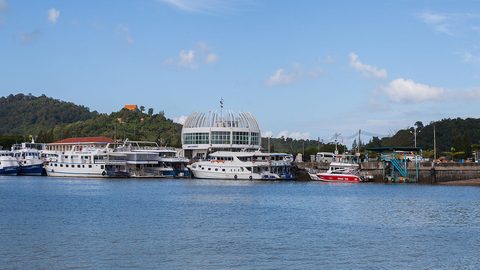 Phuket Old Town
 is a compact Sino-Portuguese quarter of shophouse cafes, dim sum trolleys and street art that most beach visitors never make the 45-minute drive to see.
Phuket Old Town
Phuket Old Town is a compact Sino-Portuguese quarter of shophouse cafes, dim sum trolleys and street art that most beach visitors never make the 45-minute drive to see.
More on Phuket
-
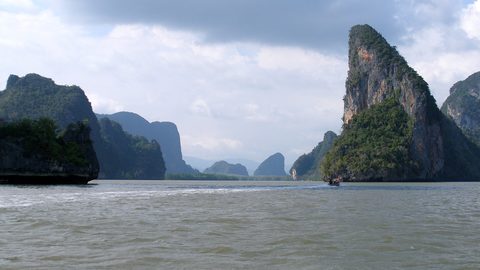 Phang Nga Bay Day Trip Sea Caves Stilt Village and James Bond Island
Phang Nga Bay day trip beyond James Bond Island: sea cave canoeing through karst tunnels, the Koh Panyee stilt village, and longtail versus speedboat departures from Ao Por.
Phang Nga Bay Day Trip Sea Caves Stilt Village and James Bond Island
Phang Nga Bay day trip beyond James Bond Island: sea cave canoeing through karst tunnels, the Koh Panyee stilt village, and longtail versus speedboat departures from Ao Por.
-
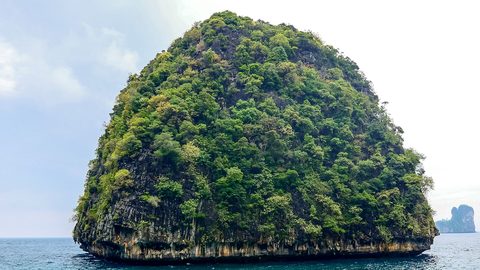 Phi Phi from Phuket Day Trip or Overnight What to Know Before You Book
A Phi Phi day trip from Phuket means four hours in transit and a strict Maya Bay time slot. Here's whether staying overnight on the islands is worth the extra logistics.
Phi Phi from Phuket Day Trip or Overnight What to Know Before You Book
A Phi Phi day trip from Phuket means four hours in transit and a strict Maya Bay time slot. Here's whether staying overnight on the islands is worth the extra logistics.
-
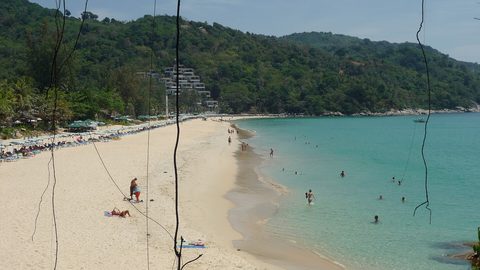 Phuket Beaches Compared 12 Stretches of Sand and Who Each One Suits
Twelve Phuket beaches compared with unvarnished honesty: sand quality, swimming safety, crowd levels, and the beach chair and jet-ski reality at each stretch of coast.
Phuket Beaches Compared 12 Stretches of Sand and Who Each One Suits
Twelve Phuket beaches compared with unvarnished honesty: sand quality, swimming safety, crowd levels, and the beach chair and jet-ski reality at each stretch of coast.
-
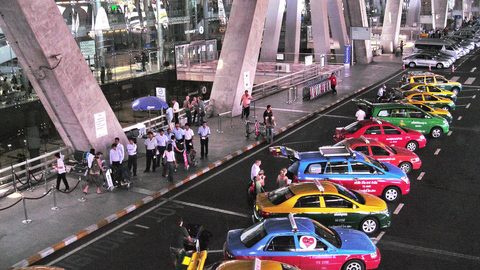 Phuket Airport to Your Hotel Every Route from HKT with Times and Costs
Common Questions
Which part of Phuket should a first-time visitor base themselves in?
It depends on your trip style. If you want nightlife and density, Patong. If you want family-friendly beaches with good infrastructure, Kata or Karon. If you want luxury seclusion with no need to leave the resort, Bang Tao. If you want culture and food without the beach, Old Phuket Town. Never book a hotel based solely on a beach name without checking the specific location. A Patong hotel on the far northern hillside traps you in a remote resort bubble with a 30-minute, 400 THB tuk-tuk ride to reach the sand.
How many days do you need in Phuket?
4 days minimum. Less than that and you spend most of your time in transit between the airport and far-flung beaches rather than actually relaxing. The island is 50 km long and the airport is in the north. A hotel in Nai Harn is 50 km and 70-80 minutes from the terminal.
What is the biggest stressor for tourists in Phuket?
The taxi and tuk-tuk mafia. Drivers refuse to use meters. Fixed fares are non-negotiable extortion in tourist zones. A 5-minute trip costs 200-400 THB. Tuk-tuks in Patong and Kata actively block app-based ride-hail pickups from Grab and Bolt. The minimum fare is 200 THB. Patong to Karon costs 400-500 THB. Patong to Phuket Town costs 500-600 THB. Budget for this before you arrive.
When is the worst time to visit Phuket?
Songkran, April 13-15. The water fights are fun but Phuket's roads become a lethal gridlock of drunk driving with a sharp spike in fatal accidents. Also avoid late May to October if you want to swim. The monsoon brings dangerous rip currents and beach closures. Red flags mean no swimming. Drowning deaths run 30-50 per year on Phuket beaches.
Is Phuket expensive?
It can be, depending on where you stay and eat. An entry-level 4-star hotel in high season costs 2,500-4,500 THB per night. A 5-star resort costs 6,000-12,000 THB. Low-season rates are 40-60% less. A Thai street-food meal in Phuket Town costs 60-100 THB. A tourist-area Thai meal costs 150-300 THB. A Western main course costs 300-700 THB. A cocktail in a beach club costs 250-450 THB. A 1-hour Thai massage costs 300-400 THB.
What are the common scams in Phuket?
Jet-ski rental scams are endemic. Operators claim you damaged the vehicle and demand cash repairs on return. Jet-ski rental costs 1,500-2,500 THB for 30 minutes. Beach-chair vendors will demand 100-200 THB even if you lay your own towel on an empty patch of sand. Always photograph the jet ski before taking it out. Never leave your passport as a deposit.
Can you get around Phuket without a car or motorbike?
Yes, but it is slow and expensive. The Smart Bus runs from the airport to Rawai along the west coast for 100 THB flat, hourly from 6 am to 9 pm. Public buses run from Phuket Town to Patong (30 THB), Kata/Karon (40 THB), Rawai (40 THB), and Bang Tao/Surin (50 THB) every 30-60 minutes from 6 am to 6 pm. For everything else, use Grab or Bolt. A Grab fare from the airport to Patong is 600-900 THB. A motorbike-taxi short hop costs around 50-100 THB. Never rent a motorbike without an International Driving Permit under the 1968 convention and travel insurance that covers bike accidents. Medical evacuation from Phuket to Bangkok costs 300,000-600,000 THB.
Read next
-
 Phuket Hotels by Property Type and Price Band Without the Hype
Phuket hotels range from gated luxury resorts in Bang Tao to walkable guesthouses in Phuket Town. Price band and location matter equally.
Phuket Hotels by Property Type and Price Band Without the Hype
Phuket hotels range from gated luxury resorts in Bang Tao to walkable guesthouses in Phuket Town. Price band and location matter equally.
-
 Where to Stay in Phuket Which Beach Area Matches Your Trip
Where to stay in Phuket depends entirely on which beach area matches your trip. Patong, Kata, Bang Tao and Rawai are not interchangeable.
Where to Stay in Phuket Which Beach Area Matches Your Trip
Where to stay in Phuket depends entirely on which beach area matches your trip. Patong, Kata, Bang Tao and Rawai are not interchangeable.
-
 Phuket Flights Direct Routes Airlines and HKT Airport Arrival Guide
Phuket flights and HKT airport guide covering direct routes, airlines, arrival procedures, visa queues, and the real cost of getting from the airport to Patong.
Phuket Flights Direct Routes Airlines and HKT Airport Arrival Guide
Phuket flights and HKT airport guide covering direct routes, airlines, arrival procedures, visa queues, and the real cost of getting from the airport to Patong.
-
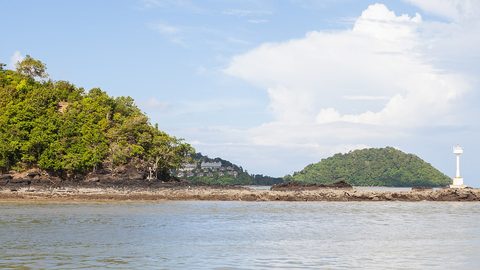 Phuket Things to Do Worth Your Days and What to Skip
Phuket things to do range from the Big Buddha and Wat Chalong to speedboat day trips. Some earn your days; many do not.
Phuket Things to Do Worth Your Days and What to Skip
Phuket things to do range from the Big Buddha and Wat Chalong to speedboat day trips. Some earn your days; many do not.
-
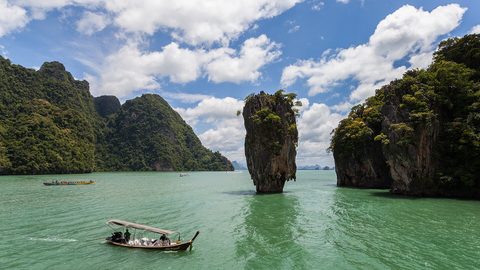 Best Time to Visit Phuket Month by Month Weather and Crowds
Best time to visit Phuket is November to February for dry weather and calm seas, but prices jump 50 to 100 percent. Monsoon months bring beach closures.
Best Time to Visit Phuket Month by Month Weather and Crowds
Best time to visit Phuket is November to February for dry weather and calm seas, but prices jump 50 to 100 percent. Monsoon months bring beach closures.
-
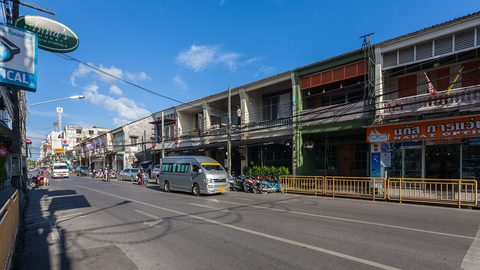 Getting Around Phuket Without Losing Your Mind or Your Cash
Getting around Phuket means navigating tuk-tuk monopolies, blocked ride-hail zones, and fixed fares. Plan your transport before you book a hotel.
Getting Around Phuket Without Losing Your Mind or Your Cash
Getting around Phuket means navigating tuk-tuk monopolies, blocked ride-hail zones, and fixed fares. Plan your transport before you book a hotel.
-
Phuket Old Town
Phuket Old Town is a compact Sino-Portuguese quarter of shophouse cafes, dim sum trolleys and street art that most beach visitors never make the 45-minute drive to see.
-
Big Buddha
Big Buddha Phuket is a free, unfinished marble statue on Nakkerd Hill with the best panoramic island view, reached by a steep road that tuk-tuks charge a premium to climb.
-
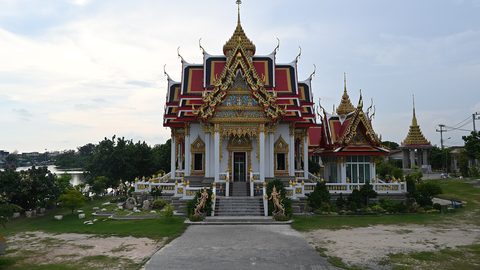 Thailand Travel Guide From First Timers To Island Hoppers
A realistic Thailand travel guide covering regions, seasons, and pacing so you avoid the classic Bangkok Chiang Mai island mistake.
Thailand Travel Guide From First Timers To Island Hoppers
A realistic Thailand travel guide covering regions, seasons, and pacing so you avoid the classic Bangkok Chiang Mai island mistake.