Plan Your Vietnam Trip Around the Country's Real Shape
Plan a Vietnam trip that fits the country's real scale, climate, and pace instead of trying to cover all 1,650km in one go.
- Flag
-

- ISO code
- VN
- Population
- 95,540,395
- Currency
- VND
- Dial code
- +84
Vietnam Travel Guide: Start with the Shape of the Country
Vietnam is cheaper and more varied than most first-time visitors expect. It is also louder, more chaotic, and more commercially persistent in tourist hubs than any guidebook photo suggests. Pavements vanish under parked motorbikes. Crossing a street in Hanoi or Ho Chi Minh City means walking at a steady pace into oncoming traffic and trusting the flow to part around you. The motorbike count sits at roughly 650 per 1,000 people, and the traffic fatality rate hovers around 22-24 per 100,000. This is not a place for visitors who need quiet, order, or predictable infrastructure. What it offers instead is sensory overload that rewards improvisation, a street-food culture that costs 30,000-60,000 VND a meal, and a coastline of 3,260 kilometres with eight UNESCO World Heritage Sites scattered along it.
- Length North to South: 1,650 km
- Climate Zones: 3 (North, Centre, South)
- Minimum Days for One End: 7-10 days
- Typical First Trip Duration: 2 weeks
- Peak Season: November to March
- Avoid Window: Tết (late Jan, mid Feb) and Central Coast typhoon season (Oct, Nov)
- Street Food Meal Cost: 30,000-60,000 VND
- Dorm Bed per Night: 120,000-250,000 VND
- Private Room per Night: 300,000-700,000 VND
How Many Days in Vietnam Should You Actually Plan for
The Case for the North (November to April)
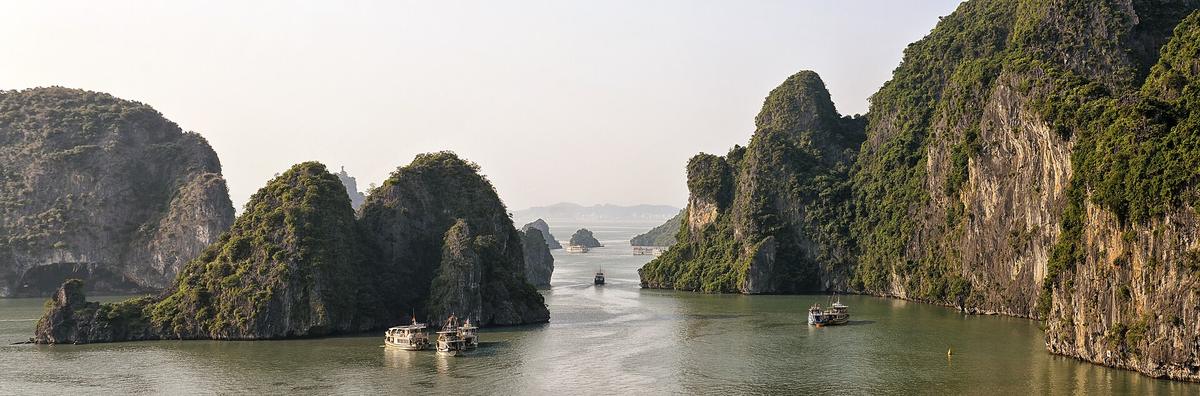
The north dry season runs November to April. Hanoi sits at 10-20°C in the winter months and the air is crisp enough for walking the Old Quarter without drenching your shirt. This block delivers Hanoi, Ha Long Bay, Ninh Binh, Sa Pa, and Ha Giang. Hire a local guide for trekking the rice terraces in Sa Pa. See the limestone karsts of Ha Long Bay on an overnight cruise from a reputable operator. Ninh Binh, often called Ha Long Bay on land, is 2-2.5 hours from Hanoi by train or bus and sees far fewer crowds than the bay itself.
The Case for the South (December to April)
The south dry season runs December to April. Ho Chi Minh City sits at a steady 24-34°C year round. This block covers Ho Chi Minh City, the Mekong Delta, Phu Quoc, Con Dao, and Mui Ne. Reach the Cai Rang floating market on the Mekong Delta before 7am. The War Remnants Museum in District 1 presents the Vietnam War from a perspective most Western visitors have never encountered. Cu Chi Tunnels make a half day trip 1.5 hours from the city by bus or speedboat.
The Case for the Centre (February to August)
The central dry season runs February to August, with the shortest transfer distances between Hue, Da Nang, and Hoi An. Allow a half day minimum for Hue Imperial City. Hoi An Ancient Town requires a ticket for the assembly halls, and its lantern lit streets are heavily touristed by mid morning. Da Nang delivers the Marble Mountains, the Ba Na Hills Golden Bridge, and a beach strip in My An thick with Korean tourists and seafood restaurants pricing by weight from live tanks. Get to the Golden Bridge before 9am; after that the crowd makes it hard to move. Phong Nha Ke Bang National Park, including Paradise Cave, sits a few hours north.

Vietnam Itinerary Options for Every Trip Length
A 7 day trip works only if you commit to one region. For the north, land at Noi Bai airport, take bus 86 to the Old Quarter for 45,000 VND, and spend day one in Hanoi on foot: the Temple of Literature, Ho Chi Minh Mausoleum (closed afternoons and Mondays, no shorts allowed), and a bowl of bun cha. Day two and three go to Ha Long Bay. Day four and five cover Ninh Binh. Day six and seven return to Hanoi for egg coffee at a cafe in the Old Quarter and a final walk through Train Street via a cafe that owns the track access. For the south, land at Tan Son Nhat airport, take bus 109 or 152 to District 1 for 20,000-40,000 VND, and split 7 days between Ho Chi Minh City, Cu Chi Tunnels, the Mekong Delta, and one beach destination like Mui Ne or Phu Quoc.
Two Weeks: North and Centre, or South and Centre
A 14 day trip can stretch to two regions but not three. Start in Hanoi, see Ha Long and Ninh Binh, then fly to Da Nang. From Da Nang, take a 45 minute Grab to Hoi An for 350,000-450,000 VND. Continue to Hue, then fly to Ho Chi Minh City. Skip Nha Trang and Da Lat unless you add a third week. The classic end to end route listed in most guides includes 12 stops: Hanoi, Ha Long Bay, Ninh Binh, Phong Nha, Hue, Da Nang, Hoi An, Nha Trang, Da Lat, Mui Ne, Ho Chi Minh City, and the Mekong Delta. That route demands 21 days minimum and a tolerance for long bus rides on sleeper buses that assign specific berths. Tall visitors over about 180 cm will find them short.
Vietnam First Time: What Shocks Most Visitors and How to Prepare
First time visitors underestimate the sensory overload. The horn use is constant, not rude. The pavement encroachment means you walk in the road with motorbikes passing on both sides. Grab drivers sometimes cancel short rides or call to renegotiate; have your location pin exact. Vendors and cyclo drivers in tourist areas use persistent repeated approaches; a firm "khong" and walking on is the only response that works. Haggling is expected at markets but not in restaurants or on Grab.
Budget Reality
Budget backpackers and flashpackers will find Vietnam cheaper than expected. A dorm bed runs 120,000-250,000 VND per night. A private room in a budget hotel costs 300,000-700,000 VND. Local coffee costs 15,000-40,000 VND. The rough number for a daily budget is easy to calculate from those three numbers. Solo visitors comfortable with improvisation will do well because the infrastructure is flexible even if it is chaotic. Food focused visitors should arrive knowing that the best meals are not in guidebook restaurants but on plastic stools on the pavement. The signature northern dishes are pho bo, pho ga, bun cha, and cha ca. The signature central dishes are bun bo Hue, mi Quang, banh beo, and banh nam. The signature southern dishes are com tam, hu tieu, banh xeo, and banh khot.
Who Should Rethink
Families with very young children should think twice. The heat, traffic, and lack of step free access make moving with a stroller difficult. Beach purists expecting pristine empty coastlines comparable to Thai islands will be disappointed. Anyone unwilling to haggle or handle persistent street sales will find the experience exhausting rather than exciting.
| Region | Best Season | Minimum Days | Best For |
|---|---|---|---|
| North (Hanoi, Ha Long, Ninh Binh, Sa Pa) | Nov–Apr (dry, cool) | 7–10 | Temple lovers, trekkers, cool weather seekers |
| Centre (Hue, Da Nang, Hoi An, Phong Nha) | Feb–Aug (dry) | 7–10 | History buffs, beach mix, shortest transit distances |
| South (HCMC, Mekong Delta, Phu Quoc) | Dec–Apr (dry, less humid) | 7–10 | War history, floating markets, island diving |

North to South Vietnam Route: How to Decide Your Direction
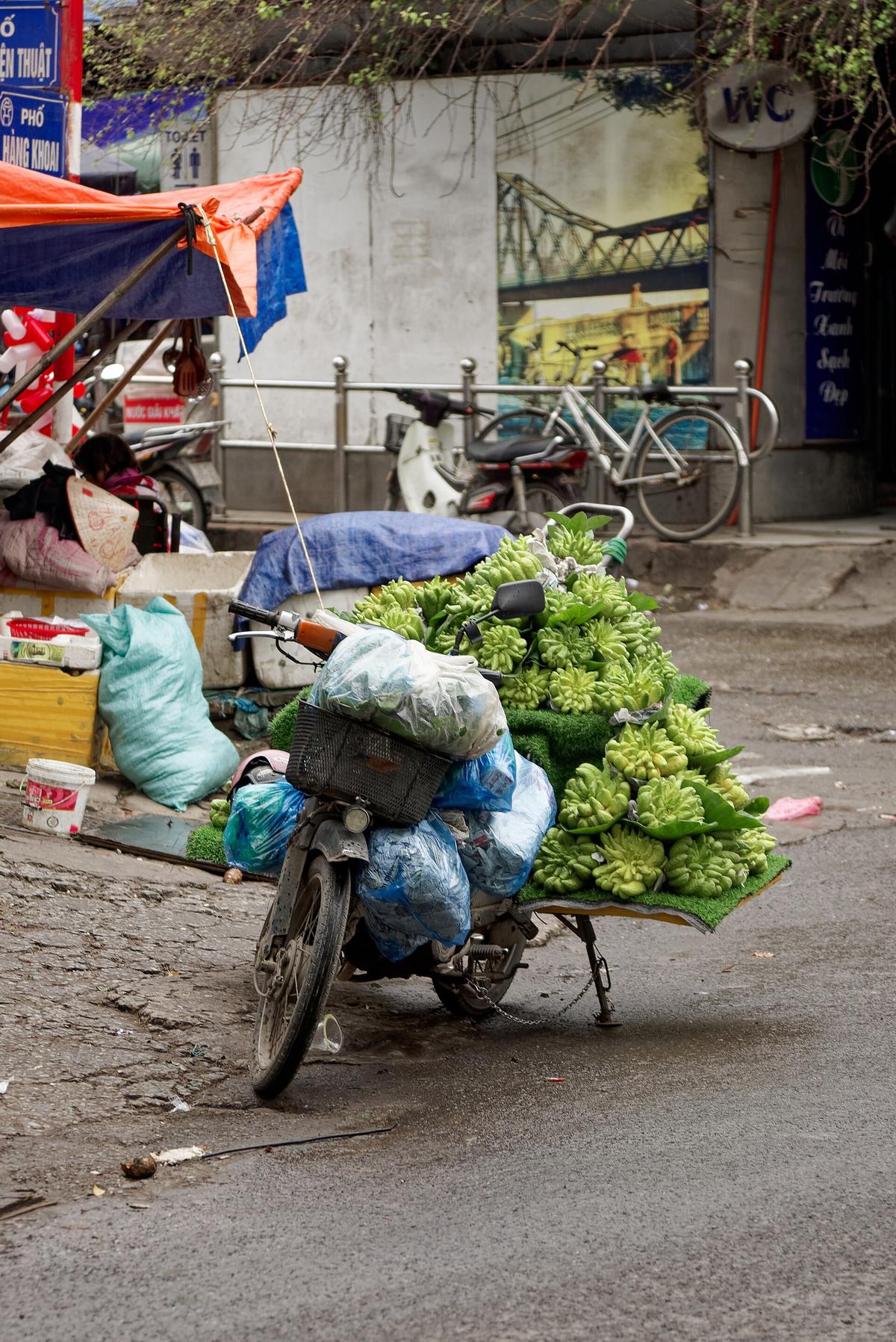
The classic direction runs Hanoi to Ho Chi Minh City, but the reverse works just as well. Start in Hanoi if you want to experience the cooler north first and finish in the tropical south. Start in Ho Chi Minh City if you want to ease into the heat and build toward the cooler north. The decision matters less than the number of stops. The 1,726 kilometre rail line between the two cities takes 30-36 hours on the Reunification Express. A domestic flight costs 1,200,000-2,500,000 VND one way. A sleeper bus costs roughly 100,000-150,000 VND per 100 kilometres and assigns specific berths that are short for anyone over about 180 cm. Budget for at least one internal flight if you are covering more than one region in under two weeks.
Onward Borders
If you are heading onward to another country, the borders are straightforward. To Cambodia, a bus from Ho Chi Minh City to Phnom Penh takes 6-7 hours via Moc Bai or Bavet, or a direct flight takes one hour. To Laos, a direct flight from Hanoi to Vientiane takes 1 hour 15 minutes, or cross overland via Cau Treo or Lao Bao border. To China, a train or bus from Hanoi to Nanning runs via Dong Dang or Pingxiang, or a direct flight Hanoi to Beijing takes 3 hours 30 minutes. Direct flights from Ho Chi Minh City or Hanoi to Bangkok take 1 hour 30 minutes to 1 hour 45 minutes. There is no practical overland route to Thailand.
Who Vietnam Suits and Who Should Go Somewhere Else
Vietnam suits budget backpackers and flashpackers who want more depth for their money than Thailand offers. It suits food focused visitors who will eat their way through three distinct regional cuisines. It suits solo visitors comfortable with improvisation because flexibility matters more than planning. It suits culture and history buffs willing to navigate the War Remnants Museum in Ho Chi Minh City, the Hue Imperial City, and the Cu Chi Tunnels. It suits slow visitors who prefer a few regions done well over a full country sprint.
Vietnam does not suit visitors who need quiet, order, or predictable infrastructure. It does not suit families with very young children who will struggle with the heat, traffic, and lack of step free access. It does not suit beach purists expecting pristine empty coastlines comparable to Thai islands. It does not suit anyone unwilling to haggle or handle persistent street sales. It does not suit visitors with low tolerance for air pollution in Hanoi and Ho Chi Minh City, where PM2.5 annual mean levels run 20-40 µg/m³. It does not suit visitors needing strict accessibility infrastructure, because pavements are narrow and step free access is limited. If those conditions describe you, consider a quieter destination. If they describe a challenge you are ready to take on, Vietnam will reward you with the best street food in Southeast Asia, eight UNESCO World Heritage Sites, and a 3,260 kilometre coastline that changes character completely every few hundred kilometres.
Regions & cities in Vietnam
-
 Da Nang
 is a liveable coastal city and central Vietnam base, not a museum town. Here is what it is actually for and where to go next.
Da Nang
Da Nang is a liveable coastal city and central Vietnam base, not a museum town. Here is what it is actually for and where to go next.
-
 Hanoi
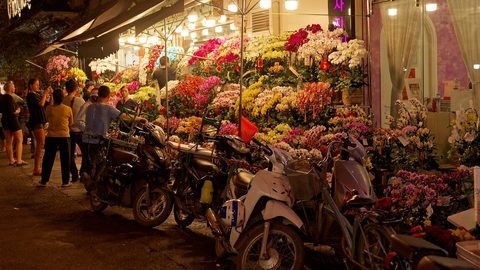
Hanoi hits with a full-sensory assault of motorbike swarms and constant horns, then rewards the persistent with Vietnam's deepest food city and layered neighbourhoods beyond the Old Quarter.
Hanoi
Hanoi hits with a full-sensory assault of motorbike swarms and constant horns, then rewards the persistent with Vietnam's deepest food city and layered neighbourhoods beyond the Old Quarter.
-
 Ho Chi Minh City
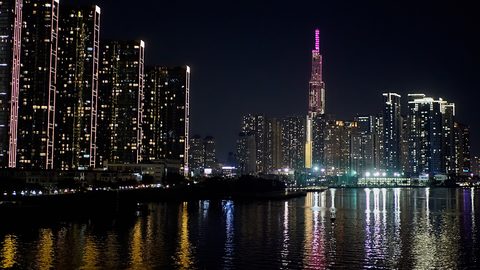
An honest Ho Chi Minh City travel guide for travellers who thrive on sensory overload, street-food obsession, and 10 million motorbikes rather than quiet temples.
Ho Chi Minh City
An honest Ho Chi Minh City travel guide for travellers who thrive on sensory overload, street-food obsession, and 10 million motorbikes rather than quiet temples.
Common Questions
What are the minimum days needed for Vietnam?
7-10 days for one region only. 14 days for two regions. 21 days for the classic end-to-end route from Hanoi to Ho Chi Minh City. Trying to cover both ends in under two weeks is the most common planning mistake.
Which airport should I fly into for a first trip?
Fly into Noi Bai Airport (HAN) for the north or Tan Son Nhat Airport (SGN) for the south. From HAN, bus 86 runs to the Old Quarter in 45-60 minutes for 45,000 VND. From SGN, bus 109 or 152 runs to District 1 in 30-45 minutes for 20,000-40,000 VND. A Grab from either airport costs 150,000-400,000 VND depending on distance.
Is Vietnam safe for solo visitors?
Yes, for solo visitors comfortable with improvisation. The main friction points are crossing roads in traffic, persistent vendor approaches in tourist areas, and Grab drivers cancelling short rides. Street food is safe and cheap. Overnight sleeper buses assign specific berths that are short for anyone over 180 cm.
When is the best time to visit Vietnam for good weather?
November to March is peak season across the country. The north is cool and dry, the centre is mild, and the south is at its least humid. The central coast should be avoided during October and November typhoon season. The south is best December to April during its dry season.
What is Tet and should I avoid it?
Tet is Vietnamese Lunar New Year, falling 17-19 February 2026 and 6-8 February 2027. Domestic travel spikes prices and fills trains and buses. Many family-run restaurants and shops close for days. First-time visitors should avoid traveling during Tet unless they have a specific invitation from locals.
What is the most common travel mistake in Vietnam?
Trying to cover Hanoi, Ha Long, Hue, Hoi An, Nha Trang, Da Lat, and Ho Chi Minh City in one trip. The single most common planning mistake is underestimating transit time and heat fatigue, leaving no room for unplanned meals, rain delays, or rest.
Do I need a visa for Vietnam as a UK, EU, or US passport holder?
UK and EU passport holders receive 45 days visa-free since 2023. US passport holders require a visa. An e-visa is valid for 90 days, single or multiple entry since 2023. The visa application process and details on extensions belong to a dedicated visa page, not this one.
Read next
-
 Vietnam eSIM Guide for Reliable Data in the Mountains and Cities
Compare Vietnam eSIM and local SIM options, and learn why Viettel is the network to choose for Sa Pa, Phong Nha, and the Mekong Delta.
Vietnam eSIM Guide for Reliable Data in the Mountains and Cities
Compare Vietnam eSIM and local SIM options, and learn why Viettel is the network to choose for Sa Pa, Phong Nha, and the Mekong Delta.
-
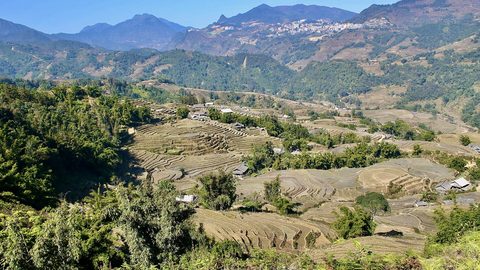 Best Time to Visit Vietnam by Region and Month
Find the best time to visit Vietnam by region, with honest advice on typhoons, Tet closures, and the north-south climate split.
Best Time to Visit Vietnam by Region and Month
Find the best time to visit Vietnam by region, with honest advice on typhoons, Tet closures, and the north-south climate split.
-
 Getting Around Vietnam by Train, Sleeper Bus, Flight, and Grab
Compare Vietnam's trains, sleeper buses, domestic flights, and Grab to plan realistic transit times and costs between cities.
Getting Around Vietnam by Train, Sleeper Bus, Flight, and Grab
Compare Vietnam's trains, sleeper buses, domestic flights, and Grab to plan realistic transit times and costs between cities.
-
 Vietnam Visa Rules and the E-Visa Mistakes That Stop Check-In
Understand Vietnam e-visa rules, the exemption list, and the check-in mistakes that can stop your trip before you board the plane.
Vietnam Visa Rules and the E-Visa Mistakes That Stop Check-In
Understand Vietnam e-visa rules, the exemption list, and the check-in mistakes that can stop your trip before you board the plane.
-
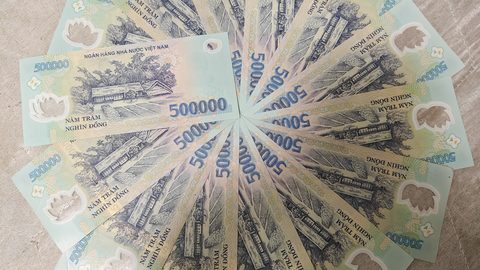 Vietnam Money Guide to Dong, ATMs, and Avoiding Bad Exchange Rates
Learn how to handle Vietnamese dong, choose ATMs that don't gouge you, and know when cash is the only option in Vietnam.
Vietnam Money Guide to Dong, ATMs, and Avoiding Bad Exchange Rates
Learn how to handle Vietnamese dong, choose ATMs that don't gouge you, and know when cash is the only option in Vietnam.
-
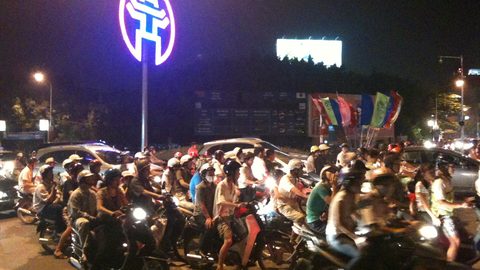 Vietnam Safety Guide for Traffic, Scams, and Health
Understand Vietnam's real safety risks, from crossing Hanoi roads to motorbike insurance gaps and the scams that target tourists.
Vietnam Safety Guide for Traffic, Scams, and Health
Understand Vietnam's real safety risks, from crossing Hanoi roads to motorbike insurance gaps and the scams that target tourists.
-
Da Nang
Da Nang is a liveable coastal city and central Vietnam base, not a museum town. Here is what it is actually for and where to go next.
-
Hanoi
Hanoi hits with a full-sensory assault of motorbike swarms and constant horns, then rewards the persistent with Vietnam's deepest food city and layered neighbourhoods beyond the Old Quarter.
-
Ho Chi Minh City
An honest Ho Chi Minh City travel guide for travellers who thrive on sensory overload, street-food obsession, and 10 million motorbikes rather than quiet temples.