A Walking Guide to Central Hong Kong's Old Streets and New Towers
Central Hong Kong rewards walking: the escalator, Tai Kwun, and stone slab streets hide between the bank towers.
- Flag
-
- ISO code
- HK
A Walking Guide to Central Hong Kong’s Old Streets and New Towers
At 08:30 on a Sunday, Chater Road is closed to traffic and given over to thousands of Filipino domestic workers sitting on cardboard sheets under the HSBC building's shadow. By 09:00, the same stretch of Central is empty of bankers. The bronze lions Stephen and Stitt look out over picnic coolers. The only noise is Tagalog conversation and the clatter of mahjong tiles. This is the moment to start a central hong kong walking guide that treats the financial district as a neighbourhood you move across on foot, not a place to change MTR lines.
The loop runs from the Star Ferry at Pier 7, up the Mid Levels escalator, past Tai Kwun, and down Pottinger Street. It takes half a day, covers 1840s granite steps and 1990s glass towers, and requires one piece of advance knowledge: which MTR exit to take.
_01.jpg)
The Wrong Exit Problem: Why Exits Matter in Central
Central station has four platforms and more than a dozen exits. Hong Kong station, a five minute walk away via the underground tunnel network, has another set. Pick the wrong one and you surface onto a footbridge that deposits you inside a shopping mall or on a six lane road with no pedestrian crossing for 200 metres. The mistake is common: visitors tap out at Hong Kong station for the Airport Express and walk ten minutes underground to reach street level at Exchange Square when they meant to be at Statue Square.
For this walk, exit Central station at Chater Road or Des Voeux Road Central. Use Exit B or Exit J. That puts you on the edge of Statue Square, facing the Old Supreme Court, the neoclassical 1912 structure with Ionic columns that now houses the Court of Final Appeal. From here, the walk is linear and obvious. Do not use Hong Kong station exits unless you are coming directly from the Airport Express. Even then, budget five extra minutes to navigate the IFC Mall podium and reach the street.
Central Mid Levels Escalator: Ride the 800 Metre Moving Staircase
From Statue Square, walk south on Chater Road, past the HSBC Main Building, then turn right onto Queen's Road Central. The entrance to the Central Mid Levels Escalator is on your left, just after the footbridge that crosses Queen's Road. The official name is the Central Mid Levels Escalator and Walkway System. It opened in 1993, runs 800 metres from Des Voeux Road Central up to Conduit Road, and climbs roughly 80 metres of elevation across 18 moving staircases and three travelators.
The system reverses direction twice daily: downhill from 06:00 to 10:00 to carry commuters into Central, then uphill from 10:00 to midnight for everyone else. Arrive before 10:00 and you ride down against the flow of office workers walking up the stairs beside you. Arrive after 10:00 and it becomes a slow, segmented elevator into SoHo, the neighbourhood whose name comes from South of Hollywood Road.
What to Do Along the Escalator
Get off at the Elgin Street or Staunton Street stops. These are the heart of SoHo, where mid rise residential towers sit above Thai noodle shops and cocktail bars. The escalator passes directly over Gage Street market, one of the oldest wet markets in Hong Kong, running since the 1840s. Look down around 10:30 to see the vegetable stalls and hanging meats that the glass towers above try to hide. Stay on all the way to the top at Conduit Road, then walk back down the side streets for a different view of the same route.
Tai Kwun Central: Prison Cells, Courtyards, and Contemporary Art
Halfway up the escalator, at Hollywood Road, step off and enter Tai Kwun Central. This 13,600 square metre site was a police station, magistracy, and prison complex built between 1841 and 1914. It opened as a heritage and arts centre in 2018. The Victoria Prison block, built in 1841, is the oldest surviving structure on the site. The Central Magistracy, built in 1914, now holds a gallery and event space. The parade ground between them is wide open, shaded by banyan trees, and serves as a rare patch of quiet in Central's vertical maze.
Entry is free. The permanent exhibition in the prison block shows the cells as they were: narrow, white tiled, with metal bunks and a single barred window. The contemporary art programme changes every few months and occupies the upper floors of the police station. Allow 45 minutes to walk the cells and the main courtyard. The restaurants and cafes inside Tai Kwun are expensive and aimed at the weekend brunch crowd. Skip them. Eat at the dai pai dong on Graham Street instead, a five minute walk down the hill.
Duddell Street Gas Lamps and the Granite Steps of Old Central
Exit Tai Kwun and walk east on Hollywood Road toward Ice House Street. At the corner, Duddell Street drops down toward Queen's Road Central on a steep flight of granite steps. Four gas lamps remain here, installed between 1875 and 1889, and they are declared monuments. They still burn at night, lit by hand each evening. The street is named after the Duddell family, and Ice House Street below takes its name from the ice storage depot built in 1845 to hold ice shipped from Boston.
At the bottom of the steps, turn left into Queen's Road Central. This road was built along the original 1841 shoreline. Everything north of it, including the IFC towers and the Star Ferry pier, is reclaimed land filled in during the 1890s. The contrast is immediate: 1840s stone steps at your feet, 412 metre IFC Two rising above the reclaimed land ahead.

Pottinger Street Hong Kong: Stone Steps, Street Stalls, and the Financial District Below
Cross Queen's Road Central and walk one block west to Pottinger Street. Pottinger Street Hong Kong runs uphill from Des Voeux Road Central to Hollywood Road on broad stone slab steps built in the 1850s. The steps are lined with market stalls selling cheap clothing, plastic toys, phone cases, and printed fabric. This is the closest Central gets to Mong Kok street density: narrow, loud, and crowded even on weekday afternoons.
Walk up Pottinger Street to the top, then turn around and look back. The view is the entire point. The granite steps drop away toward the harbour, and the glass towers of the financial district fill the sky above the market awnings. The Bank of China Tower, I M Pei's 1990 tower with its triangular geometry, stands directly in the sightline. The HSBC Main Building, Norman Foster's 1985 prefabricated steel structure with no internal load bearing columns, sits to the left. Two philosophies of vertical city construction, visible from a 1850s staircase.
Walking Down to the Waterfront
From the top of Pottinger Street, walk back down toward Des Voeux Road Central. Cross into Statue Square, then continue north via Chater Garden and under the elevated walkway that connects the IFC Mall to the ferry piers. The walkway system in Central sits roughly four to six metres above street level and links the ferry piers to Des Voeux Road, Queen's Road Central, and the Mid Levels escalator. Use it to cross Connaught Road Central without waiting at traffic lights. The Star Ferry pier, Pier 7, is at the end of the walkway. The fare for the upper deck to Tsim Sha Tsui is HKD 5.00. The crossing takes six to eight minutes. It is the cheapest harbour view in the city.
What Central Cannot Do
Central is bad at cheap street food. The dai pai dong density is low compared with Mong Kok or Sham Shui Po. A bowl of wonton noodle soup in Central costs HKD 60 to HKD 90; the same bowl in Yau Ma Tei costs half that. Central is also bad at public space. Statue Square and Chater Garden are the only real open areas, and both are occupied by domestic workers on Sundays. Hong Kong Park, eight hectares between Cotton Tree Drive and Supreme Court Road, is a fifteen minute walk east and is the nearest reliable green space. Central is efficient, safe, and ordered. It is not relaxed. If you want slow mornings and empty streets, stay in Sheung Wan or Sai Kung instead.
Central suits urban explorers who want to read the city's vertical history in a single loop. It suits photographers who will shoot the contrast between Pottinger Street's stone steps and the Bank of China Tower's steel frame. It does not suit travellers who want wide open public squares or cheap street food. It does not suit anyone who finds crowds and narrow pavements exhausting. The 1841 shoreline at Queen's Road Central and the 1990 towers on reclaimed land are the same place; the walk between them takes ten minutes and explains the city better than any museum.
Common Questions
How long does the Central Mid Levels escalator take end to end?
Approximately 20 minutes if you ride the full 800 metres without getting off. Most visitors stop at SoHo or Tai Kwun along the way, which adds 30 to 45 minutes to the trip.
What time does the escalator change direction?
Downhill from 06:00 to 10:00, uphill from 10:00 to midnight. Arrive before 10:00 and you ride down; after 10:00 you ride up. The switch happens at 10:00 exactly.
Is Tai Kwun free to enter?
Yes, entry to Tai Kwun is free. The prison block, parade ground, and most gallery spaces require no ticket. Some special exhibitions charge admission, but the main structures are open to everyone.
Why is the MTR exit important in Central?
Central and Hong Kong stations sit under different buildings. Exit at Chater Road or Des Voeux Road Central for Statue Square and the walkable loop. The wrong exit can put you inside a mall or on a major road ten minutes from where you meant to be.
Read next
-
 Where Central Hong Kong Actually Eats Lunch
Central's best meals are the noodle shops and dai pai dongs holding out between the banks, plus set lunches that beat dinner prices.
Where Central Hong Kong Actually Eats Lunch
Central's best meals are the noodle shops and dai pai dongs holding out between the banks, plus set lunches that beat dinner prices.
-
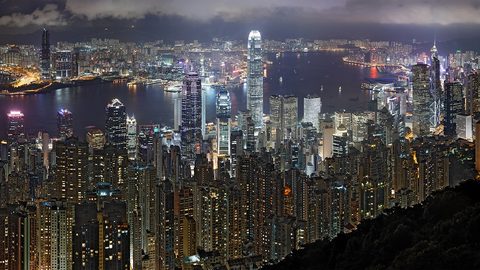 Hong Kong Travel Guide and Trip Planning Hub
How to plan a Hong Kong trip that respects the city's density, uses the MTR properly, and leaves room for a hike or an island day.
Hong Kong Travel Guide and Trip Planning Hub
How to plan a Hong Kong trip that respects the city's density, uses the MTR properly, and leaves room for a hike or an island day.
-
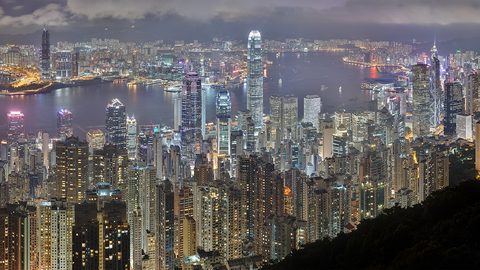 Victoria Peak Hong Kong The View Is the Point the Tram Queue Is Not
The view from Victoria Peak is the point; the tram queue is the problem, and there are four other ways up.
Victoria Peak Hong Kong The View Is the Point the Tram Queue Is Not
The view from Victoria Peak is the point; the tram queue is the problem, and there are four other ways up.
-
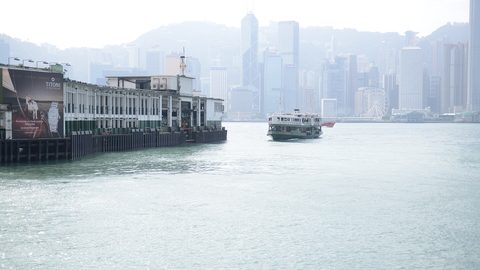 Star Ferry Hong Kong Fare, Route and Which Side to Sit
The Star Ferry costs HK$5, takes 10 minutes, and the upper deck heading from Tsim Sha Tsui to Central gives the best skyline view.
Star Ferry Hong Kong Fare, Route and Which Side to Sit
The Star Ferry costs HK$5, takes 10 minutes, and the upper deck heading from Tsim Sha Tsui to Central gives the best skyline view.
-
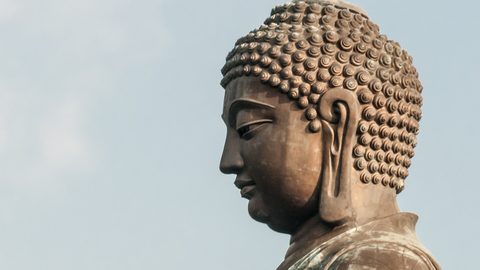 Big Buddha and Ngong Ping 360 Cable Car Without the Crowds
The Big Buddha is 268 steps up, the cable car takes 25 minutes, and the village at the top is mostly a shopping mall.
Big Buddha and Ngong Ping 360 Cable Car Without the Crowds
The Big Buddha is 268 steps up, the cable car takes 25 minutes, and the village at the top is mostly a shopping mall.
-
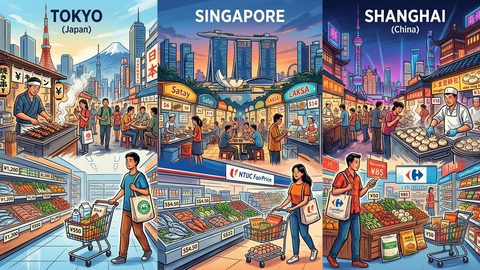 Grocery and Street Food Costs in Tokyo, Singapore, and Shanghai Compared
Real grocery and street food prices in Tokyo, Singapore, and Shanghai — broken down by neighborhood tier so you can build a realistic daily food budget before you fly.
Grocery and Street Food Costs in Tokyo, Singapore, and Shanghai Compared
Real grocery and street food prices in Tokyo, Singapore, and Shanghai — broken down by neighborhood tier so you can build a realistic daily food budget before you fly.
-
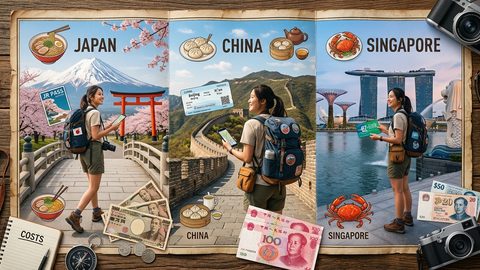 What Japan, China, and Singapore Actually Cost Independent Travelers
Real per-day costs for Japan, China, and Singapore broken down by accommodation tier, food strategy, transit, and connectivity for independent travelers.
What Japan, China, and Singapore Actually Cost Independent Travelers
Real per-day costs for Japan, China, and Singapore broken down by accommodation tier, food strategy, transit, and connectivity for independent travelers.
-
 What Most Travelers Get Wrong When Booking Flights to East Asia
Most travelers book East Asia flights on price alone. Here's what they miss about route gaps, fleet age, and aircraft type on 10-14 hour hauls.
What Most Travelers Get Wrong When Booking Flights to East Asia
Most travelers book East Asia flights on price alone. Here's what they miss about route gaps, fleet age, and aircraft type on 10-14 hour hauls.
-
 The Honest Cost of Mobile Data in Japan, China, and Singapore
Real price data for SIMs, pocket WiFi, and eSIMs in Japan, China, and Singapore. Plus the friction points most travel guides quietly skip.
The Honest Cost of Mobile Data in Japan, China, and Singapore
Real price data for SIMs, pocket WiFi, and eSIMs in Japan, China, and Singapore. Plus the friction points most travel guides quietly skip.