Sheung Wan's Dried Seafood, Antiques and Coffee Streets
Sheung Wan is Hong Kong Island's oldest Chinese quarter, where dried seafood, antiques, and coffee roasteries share the same streets.
- Flag
-

- ISO code
- HK
You came to Hong Kong expecting the city that never sleeps. You got Central: glass towers, luxury malls, a financial district that could be Singapore or Shanghai or anywhere. That is not why you came. Sheung Wan is why you came. Walk 700 metres west from Central MTR to Sheung Wan MTR, a ten minute walk along Des Voeux Road, and the glass falls away. What replaces it is the smell of dried scallops, the curl of incense from an 1847 temple, and a neighbourhood that has been the Chinese quarter on Hong Kong Island since the 1840s.
Sheung Wan is dense, vertical, and old in a way that Central never managed to be. It is quiet when you want it to be. It is bad at exactly one thing: Sundays. On Sunday nearly every dried seafood shop, Chinese medicine wholesaler, and antique dealer on Cat Street closes. The streets south of Queen's Road go still. Do not arrive on a Sunday expecting the Sheung Wan that the weekday delivers.

A Morning Walk from Man Mo Temple to the Dried Seafood Streets
Start at Man Mo Temple on Hollywood Road, Sheung Wan. It opens at 08:00, entry is free, and by 09:00 the incense coils hanging from the ceiling have already begun to smoke. The temple is a declared monument built in 1847, dedicated to the god of literature and the god of war. Stand inside for five minutes, no more. The smell is powerful. The space is small. The crowds arrive by 10:00. The point of Man Mo Temple is not to linger. It is to reset your sense of what Hong Kong Island looked like before the banks arrived.
From the temple turn down Ladder Street, built in the 1840s, a staircase of roughly 150 steps that connects Hollywood Road to Queen's Road Central below. Ladder Street is not a destination. It is the spine that holds the old quarter together. Walk down it and you cross Pound Lane, another short stepped lane with about 100 steps. These lanes were the original pedestrian routes up the hill. They still function that way. Use them.
Cat Street for Antiques, Not Souvenirs
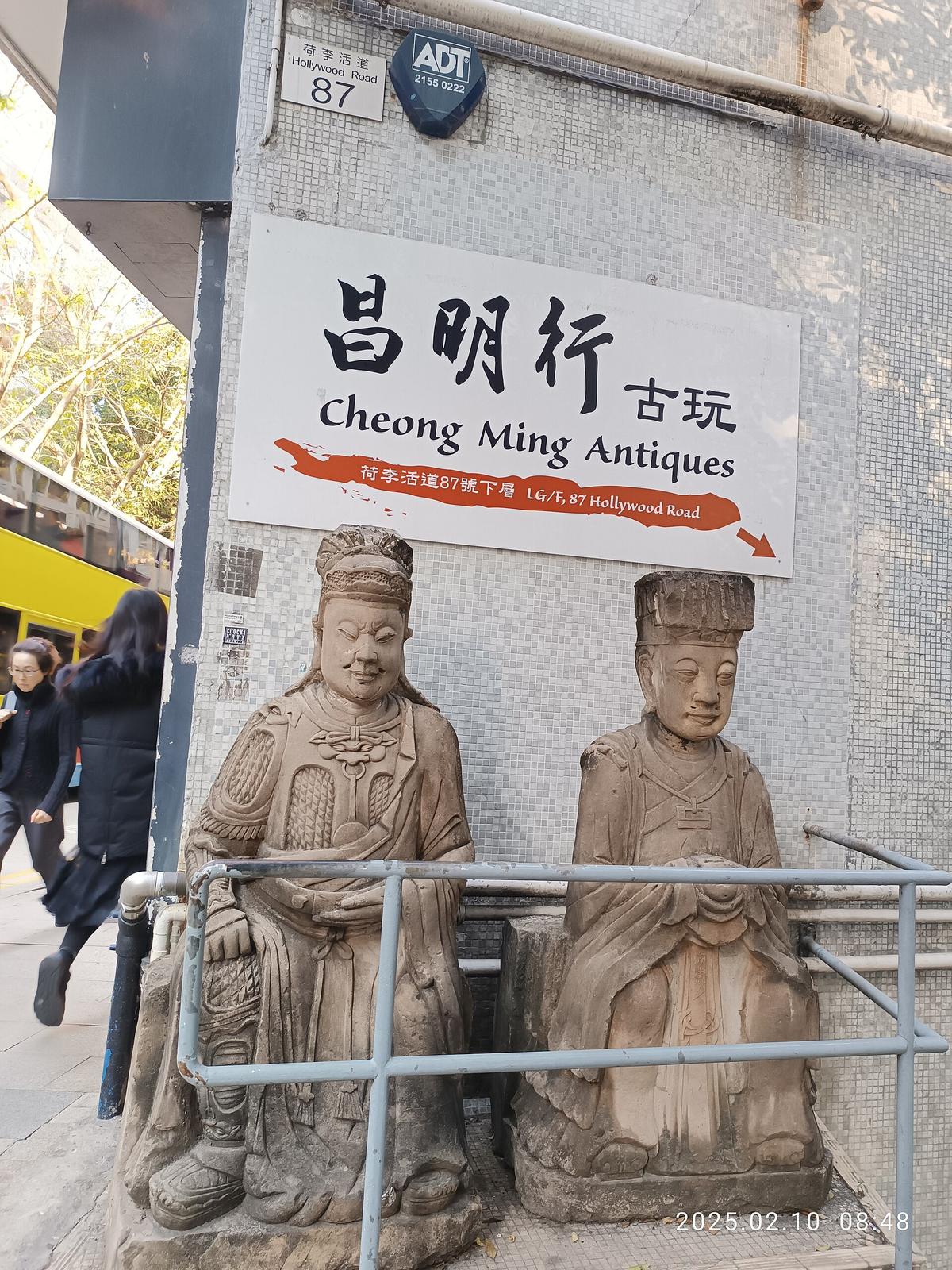
At the bottom of Ladder Street turn left onto Upper Lascar Row, the official name for Cat Street. It runs about 150 metres and is the only lane in Sheung Wan where you should buy something. The shops open from 10:00 to 18:00, though some close on Sunday. What you find here is not the polite curated antiques of Hollywood Road galleries. It is reproduction furniture, jade bangles, Mao memorabilia, and the occasional real Qing dynasty ceramic hidden among the tourist junk. Do not buy the first thing you see. Walk the full 150 metres, check the prices at three stalls, and bargain only if you know what you are buying. If you do not know jade, do not buy jade. Buy the Mao alarm clock instead. It costs HK$80 and it actually works.
Des Voeux Road West and the Dried Seafood Trade
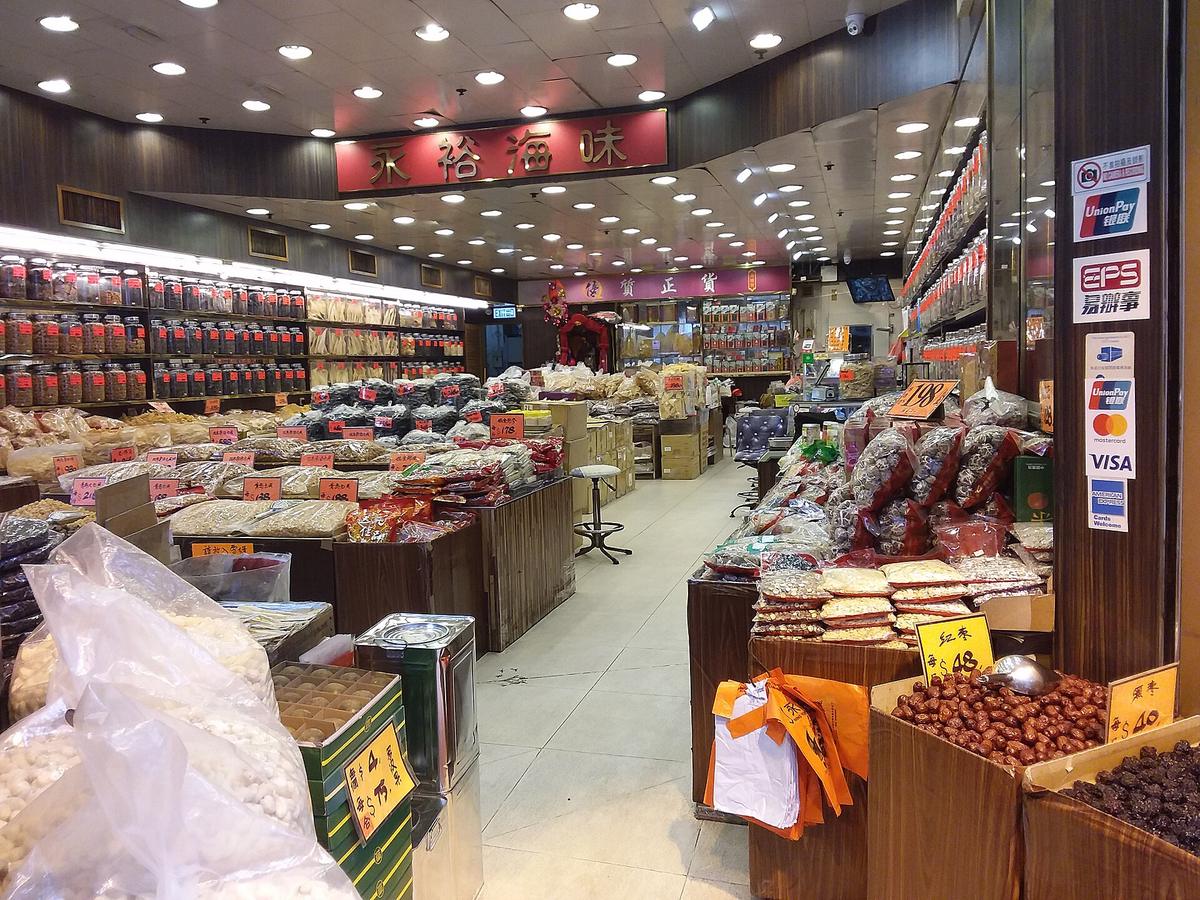
From Cat Street walk south to Des Voeux Road West, specifically the block between Queen Street and Sutherland Street. This is the dried seafood quarter, and it is the reason Sheung Wan exists as a commercial district. The trade concentration here is not subtle. The marine smell hits you before you see the shopfronts. Every shopfront is stacked with scallops the size of your palm, abalone, dried shrimp, sea cucumber, and fish maw in plastic bins. The shops open from 09:00 to 18:00, busiest between 10:00 and 16:00, and this matters because the smell is strongest during those hours. Arrive at 11:00 on a weekday and you walk through a lane that is working, not performing. By 18:00 the metal shutters come down, the smell fades, and the road becomes just another road. You came for the working version. Get there before 16:00.
Turn north one block onto Ko Shing Street, the 150 metre Chinese medicine wholesale lane with 60 to 80 shops. The smell here is herbal and earthy, not marine. Ginseng root, dried medicinal fungus, and loose herbs fill paper bags on the pavement. Same hours, same weekday rule. Many of these shops also close on public holidays. If you want to see the wholesale trade in motion, arrive Tuesday through Thursday between 10:00 and 15:00. Monday can be slow, Friday is packing up, Saturday is a gamble.
Where the Coffee Roasteries Moved in Above the Trades
Bonham Strand and Wing Lok Street were historically the hub of the ginseng and dried seafood wholesale trade. The wholesalers are still there on the ground floor. What changed is what filled the floors above them. From roughly 2015 onward, independent coffee roasteries began leasing the narrow upstairs spaces above the dried scallop shops. The result is a neighbourhood where you stand at a counter drinking a pour over while below you a man weighs abalone on a hand scale.
No single coffee address dominates. The roasteries are scattered on Bonham Strand, on Wing Lok Street, and on the western end of Hollywood Road. They open late by Sheung Wan standards, usually 09:00 or 10:00, and close by 17:00 or 18:00. These are not all day cafes. They are roasteries that serve coffee, and they close when the beans are gone or the batch is finished. If you need a caffeine stop between 10:00 and 14:00, you will find one. After 15:00, choices narrow. Plan your coffee for before the dried seafood walk, not after.
Western Market for Fabric and a Break from the Smell
At 323 Des Voeux Road Central stands Western Market, a declared monument built in 1906. It operated as a food market until the 1980s. Today it houses about 20 to 30 tenants: fabric dealers, a cafe, and a few souvenir shops. The building itself is Edwardian, red brick, and looks like it was airlifted from Birmingham. It matters for two reasons. First, it gives you a seat with air conditioning when the marine smell on Des Voeux Road becomes too much. Second, the fabric dealers on the upper floor sell silk, linen, and cotton by the metre at wholesale prices. Hong Kong is not a cheap city for textiles. This is the exception. If you sew, or if you want a custom shirt made elsewhere in town, buy the fabric here.
Tai Ping Shan Street and PMQ When You Need a Shift in Register
Walk south from Western Market up the steep gradient that defines north south routes in Sheung Wan. The elevation rises from sea level to about 60 or 80 metres at Hollywood Road and Caine Road. You will feel it in your legs. At the top, on Tai Ping Shan Street, the character shifts entirely. This 250 metre residential lane between Upper Station Street and Bridges Street is low rise, quiet by day, and lined with small cafes that operate on their own schedules. The lane is what Hong Kong feels like when the tourists are somewhere else. There is nothing to buy here. That is the point. Sit at a cafe, drink something, and watch the neighbourhood go about its afternoon.
North of Tai Ping Shan Street, at 35 Aberdeen Street, stands PMQ, the former Police Married Quarters built in 1951 and converted into a creative hub in 2014. It is a Grade III historic building with about 18,000 square metres of floor space and 100 to 130 studios and shops. The shops open mostly from 11:00 to 20:00. The site is worth exactly one hour. Visit for the architecture: the open courtyard and the grid of former quarters turned into design studios. Skip the overpriced pop up boutiques. The 2024 tenant list is published by the PMQ management company and changes annually. If you want to see what a government building looks like when it becomes a design incubator, this is it. If you want a meaningful shopping experience, you already had it on Cat Street.
Sheung Wan has fewer than five major ticketed attractions. It has exactly zero. Man Mo Temple and Western Market are free. The neighbourhood is the attraction. That is its strength and its limitation. If you need museums, exhibitions, and ticketed experiences, stay in Central or go to Kowloon. If you want to walk a neighbourhood that has been the Chinese quarter since the British arrived in 1841, and that still functions as a wholesale hub rather than a performance of one, Sheung Wan delivers that.
One last thing about the gradient. The steep north south routes mean your walking options are limited. You cannot cut diagonally. You go up a staircase, down a staircase, or around the block. Google Maps is often wrong on which staircase connects to which lane. Use Citymapper or HKeMobility for the walking routes, and accept that you will occasionally dead end at a metal gate or a construction barrier. It happens. Turn around. Go another way. The neighbourhood rewards patience.

| Character | Central | Sheung Wan |
|---|---|---|
| Built form | High rise offices, luxury malls | Low rise mixed commercial, residential lanes |
| Primary trade | Finance, luxury retail | Wholesale dried seafood, Chinese medicine, antiques |
| Sunday activity | Malls and hotels open | Most wholesale shops closed, streets quiet |
| Density of attractions | High: Star Ferry, Peak Tram, bars | Low: fewer than 5 free sights |
| MTR station code | CEN | SHW |
| Walking time between | 700 metres, roughly 10 minutes | 10 minutes |
Who Sheung Wan Works for and Who Should Skip it
Sheung Wan works for the traveller who arrives in Hong Kong and finds Central too clean, too corporate, too much like every other global banking hub. It suits the urban explorer who wants to see a wholesale trade that has existed since the 1840s, who does not need a museum label to tell them what they are looking at, and who is willing to walk up 150 steps for a quiet lane and a decent pour over. It suits the photographer who wants something other than skyline reflections: a dried scallop shopfront at 11:00, the incense smoke at Man Mo Temple, the faded signboards on Pound Lane.
Sheung Wan does not suit the traveller who needs clear signage, broad pavements, and predictable opening hours. The pavements are narrow. They are uneven. They are frequently blocked by scaffolding or queues. Many small restaurants and cafes are cash only or take Octopus, not credit cards. Public toilets are scarce. The gradient is punishing. If you want a relaxed, slow paced morning where everything is arranged for your convenience, stay in Central. Sheung Wan is not that. It is the anti Central, and that is exactly why it matters.
Common Questions
What is the best time of day to visit the dried seafood street on Des Voeux Road West?
Arrive between 10:00 and 16:00 on a weekday. That is when the shops are open and the marine smell is strongest. After 18:00 the metal shutters are down and the street reads as just another road.
Can I visit Sheung Wan on a Sunday?
You can, but most dried seafood shops, Chinese medicine wholesalers, and antique dealers on Cat Street are closed or operating reduced hours. Sunday foot traffic is the lowest of the week. For the full Sheung Wan experience, choose a weekday.
How do I get from Central to Sheung Wan?
Sheung Wan MTR station is one stop west of Central on the Island Line. The walk is about 700 metres and takes roughly 10 minutes. The boundary is around Jubilee Street and Garden Road.
Is Man Mo Temple worth queuing for?
There is no queue. Entry is free, and the temple opens at 08:00. Visit before 10:00 to avoid crowds. Five minutes inside is enough to take in the incense coils and the atmosphere.
What should I buy on Cat Street?
Reproduction furniture, Mao memorabilia, and jade if you know what you are looking at. Do not buy jade unless you can distinguish real from treated stone. The HK$80 Mao alarm clock is a safe bet.
Are there public toilets in Sheung Wan?
They are scarce. The reliable options are inside Western Market and at Sheung Wan MTR station. Carry tissues and hand sanitiser.
Does Sheung Wan have any ticketed attractions?
No. Man Mo Temple and Western Market are free entry. PMQ is free to enter. Sheung Wan is a neighbourhood to walk through, not a collection of paid sites.
Read next
-
 Sheung Wan Food Runs From Roast Goose to Coffee Roasters
Sheung Wan eats in layers: roast goose and tong sui on the old streets, coffee roasteries above the dried seafood shops.
Sheung Wan Food Runs From Roast Goose to Coffee Roasters
Sheung Wan eats in layers: roast goose and tong sui on the old streets, coffee roasteries above the dried seafood shops.
-
 Hong Kong Travel Guide and Trip Planning Hub
How to plan a Hong Kong trip that respects the city's density, uses the MTR properly, and leaves room for a hike or an island day.
Hong Kong Travel Guide and Trip Planning Hub
How to plan a Hong Kong trip that respects the city's density, uses the MTR properly, and leaves room for a hike or an island day.
-
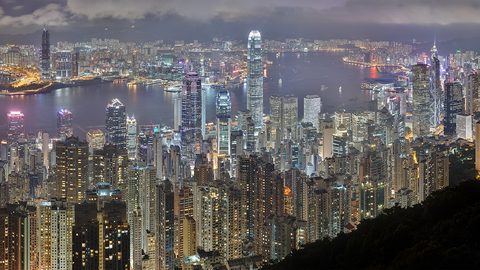 Victoria Peak Hong Kong The View Is the Point the Tram Queue Is Not
The view from Victoria Peak is the point; the tram queue is the problem, and there are four other ways up.
Victoria Peak Hong Kong The View Is the Point the Tram Queue Is Not
The view from Victoria Peak is the point; the tram queue is the problem, and there are four other ways up.
-
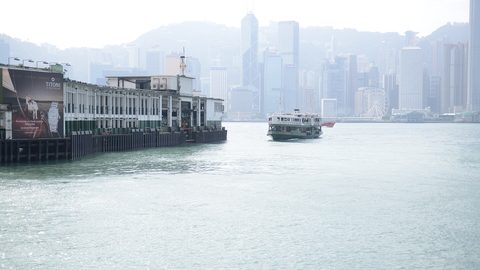 Star Ferry Hong Kong Fare, Route and Which Side to Sit
The Star Ferry costs HK$5, takes 10 minutes, and the upper deck heading from Tsim Sha Tsui to Central gives the best skyline view.
Star Ferry Hong Kong Fare, Route and Which Side to Sit
The Star Ferry costs HK$5, takes 10 minutes, and the upper deck heading from Tsim Sha Tsui to Central gives the best skyline view.
-
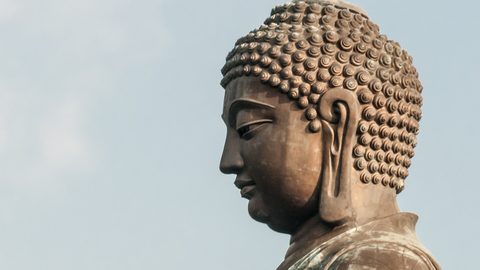 Big Buddha and Ngong Ping 360 Cable Car Without the Crowds
The Big Buddha is 268 steps up, the cable car takes 25 minutes, and the village at the top is mostly a shopping mall.
Big Buddha and Ngong Ping 360 Cable Car Without the Crowds
The Big Buddha is 268 steps up, the cable car takes 25 minutes, and the village at the top is mostly a shopping mall.
-
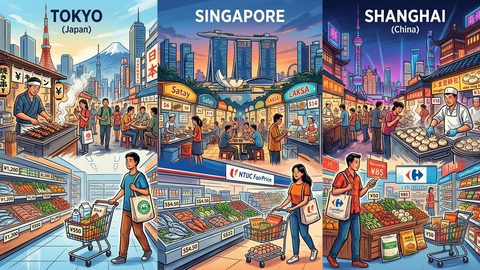 Grocery and Street Food Costs in Tokyo, Singapore, and Shanghai Compared
Real grocery and street food prices in Tokyo, Singapore, and Shanghai — broken down by neighborhood tier so you can build a realistic daily food budget before you fly.
Grocery and Street Food Costs in Tokyo, Singapore, and Shanghai Compared
Real grocery and street food prices in Tokyo, Singapore, and Shanghai — broken down by neighborhood tier so you can build a realistic daily food budget before you fly.
-
 What Japan, China, and Singapore Actually Cost Independent Travelers
Real per-day costs for Japan, China, and Singapore broken down by accommodation tier, food strategy, transit, and connectivity for independent travelers.
What Japan, China, and Singapore Actually Cost Independent Travelers
Real per-day costs for Japan, China, and Singapore broken down by accommodation tier, food strategy, transit, and connectivity for independent travelers.
-
 What Most Travelers Get Wrong When Booking Flights to East Asia
Most travelers book East Asia flights on price alone. Here's what they miss about route gaps, fleet age, and aircraft type on 10-14 hour hauls.
What Most Travelers Get Wrong When Booking Flights to East Asia
Most travelers book East Asia flights on price alone. Here's what they miss about route gaps, fleet age, and aircraft type on 10-14 hour hauls.
-
 The Honest Cost of Mobile Data in Japan, China, and Singapore
Real price data for SIMs, pocket WiFi, and eSIMs in Japan, China, and Singapore. Plus the friction points most travel guides quietly skip.
The Honest Cost of Mobile Data in Japan, China, and Singapore
Real price data for SIMs, pocket WiFi, and eSIMs in Japan, China, and Singapore. Plus the friction points most travel guides quietly skip.