Osaka Is Loud, Hungry and the Best Base in Kansai
Osaka runs on street food, standing bars and a transport network that puts Kyoto and Nara within an hour. Here is how to use the city.
- Flag
-
- ISO code
- JP
- Population
- 2,690,000
- Currency
- JPY
- Timezone
- Asia/Tokyo
Osaka is Two Cities Separated by a Subway Line
Osaka does not have a single centre. It has two, and they sit 15 to 25 minutes apart on the Midosuji Line. Kita, north around Umeda, is the business and shopping pole with the transport hub. Minami, south around Namba, is neon, street food, and nightlife. Build your trip around this split. Treating Osaka as one continuous downtown is the fastest way to waste time crossing the same river twice. Plan one day for Kita and one day for Minami, plus evenings in Dotonbori. That is the minimum two days the city demands. A single overnight stay undersells it.
- Organising Principle: Bipolar split between Kita (Umeda, north) and Minami (Namba, south). Cross city trips take 15 to 25 minutes each way on the Midosuji Line.
- Minimum Days: 2 full days. One for Kita, one for Minami. Add Kansai day trips and plan for 5 to 7 days total.
- Peak Seasons: Late March to early April for cherry blossoms. November for autumn foliage and comfortable walking temperatures. Both periods sharply raise hotel rates.
- Avoid Window: Golden Week (late April to early May). Standing room only on trains, accommodation prices spike.
- Best For: Street food grazers, nightlife seekers, Kansai base campers, repeat Japan visitors, solo travellers who want conversation in standing bars.
- Not For: Travellers seeking a quiet, traditionally beautiful Japanese city. Osaka is not a Kyoto substitute.
Kita Means Umeda and Umeda Means a Maze
Umeda station complex handles 2.3 million passengers daily across four distinct stations: JR Osaka, Hankyu Osaka Umeda, Hanshin Osaka Umeda, and Osaka Metro Umeda. Over 50 named exits connect through the underground malls of Diamor, Whity, and Hankyu Sanbangai. The walk from JR Osaka to Hankyu Umeda is eight minutes. From JR to Hanshin, ten. Never tell anyone to meet you at Umeda. Pick a department store exit or a specific ticket gate. The single biggest trip up for visitors is the assumption that Umeda is one station.
Where To Go High In Kita
Kita is where you shop, transfer between long distance trains, and find the Umeda Sky Building. The Sky Building charges ¥1,500 for the floating garden observatory and its open air escalator. Arrive just before sunset to catch the transition. Abeno Harukas, Japan's tallest building at 300 metres, is further south near Tennoji. Book the Harukas 300 observation deck online and save ¥300. Last admission is 30 minutes before closing, which is 22:00. The view is better than the Sky Building, but the area around it is less convenient for a meal afterward.

Minami is Where Osaka Eats, Drinks, and Stays Up Late
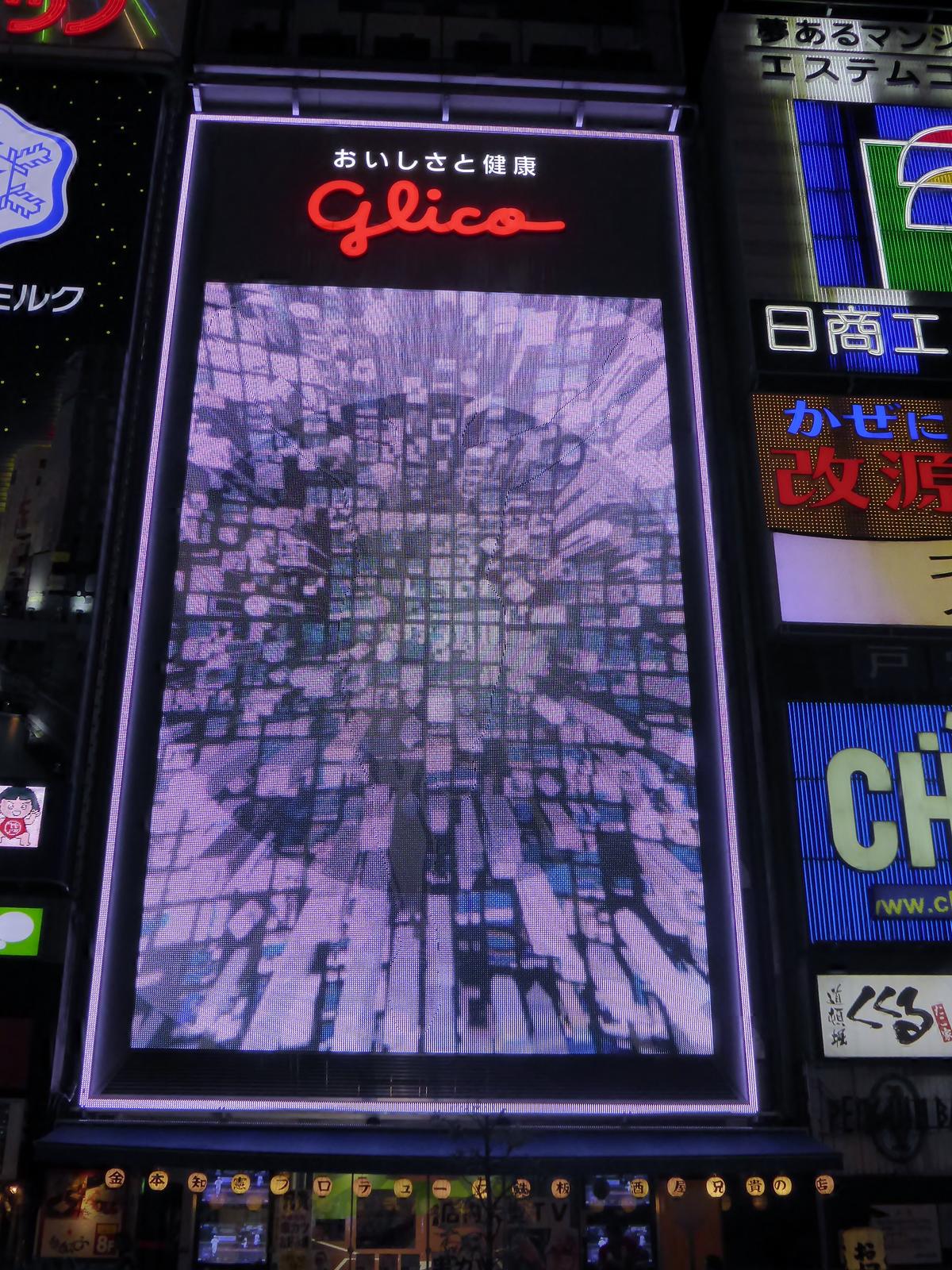
Minami covers Namba, Shinsaibashi, Dotonbori, Amerikamura, and Shinsekai. This is not a polite city. Dotonbori canal runs 800 metres from Ebisu Bridge to Dotonboribashi, and after 19:00 on weekends it is shoulder to shoulder. Eating while walking is locally frowned on despite the street food vibe. Stand at a stall or find a wall. Wanaka in Namba serves the crisp outside, molten inside takoyaki that defines the style. Mizuno in Dotonbori grills okonomiyaki with minced yam batter right in front of you. Both are institutions, not tourist traps.
Shinsekai And The Retro Grit
Shinsekai sits under Tsutenkaku Tower and runs on a different clock. Kushikatsu skewers with the strict no double dip sauce rule dominate the narrow lanes of Janjan Yokocho. Cash only in the small joints. Carry ¥5,000 in notes. Tsutenkaku Tower closes between 20:00 and 21:00 depending on season, and last admission is 30 minutes before that. The view is not as good as Abeno Harukas, but the neighbourhood below it is the reason to come: Showa era nostalgia, cheap standing bars, and a working class energy that Tokyo polished away decades ago.
Kuromon Market Has A Curfew
Kuromon Market runs about 150 stalls along a covered arcade. Most close between 17:00 and 18:00. Go at 10:00, eat a walking breakfast of sea urchin, grilled scallops, and skewered wagyu, and be out before the dinner crowd never arrives. Kuromon is a daytime operation, not a night market. Plan it into your Minami morning before Namba wakes up.
| Destination | Route | Travel Time | Cost One Way | Why Go |
|---|---|---|---|---|
| Kyoto | JR Special Rapid from Osaka Station | 28 min | ¥580 | Temples and geisha district. No substitute for Osaka, but worth the short ride. |
| Nara | Kintetsu Limited Express from Namba | 34 min | ¥680 | Todaiji temple, the great Buddha, and deer in Nara Park. Morning trip, back by lunch. |
| Kobe | JR Special Rapid from Osaka Station | 21 min | ¥350 | Harbour, beef, and a compact city centre. Good half day. |
| Himeji | JR Shinkansen Hikari from Shin-Osaka | 29 min | ¥3,350 | Japan's finest original castle. Book the Shinkansen, not the Special Rapid. |
| Koyasan | Nankai Koya Line from Namba | 90 min plus cable car | ¥1,680 | Temple lodgings and the Okunoin cemetery. Overnight recommended. |

The Transport Trap and How to Beat it
Osaka runs on six private railways plus the JR West network plus nine subway lines. An ICOCA card works across all of them. Buy one at KIX or any station vending machine. Do not buy individual tickets for each operator. The second trap: Google Maps sometimes routes you through JR when a private line is faster. Check the operator name on the result, not just the travel time. If it says Hankyu or Kintetsu and the JR option is a minute faster, take the private line. The terminals are closer to where you are going.
Airport Arrival
Kansai International Airport sits 43 kilometres south on a man made island. The Nankai Limited Express Rapi:t reaches Namba in 34 minutes for ¥1,450 reserved. The JR Haruka reaches Tennoji and Shin-Osaka in 35 to 47 minutes for ¥2,400 reserved. Do not take the Airport Express. It takes 43 minutes for the same route and saves only ¥400. For Umeda, take the Haruka to Osaka Station. For Namba, take the Rapi:t. Itami Airport is 14 kilometres north and much faster. The monorail and Hankyu combination gets you to Umeda in half an hour for ¥500. The limousine bus takes the same time but costs more. Itami has no rail link to Namba. If your accommodation is in Minami, the Rapi:t from KIX is the better option regardless of which airport you prefer.
Shin-Osaka Is A Bad Base
Shin-Osaka is the Shinkansen stop. It is a sterile business district with almost no nightlife, few walkable food streets, and a daily commute to Namba or Umeda that eats 40 minutes round trip. Visitors book it for convenience and regret it. Stay in Umeda or Namba. The Shinkansen to Tokyo, Hiroshima, and points beyond departs from Shin-Osaka, but you are visiting Osaka, not passing through it.
USJ requires planning. Super Nintendo World inside Universal Studios Japan either needs a free area timed entry ticket obtained inside the park on the day or an Express Pass with timed entry. Without either, the area is inaccessible by 10:00. The base one day studio pass for 2026 ranges from ¥8,900 to ¥10,900 depending on the date. Express Pass 7 runs ¥10,800 to ¥20,800. Buy both online before you travel. The park opens between 08:30 and 09:30 and closes between 19:00 and 21:00. Arrive half an hour before opening.
Neighbourhoods in Osaka
-
 Amerikamura
 is Osaka's youth fashion hub, packed with vintage clothing stores, streetwear boutiques, and record shops radiating from Triangle Park.
-
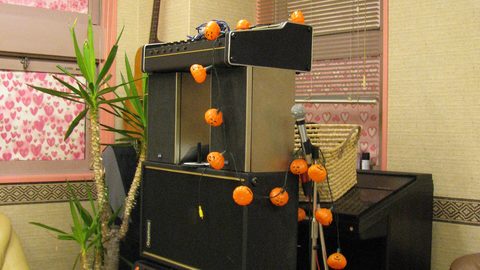 Den Den Town
 in Osaka's Nipponbashi is a rougher, more local Akihabara, dense with electronics, anime figures and retro game shops.
-
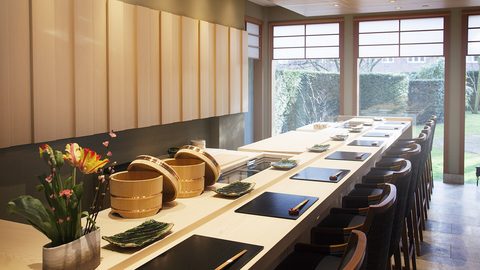 Kitashinchi
 is Osaka's most expensive nightlife quarter, a concentration of hostess bars and salaryman fine-dining restaurants that only comes alive after dark.
-
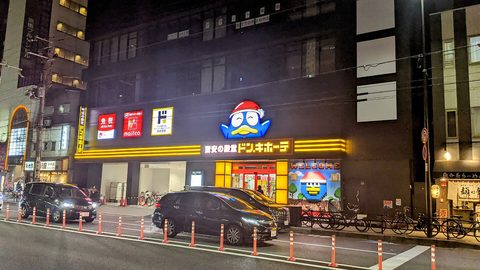 Kyobashi
 is Osaka's unvarnished drinking district, a tangle of cheap standing bars near the station where salarymen pack in for beer and grilled skewers with no tourist concessions.
-
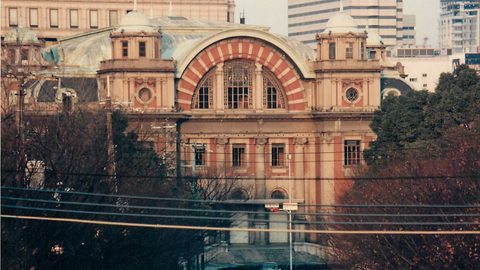 Nakanoshima
 is Osaka's museum island, a riverside strip of civic galleries, rose gardens and the quietest central walk in the city.
-
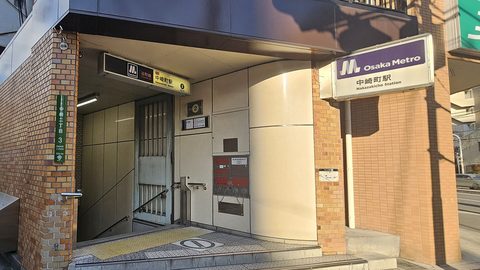 Nakazakicho
 is a pocket of pre-war wooden houses, indie cafes and vintage shops, a quiet anomaly in loud, concrete Osaka.
-
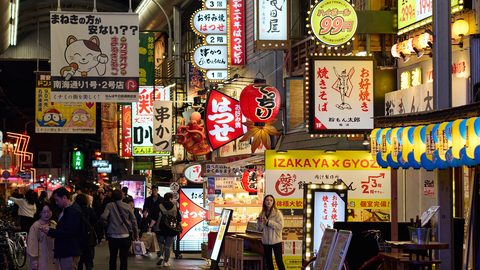 Namba
Namba is Osaka's eating and nightlife centre, the default base in Minami with direct KIX airport access, Dotonbori on its doorstep and dense walkable food streets.
-
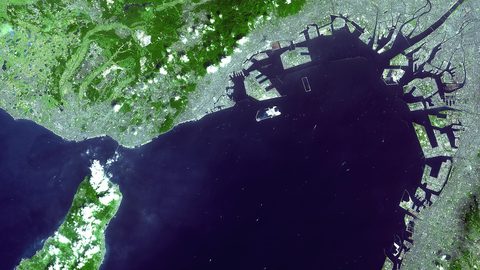 Osaka Bay
The Osaka Bay Area packs Universal Studios Japan, Kaiyukan Aquarium and the Tempozan Ferris Wheel onto artificial islands best visited as a single day trip.
-
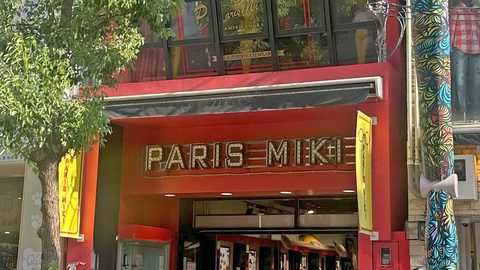 Shinsaibashi
 is Osaka's covered shopping spine, running from Namba northward, with Amerikamura's vintage and street-fashion blocks tucked beside it.
-
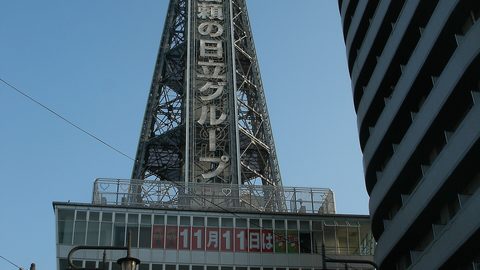 Shinsekai
 is Osaka's 1912 future district, home to kushikatsu alleys, Tsutenkaku tower and an unpolished Showa-era atmosphere that rewards the right visitor.
-
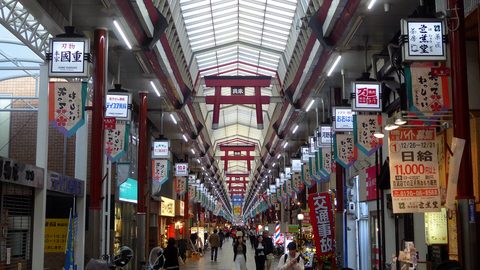 Tenma
Tenma is home to Japan's longest shopping arcade, Tenjinbashisuji, and the best-value standing bars and budget eating in Osaka.
-
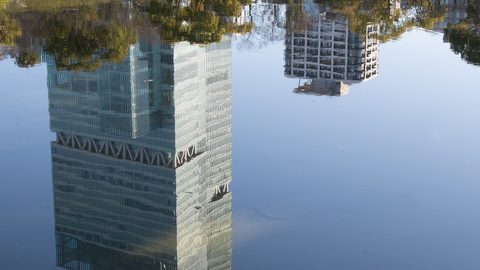 Tennoji
 pairs Abeno Harukas and Japan's oldest temple Shitennoji with Osaka's cheapest central beds, a value base with a blue-collar edge south of Namba.
-
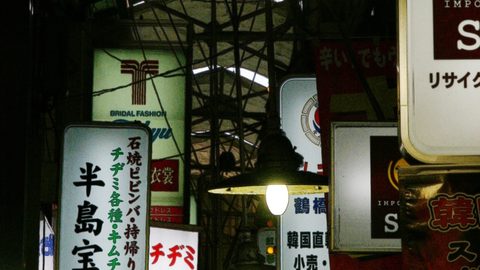 Tsuruhashi
 is Osaka's Koreatown, where narrow alleys fill with smoke from horumon-yaki grills and counter stalls serve the best grilled offal in Japan.
-
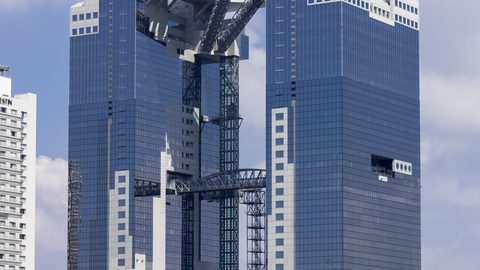 Umeda
How to navigate Umeda's multi-station maze in Osaka's Kita district: which exits to use, where to meet someone, and why the department stores are your best landmark.
What to See in Osaka
-
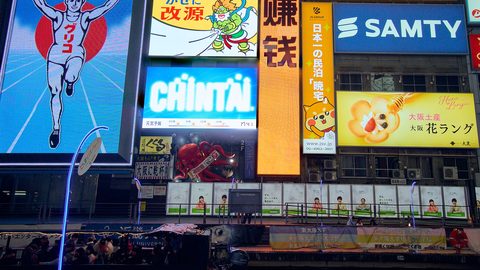 Dotonbori
 is Osaka's neon-lit eating canal, best used as a full-evening food and bar crawl rather than a quick Glico Sign photo stop.
-
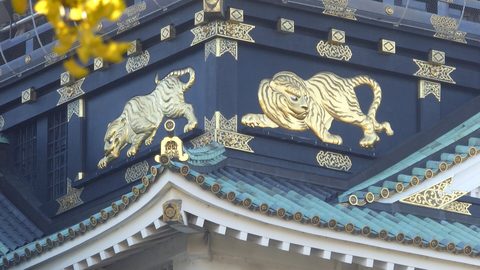 Osaka Castle
's park and moat walks outshine the concrete-reconstructed keep, which houses a museum and observation deck rather than original interiors.
-
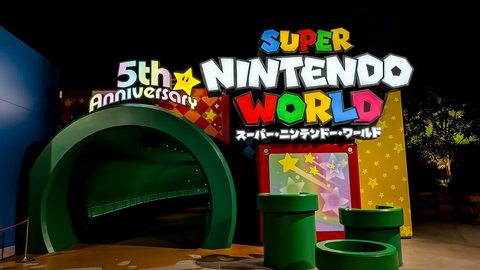 Universal Studios Japan
 demands a full day and a pre-purchased timed-entry ticket; here is whether USJ is worth it and how the ticketing actually works.
-
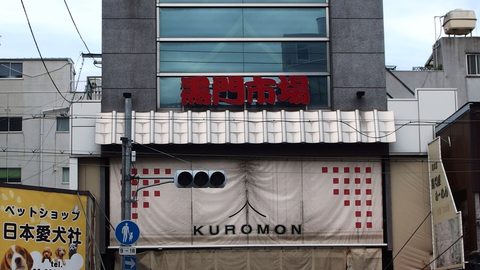 Kuromon Ichiba Market
Kuromon Market rewards early visitors with fresh seafood and stall grazing before 10am, afternoons bring tour-bus crowds and a different, lesser market.
-
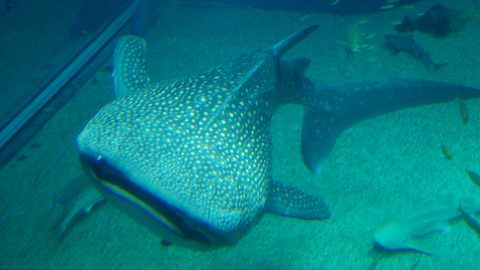 Osaka Aquarium Kaiyukan
 is designed as a top-to-bottom spiral around a central Pacific tank, arrive at opening or late afternoon to avoid the 11am queue crush.
-
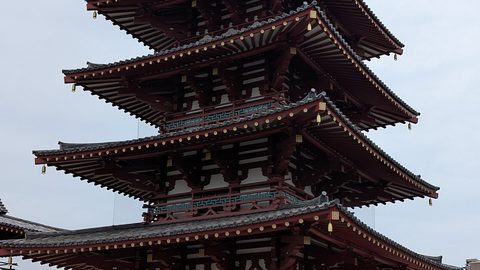 Shitenno-ji
Shitennoji is Japan's oldest official temple but its low-key Tennoji setting and concrete rebuild make it quieter than its age deserves, and that's the appeal.
-
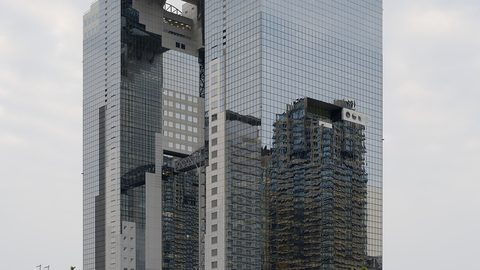 Umeda Sky Building
The Umeda Sky Building's open-air Floating Garden and glass escalator bridge deliver Osaka's best observation experience, beating taller decks on atmosphere.
-
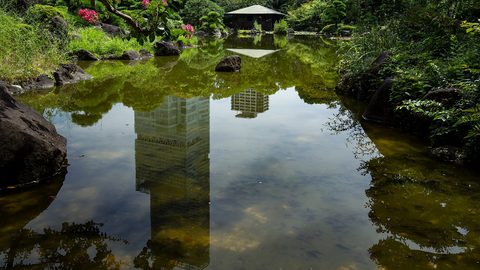 Abeno Harukas
 300 offers Japan's tallest observatory view, but whether the ticket beats free Osaka viewpoints depends on what you want from a skydeck.
-
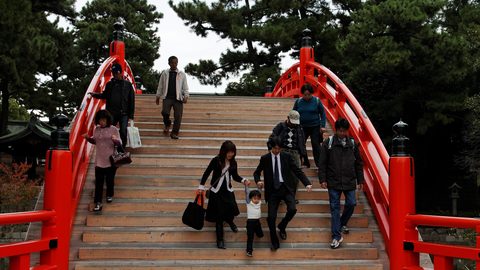 Sumiyoshi Taisha
's straight-roof sumiyoshi-zukuri architecture predates Buddhist influence and survives almost nowhere else, plus its steep Sorihashi bridge and free grounds.
-
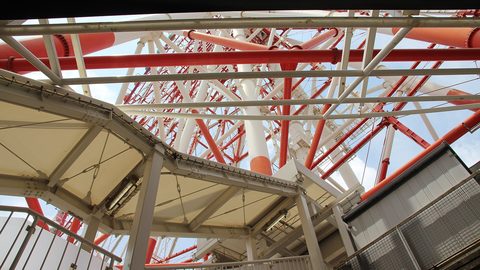 teamLab Botanical Garden
TeamLab Botanical Garden in Osaka's Nagai Park is an outdoor night exhibition where booking, dusk arrival, and weather decide everything.
-
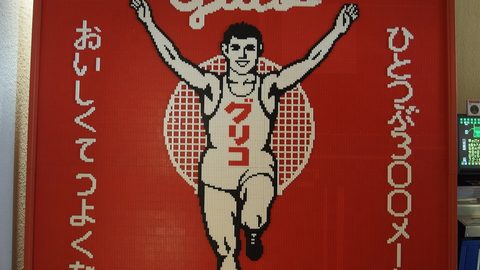 Tsutenkaku
 Tower's ¥900 ticket buys Showa-era nostalgia and the Billiken luck statue ritual, not a serious panorama, but that's exactly why it works in Shinsekai.
More on Osaka
-
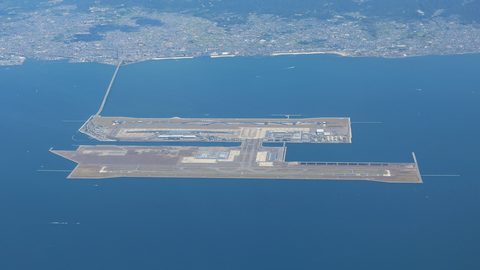 KIX vs Itami Which Osaka Airport You Should Actually Fly Into
KIX handles nearly all international flights and Itami owns the domestic skies. The airport choice is usually made by your departure city, not by preference.
-
 Osaka on a Budget What Japan's Cheapest Big City Buys and Where It Stops
Osaka is Japan's cheapest big city, but the floor is real. A realistic budget day priced out, from a Tennoji bed to a Kyobashi standing-bar round.
-
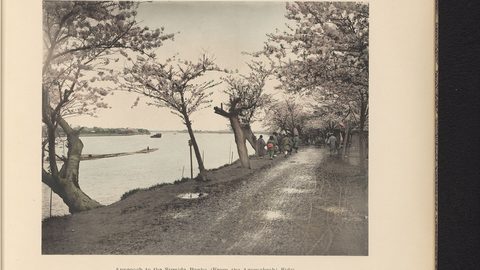 Osaka Cherry Blossom Spots and the Viewing Ballot Most Visitors Miss
Osaka's best cherry blossom viewing requires a ballot most visitors never hear about. The Japan Mint opens for one week in April, here is how to get in.
-
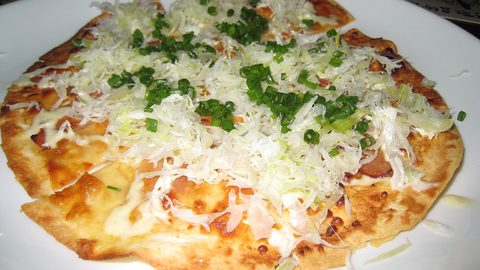 Osaka Nightlife From Standing Bars in Kyobashi to Kitashinchi After Dark
Osaka drinks differently in every neighbourhood. Kyobashi keeps it cheap and standing, Kitashinchi runs on expense accounts, and Dotonbori never sleeps. Which one is yours?
-
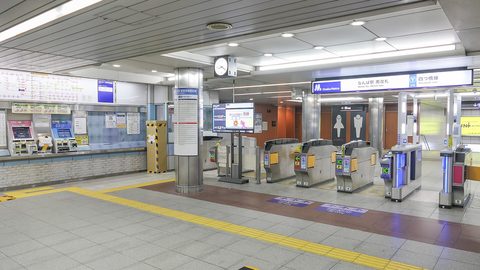 Osaka Amazing Pass Maths Done Honestly Including When It Loses
The Osaka Amazing Pass promises free entry and unlimited rides, but the maths only works for a specific kind of day. We ran the numbers on three real itineraries.
-
 Osaka with Kids Why This Is Japan's Easiest City for Family Travel
Osaka's short distances, universal food, and stacked family attractions make it Japan's easiest city with children, if you know which stations to avoid with a stroller.
-
 Osaka Street Food Culture and How to Order at Every Stall
Osaka's street-food obsession runs deeper than Dotonbori's neon. Learn the kuidaore culture, stall-by-stall ordering rules, and why eating while walking is genuinely frowned on.
-
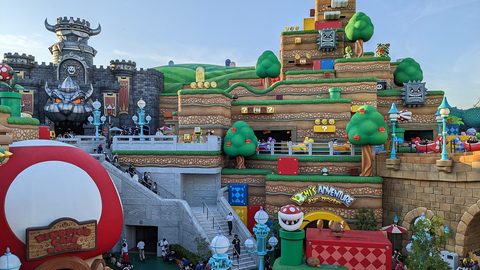 How to Actually Get Into Super Nintendo World at Universal Studios Japan
Super Nintendo World often closes to new entries by 10:00. The park's own instructions miss the critical steps. Here is the exact sequence that works.
-
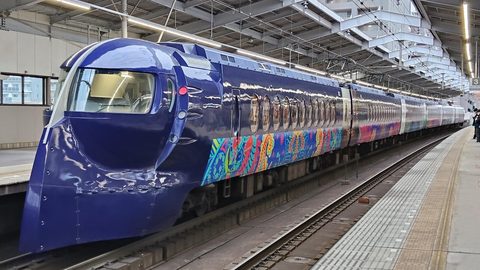 KIX to Osaka City Centre by Train, Bus and Private Transfer Compared
The Nankai Rapi:t and JR Haruka serve different Osakas. Pick the wrong one and you add 25 minutes to your arrival. Every KIX route compared by destination, time, and fare.
Common Questions
Is Osaka safe at night?
Yes. Crime rates are low. Dotonbori and Shinsekai are busy until midnight. Kitashinchi and Kyobashi are fine. Standard city awareness applies. No neighbourhood in the tourist zone requires special caution.
Should I buy the Osaka Amazing Pass?
The 1 day pass was ¥2,800 in 2026. The 2 day pass was ¥3,600. It covers Osaka Metro, some buses, and free entry to about 40 attractions. If you plan to visit Osaka Castle, the Umeda Sky Building, or Abeno Harukas in one day, it pays for itself. If you are only eating and drinking, skip it.
Can I use Suica or PASMO in Osaka?
Yes. ICOCA is the JR West card, but Suica, PASMO, and all major IC cards work on every train, bus, and subway in the city. You cannot refund a Suica in Osaka. Buy an ICOCA if you want to get your deposit back at the end.
How far in advance should I book hotels?
For cherry blossom season and November, book three to four months ahead. For Golden Week, book six months ahead. For a random Tuesday in October, two weeks is fine. Accommodation near Namba fills first.
Is the Osaka Castle reconstruction worth visiting?
The interior is a modern museum with an elevator and an observation deck. It is not a historic castle keep. Go for the park and the view from the top, not for historical authenticity. The Nishinomaru Garden closes at 17:00 and is a good photo spot. Budget 90 minutes total.
What if I do not eat seafood?
Osaka works fine without fish. Kushikatsu is deep fried skewers of meat and vegetables. Okonomiyaki is a cabbage and batter pancake with pork or squid. Kitsune udon is noodle soup with sweet fried tofu. Horumon yaki is grilled offal. Ramen shops serve pork based broth with cabbage. You will not go hungry.
Is the Midosuji subway the fastest way between Kita and Minami?
Yes. 15 to 25 minutes from Umeda Station (M16) to Namba Station (M20). The JR Osaka Loop Line takes 20 to 25 minutes but drops you at JR Namba, which is a 10 minute walk from the main Namba station complex. Stick to the Midosuji for the core connection.
Read next
-
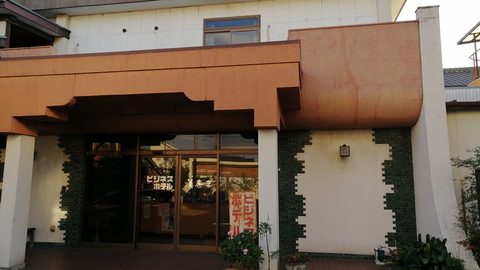 Osaka Hotels, Sorted by Price Band and Property Type Not Neighbourhood
Osaka hotels sorted by budget and type, business towers, luxury high-rises and the few ryokan, with the trade-off each choice demands.
-
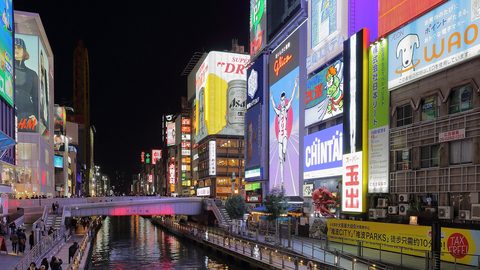 Where to Stay in Osaka, Pick the District That Matches Your Nights
Osaka's districts switch character after sunset. Pick where to stay based on whether you want street food chaos, standing-bar crawls or a quiet lane.
-
 Osaka Flights Which Airport to Choose and When to Book
KIX or Itami? Which Osaka airport to fly into, when flight prices spike during cherry blossom and November, and the booking windows that matter.
-
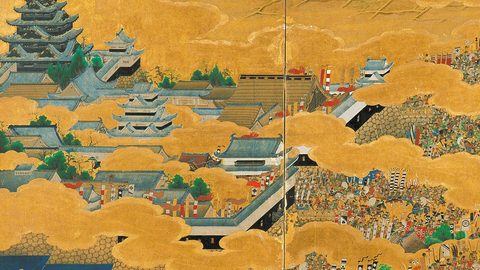 Osaka Things to Do, What Earns a Slot in Two Full Days
Osaka is not a monument city. This page ranks what earns a slot in two full days, from Dotonbori's neon to Shinsekai's retro grit.
-
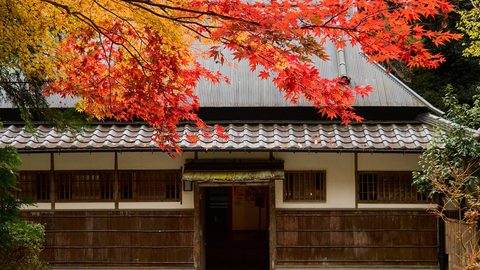 Best Time to Visit Osaka, Month by Month and the Trade Off Each One Asks
-
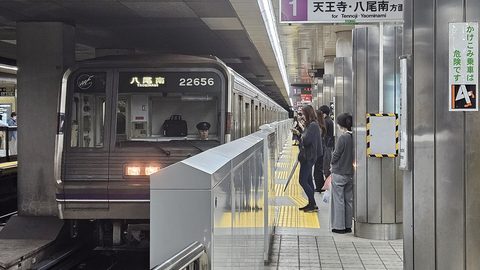 Getting Around Osaka, The Subway, the Private Railways and the Umeda Maze
Osaka's transit is fast but fractured. The Umeda station maze, private railway tickets and the ICOCA card explained before you go.
-
Osaka Castle
Osaka Castle's park and moat walks outshine the concrete-reconstructed keep, which houses a museum and observation deck rather than original interiors.
-
Dotonbori
Dotonbori is Osaka's neon-lit eating canal, best used as a full-evening food and bar crawl rather than a quick Glico Sign photo stop.
-
Universal Studios Japan
Universal Studios Japan demands a full day and a pre-purchased timed-entry ticket; here is whether USJ is worth it and how the ticketing actually works.