Hua Hin Thailand: A Royal Weekender Town for Predictable Beach Fixes
Hua Hin is a polished, orderly seaside town that feels more like a Bangkok weekend suburb than a tropical escape, with wide beaches, golf resorts, and seafood that reveals its fishing-town roots.
- Flag
-

- ISO code
- TH
- Population
- 126,355
- Currency
- THB
- Timezone
- Asia/Bangkok
Hua Hin Thailand: a Royal Weekender Town for Predictable Beach Fixes
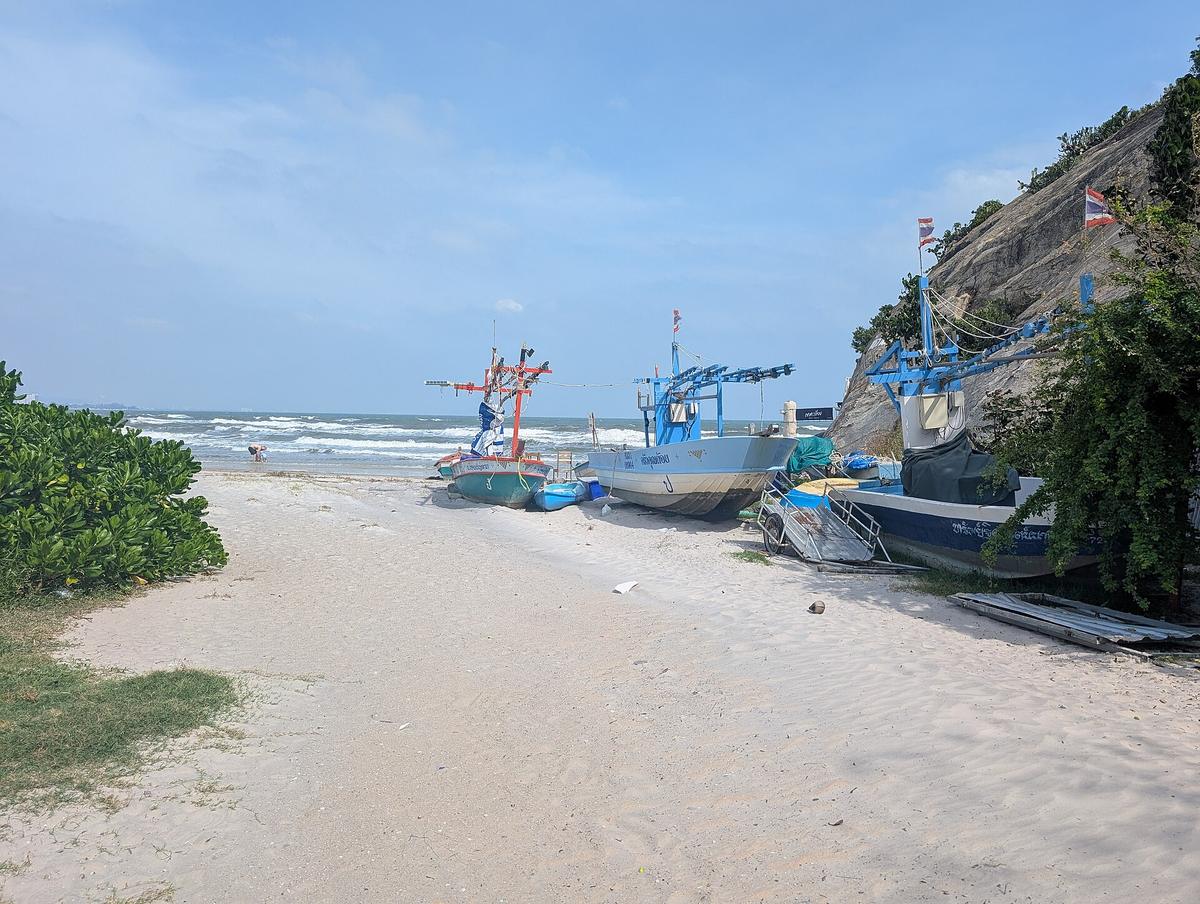
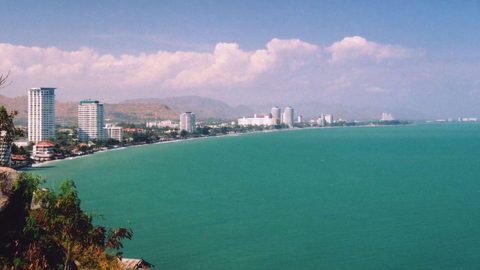
Hua Hin is a polished, orderly seaside town that feels more like a Bangkok weekend suburb than a tropical escape. The beach runs five kilometres of light brown sand with a shallow slope, but the water is an opaque greenish-grey, not turquoise, and jellyfish appear sporadically from July to October. The nightlife shuts down by midnight. If that sounds disappointing, skip straight to the end and book something else. If it sounds exactly right, you want predictable seafood dinners, a clean hotel room, and a cold beer at a reasonable price with zero pressure to party, you have found your destination. This is a plain reckoning of what the town is and who it is actually for, so you can decide whether to dig into the sub-pages or move on.
- Typical visitor: Bangkok residents on weekend or short-break trips; international visitors are a small minority, mostly long-stay retirees or expat residents
- Original draw: King Prajadhipok (Rama VII)'s Klai Kangwon Palace, built 1926, still a royal residence
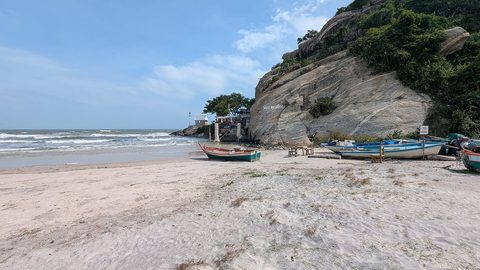
- Beach extent: Approximately 5 km from the pier south to Khao Takiab
- Water colour: Opaque greenish-grey to brown, not turquoise
- Dry season: December to April
- Distance from Bangkok: Approximately 195 km by road
- Drive time Bangkok Hua Hin: 2.5 to 3.5 hours, varying with traffic
- Rail journey time Bangkok Hua Hin: 3.5 to 4.5 hours, varying with train type
- Minimum days: 2 nights for a quick fix; 3 nights for a relaxed pace
- Not suited for: Travellers seeking clear turquoise water, dramatic scenery, island-style beauty, a party atmosphere, or an unspoiled fishing village
Hua Hin Guide: What Kind of Destination This Actually is
A guide that does not set expectations honestly wastes your time. This is a weekend beach destination for the capital, not a tropical island. The railway reached town in 1911, and in 1923 the Railway Hotel opened, now the Centara Grand Beach Resort & Villas Hua Hin. King Prajadhipok built Klai Kangwon Palace here in 1926, and the town has been the royal waiting room ever since. That heritage gave it wide manicured beaches, golf resorts, and seafood restaurants instead of backpacker bars and bucket cocktails.
Who Hua Hin Is For
Multi-generational Thai families come for safe, clean shores where grandparents can sit under an umbrella and children can wade in the shallow slope. Weekend escapees arrive Friday evening for a predictable beach fix: the same seafood platter at the same night market, the same hotel pool, the same sunset walk on Naresdamri Road. Golf obsessives attack the ten-plus courses in the Hua Hin and Cha-Am area, from seaside links to inland layouts at Palm Hills. Digital nomads over forty base themselves in Soi 102's condo canyon, where the 5G is strong and the coworking spaces like The White House and Skoop at Khao Takiab have reliable desks and air conditioning.
Who Hua Hin Is Not For
Backpackers craving wild parties or pristine turquoise water will hate it. Culture-first travellers will find the temples modest compared to the north. Anyone seeking an unspoiled fishing village vibe should know that version of Hua Hin vanished thirty years ago. If you want a party-island atmosphere, pick a southern island. If you want convenience, air conditioning, and zero logistical struggle, this town delivers.

Is Hua Hin Worth Visiting? the Honest Answer
Whether the town is worth visiting depends entirely on what you need from a beach trip. If your goal is to lie on a lounger, eat grilled squid on plastic chairs with the waves splashing your feet at Kao Takiab Seafood on the Rocks, and be asleep by 11pm, yes. If you need azure water and cliff-jumping, no.
What You Actually Get
The beach is five kilometres of white sand, but the Gulf of Thailand water here is murky. Horse rides along the main beach leave significant manure, so barefoot walks require vigilance. Jellyfish swarms push box jellyfish onto the swim zone, especially July through October; swim only where vinegar stations are posted. The tide extremes mean the beach nearly disappears at high tide in some sections, leaving no sand for chairs. Plan your beach time around a tide chart.
The Weekend Economy
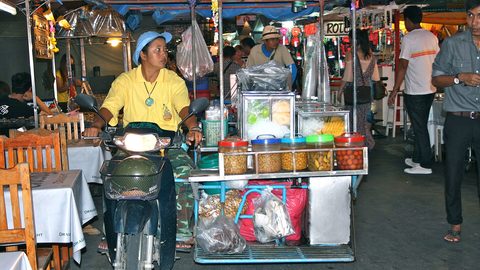
The town runs on the capital's weekender clock. The Cicada Market runs Friday through Sunday evenings, and you should arrive by 18:00 before the crowds peak. The Hua Hin Night Market on Dechanuchit Road operates daily from about 17:00 to 23:00, selling fresh seafood from the Gulf of Thailand and the local specialty: Hoi Shellang Larb, stir-fried oysters with chilli paste and holy basil. Grab a Roti Saimai at the night market for dessert, candy floss wrapped in thin roti. The town empties Sunday evening. Monday through Wednesday, midweek rates drop, and you will have the beach to yourself and the retirees.
| District | Best for | Key friction |
|---|---|---|
| Central Hua Hin | Night market hub, walkable, older hotels | Busy, dense, loud at night |
| Khao Takiab (Chopstick Mountain) | Giant Buddha, seafood shacks, quiet beach | Monkey aggression; macaques steal bags aggressively |
| Naresdamri Road | Fishing pier, sunset seafood grills, boat charters | Tourist prices on the pier |
| Soi 94 | Expat drinking strip, sports bars, German breakfasts | Feels like a foreigner ghetto |
| Soi 102 | Condo canyon, modern cafes, digital nomad base | Far from the beach, needs transport |
| Palm Hills | Inland golf community, quiet, large villas | Need wheels, no walkable amenities |
| Cha-Am (north) | Wider beach, fewer vendors, Thai family resorts | 25 km north, separate trip |
| Pranburi (south) | Kite-surfing lagoon, minimalist resorts, mangroves | 20 km south, quiet to the point of empty |
| Smor Prong | Red-light area, beer bars, only late-late zone | Not family-friendly, dingy |
Bangkok Weekend Beach Destination: Getting There and Around
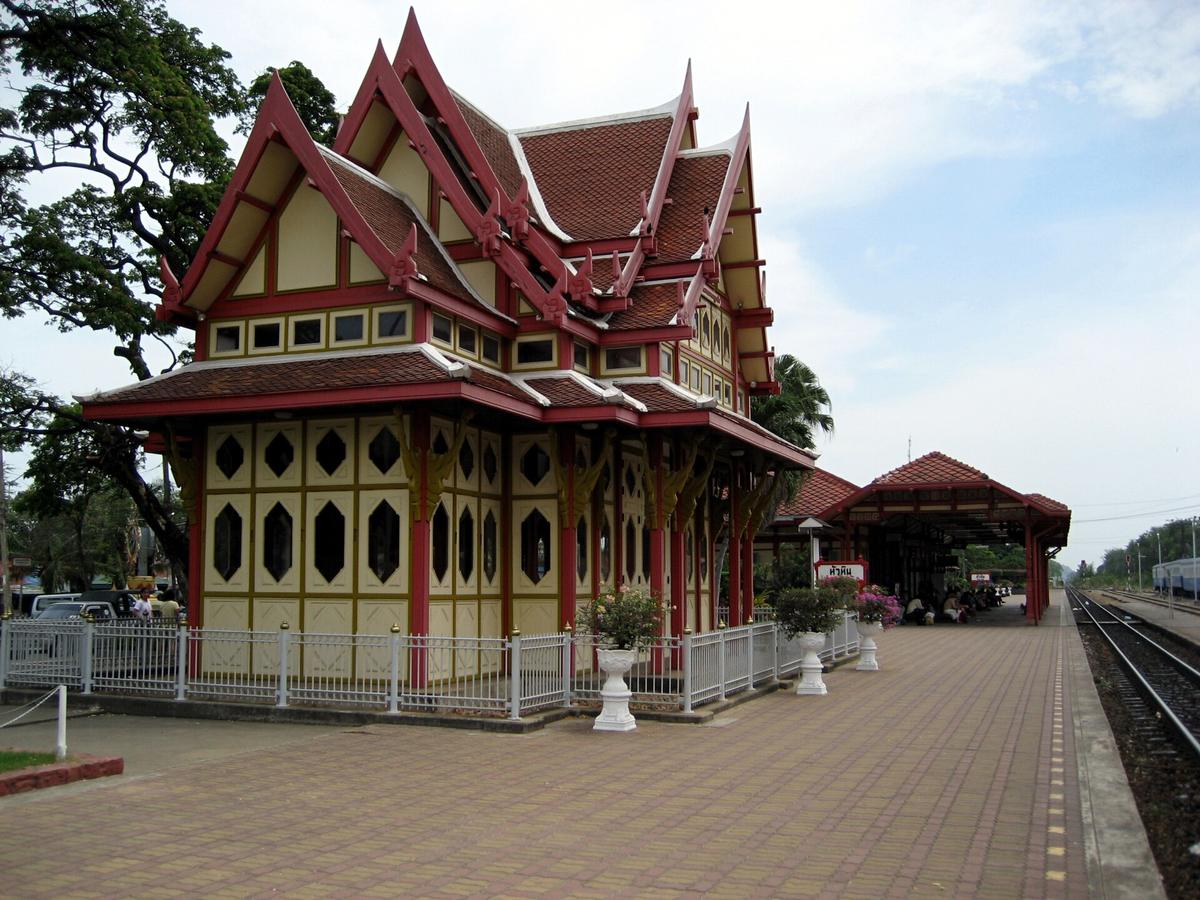
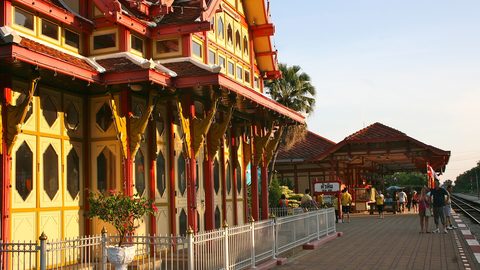
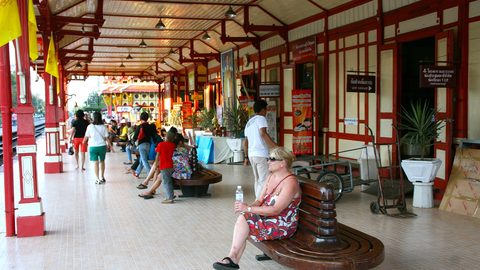
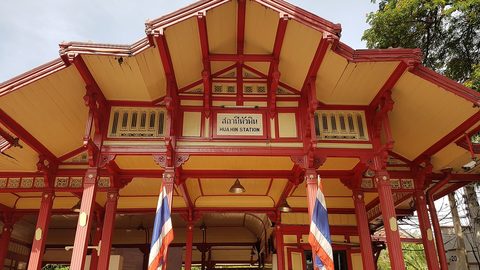
As a weekend beach destination for the capital, Hua Hin is close enough for a spontaneous Friday departure. Fly into Suvarnabhumi (BKK). From there, the airport bus (RRC Bus) takes 3.5 to 4 hours to the centre for 325 THB. A private taxi takes 2.5 to 3 hours and costs 2,000 to 2,500 THB. By train from the capital, the slow diesel rail from Krung Thep Aphiwat takes 4 to 4.5 hours, costing 44 to 410 THB depending on class. The Hua Hin Railway Station itself is a landmark: built in the 1920s, it features a royal waiting room in a Thai-style pavilion form. Get off the train and photograph it before you check in.
Getting Around: Songthaew vs Taxi Mafia
Songthaews, converted pick-up trucks, run fixed routes along the main roads for 10 to 20 THB. Flag them down like a bus. The dominant friction is that Grab and Bolt are legally restricted by the local taxi mafia, so pick-ups happen away from major hotel entrances, or you will be forced to use overpriced hotel taxis. Metered taxis refuse to use their meters. Budget for hotel transport at roughly three times the songthaew price. Do not assume the town is walkable. The main strip is ten kilometres long with key attractions spread far apart, and the heat makes walking between them punishing. If you do not have a transport plan, you will be stranded.
Common Mistake: Thinking You Can Walk It
First-timers assume the night market area is the whole town. It is not. The beach extends from the pier south to Khao Takiab, five kilometres. Khao Takiab hill itself rises 272 metres, with a temple, Wat Khao Takiab, and a macaque population that aggressively steals bags, glasses, and food. No deterrents are in place. The Mrrigadayavan Palace, a teakwood seaside palace with royal heritage, is north of town. The Phraya Nakhon Cave requires a one-hour hike south. Without wheels or a songthaew route in mind, you will see only your hotel room.

Day Trips and Deeper Dives
With three nights, you have time for a day trip. Sam Roi Yot National Park is 45 minutes south by car, with limestone peaks and marshland boardwalks. Kaeng Krachan National Park is 1.5 hours west, offering a misty reservoir and hornbill spotting. Phetchaburi Historical Town is one hour north by train, with the hilltop Phra Nakhon Khiri palace and cave shrines. Pranburi Mangrove Forest is 30 minutes south, with boardwalks through protected mangroves and boat tours. Pala-U Waterfall is 1.5 hours west, best in the wet season with butterfly swarms. Dolphin Bay in Pranburi offers rare pink dolphin sightings by boat, unreliable but magical. The kite-surfing season runs November through March, with launch points south of the pier and at Pranburi's Pak Nam Pran flat-water lagoon.
Monsoon Valley and Inland Excursions
Monsoon Valley Vineyard produces Thai wine from Colombard grapes in a hilly microclimate. Book a grape cycle tour and taste the Monsoon Valley Sparkling. Wat Huy Mongkol has a giant Luang Phor Tuad statue and an amulet market that draws massive local crowds. Ratchapakdi Park displays seven giant bronze kings on a vast, exposed site, bring water. The Hua Hin Artist Village (Baan Sillapin) has galleries, coffee, and giant termite mound sculptures. Tamarin Market runs Friday through Sunday with foodie stalls, craft beer, and acoustic sets. All of these are reachable by songthaew or a hired car for the day.
Onward Routes
Hua Hin sits on the Southern Line railway, which serves Surat Thani for Ko Samui and Ko Phangan, then onward to Hat Yai and the Malaysian border at Padang Besar. By road, Phetkasem Road (Highway 4) runs south through Prachuap Khiri Khan, Chumphon, and onward to Surat Thani and Phuket. Northbound, the same road and rail return you to the capital. The town works as a first stop on a southern Thailand trip or as the final decompression before flying home.
What to See in Hua Hin
More on Hua Hin
-
 Khao Sam Roi Yot Day Trip the Phraya Nakhon Cave Pavilion and the Climb to Reach It
-
 Hua Hin or Pattaya Which Bangkok Weekender Beach Town Fits You
Hua Hin or Pattaya? One is an orderly golf-and-seafood retreat for Bangkok families, the other a loud anything-goes playground. Here's how to pick without regret.
Hua Hin or Pattaya Which Bangkok Weekender Beach Town Fits You
Hua Hin or Pattaya? One is an orderly golf-and-seafood retreat for Bangkok families, the other a loud anything-goes playground. Here's how to pick without regret.
Common Questions
When is peak season in Hua Hin?
December to March. Cool, dry weather with low humidity draws the capital's elite and European snowbirds, sending beachfront hotel prices up 50 to 100 percent.
When should I avoid Hua Hin?
Late April to May brings brutal heat with temperatures hitting 38°C. Avoid Thai school holidays from mid-March to mid-May when beaches are packed. The Hua Hin Jazz Festival weekend in May or June brings heavy traffic and sold-out hotels.
Is the water clear in Hua Hin?
No. The Gulf of Thailand water here is opaque greenish-grey to brown. It is not turquoise. If clear water is a dealbreaker, skip the town.
Are there jellyfish in Hua Hin?
Yes. Box jellyfish appear sporadically, especially July through October. Swim only where vinegar stations are posted.
Can I use Grab or Bolt in Hua Hin?
Grab and Bolt are legally restricted by the local taxi mafia. Pick-ups happen away from major hotel entrances, or you will be forced into overpriced hotel taxis. Songthaews on fixed routes for 10 to 20 THB are the reliable option.
How long should I stay in Hua Hin?
Minimum two nights: one full day for the beach and night market, one for a day trip or golf. Three nights unlocks a genuinely relaxed pace.
What should I eat in Hua Hin?
Kao Takiab Seafood on the Rocks: grilled squid and blue crab eaten on plastic chairs with waves splashing your feet. Hoi Shellang Larb: stir-fried oysters with chilli paste and holy basil. Khao Man Gai Baan Kao: chicken rice with fermented soybean dipping sauce. Hua Hin Pineapple: a crunchy, low-acid variety sold sliced at the train station. Roti Saimai: candy floss wrapped in thin roti at the night market. Pla Samlee Daed Dieow: sun-dried threadfin bream, deep-fried and eaten whole. Monsoon Valley Sparkling: local sparkling wine from Colombard grapes.
Read next
-
 Hua Hin Hotels by Type and Price Where Midweek Rates Halve
Hua Hin hotels are shaped by Bangkok weekend demand, so midweek rates often run half the weekend price—the single most useful fact for booking a stay on this coast.
Hua Hin Hotels by Type and Price Where Midweek Rates Halve
Hua Hin hotels are shaped by Bangkok weekend demand, so midweek rates often run half the weekend price—the single most useful fact for booking a stay on this coast.
-
 Where to Stay in Hua Hin Along Fifteen Kilometres of Coast
Where to stay in Hua Hin depends on whether you want night market walkability, a condo near Soi 102 cafes, or a family resort up the coast in Cha-Am—and your transport plan follows from that choice.
Where to Stay in Hua Hin Along Fifteen Kilometres of Coast
Where to stay in Hua Hin depends on whether you want night market walkability, a condo near Soi 102 cafes, or a family resort up the coast in Cha-Am—and your transport plan follows from that choice.
-
 Hua Hin Flights Why You Fly to Bangkok and the Airport Bus Beats a Connection
-
 Hua Hin Things to Do Ranked for a Town Where Less Is the Point
Hua Hin things to do are fewer than most Thai beach towns, and that is the point—this is a place for beach horse rides, weekend markets, and seafood, not an attraction-packed itinerary.
Hua Hin Things to Do Ranked for a Town Where Less Is the Point
Hua Hin things to do are fewer than most Thai beach towns, and that is the point—this is a place for beach horse rides, weekend markets, and seafood, not an attraction-packed itinerary.
-
 Best Time to Visit Hua Hin Month by Month in a Rain Shadow Coast
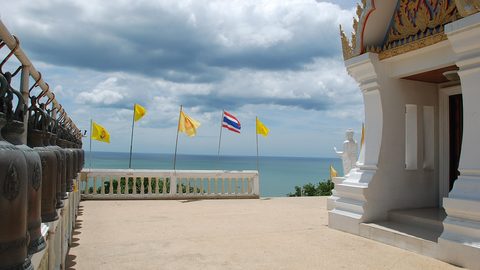
The best time to visit Hua Hin is December to March for cool dry weather, but its rain shadow means the wet season is milder than Phuket's—a genuine reason to come when other coasts are poor.
Best Time to Visit Hua Hin Month by Month in a Rain Shadow Coast
The best time to visit Hua Hin is December to March for cool dry weather, but its rain shadow means the wet season is milder than Phuket's—a genuine reason to come when other coasts are poor.
-
 Getting Around Hua Hin When the Town Is Strung Out and Grab Fails
Getting around Hua Hin requires a plan: the town stretches ten kilometres, Grab is restricted by the local taxi mafia, and songthaews on fixed routes become your most reliable option.
Getting Around Hua Hin When the Town Is Strung Out and Grab Fails
Getting around Hua Hin requires a plan: the town stretches ten kilometres, Grab is restricted by the local taxi mafia, and songthaews on fixed routes become your most reliable option.
-
 Hua Hin Night Market
-
 Khao Takiab
-
 Thailand Travel Guide From First Timers To Island Hoppers
A realistic Thailand travel guide covering regions, seasons, and pacing so you avoid the classic Bangkok Chiang Mai island mistake.
Thailand Travel Guide From First Timers To Island Hoppers
A realistic Thailand travel guide covering regions, seasons, and pacing so you avoid the classic Bangkok Chiang Mai island mistake.