A Guangzhou Travel Guide That Puts Cantonese Food and Real Neighbourhoods First
A Guangzhou travel guide that puts Cantonese food and real neighbourhoods first, for travellers who prefer chaotic wholesale markets and yum cha to polished tourist sights.
- Flag
-
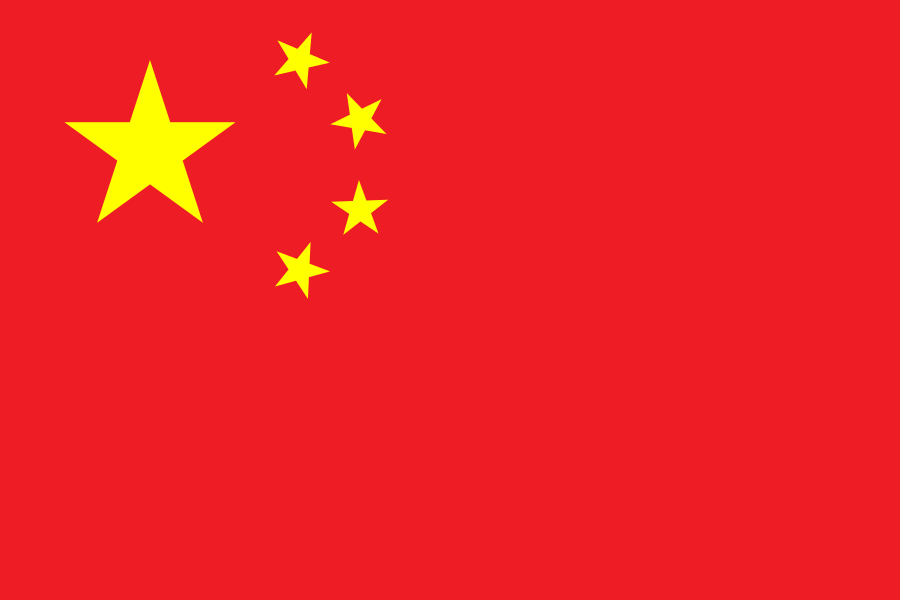
- ISO code
- CN
- Population
- 16,096,724
- Currency
- CNY
- Timezone
- Asia/Shanghai
Guangzhou is 2,200 years old as a trading port, yet most visitors spend only two days here and call it done. The city does not perform for tourists. It is a humid, sprawling commercial machine, one of the largest wholesale market clusters in China, and its main event is food. The right number is three days: one for the historic core and Shamian Island, one for eating across the neighbourhoods of Liwan and Yuexiu, and one for a modern area like Tianhe or a day trip into the Pearl River Delta. This Guangzhou travel guide is built for travellers who want to eat Cantonese food where people actually eat it, wander neighbourhoods that look nothing like a postcard, and treat the city as a base for the region rather than a destination in itself.
- Primary reason to visit: Food
- Recommended stay: 2 days for most visitors; 3 days for depth
- Old city districts: Yuexiu, Liwan
- Modern district: Tianhe
- Main river: Pearl River (Zhujiang)
- Population (2020 census): 18,676,605 (city proper)
- Metro population (Greater Bay Area): approx. 67.8 million
- Climate type: Humid subtropical (Cfa)
- Average July high: Approx. 33°C
- Average January low: Approx. 10°C
- Metro lines in operation (2026): 16 lines, 621 km
- Metro daily ridership: Approx. 8-10 million
- Main airport: Guangzhou Baiyun International Airport (CAN)
- High-speed rail to Hong Kong: Approx. 47-60 min to West Kowloon
- Visa-free transit: 240-hour (10-day) transit for eligible nationalities at Baiyun Airport; verify current rules with official sources
- UNESCO status: Creative City of Gastronomy, 2010
A Guangzhou Travel Guide That Puts Cantonese Food and Real Neighbourhoods First
Most overseas Chinese food traces back to Cantonese cooking traditions, and Guangzhou remains the best place in mainland China to eat that food on its own terms. But the city does not present itself politely. Guangzhou is not a pretty city. Sight density is low relative to the city's size. Visitors who come expecting Beijing's imperial monuments or Shanghai's waterfront grandeur often leave disoriented. The payoff is something else: a raw, working energy built around trade, not tourism. You eat in markets where stallholders have been frying the same noodles for forty years. You cross the Pearl River on a metro train because the road bridges and tunnels are clogged at rush hour. You adjust to the humidity, which sits around 75-80% average annual humidity and peaks from April through September with sudden downpours that flood low-lying streets. Guangzhou rewards slow wandering across its neighbourhoods, not checklist tourism.
Planning Decisions
The two essential planning decisions for a trip to Guangzhou are what you eat and where you sleep. These decisions are connected because good food and real accommodation are distributed by area, not concentrated in a single hotel zone. The food page for this city covers where to eat dim sum, claypot rice, roast goose, wonton noodles, and double-skin milk. It also explains the hours and etiquette of yum cha, which in traditional restaurants runs from roughly 07:00 to 14:00. The where-to-stay page covers which area fits which traveller. A hotel in Tianhe CBD puts you near the Canton Tower and modern malls but a 40-minute metro ride away from the old quarter food streets of Liwan. The rest of the planning details are standard: set up WeChat Pay and Alipay before you arrive, since Guangzhou runs on the QR code. Budget for a VPN, since Google, WhatsApp, Instagram, and Facebook are blocked. Accept that you will need a Chinese phone number for SMS verification on public Wi-Fi.


Guangzhou Food Guide: Where and What to Eat in the Cantonese Food City
Calling Guangzhou a Cantonese food city is underselling it. Guangzhou is the Cantonese food city. The sheer range runs from street stalls in Liwan that sell congee with youtiao for under RMB 15 to high-end restaurants in Tianhe where a dinner for two passes RMB 1,000. The Michelin Guide published its first Guangzhou edition in 2018. The 2024 list included 15 starred restaurants plus roughly 20 Bib Gourmand choices. But the street-level eating is the draw. Dim sum at a traditional teahouse like Panxi or Guangzhou Restaurant costs approximately RMB 50 to 150 per person, depending on how many trolleys you flag down. Roast goose in Yuexiu or Liwan old quarters has a crisp skin and a gamier, fattier flavour than roast duck. Eat it for lunch at a specialist shop for around RMB 30 to 60 a portion. Baiqie chicken, the poached chicken with ginger-scallion oil, and claypot rice with lap cheong and a charred crust at the bottom are dishes that define the city's domestic culinary reputation more than anything on a tourist menu.
Food Streets And Markets
The food streets cluster in the old areas. Shangxiajiu Pedestrian Street in Liwan is a late Qing arcaded commercial street lined with shops selling everything from dried seafood to white cut chicken. The alleys around it are where you find the night market seafood stalls in Haizhu and Liwan that cook fresh shellfish to order. Qingping Market, a herbal medicine and dried seafood market operating since 1979, is worth a walk-through even if you do not buy anything. The breadth of Cantonese food in Guangzhou is not limited to sit-down meals. Liangcha herbal tea shops are everywhere in the old areas. Double-skin milk dessert native to neighbouring Shunde is widely available for around RMB 10 to 20.
Dim Sum Timing
Plan around the fact that dim sum is a daytime meal. Most traditional restaurants stop serving dim sum by 14:00. For dinner, look for restaurants that specialise in a single dish: roast goose, congee, or claypot rice. The city's UNESCO Creative City of Gastronomy designation, awarded in 2010, is not decorative. It reflects a food culture that dominates every level of the economy and social life.
Using Guangzhou as a Pearl River Delta Base
One of the smartest ways to plan a southern China trip is to treat Guangzhou as a Pearl River Delta base. The high-speed rail connections from Guangzhou South Railway Station put Foshan, Shunde, Shenzhen, and Hong Kong within 30 to 60 minutes. Foshan is accessible by metro via the Guangfo Line, the first intercity metro in China, which opened in 2010 and runs approximately 38 km. Shunde, the adjacent city that also holds a UNESCO Creative City of Gastronomy designation from 2014, is 30 to 60 minutes away by intercity rail. Hong Kong West Kowloon is 47 to 60 minutes from Guangzhou South on G-series high-speed trains. Kaiping Diaolou, the fortified watchtower villages, require a longer journey of about 1.5 to 2 hours by bus or train plus a transfer but offer an architectural experience that Guangzhou itself cannot provide.
The reverse is also true: Guangzhou is the easiest mainland China entry point from Hong Kong. The high-speed rail connection replaces the discontinued through train service from 2018. You can fly into Hong Kong International Airport and be in Guangzhou within 90 minutes if you combine the Airport Express to West Kowloon with a high-speed train. That logic makes Guangzhou a more practical base than Shenzhen for deeper trips into Guangdong province. The metro network of 16 lines and 621 km in operation as of 2026 covers the urban area thoroughly. But the city's physical scale means you should not try to see Guangzhou and Shenzhen in the same day unless you enjoy spending hours on trains.
Navigating Guangzhou Neighbourhoods
Guangzhou neighbourhoods are not interchangeable. Each one has a distinct character and a different reason to visit. The correct approach is to pick a home base based on the where-to-stay page and then make targeted trips to other areas. Do not try to sleep in a new neighbourhood every night. The metro handles the distances, but the interchanges at Tiyu Xilu and Zhujiang New Town involve long underground walks, and Line 3 is crush-loaded at rush hour.
Yuexiu
Yuexiu is the old city core. Yuexiu Park covers 860,000 square metres and contains the Five Rams Statue, the symbol of Guangzhou erected in 1959, and Zhenhai Tower, built in 1380, which houses the Guangzhou Museum. Beijing Road, a pedestrian shopping street that has been a commercial street for over 1,000 years, runs through Yuexiu and has exposed archaeological layers of ancient road surfaces. Chen Clan Ancestral Hall, built in 1894, is an ornate Lingnan architecture complex that functions as a folk art museum. The Temple of the Six Banyan Trees has the Flower Pagoda, 57 metres tall, first built in 537 and rebuilt in 1097, and is an active Buddhist worship site. Sacred Heart Cathedral, a Gothic Revival granite cathedral built from 1863 to 1888, feels architecturally out of place in Guangzhou and is worth a fast visit for the contrast.
Liwan
Liwan is the traditional Cantonese neighbourhood area. This is where you find the Xiguan old quarter, the arcaded qilou architecture, Lychee Bay with its canal-side historic area and Cantonese opera heritage, and the densest concentration of street food and small restaurants in the city. Cantonese opera is a UNESCO Intangible Cultural Heritage, inscribed in 2009, and you can hear it performed along Lychee Bay. The wholesale market clusters in the area include Zhanxi clothing market with over 30,000 stalls, Baima Clothing Market which opened in 1993, and the Fangcun Tea Market, one of the largest tea wholesale markets in China. From a tourist perspective, Liwan is the area to visit, not to sleep in, since the accommodation stock is limited to a few older guesthouses.
Tianhe
Tianhe is the modern CBD. Canton Tower, 604 metres tall and completed in 2010, dominates the skyline. Zhujiang New Town is the CBD itself, home to the Guangzhou Opera House designed by Zaha Hadid, completed in 2010, and the Guangdong Museum, which opened the same year. Huacheng Square is the central axis plaza with skyline views and an underground mall. Tianhe works well as a base for business travellers and first-time visitors who want modern hotel standards, but the food options lean polished and expensive compared to Liwan and Yuexiu.
Shamian Island, Haizhu, And Pazhou
Shamian Island is a quiet colonial-era enclave with European buildings, banyan trees, and a riverfront calm that feels disconnected from the rest of Guangzhou. It was a former foreign concession area from the 19th century. It takes about 90 minutes to walk across and is worth a morning for the atmosphere, but there is no reason to return a second time. Haizhu is the island area south of the Pearl River, home to the Huangsha Aquatic Product Market, one of the largest seafood wholesale markets in South China, and riverside promenades with river crossing access to the old city. Pazhou is the exhibition area that contains the Pazhou International Convention and Exhibition Centre, venue for the Canton Fair. During the Canton Fair periods in mid-April to early May and mid-October to early November, hotel rates in Pazhou and Tianhe can triple, and the metro is packed with attendees. Outside of fair weeks, Pazhou has wide roads and little street life. There is no reason for a leisure traveller to stay there.
When to Visit Guangzhou and When to Stay Home
The best months for a Guangzhou visit are October through December, when humidity drops and temperatures are comfortable. Late January through February around Chinese New Year offers flower markets and temple fairs, though many small restaurants close for the holiday, and the 2027 date for Lunar New Year falls on 6 February 2027 so plan accordingly. The window to avoid is April through June, when heavy rain and humidity peak. The Canton Fair periods of mid-April to early May and mid-October to early November produce hotel price spikes even far from Pazhou, so check the fair schedule before booking if you have flexibility.
The January low averages about 10°C, so winter is far from cold by most standards, but the July high averages around 33°C with oppressive humidity. May through November covers typhoon season, with the peak from July to September. Annual rainfall runs approximately 1,700 to 2,000 mm. If you hate humidity, crowds, or aggressive commercial density, Guangzhou is not for you. If you want a quiet or visually pretty city, go somewhere else.
| District | Character | Best For | Food Quality | Hotel Quality |
|---|---|---|---|---|
| Yuexiu | Old city core, parks, temples, chaotic commerce | History, Beijing Road, Yuexiu Park | Excellent street food and roast goose | Mid-range, some heritage hotels |
| Liwan | Traditional Cantonese neighbourhoods, food streets, arcades | Eating, Cantonese food, wholesale markets | Best in the city | Limited, older guesthouses |
| Tianhe | Modern CBD, malls, high-rise business district | Business, modern hotels, Canton Tower | Good but polished and expensive | High-end, international chains |
| Shamian Island | Colonial enclave, quiet, leafy | Morning walk, photography | Minimal on-island | One or two heritage hotels |
| Haizhu | Island district, wholesale markets, riverfront | Seafood markets, riverside walks | Seafood wholesale | Limited |
| Pazhou | Exhibition district, wide roads, little street life | Canton Fair attendance only | Poor | Expensive during fair, empty otherwise |


Arrival, Metro, and Getting Around
Guangzhou Baiyun International Airport, IATA code CAN, is the main airport. In 2023 it handled 63.1 million passengers and ranked first in China for passenger volume for four consecutive years. It has two terminals and three runways. Metro Line 3 runs from the airport to Tiyu Xilu and central stations in about 40 to 50 minutes for a fare of RMB 7 to 10. A taxi to central areas takes 45 to 70 minutes and costs roughly RMB 120 to 180 depending on traffic. Shenzhen Bao'an Airport is an alternative but requires a 1.5 to 2.5 hour onward journey by train or coach. For budget travellers, the metro is the only sensible option. For groups of three or four, the taxi splits to roughly the same cost as metro tickets.
Using The Metro
The Guangzhou Metro opened its first line in 1997 and now runs 16 lines across 621 km, carrying approximately 8 to 10 million passengers daily. You need a WeChat or Alipay transport QR code or a Yang Cheng Tong transport card to ride it, since cash is not accepted at most ticket machines. The challenge of the metro is not complexity but scale. Interchanges like Tiyu Xilu and Zhujiang New Town involve long underground walks, and Line 3 is crush-loaded at rush hour. Metro security checks operate at every station with bag scanners, which slows entry at peak times.
Crossing The River
Crossing the Pearl River by taxi or car is a mistake during rush hour. The north-south road bridges and tunnels clog badly, and the metro is almost always faster. Ride-hailing through WeChat or Alipay works well outside peak hours, but English is less common in taxis than in Shanghai or Beijing. Have your destination written in Chinese characters on your phone.
Avoid The Checklist Loop
One common mistake visitors make is underestimating the city's physical scale and spending too much time crossing between far-flung sights instead of staying in one area and eating through it. Guangzhou is not a city you see in a checklist loop. You pick a neighbourhood in the morning, eat your way through it, and let the afternoon unfold. If you try to see Yuexiu Park, Chen Clan Ancestral Hall, Canton Tower, and Shamian Island in a single day, you will spend half the day on the metro and the other half walking across vast station interchanges, and you will eat badly as a result.
What Goes Wrong in Guangzhou
Language barrier is real. English is less common than in Shanghai or Beijing, including in taxis and many restaurants. You need restaurant names and addresses written in Chinese on your phone, and you need WeChat Pay or Alipay working because cash is less common than it should be for a tourist economy. The heat and rain from April through September are oppressive, and sudden downpours flood low-lying streets. Bring an umbrella that can handle a tropical rainstorm and shoes that dry fast.
During the Canton Fair, hotel rates can triple even far from Pazhou. The fair's spring session typically runs April 15 through May 5, and the autumn session runs October 15 through November 4. If you are not attending the fair, avoid those dates entirely. If you must travel during those windows, book accommodation in areas far from Pazhou and commit to longer metro commutes.
Foreign SIMs with roaming usually work in Guangzhou, but Google, WhatsApp, Instagram, and Facebook are blocked without a VPN. Public Wi-Fi often requires a Chinese phone number for SMS verification. You need to set up WeChat and Alipay before arrival and load them with funds or link a foreign card. The tap water is not potable without boiling or filtering, so buy bottled water in bulk when you arrive.
Who Should Visit Guangzhou and Who Should Skip it
Guangzhou is right for food-focused travellers who will eat anywhere, from a street stall in Liwan to a Michelin-starred dining room in Tianhe. It suits business travellers with free evenings who want to eat well without a reservation. It works for urban explorers who like unpolished neighbourhoods, wholesale markets, and the energy of a city built around commerce rather than sightseeing. It is a strong choice for shoppers interested in wholesale markets, especially clothing at Zhanxi and Baima, and for travellers using Guangzhou as a cheap, less touristy base for the Pearl River Delta, including day trips to Foshan, Shunde, and Hong Kong.
Guangzhou is not right for first-time China visitors who want famous monuments and polished tourist infrastructure. It is wrong for people who dislike humidity, crowds, or aggressive commercial density. It is wrong for travellers seeking a compact, walkable historic core. It is wrong for anyone expecting a quiet or visually pretty city. And it is absolutely wrong for travellers with no interest in eating. If food is fuel to you, not pleasure, pick another city.
What to See in Guangzhou
-
 Chen Clan Ancestral Hall
The Chen Clan Ancestral Hall in Guangzhou is a 19th-century academy covered in Lingnan carving, ceramic sculpture, and ironwork—the one unmissable building in the city.
Chen Clan Ancestral Hall
The Chen Clan Ancestral Hall in Guangzhou is a 19th-century academy covered in Lingnan carving, ceramic sculpture, and ironwork—the one unmissable building in the city.
-
 Mausoleum of the Nanyue King
The Nanyue King's Tomb Museum in Guangzhou holds an intact Western Han king's burial chamber discovered in 1983, complete with a jade suit sewn in gold thread.
Mausoleum of the Nanyue King
The Nanyue King's Tomb Museum in Guangzhou holds an intact Western Han king's burial chamber discovered in 1983, complete with a jade suit sewn in gold thread.
-
 Shamian Island
 is a sandbank of European colonial villas, banyan trees, and riverfront calm—the quietest place in Guangzhou and the antidote to the city's commercial density.
Shamian Island
Shamian Island is a sandbank of European colonial villas, banyan trees, and riverfront calm—the quietest place in Guangzhou and the antidote to the city's commercial density.
More on Guangzhou
-
 Guangzhou Dim Sum Guide to Yum Cha, Teahouses and Trolley Classics
Where Guangzhou yum cha comes from, what to order from the trolley, and the traditional teahouses still doing dim sum properly.
Guangzhou Dim Sum Guide to Yum Cha, Teahouses and Trolley Classics
Where Guangzhou yum cha comes from, what to order from the trolley, and the traditional teahouses still doing dim sum properly.
-
 Guangzhou Canton Fair Dates, Hotel Price Spikes and What It Means
What the Guangzhou Canton Fair is, when it runs, and why it triples hotel prices and packs the metro across the whole city.
Guangzhou Canton Fair Dates, Hotel Price Spikes and What It Means
What the Guangzhou Canton Fair is, when it runs, and why it triples hotel prices and packs the metro across the whole city.
-
 Guangzhou Old Streets Walk from Enning Road to the Xiguan Houses
A one-afternoon Guangzhou old streets walk from Enning Road through the Liwan arcades to the Xiguan houses and Lychee Bay.
Guangzhou Old Streets Walk from Enning Road to the Xiguan Houses
A one-afternoon Guangzhou old streets walk from Enning Road through the Liwan arcades to the Xiguan houses and Lychee Bay.
Common Questions
How many days do I need in Guangzhou?
Three days is the right number: one for the historic core and Shamian Island, one for food and neighbourhoods in Liwan and Yuexiu, and one for a modern area like Tianhe or a day trip into the Pearl River Delta. Most visitors do it in two days and leave hungry.
Is Guangzhou safe for solo travellers?
Yes. Guangzhou is a safe city for solo travellers, including solo women, by any global standard. The main risks are traffic and pickpocketing in crowded metro stations and wholesale markets, not violent crime. Take standard precautions with your phone and wallet.
Do I need to speak Cantonese?
No. Mandarin is widely understood across Guangzhou, especially in younger generations, shops, and the metro. Cantonese is the dominant local language and you will hear it constantly, but you do not need to speak it. Have addresses written in Chinese characters on your phone for taxis and older restaurant owners.
What is the best way to get from Hong Kong to Guangzhou?
High-speed rail from Hong Kong West Kowloon to Guangzhou South takes approximately 47 to 60 minutes on G-series trains. This is the fastest and most reliable option. The old through train was discontinued in 2018. A bus takes 3 to 4 hours and is not worth the savings.
Is Guangzhou expensive?
Guangzhou is cheaper than Shanghai and dramatically cheaper than Hong Kong. Street food costs RMB 5 to 30 per item. A dim sum lunch costs RMB 50 to 150 per person. High-end Cantonese dinners run RMB 300 to over 1,000 per person. Hotels are reasonable outside of Canton Fair periods, when rates triple.
Should I go to Guangzhou or Shenzhen?
Choose Guangzhou if you want Cantonese food, neighbourhood life, and a raw urban character. Choose Shenzhen if you want modern architecture, art districts, and electronics markets. Guangzhou rewards slow wandering across its neighbourhoods. Shenzhen is a planned city built for efficiency and consumption.
What should I pack for Guangzhou?
Lightweight, moisture-wicking clothing for the humid months (April to September). A sturdy umbrella for the sudden rainstorms. Fast-drying shoes. A portable fan. A VPN enabled on your phone before you arrive. WeChat Pay and Alipay set up with funds. A backup phone number for SMS verification on public Wi-Fi.
Read next
-
 Guangzhou Hotels by District and Price Band with Canton Fair Dates First
Canton Fair dates dictate Guangzhou hotel prices: rates double or triple city-wide twice a year. Pick your district by travel style, and always check the fair calendar before booking.
Guangzhou Hotels by District and Price Band with Canton Fair Dates First
Canton Fair dates dictate Guangzhou hotel prices: rates double or triple city-wide twice a year. Pick your district by travel style, and always check the fair calendar before booking.
-
 Where to Stay in Guangzhou District by District for Food and Metro Access
Where to stay in Guangzhou broken down district by district, weighing food access, metro convenience, and the Canton Fair pricing spike that hits the whole city.
Where to Stay in Guangzhou District by District for Food and Metro Access
Where to stay in Guangzhou broken down district by district, weighing food access, metro convenience, and the Canton Fair pricing spike that hits the whole city.
-
 Guangzhou Flights Getting to Baiyun Airport and Shenzhen Baoan Alternatives
Fly into Guangzhou Baiyun Airport (CAN) and take Metro Line 3 to the centre in 40 minutes for under ¥10, or use Shenzhen Bao'an as a cheaper alternative with a longer onward connection.
Guangzhou Flights Getting to Baiyun Airport and Shenzhen Baoan Alternatives
Fly into Guangzhou Baiyun Airport (CAN) and take Metro Line 3 to the centre in 40 minutes for under ¥10, or use Shenzhen Bao'an as a cheaper alternative with a longer onward connection.
-
 Guangzhou Things to Do That Frame the Real Main Event Which Is Eating
Guangzhou things to do ranked and argued honestly, with the framing that Cantonese food is the main event and the sights are the structure around the eating.
Guangzhou Things to Do That Frame the Real Main Event Which Is Eating
Guangzhou things to do ranked and argued honestly, with the framing that Cantonese food is the main event and the sights are the structure around the eating.
-
 Best Time to Visit Guangzhou Month by Month Avoiding Canton Fair Spikes
The best time to visit Guangzhou is October to December for low humidity and comfortable temperatures, steering clear of the Canton Fair weeks when hotel rates triple across the city.
Best Time to Visit Guangzhou Month by Month Avoiding Canton Fair Spikes
The best time to visit Guangzhou is October to December for low humidity and comfortable temperatures, steering clear of the Canton Fair weeks when hotel rates triple across the city.
-
 Geting Around Guangzhou by Metro Line 3 and the Yang Cheng Tong Card
Geting around Guangzhou means mastering the metro, setting up a Yang Cheng Tong card or transport QR code, and knowing which river crossings to avoid at rush hour.
Geting Around Guangzhou by Metro Line 3 and the Yang Cheng Tong Card
Geting around Guangzhou means mastering the metro, setting up a Yang Cheng Tong card or transport QR code, and knowing which river crossings to avoid at rush hour.
-
Chen Clan Ancestral Hall
The Chen Clan Ancestral Hall in Guangzhou is a 19th-century academy covered in Lingnan carving, ceramic sculpture, and ironwork—the one unmissable building in the city.
-
Shamian Island
Shamian Island is a sandbank of European colonial villas, banyan trees, and riverfront calm—the quietest place in Guangzhou and the antidote to the city's commercial density.
-
Mausoleum of the Nanyue King
The Nanyue King's Tomb Museum in Guangzhou holds an intact Western Han king's burial chamber discovered in 1983, complete with a jade suit sewn in gold thread.