Badaling Great Wall by Train Why the Easiest Section Might Still Work
Badaling is the crowded, easy Great Wall section, but the train from Beijing North or Qinghe makes it worth reconsidering.
.jpg)
Badaling Great Wall by Train Why the Easiest Section Might Still Work
The express train from Beijing North reaches Badaling in 19 to 34 minutes. That speed makes this the most crowded and most restored Great Wall section worth a serious look, but only if you arrive early and commit to the south route. Skip the north route entirely. Do that and you see a World Heritage Site with a manageable crowd and a concrete plan. Fail to plan, and you join the 65,000 daily visitors who queue for two hours on the wall's steepest staircases.
The Beijing, Zhangjiakou line opened on 30 December 2019. Its Badaling Changcheng stop sits 102 m underground, the deepest rail terminal of its kind in the world. From the platform, three minutes on the 88 m escalator lifts you roughly 62 m to the surface. The second-class fare runs ¥25 to ¥29 (2024 rates, published by China Railway); first-class is ¥40 to ¥46. Tickets require real-name registration with a passport, and they open 15 days before departure. Around 10 to 20 daily departures leave Beijing North for Badaling. The exact schedule changes seasonally; check the official China Railway app for the day you travel.
The alternative is the S2 suburban line from Huangtudian. It takes 70 to 80 minutes and costs ¥7 exact, payable with a Beijing Subway Yikatong card. No real-name registration needed. No reserved seat. Frequency runs roughly 6 to 10 departures per day depending on season and day of the week. China Railway Beijing Group publishes the current schedule on its website and at the terminal. The S2 is cheaper but slower, and it drops you at Badaling, a ten-minute walk from the wall access point. The express train arrives at Badaling Changcheng, which requires an escalator ride to ground level and a short walk across a plaza. Both work. Neither requires a tour bus.
Train Schedule Logic: Which Train, Which Hour, Which Route
Take the First Departure
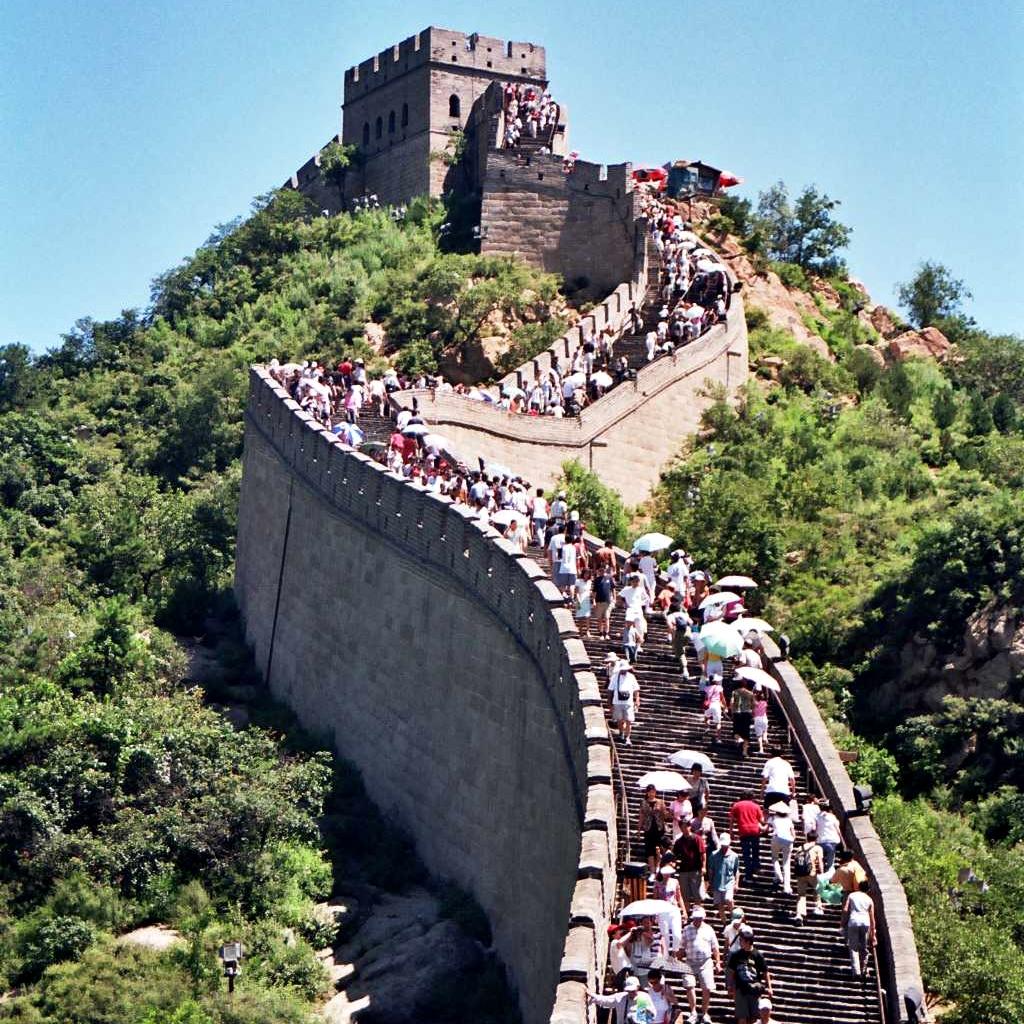
Board the earliest express from Beijing North. It arrives at Badaling Changcheng shortly after 07:00 in high season (April to October, first entry around 06:30). Enter the wall immediately. Walk straight to the south route, seven watchtowers, South Tower 1 to South Tower 7, with a gentler gradient and consistently lower crowding. The north route, twelve watchtowers up to North Tower 8 at 888 m, handles the worst crush because the cable car drops passengers near North Tower 8 and the vast majority of day-trippers turn right on arrival.
If you cannot make the first departure, take the second or third and accept that the peak crowd arrives from 10:00 to 14:00. On a weekday outside holidays, Badaling sees 10,000 to 25,000 visitors. A weekend pushes that to 30,000 to 50,000. National holiday weeks hit the 65,000 daily cap. On those days, the convenience of a 20-minute ride is cancelled by the reality of walking the wall bumper-to-bumper. Skip Badaling entirely and use the express line for a different day trip. Chengde Mountain Resort is two hours from Beijing North. Tianjin is 30 minutes. Both are less crowded.
The S2 as a Backup
The S2 suburban line from Huangtudian has its own logic. It is the backup when express tickets are sold out. Arrive at Huangtudian at least 30 minutes before the posted departure because the line forms. The S2 does not take reservations, so you stand or find a seat on a first-come basis. Board an S2 after 09:00 and you will arrive at Badaling near 10:30, deep into peak crowd hours. That combination is worth doing only if your goal is the very low fare and the scenic ride through the mountains, not a quiet wall experience. If you arrive by S2 after 10:00, skip the north route completely and walk only the first four watchtowers of the south route, then turn back. That gives you the photo angle southward without the crowds.
Walking from the Station to the Wall
From the Express Terminal to the Gate
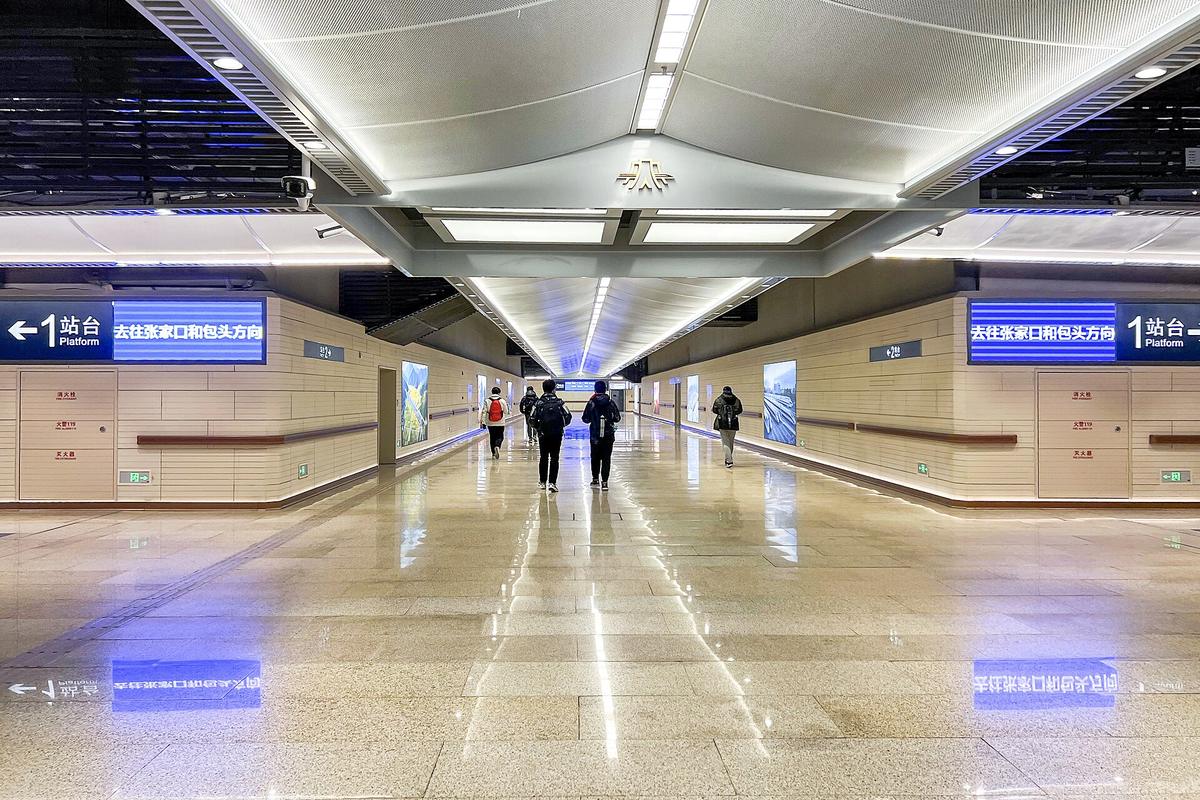
From Badaling Changcheng, follow the underground passage to the main plaza. You emerge near the circular-screen cinema, the souvenir arcades, and the Bear Park, a small enclosure of captive black bears that you should skip. It is shabby and not worth the detour. Walk past these to the main ticket gate. Buy your entry ticket online through the official Badaling Great Wall mini-program or a travel platform that accepts foreign passports. The 2024 high-season price was ¥40; low-season (November to March) was ¥35. Entry is timed and your passport is checked at the gate. Have it ready.
From the ticket gate, ignore the cable car queue on your left. That line serves the north route. Walk straight ahead toward the south route access. The ground pulley car, which lands near South Tower 4, is on the right near the Bear Park side access. You do not need either lift. The walk from the ticket gate to South Tower 1 is roughly 15 minutes on a paved path with shallow steps. Once on the wall, the south route is less steep and less crowded, and you can walk to South Tower 7 and back in under two hours at a moderate pace. For the highest point on the south route, South Tower 4 gives you a view over the valley and the north route without the density.
Why the North Route Fails
The north route is the one that appears in every brochure and every state-visit photograph. Foreign heads of state have been brought here since the 1950s, and Chinese school groups come as part of patriotic education trips. That makes it the most famous 3,741 m of wall at Badaling and the most frustrating. North Tower 8 is the peak at 888 m, reachable by cable car or a steep hike. On any weekend afternoon it is a bottleneck. Do not go there unless you arrive before 08:00 and can exit before 10:00. The trade-off: the north route has 12 watchtowers versus the south route's seven, so if you want a longer walk and your legs can handle the gradient, arrive at first entry and go north. But the practical choice for most visitors is the south route, done early, then out by noon before the 10-bus loads arrive.
Timing to Avoid the Worst Crush
The Early Window
The single most effective tactic is arriving at the wall access point within the first 30 minutes of opening. In high season, first entry is around 06:30 and last entry around 16:00, with the wall closing near 19:00. The two-hour window from 06:30 to 08:30 is the only time the north route is walkable. After 09:00, both routes fill. After 11:00 on a weekend, the experience on either route is a shuffle.
Weekdays outside Chinese holidays are dramatically better. Visitor count sits at 10,000 to 25,000, compared to 30,000 to 50,000 on a weekend. The national holiday windows to avoid entirely are Labour Day (1 to 5 May) and National Day (1 to 7 October), when the wall hits its 65,000 cap. Chinese New Year in late January to February is slightly less crowded at Badaling because many domestic travellers stay home, but the express train runs a reduced schedule and family-run restaurants near the base may close.
Skip the Lifts
Arrive and find the queue for the north route cable car stretching across the main plaza? Do not wait. Walk to the south route access. The pulley car landing point near South Tower 4 is faster and less used. Better still, skip the lifts entirely and walk the path. The walk to South Tower 1 is not strenuous. Reaching South Tower 4 on foot takes about 30 minutes from the entry gate. You gain exactly the same view as the cable car user, and you do not stand in a 45-minute line.
Badaling Versus Mutianyu: the Honest Comparison
Mutianyu is 1.5 hours from central Beijing by pre-booked car or tourist bus, with a cable car and a toboggan ride down. It is restored, but less crowded than Badaling. Its visitor profile skews toward independent travellers and families rather than school groups and first-timers. Mutianyu does not have an express rail link. You book a private driver or join a tour. That extra time and cost is the trade-off for a wall walk that is genuinely quieter on weekend afternoons.
Badaling's advantage is speed. The express from Beijing North to Badaling Changcheng takes 19 to 34 minutes. The S2 suburban line runs 70 to 80 minutes at ¥7. Bus 877 from Deshengmen is ¥12 and takes 70 to 90 minutes in normal traffic, but it is plagued by unlicensed touts and fake buses. Deshengmen is notorious for drivers offering a ¥50 ride that ends at a shopping stop. Neither Mutianyu nor Jinshanling (2.5 hours, semi-wild, fewer crowds) has this kind of rail access. If your total Beijing visit is four days and you cannot spare a half-day for the 1.5-hour drive each way to Mutianyu, the express to Badaling is the better logistical choice.
Use this decision rule: if you have a full day and want a quieter wall, go to Mutianyu and pay for the car. If you have a morning only, or you are travelling without a pre-booked driver, go to Badaling by express, arrive at 07:00, walk the south route, and leave by 11:00. You will have seen a 3,741 m section of Ming dynasty wall, spent less than ¥100 on transport, and missed the 50,000-person weekend peak. That is the version of Badaling that works.
.jpg)
What to Skip at the Base
The Bear Park near the south route access holds captive black bears in a small enclosure. Skip it. The circular-screen cinema and the photo studios are aimed at tour groups. The China Great Wall Museum, located near the main entry, is free with your Badaling ticket and covers the wall's construction history with artefacts from the Badaling section. It reopened after renovation on a date that may have changed, so check the official Badaling website for the current status. If it is open, budget 30 minutes. If it is closed, do not wait.
The fast-food outlets and souvenir arcades at the base charge inflated prices. Bring your own water and snacks. The walk from the express terminal to the wall access passes through a commercial plaza with overpriced restaurants that serve reheated noodles. Skip them. Eat afterward in Beijing.
| Mode | Journey Time | One-Way Fare (2024) | Booking | Terminal to Wall Walk |
|---|---|---|---|---|
| Express train (Beijing North) | 19–34 min | ¥25–29 second-class | Real-name, 15 days ahead | 5 min from exit |
| S2 suburban train (Huangtudian) | 70–80 min | ¥7 | No reservation needed | 10 min walk from Badaling |
| Bus 877 (Deshengmen) | 70–90 min | ¥12 | Cash or transit card | At main car park, 5 min to gate |
| Private car or taxi | 60–90 min | ¥300–500 estimated | Book in advance | Drops at main car park |
Who Should Take the Express Train to Badaling and Who Should Not
Good Fit
The Badaling express suits first-time China visitors who want the Great Wall set-piece and have only a morning to spare. It fits travellers who dislike dealing with tour buses and want the independence of a 20-minute ride with no transfers. The restored wall and the easy access from Beijing North mean you see a UNESCO World Heritage Site with minimal friction, as long as you front-load the day.
Bad Fit
The express does not suit anyone seeking a semi-wild wall with few people. That traveller goes to Jinshanling, 2.5 hours from the city, where the wall is unrestored and the crowds are thin. It does not suit travellers who hate crowds and cannot wake up early. On a weekend after 10:00, Badaling is the most congested Great Wall section open to the public. And it does not suit anyone who wants a wall walk longer than two hours without interruption, because the south route ends at South Tower 7 and the north route is too dense to enjoy after 09:00.
The single thing that most often goes wrong at Badaling is arriving after 09:00 and heading straight for the north route cable car. That queue can take 45 minutes on a weekend, and the walk from North Tower 8 back down through the crowd is slow enough that the total time on the wall feels like a penance. The correction costs nothing: take the first express from Beijing North, walk to the south route access, and leave by noon. That is the version of Badaling where the convenience of the train outweighs the crowds.
Read next
-
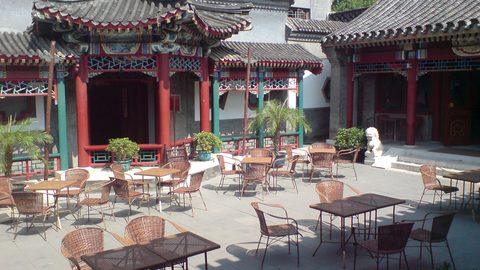
 Beijing Hotels by Price Band and Property Type
Beijing hotels split into hutong courtyards, international chains and functional business towers. Here is what each price band actually buys you.
Beijing Hotels by Price Band and Property Type
Beijing hotels split into hutong courtyards, international chains and functional business towers. Here is what each price band actually buys you.
-
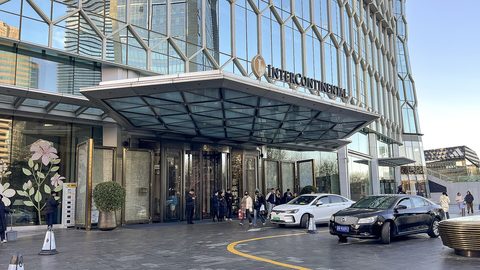 Where to Stay in Beijing by District and Travel Style
Dongcheng puts you beside the Forbidden City, Chaoyang beside the nightlife. Here is how Beijing's districts compare for different travellers.
Where to Stay in Beijing by District and Travel Style
Dongcheng puts you beside the Forbidden City, Chaoyang beside the nightlife. Here is how Beijing's districts compare for different travellers.
-
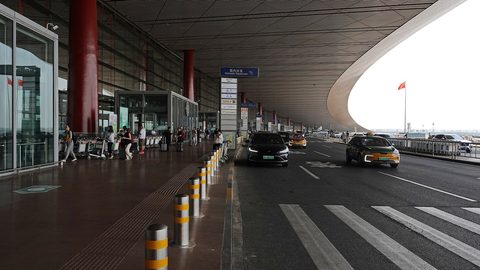 Beijing Flights PEK vs PKX Which Airport Actually Works for You
PEK or PKX? What each Beijing airport costs you in time, money, and logistical friction depending on where you are staying.
Beijing Flights PEK vs PKX Which Airport Actually Works for You
PEK or PKX? What each Beijing airport costs you in time, money, and logistical friction depending on where you are staying.
-
 Beijing Things to Do Worth Your Limited Days
The Forbidden City and Great Wall are essential, but Beijing's meaning lives in temple courtyards, hutong lanes and food streets. Here is what earns your days.
Beijing Things to Do Worth Your Limited Days
The Forbidden City and Great Wall are essential, but Beijing's meaning lives in temple courtyards, hutong lanes and food streets. Here is what earns your days.
-
 Best Time to Visit Beijing, Month by Month Tradeoffs
April and October bring blue skies and queues, July brings heat, January brings empty sites and hazardous air. Here is Beijing month by month.
Best Time to Visit Beijing, Month by Month Tradeoffs
April and October bring blue skies and queues, July brings heat, January brings empty sites and hazardous air. Here is Beijing month by month.
-
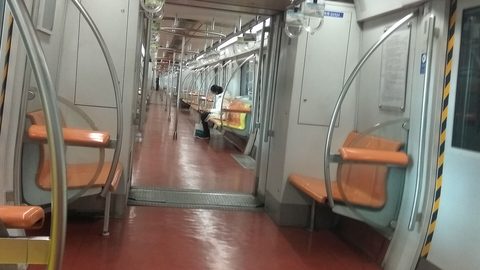 Getting Around Beijing Without Losing Half Your Day
Beijing's metro is clean and cheap but stops early, and taxis rarely speak English. Here is how to move around without burning half your day.
Getting Around Beijing Without Losing Half Your Day
Beijing's metro is clean and cheap but stops early, and taxis rarely speak English. Here is how to move around without burning half your day.
-
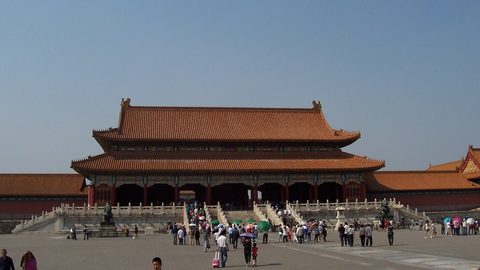 Forbidden City
 tickets require booking seven days ahead on WeChat with a passport. Here is the route to take once you are inside to avoid wasting the visit.
Forbidden City
Forbidden City tickets require booking seven days ahead on WeChat with a passport. Here is the route to take once you are inside to avoid wasting the visit.
-
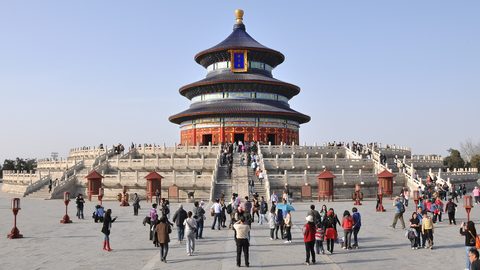 Temple of Heaven
The Temple of Heaven park matters as much as the temple. Morning tai chi, choirs, and card players make it a Beijing ritual worth a full morning.
Temple of Heaven
The Temple of Heaven park matters as much as the temple. Morning tai chi, choirs, and card players make it a Beijing ritual worth a full morning.
-
 Summer Palace
The Summer Palace is vast and the wrong entrance adds an hour of walking. Use the East Palace Gate and plan for at least four hours.
Summer Palace
The Summer Palace is vast and the wrong entrance adds an hour of walking. Use the East Palace Gate and plan for at least four hours.