How to Pay, Transfer, and Survive the Beijing Metro as a Foreigner
How to pay for the Beijing metro, navigate transfers and exits, pass security checks, and catch the last train without Chinese skills.
.jpg)
You step off the train at Dongzhimen, pull your suitcase towards the Line 13 platform, and the underground walk stretches ahead for ten minutes. No signs point to a shortcut. No English voice tells you which direction. You are carrying ¥100 in cash, a phone without a VPN, and zero Chinese characters. This is the moment a Beijing subway guide exists to solve.
The Beijing Subway runs 836 km across 29 lines and 490 stops. It carries 10.5 million passengers on a weekday. You will ride it to the Forbidden City, the Summer Palace, Lama Temple, and the Great Wall coach pick-up points. Here is how to pay without cash, what happens at every security check, which exit to surface from, when the last train leaves, and what to do when you miss it.
How to Pay on the Beijing Metro Without Cash
You have two options. Both work. One works for every visitor. The other fails for some.
Yikatong Card
The Beijing Transportation Smart Card, called Yikatong, is the safest option. Buy it at a staffed ticket window in any subway stop. It costs a refundable ¥20 deposit plus a minimum ¥10 top-up. Pay cash at the window. No Chinese is required: hold up your card, point at the machine, say "chongzhi" if you want to try, but the staff know the routine. Self-service kiosks accept ¥5, ¥10, ¥20 notes and ¥1 coins. The minimum top-up at a kiosk is ¥10.
Refund the card at designated stops only, including Beijing Railway Station, Beijing South Railway Station, Beijing West Railway Station, Beijing North Railway Station, Dongzhimen, Xizhimen, Capital Airport T2 and T3, and Daxing Airport. The maximum balance for a full cash refund is ¥100 or less. No fee if the card is undamaged and readable. The card has no expiry date.
Yikatong offers no discount per trip. Fares are distance-based: ¥3 for 0-6 km, ¥4 for 6-12 km, ¥5 for 12-22 km, ¥6 for 22-32 km, ¥7 for 32-52 km, ¥8 for 52-72 km, ¥9 for 72 km and above. A monthly cumulative discount kicks in: 20% off after ¥100 spend in a calendar month, 50% off after ¥150 spend. That matters for visitors staying two weeks or more.
Alipay and WeChat Transport QR Codes
Both Alipay and WeChat offer a "Beijing Subway Ride Code" that lets you scan your phone at the gate and pay after you exit. This is faster than a card. No top-up, no refund queue.
The catch: you need a mainland China Alipay or WeChat Pay account with real-name verification and a linked payment method. Foreign phone numbers may not support full setup. If you arrive without it working, you cannot set it up in the station. Do this before you leave your home country. Test it. If it fails, buy a Yikatong card at the airport subway stop.
Single-journey tickets from vending machines are a backup. They accept cash and some accept Alipay, WeChat, or UnionPay. Queue times at major stops during peak hours (07:00-09:00 and 17:00-19:00) run 5-15 minutes. The ticket is valid only on the day of purchase and for one journey. No refund for unused tickets after that day.
Beijing Metro Security Check: What to Expect at Every Station
Every stop has a mandatory bag X-ray scanner at the entrance. You will pass one every time you enter the system. Off-peak, the wait is 1-3 minutes. At peak hours in central stops such as Guomao, Xizhimen, Dongzhimen, Beijing South Railway Station, Wangfujing, Tiananmen East, and Tiananmen West, it stretches to 5-10 minutes.
Water bottles must be presented. The guard watches you open the bottle and take a sip. Do not argue. Do not pour it out in advance. Keep a bottle with you for the check, or carry an empty one and fill it after the gate.
Budget the security check into every journey. If you are connecting through Guomao from Line 1 to Line 10, you pass security once, not twice. The bottleneck is entering the system, not transferring. But when you exit a stop to change your route and re-enter at a different entrance, you go through again. Plan for 10 extra minutes at central stops during rush hour.
Why Exit Letters Matter and How to Pick the Right One
Beijing stops have multiple exits labelled A, B, C, D. Some have letters up to H or beyond. Picking the wrong exit puts you on the wrong side of a 10-lane road with no pedestrian crossing for 500 metres. You lose 10 minutes walking around the block.
Before you leave the train, check the station wall map. It shows which exits lead to which landmarks. Or pre-load a screenshot of your destination with the exit letter noted. For the Forbidden City, use Tiananmen East Exit B or Tiananmen West Exit B. For the Summer Palace north gate, use Beigongmen Exit D, then walk 300 metres. For Lama Temple, use Yonghegong Exit C, then walk 100 metres.
If you surface and realise you chose wrong, do not try to cross the road at grade. Go back down, pass through the paid area again if needed, and take the correct exit. You will not be charged again for re-entering the same stop if your journey is still active on your ticket or card.
Beijing Metro Last Train Time
Last train departure times vary by line, direction, and station. The range is 22:30 to 23:30. There is no single time that covers every journey. You must check the specific stop and direction you need.
Take a concrete example: Houhai on Line 8. The last southbound train from Houhai departs at 23:00. The last northbound train departs at 23:15. If you need to reach Line 2 at Gulou Dajie from Houhai, the last connection via Line 8 southbound leaves at 22:45. If you arrive at Houhai at 23:15, the Line 8 northbound last train may have already departed. Line 2 connections at Gulou Dajie will be closed. You will need a taxi or ride-hail.
Pre-download an offline map of the Beijing Subway network before you arrive. Amap (Gaode) or Baidu Maps work for route planning. Screenshot your planned route before you enter a station. The official Beijing Subway app offers route planning, fare calculation, real-time train times, and station exit information, but it is in Chinese only. The customer service hotline is 96165 from within mainland China.
What to Do If You Miss the Last Train
Use Didi or a street taxi. Have your destination written in Chinese characters on your phone. Expect surge pricing near stops after last train. The fare from central Beijing to a hotel in Chaoyang runs roughly ¥30 to ¥60 by ride-hail. From the outer suburbs, expect ¥80 to ¥150. Do not walk alone at 1am in areas without street activity. Stick to well-lit main roads.
Beijing Yikatong Card for Tourists: Purchase, Use and Refund
Buy it at any station ticket window. Hand over ¥30 (¥20 deposit plus ¥10 credit). You get a physical card. Tap it at the gate on entry and exit. The fare is deducted automatically. Check your balance at any machine. Top up at a ticket window or a self-service kiosk. The self-service kiosk accepts ¥10, ¥20, ¥50, and ¥100 notes. Some kiosks accept coins. If you have only large notes, find a staffed window.
The card works on all subway lines, including the Capital Airport Express (¥25 flat fare) and the Daxing Airport Express (¥35 ordinary class, ¥50 business class). It also works on the Xijiao Line (¥4 flat fare) and the Yizhuang T1 tram (¥3 flat fare). It does not work on buses or taxis.
Refund at one of the designated stops listed above. The balance must be ¥100 or less for a full cash refund. If the balance exceeds ¥100, you may need to spend it down or accept a partial refund. The card is valid indefinitely, so you can keep it for a return trip.
Passport is not required for buying or topping up a Yikatong card. Some top-up methods at third-party kiosks may ask for one, but the staffed ticket window does not. Carry your passport anyway for other purposes: entry to Tiananmen Square, the Forbidden City, the National Museum, and many parks requires it. You will be asked for it at security checks at those sites. Keep it on your body, not in your hotel safe, during daytime sightseeing.
| Distance or Route | Fare |
|---|---|
| 0–6 km | ¥3 |
| 6–12 km | ¥4 |
| 12–22 km | ¥5 |
| 22–32 km | ¥6 |
| 32–52 km | ¥7 |
| 52–72 km | ¥8 |
| 72 km and above | ¥9 |
| Capital Airport Express | ¥25 flat fare |
| Daxing Airport Express (ordinary) | ¥35 flat fare |
| Daxing Airport Express (business) | ¥50 flat fare |
| Xijiao Line | ¥4 flat fare |
| Yizhuang T1 tram | ¥3 flat fare |
Transfer Corridors You Need to Know About
Some transfers involve a long underground walk. Xizhimen between Line 2 and Line 4 or 13 is a 10-12 minute walk. Dongzhimen between Line 2 and the Airport Express is 8-10 minutes. Guomao between Line 1 and Line 10 is 8-10 minutes. Fuxingmen, Jianguomen, National Library, and Sanyuanqiao all have similar corridors.
Line 2 runs a circular route following the old Ming and Qing city wall moat. Its stops are named after former city gates: Xizhimen, Dongzhimen, Chaoyangmen, Fuchengmen, Jianguomen, Fuxingmen, Andingmen, Deshengmen, Chongwenmen, Xuanwumen. If you memorise that ring, you can orient yourself anywhere inside it. Line 10 is the outer ring, mostly following the 3rd Ring Road. It connects to 17 other lines. Many cross-town transfers are faster on Line 10 than going through central interchange stations.
Rush hour density on Line 1 between Sihui East and Fuxingmen reaches 6-8 passengers per square metre. On Line 4 between Xinjiekou and Xuanwumen, same density. On Line 10 between Guomao and Sanyuanqiao, 5-7 per square metre. Stops with entry queueing during peak include Guomao, Dawanglu, Sihui, Sihui East, Xierqi, Huilongguan, Tiantongyuan, and others. Queue duration at the worst stops can reach 10-20 minutes. Avoid those stops during peak if you can. If you cannot, budget the extra time.
Staying Online and Navigating Without an App
Google Maps is blocked in China without a VPN. Install and test a VPN before you arrive. A local SIM or eSIM from China Unicom or China Mobile works well, but registration requires your passport. Alipay and WeChat Pay are essential for payments, ride-hailing, and ordering in restaurants. Set up international card linkage on both before you leave home.
If your VPN fails or your phone loses signal in a station, you are not trapped. Station wall maps show the full network in Chinese and English. A paper subway map is available at station information desks. Download a PDF of the Beijing Subway map from the official website before travel. Screenshot your route before you enter the station. Hotel concierges and tourist information centres have printed maps.
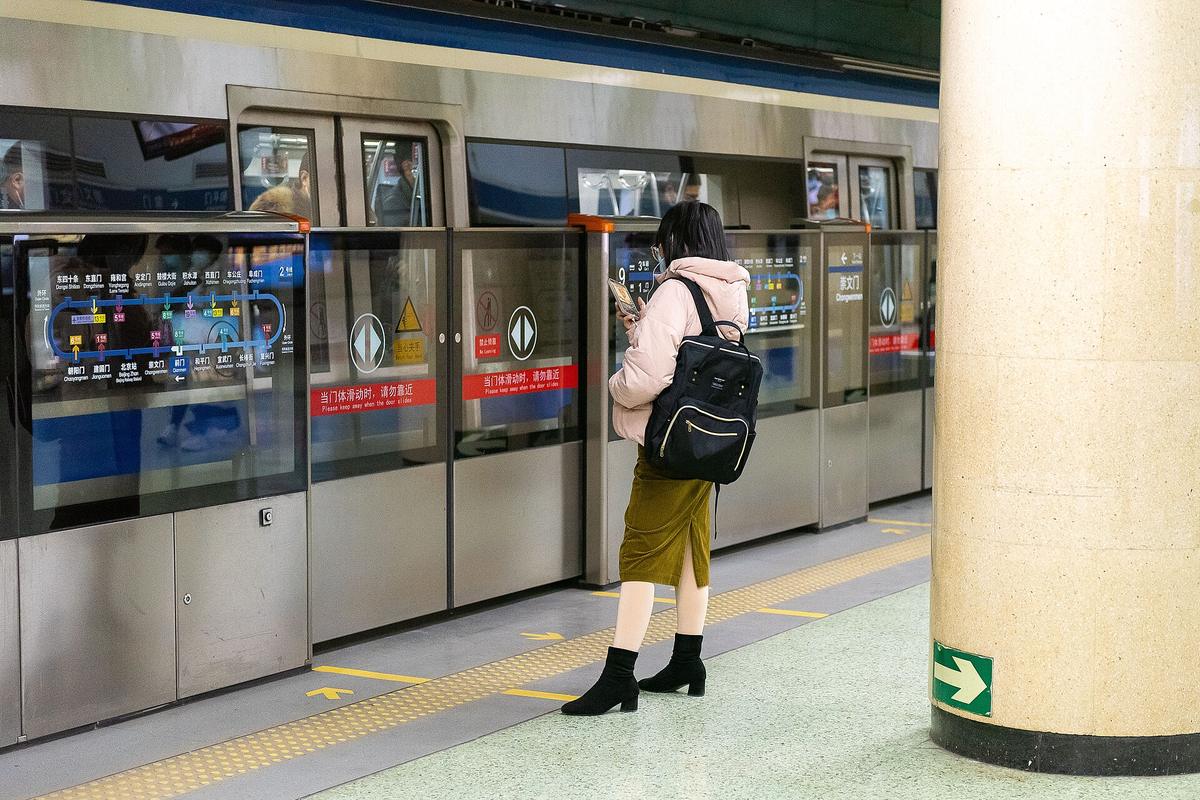
English announcements on trains and platforms announce station names and transfer information in Mandarin and English. All station names, line maps, exit signs, and transfer signs are bilingual. You do not need to read Chinese to navigate the system. You do need to know which exit letter to use.
The One Thing That Most Often Goes Wrong
New visitors arrive at a central station, see the distance on the map, and assume a 30-minute metro ride takes 30 minutes. It takes 45 minutes plus security check, plus the walk from platform to street, plus the exit confusion. The Forbidden City alone consumes a morning. The Summer Palace is a 40-60 minute metro ride from the centre. The Great Wall at Mutianyu requires 1.5 hours by pre-booked car or tourist bus, not including the metro to the meeting point. Underestimating travel time and security delays is the single error that causes missed sightseeing windows and exhausted afternoons. Budget 15 extra minutes for every metro journey that involves a transfer or a central station. If you do that, the rest of the guide handles the details.
Read next
-
 Beijing Hotels by Price Band and Property Type
Beijing hotels split into hutong courtyards, international chains and functional business towers. Here is what each price band actually buys you.
Beijing Hotels by Price Band and Property Type
Beijing hotels split into hutong courtyards, international chains and functional business towers. Here is what each price band actually buys you.
-
 Where to Stay in Beijing by District and Travel Style
Dongcheng puts you beside the Forbidden City, Chaoyang beside the nightlife. Here is how Beijing's districts compare for different travellers.
Where to Stay in Beijing by District and Travel Style
Dongcheng puts you beside the Forbidden City, Chaoyang beside the nightlife. Here is how Beijing's districts compare for different travellers.
-
 Beijing Flights PEK vs PKX Which Airport Actually Works for You
PEK or PKX? What each Beijing airport costs you in time, money, and logistical friction depending on where you are staying.
Beijing Flights PEK vs PKX Which Airport Actually Works for You
PEK or PKX? What each Beijing airport costs you in time, money, and logistical friction depending on where you are staying.
-
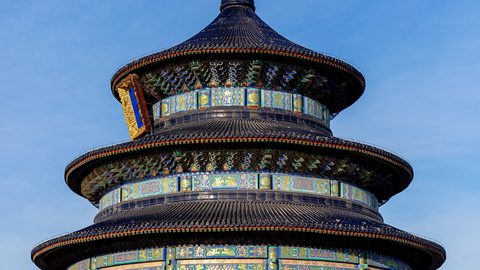 Beijing Things to Do Worth Your Limited Days
The Forbidden City and Great Wall are essential, but Beijing's meaning lives in temple courtyards, hutong lanes and food streets. Here is what earns your days.
Beijing Things to Do Worth Your Limited Days
The Forbidden City and Great Wall are essential, but Beijing's meaning lives in temple courtyards, hutong lanes and food streets. Here is what earns your days.
-
 Best Time to Visit Beijing, Month by Month Tradeoffs
April and October bring blue skies and queues, July brings heat, January brings empty sites and hazardous air. Here is Beijing month by month.
Best Time to Visit Beijing, Month by Month Tradeoffs
April and October bring blue skies and queues, July brings heat, January brings empty sites and hazardous air. Here is Beijing month by month.
-
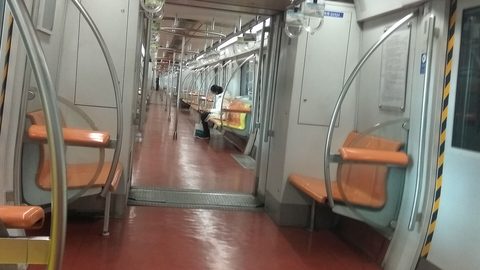 Getting Around Beijing Without Losing Half Your Day
Beijing's metro is clean and cheap but stops early, and taxis rarely speak English. Here is how to move around without burning half your day.
Getting Around Beijing Without Losing Half Your Day
Beijing's metro is clean and cheap but stops early, and taxis rarely speak English. Here is how to move around without burning half your day.
-
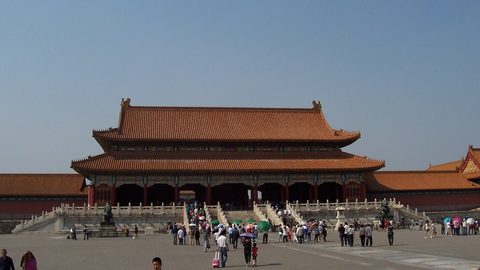 Forbidden City
 tickets require booking seven days ahead on WeChat with a passport. Here is the route to take once you are inside to avoid wasting the visit.
Forbidden City
Forbidden City tickets require booking seven days ahead on WeChat with a passport. Here is the route to take once you are inside to avoid wasting the visit.
-
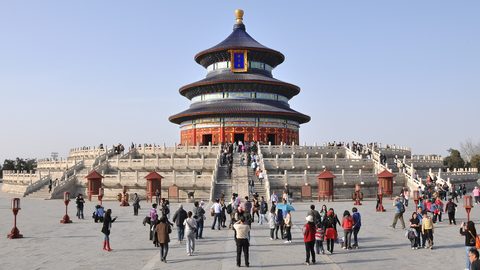 Temple of Heaven
The Temple of Heaven park matters as much as the temple. Morning tai chi, choirs, and card players make it a Beijing ritual worth a full morning.
Temple of Heaven
The Temple of Heaven park matters as much as the temple. Morning tai chi, choirs, and card players make it a Beijing ritual worth a full morning.
-
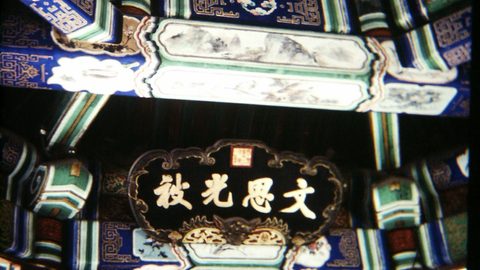 Summer Palace
The Summer Palace is vast and the wrong entrance adds an hour of walking. Use the East Palace Gate and plan for at least four hours.
Summer Palace
The Summer Palace is vast and the wrong entrance adds an hour of walking. Use the East Palace Gate and plan for at least four hours.