Gulou Beijing The Hutong Neighbourhood That Still Feels Alive
Gulou is the hutong neighbourhood people actually mean when they say old Beijing, but you need to know which lanes to avoid.
- Flag
-

- ISO code
- CN
- Currency
- CNY
- Timezone
- Asia/Shanghai
A Tuesday Morning, 9am, Wudaoying Hutong
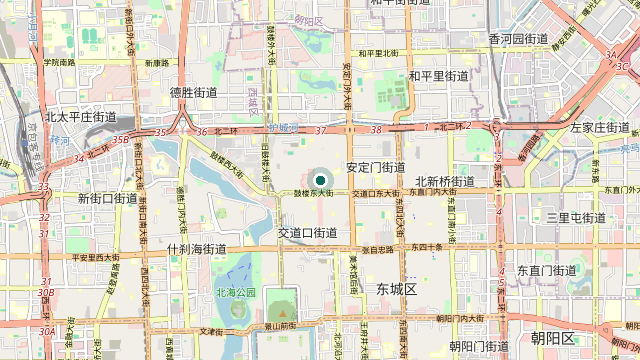
Grey smoke curls from a coal brazier outside a lunch shop that has no name. An old man in a white undershirt drags a wooden stool to the curb and sets up a chess board. A delivery cyclist weaves past, his phone blaring a pop song. This is Gulou. Not the Drum Tower itself, though that heavy Ming structure stands three blocks east. This is the Beijing of hutongs that still exhale. The one tourists chase and Nanluoguxiang, two minutes away, has already sold to bubble tea chains and souvenir stores. Wudaoying still belongs to residents who hang laundry on bamboo poles and ignore the few foreigners who wander through.
Start at the Drum Tower, Then Turn Left
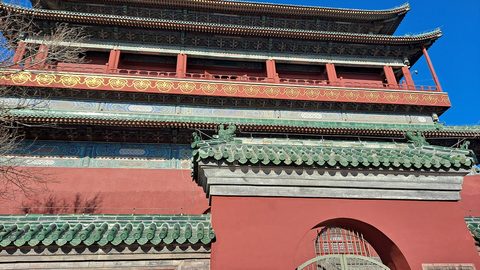
The Drum and Bell Towers sit at the northern spine of the old city. Climb the Drum Tower's steep stairs for a rooftop view over grey tile roofs and the green smear of Houhai lake. Then descend and walk west, not south. South is Nanluoguxiang, a strip of jianbing stalls and identical trinket shops, shoulder-to-shoulder by 11am. West is where the city breathes differently.
Into the Residential Lanes
Fork onto the small lanes behind the tower. Gulou West Avenue splits into dozens of narrow veins: Zhaozhi Hutong, Zhangwang Hutong, the ones without English names on the blue street signs. These are residential. People live here. A woman washes cabbage at a spigot. A carpenter plane's a doorframe at street level. You are a visitor, not a customer. That is the trade-off. You get authenticity but no one is selling it to you. There is no toilet for the next half hour. Carry that roll of paper.

Houhai: the Lake That Splits in Two
Houhai is actually three connected lakes: Qianhai, Houhai, and Xihai. The eastern shore of Qianhai, the southernmost lake, is the problem. It is a tourist bar strip. Loud music at 3pm. Hawkers pushing paddle boats. The kind of place where a bottle of water costs ¥10 and tastes of regret. Walk past it. Do not stop.
The Western Shore and Xihai
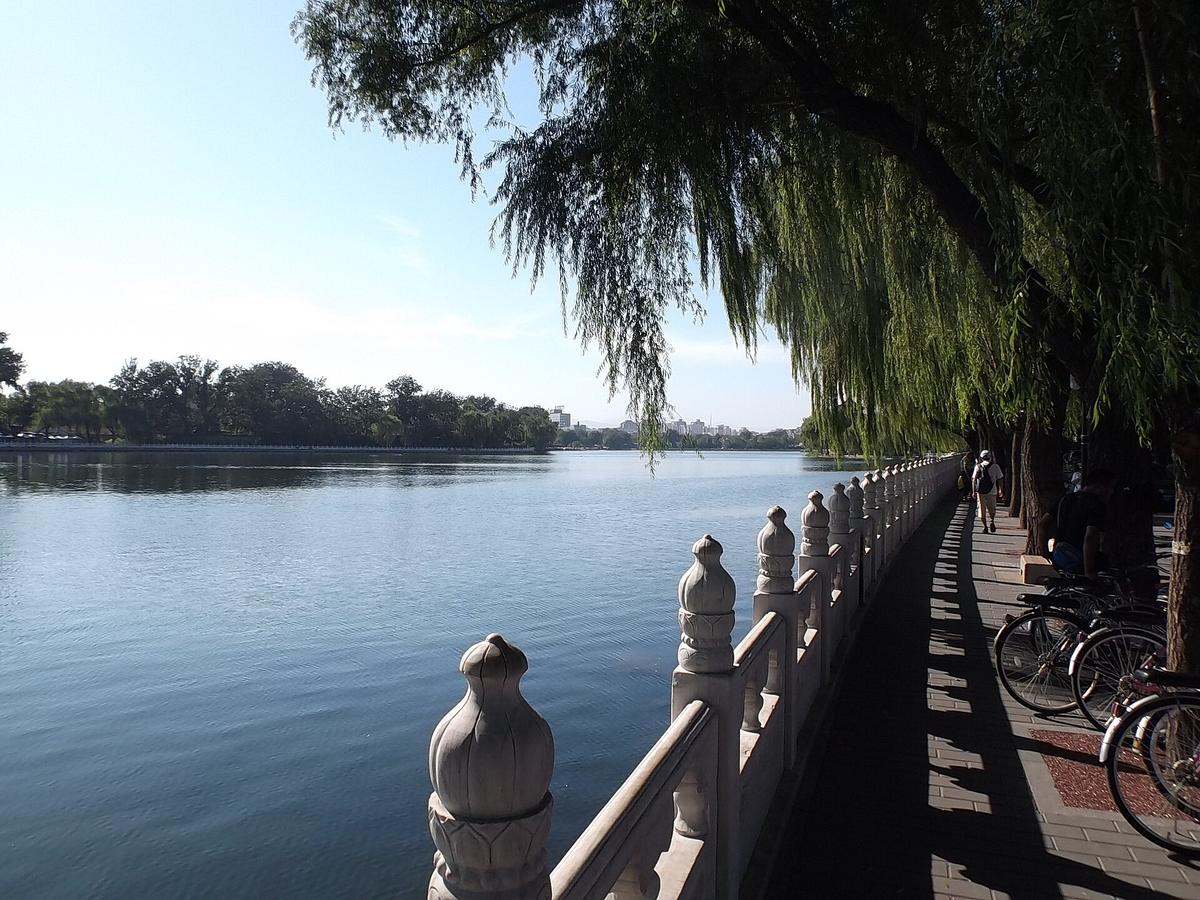
Cross the arched Yinding Bridge. The water widens. The bars thin. The western shore of Houhai and all of Xihai are where the old neighbourhoods survive. Here the lake is bordered by willow trees and the back walls of courtyard homes. Elderly men fish from the stone edge. A woman practices tai chi on a narrow platform. At dusk the light goes soft and the water turns the colour of ink. This is the Houhai people mean when they call it romantic. It is also the Houhai that requires the walk to find it.
The Residential Lanes West of the Lake
Leave the water and push into the maze west of Houhai. These hutongs have no guidebook pedigree. Liuyin Jie. Qianhai Xijie. The lanes that connect them are barely wide enough for a taxi. Kids kick a ball against a brick wall that has stood since the Qing dynasty. A retired couple sells cigarettes and bottled water from a ground floor window, their living room visible behind them. The chess games on the curb are real. They are not staged for photographers. The players will ignore you unless you ask about the board.
Dinner and the Evening Noise
This area is bad at dinner. The few restaurants that exist serve workaday noodles and dumplings for locals. They close early, around 8pm. If you want a proper meal, you walk back toward the Gulou intersection where Gulou Dongdajie has a handful of solid, unremarkable places. The Siji Minfu roast duck there is the same chain locals prefer in other districts. Book ahead or queue for 45 minutes.
Do not expect a quiet night. Hutongs are not silent. Neighbours talk through thin walls. Dogs bark. A motorcycle backfires. The romance of old Beijing comes with the lived noise of a dense city. If you need quiet, stay in Chaoyang in a high-rise with double glazing.
Wudaoying: the Alley That Got Tasteful Without Selling Out
Wudaoying runs east-west between the Drum Tower and Andingmen. Ten years ago it was a quiet residential lane. Now it is a corridor of independent cafes, vintage clothing shops, and small galleries. It is tasteful. It is photogenic. It is also still lived in. Residents hang quilts from the second-floor windows above a kombucha shop. The balance holds because the street is too short for the tour bus crowds. They hit Nanluoguxiang, take their photos, and leave. Wudaoying gets the walkers who bother to go one street over. Come at 10am when the coffee shops open. Come at 6pm when the alley goes quiet and the old women walk their small white dogs. It is not a secret. But it still works.

Who This Area Suits, and Who it Does Not
This suits the traveller who has read one too many 'hutong experience' articles and wants to see if the reality holds. It suits the walker comfortable with two hours of pavement without a cafe in sight. It suits the person who finds Nanluoguxiang exhausting and wants proof that another Beijing exists a short walk away.
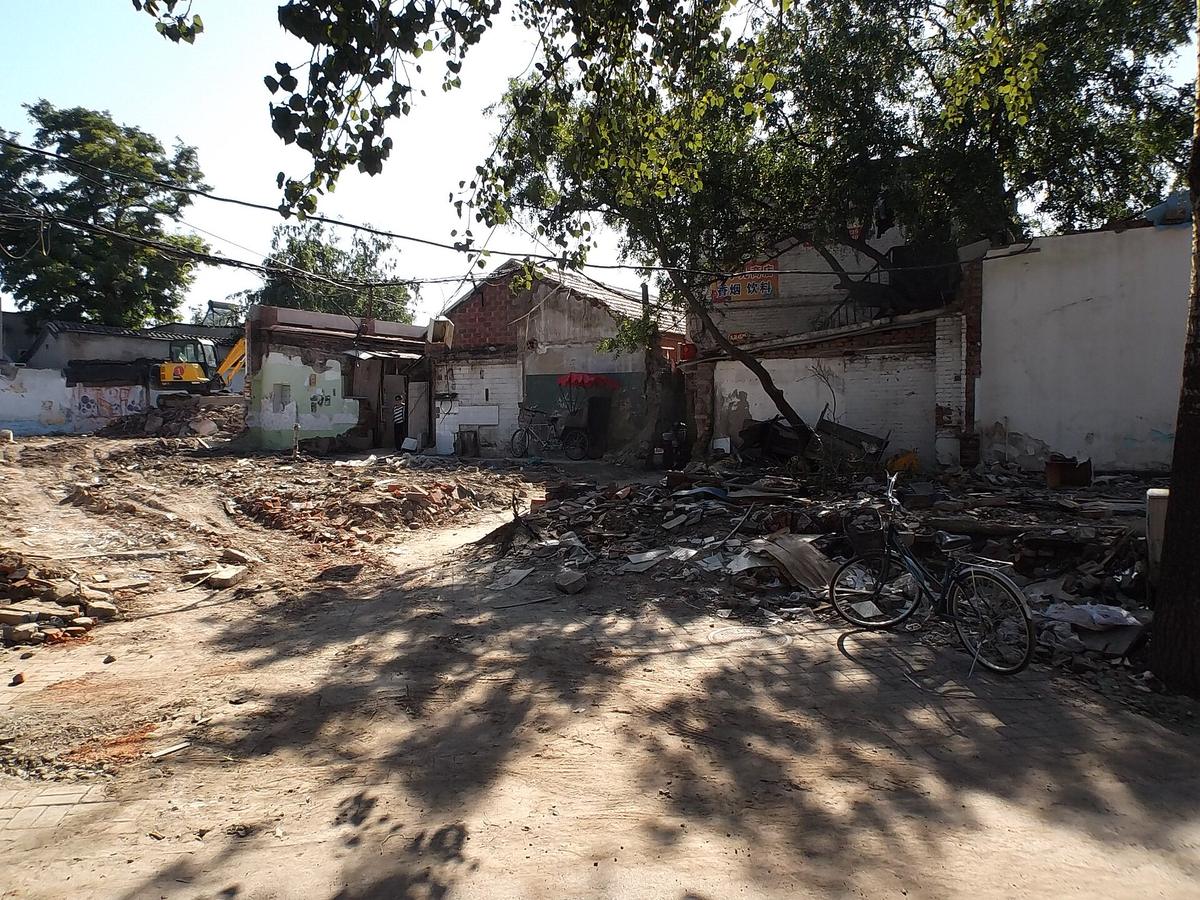
It does not suit the traveller on a tight schedule who wants a single, efficient afternoon. The area resists efficiency. You get lost. You walk a dead end. The chess game you wanted to photograph finishes and the players leave. It does not suit anyone who wanted the hutongs sanitised, with clean public toilets and English menus on every corner. The toilets exist but they are squat style. The menus exist but they are in Chinese. If you need to feel that you have found the real Beijing, there is a price. The price is patience, a willingness to walk past the guidebook attractions, and your own toilet paper.
Common Questions
How do I get to the Gulou area from the metro?
Take Line 2 to Gulou Dajie station, Exit G. Walk north 200 metres on Gulou Dongdajie. The Drum Tower appears on your right. For Wudaoying, exit at Yonghegong station on Line 2 or Line 5 and walk southwest 10 minutes.
Is the Drum Tower worth going inside?
If you want the rooftop view over the old city, yes. The interior is a sparse museum of ancient timekeeping. The stairs are steep and narrow. Jingshan Park gives a better view of the Forbidden City, but the Drum Tower shows you hutongs and lakes, which is the point of being here.
Can I rent a bike to explore the hutongs?
Yes. Shared bikes from Hellobike and Meituan are everywhere. Download the app, scan the QR code. Riding through the narrow lanes is faster than walking and easier on the feet. Be careful on the main roads where buses and taxis do not expect cyclists.
Are the hutongs west of Houhai safe at night?
Safe in the sense that crime against foreigners is rare. But the lanes are dark. Many lack streetlights. The pavement dips and rises over old drainage. Walk slowly. Carry your phone for light. Women walking alone should stick to the main alleyways until 10pm.
What is the best time of day for the Drum Tower area?
Early morning, before 8am. The sunlight hits the grey tiles. The delivery trucks are finishing their rounds. The breakfast jianbing carts are still open. By 10am the tour groups arrive at the Drum Tower and the bar strip on the eastern lake starts its amplified day.
Read next
-
 Gulou Things to Do Around the Drum Tower Bell Tower and the Lakes
Climb the steep stairs of Beijing's Drum Tower for a city view, see the Ming Bell in the Bell Tower, and wander the hutong lanes toward Houhai Lake.
Gulou Things to Do Around the Drum Tower Bell Tower and the Lakes
Climb the steep stairs of Beijing's Drum Tower for a city view, see the Ming Bell in the Bell Tower, and wander the hutong lanes toward Houhai Lake.
-
 Eating Around Gulou in the Hutong Kitchens and Houhai Bar Streets
Skip the Houhai lakeside traps and eat in the real Gulou hutong, from Mr Shi's Dumplings on Gulou Dongdajie to craft beer in Doujiao Hutong.
Eating Around Gulou in the Hutong Kitchens and Houhai Bar Streets
Skip the Houhai lakeside traps and eat in the real Gulou hutong, from Mr Shi's Dumplings on Gulou Dongdajie to craft beer in Doujiao Hutong.
-
 China Travel Guide for First-Timers Who Plan Ahead
China rewards travellers who plan apps, payments, trains, and tickets before arrival. Start with the four obstacles and the pages that solve them.
China Travel Guide for First-Timers Who Plan Ahead
China rewards travellers who plan apps, payments, trains, and tickets before arrival. Start with the four obstacles and the pages that solve them.
-
 China Visa-Free Transit and Unilateral Entry Rules Explained
China visa-free transit and unilateral entry rules change often. Here is how they work now, who qualifies, and what breaks a stay.
China Visa-Free Transit and Unilateral Entry Rules Explained
China visa-free transit and unilateral entry rules change often. Here is how they work now, who qualifies, and what breaks a stay.
-
 Cash to Cashless in China What First-Timers Must Set Up
China runs on Alipay and WeChat Pay, and cash is often refused. Set up both with a foreign card before you land or risk being stranded.
Cash to Cashless in China What First-Timers Must Set Up
China runs on Alipay and WeChat Pay, and cash is often refused. Set up both with a foreign card before you land or risk being stranded.
-
 Will Google, WhatsApp and Maps Actually Work on a China eSIM
A China eSIM solves data but not the firewall. Here is what actually works for Google, WhatsApp and Maps and why a VPN still matters.
Will Google, WhatsApp and Maps Actually Work on a China eSIM
A China eSIM solves data but not the firewall. Here is what actually works for Google, WhatsApp and Maps and why a VPN still matters.
-
 What Japan, China, and Singapore Actually Cost Independent Travelers
Real per-day costs for Japan, China, and Singapore broken down by accommodation tier, food strategy, transit, and connectivity for independent travelers.
What Japan, China, and Singapore Actually Cost Independent Travelers
Real per-day costs for Japan, China, and Singapore broken down by accommodation tier, food strategy, transit, and connectivity for independent travelers.
-
 What Most Travelers Get Wrong When Booking Flights to East Asia
Most travelers book East Asia flights on price alone. Here's what they miss about route gaps, fleet age, and aircraft type on 10-14 hour hauls.
What Most Travelers Get Wrong When Booking Flights to East Asia
Most travelers book East Asia flights on price alone. Here's what they miss about route gaps, fleet age, and aircraft type on 10-14 hour hauls.
-
 The Honest Cost of Mobile Data in Japan, China, and Singapore
Real price data for SIMs, pocket WiFi, and eSIMs in Japan, China, and Singapore. Plus the friction points most travel guides quietly skip.
The Honest Cost of Mobile Data in Japan, China, and Singapore
Real price data for SIMs, pocket WiFi, and eSIMs in Japan, China, and Singapore. Plus the friction points most travel guides quietly skip.