Summer Palace or Yuanmingyuan, Choosing Your Beijing Imperial Garden
Two imperial sites in Haidian share a name but offer completely different experiences. Here is how to choose between them.
.jpg)
The Naming Trap That Derails Beijing Itineraries
A taxi driver drops you at a gate. You pay 25 CNY, walk inside, and find yourself staring at a field of stone rubble. This is not the lake and painted corridor you saw on Instagram. You are at the Old Summer Palace, Yuanmingyuan, not the Summer Palace, Yiheyuan. The difference is not subtle. It is the difference between a fully restored 18th-century imperial playground and a deliberate ruin. Choosing the wrong one for your mood wastes half a day and leaves you frustrated. Here is how to pick correctly.
What Each Site Actually is
Summer Palace, Yiheyuan
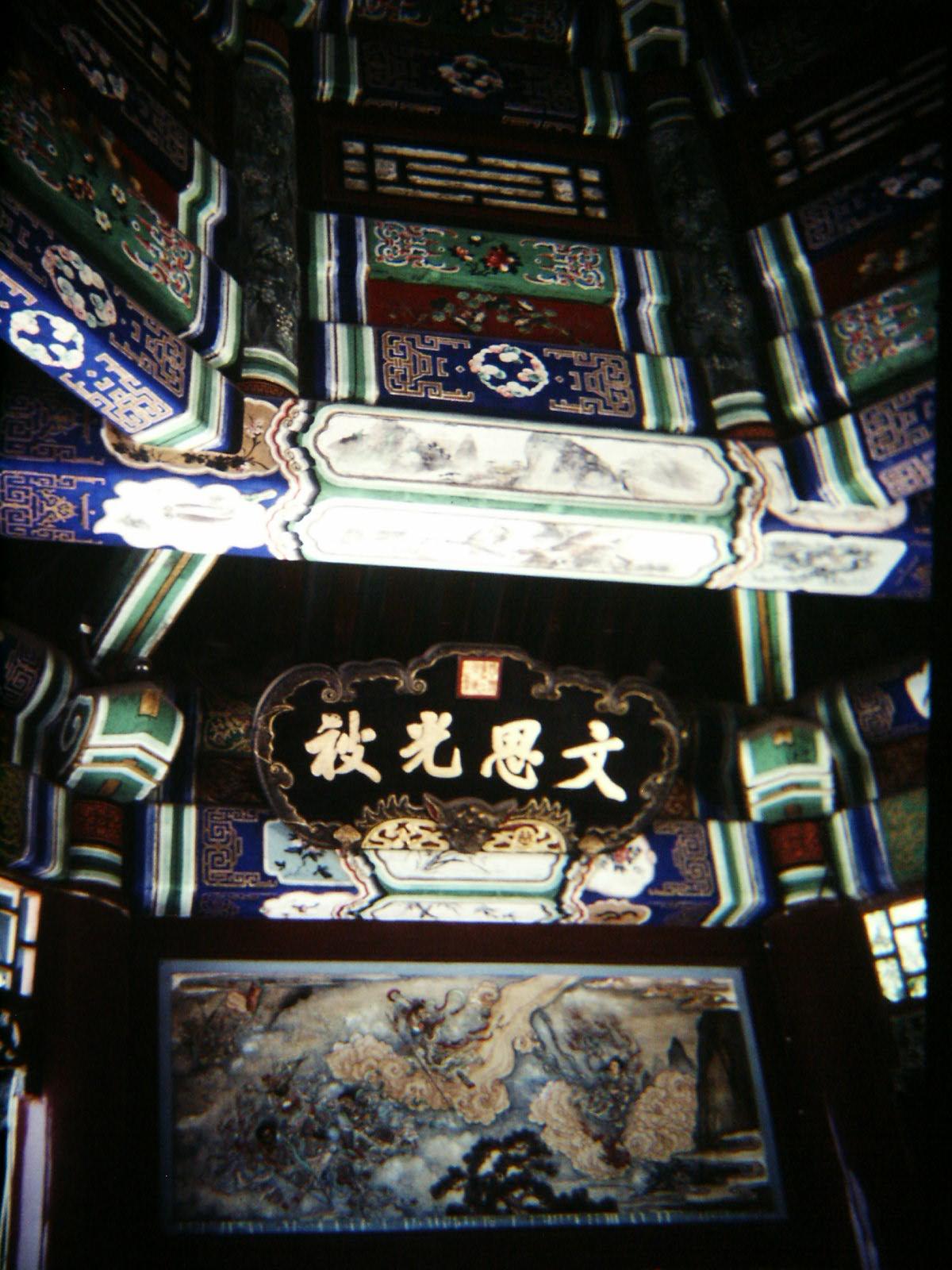
Summer Palace (Yiheyuan, 颐和园). A UNESCO World Heritage Site inscribed in 1998 on 3 square kilometres. Construction finished in 1764 under the Qianlong Emperor. Anglo French forces destroyed it in 1860. Empress Dowager Cixi rebuilt it from 1888 to 1895, using funds diverted from a navy budget, and the Eight Nation Alliance wrecked it again in 1900. It was restored a second time in 1902. What you see today is that restored version: Kunming Lake open water covering 2.2 square kilometres, Longevity Hill rising 60 metres above the lake, the 728-metre Long Corridor with 273 painted bays, the 150-metre Seventeen Arch Bridge, and the 36-metre Marble Boat. This is a complete palace and garden complex. You walk across halls, over bridges, along covered walkways. Everything is painted, gilded, intact. It receives 15 to 17 million visitors annually. It is crowded from 10:00 to 15:00, especially around the Long Corridor, the Tower of Buddhist Incense, and the Seventeen Arch Bridge.
Old Summer Palace, Yuanmingyuan
Old Summer Palace (Yuanmingyuan, 圆明园). Not a UNESCO site. Not reconstructed. The park covers 3.47 square kilometres, slightly larger than the Summer Palace. Construction peaked from 1707 to 1772 across three reigns, Kangxi to Qianlong. The same Anglo French forces that destroyed the Summer Palace burned Yuanmingyuan in 1860. The Eight Nation Alliance finished it in 1900. China adopted a deliberate non-reconstruction policy in the 1980s. The Beijing Municipal Administration Center of Parks maintains that policy. What you see is a grassy landscape studded with ruined foundations. The Western Mansions, Xiyang Lou, a 7-hectare zone designed by Jesuit missionaries Giuseppe Castiglione and Michel Benoist, retains the most readable fragments: carved stone arches, broken fountain basins, marble staircases leading nowhere. Fuhai Lake, 28 hectares, is the largest of three main lakes. The park attracts 4 to 6 million visitors annually, mostly locals: families, retirees, walkers. It is quiet outside the Western Mansions ruins.
The Core Difference is Not Age. it is Intent
Both sites were looted and burned in the same two wars. The difference is what happened after. The Summer Palace was rebuilt to serve as a late Qing power base and later as a tourist showcase. Everything is restored, polished, operational. The Old Summer Palace was left as a monument to destruction. Grass grows over the rubble. The halls are not coming back. You are not touring a palace. You are walking across the skeleton of one.
This is not a better-or-worse situation. It is two completely different experiences sold under confusingly similar names. Choose based on what you want to feel.
Which One You Should Visit
Choose the Summer Palace for Grandeur
Visit the Summer Palace if you want imperial grandeur. You want the postcard shot of the lake, the hill, the painted corridor. You want to walk across halls that look as they did in 1902. You want to see how a Qing emperor and a powerful dowager spent their summers. You accept crowds. You accept that this is a major tourist attraction. Budget 3 to 5 hours. Arrive by 08:30 via Beigongmen station on metro Line 4. Enter through the north gate to start at the top of Longevity Hill and work downhill toward the lake. Buy a through ticket for 60 CNY in peak season, 50 CNY in off season, which includes Dehe Garden, the Tower of Buddhist Incense, Suzhou Street, and the Wenchang Gallery. Peak season runs 1 April to 31 October. Off season runs 1 November to 31 March. Book a real-name reservation in advance on the official site, summerpalace-china.com, or via the WeChat mini program. The through-ticket price published for the 2026 season is accurate for that year; the Beijing Municipal Administration Center of Parks publishes the rate in force each year.
Choose the Old Summer Palace for Quiet and Ruin
Visit the Old Summer Palace if you want historical melancholy. You want to see what imperial destruction looks like. You want space to walk without tour groups. You want quiet. You are a repeat visitor to Beijing who has already seen the Summer Palace. You are a history-focused traveller who understands why China chose not to rebuild. Budget 1.5 to 2.5 hours. Enter through the south gate from Yuanmingyuan Park station on metro Line 4, one stop and 2 minutes from Xiyuan. Buy a through ticket for 25 CNY at the gate, including the Western Mansions ruins and the maze. On-site purchase works most days, but book ahead for national holidays. The quietest zones are the Fuhai Lake perimeter and the northern and western sections of the park. The busiest area is the Western Mansions ruins, which still feels empty compared to any corner of the Summer Palace.
Doing Both in One Day
If you have time for both, do them in one day. Start at the Old Summer Palace at 07:00 when it opens in summer. Spend 2 hours there. Walk the 3.5 kilometres from the Old Summer Palace south gate to the Summer Palace east gate, or take the metro one stop from Yuanmingyuan Park to Xiyuan. Enter the Summer Palace by 10:00. You can cover both sites in 5 to 7 hours total. The recommended order is Old Summer Palace first because it opens earlier, and Summer Palace second because late-afternoon light on Kunming Lake beats morning light.

Worth it if
- Summer Palace: fully restored and painted, everything intact, iconic lake and hill views, UNESCO World Heritage Site, substantial 3-to-5-hour visit with varied scenery
- Old Summer Palace: cheap at 25 CNY, quiet outside the ruins area, powerful historical atmosphere, mostly local visitors, feels like discovery not tourism
Skip it if
- Summer Palace: crowded from 10:00 to 15:00, expensive through ticket at 60 CNY peak season, tour groups clog the Long Corridor, partial wheelchair access on Longevity Hill
- Old Summer Palace: mostly rubble and foundations, no restored buildings, less visually spectacular, uneven paths in the Western Mansions, small annual attendance reflects limited appeal
Read next
-
 Beijing Hotels by Price Band and Property Type
Beijing hotels split into hutong courtyards, international chains and functional business towers. Here is what each price band actually buys you.
Beijing Hotels by Price Band and Property Type
Beijing hotels split into hutong courtyards, international chains and functional business towers. Here is what each price band actually buys you.
-
 Where to Stay in Beijing by District and Travel Style
Dongcheng puts you beside the Forbidden City, Chaoyang beside the nightlife. Here is how Beijing's districts compare for different travellers.
Where to Stay in Beijing by District and Travel Style
Dongcheng puts you beside the Forbidden City, Chaoyang beside the nightlife. Here is how Beijing's districts compare for different travellers.
-
 Beijing Flights PEK vs PKX Which Airport Actually Works for You
PEK or PKX? What each Beijing airport costs you in time, money, and logistical friction depending on where you are staying.
Beijing Flights PEK vs PKX Which Airport Actually Works for You
PEK or PKX? What each Beijing airport costs you in time, money, and logistical friction depending on where you are staying.
-
 Beijing Things to Do Worth Your Limited Days
The Forbidden City and Great Wall are essential, but Beijing's meaning lives in temple courtyards, hutong lanes and food streets. Here is what earns your days.
Beijing Things to Do Worth Your Limited Days
The Forbidden City and Great Wall are essential, but Beijing's meaning lives in temple courtyards, hutong lanes and food streets. Here is what earns your days.
-
 Best Time to Visit Beijing, Month by Month Tradeoffs
April and October bring blue skies and queues, July brings heat, January brings empty sites and hazardous air. Here is Beijing month by month.
Best Time to Visit Beijing, Month by Month Tradeoffs
April and October bring blue skies and queues, July brings heat, January brings empty sites and hazardous air. Here is Beijing month by month.
-
 Getting Around Beijing Without Losing Half Your Day
Beijing's metro is clean and cheap but stops early, and taxis rarely speak English. Here is how to move around without burning half your day.
Getting Around Beijing Without Losing Half Your Day
Beijing's metro is clean and cheap but stops early, and taxis rarely speak English. Here is how to move around without burning half your day.
-
 Forbidden City
 tickets require booking seven days ahead on WeChat with a passport. Here is the route to take once you are inside to avoid wasting the visit.
Forbidden City
Forbidden City tickets require booking seven days ahead on WeChat with a passport. Here is the route to take once you are inside to avoid wasting the visit.
-
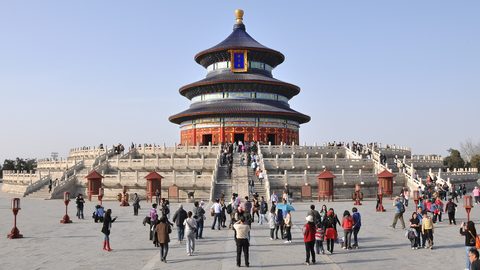 Temple of Heaven
The Temple of Heaven park matters as much as the temple. Morning tai chi, choirs, and card players make it a Beijing ritual worth a full morning.
Temple of Heaven
The Temple of Heaven park matters as much as the temple. Morning tai chi, choirs, and card players make it a Beijing ritual worth a full morning.
-
 Summer Palace
The Summer Palace is vast and the wrong entrance adds an hour of walking. Use the East Palace Gate and plan for at least four hours.
Summer Palace
The Summer Palace is vast and the wrong entrance adds an hour of walking. Use the East Palace Gate and plan for at least four hours.