The National Museum of Singapore Is the Single Museum to Pick If You Want the Full National Story
The National Museum of Singapore tells the country's full story through immersive installations, not glass cases, here is why it is the one museum to pick and what to book.
.jpg)
The National Museum of Singapore is the Single Museum to Pick If You Want the Full National Story
The mistake first-time visitors make is assuming Singapore's story lives in one of the flashier landmark buildings. Marina Bay Sands is a hotel with a pool, not a history lesson. Gardens by the Bay is a horticultural spectacle, not an origin story. The museum you actually need sits on Stamford Road in a 1887 neoclassical building with a glass extension bolted to its back. The National Museum of Singapore is the only institution in the city that tells the country's entire arc, from a 14th century fishing village to a wealthy city state, and it does it through installations that surround you rather than glass cases you peer into. If you have two hours for one museum, this is the one.
- Founded: 1887
- Building Style: Neoclassical with glass rotunda addition
- Core Exhibition: Singapore History Gallery, 14th century to present
- Ticket Cost (Tourist Adult): SGD 15 (rate set by National Heritage Board, revised annually)
- Singapore Citizens and PRs: Free entry to permanent galleries
- Typical Visit Duration: 2 to 3 hours
- Nearest MRT: Bras Basah (Circle Line, CC2)
- Alternative MRT: Dhoby Ghaut (three lines)
- Adjacent Site: Fort Canning Park, accessed via pedestrian path from the museum rear
What the Singapore History Gallery Actually Does
Four Galleries That Surround You
The Singapore History Gallery is the reason you come. It covers the 14th century through the present across four sections: Pre Colonial, Colonial, Japanese Occupation, and Independence. The Japanese Occupation galleries are the heaviest in the building, and the museum does not soften them. You walk through recreated spaces, hear oral histories, and stand in front of objects that were hidden from occupying forces. It is immersive in a way that forces a reaction, not a detached skim.
The rest of the gallery follows the same principle. Instead of reading a plaque about the arrival of the British, you stand inside a reconstruction of a colonial trading room. Instead of a timeline of independence, you watch footage projected onto three walls while the floor vibrates with the recorded sound of a rally. The museum calls these installations. A better word is environments. You are in the scene, not outside it looking in.
The Life in Singapore Side Galleries
The four Life in Singapore galleries sit alongside the history gallery. These cover domestic life, food, fashion, and photography. They are lighter, faster, and work well as a cool down after the occupation section. Skip them if you are short on time. The history gallery is the priority.
The Glass Rotunda and the Story of the Forest
Story of the Forest
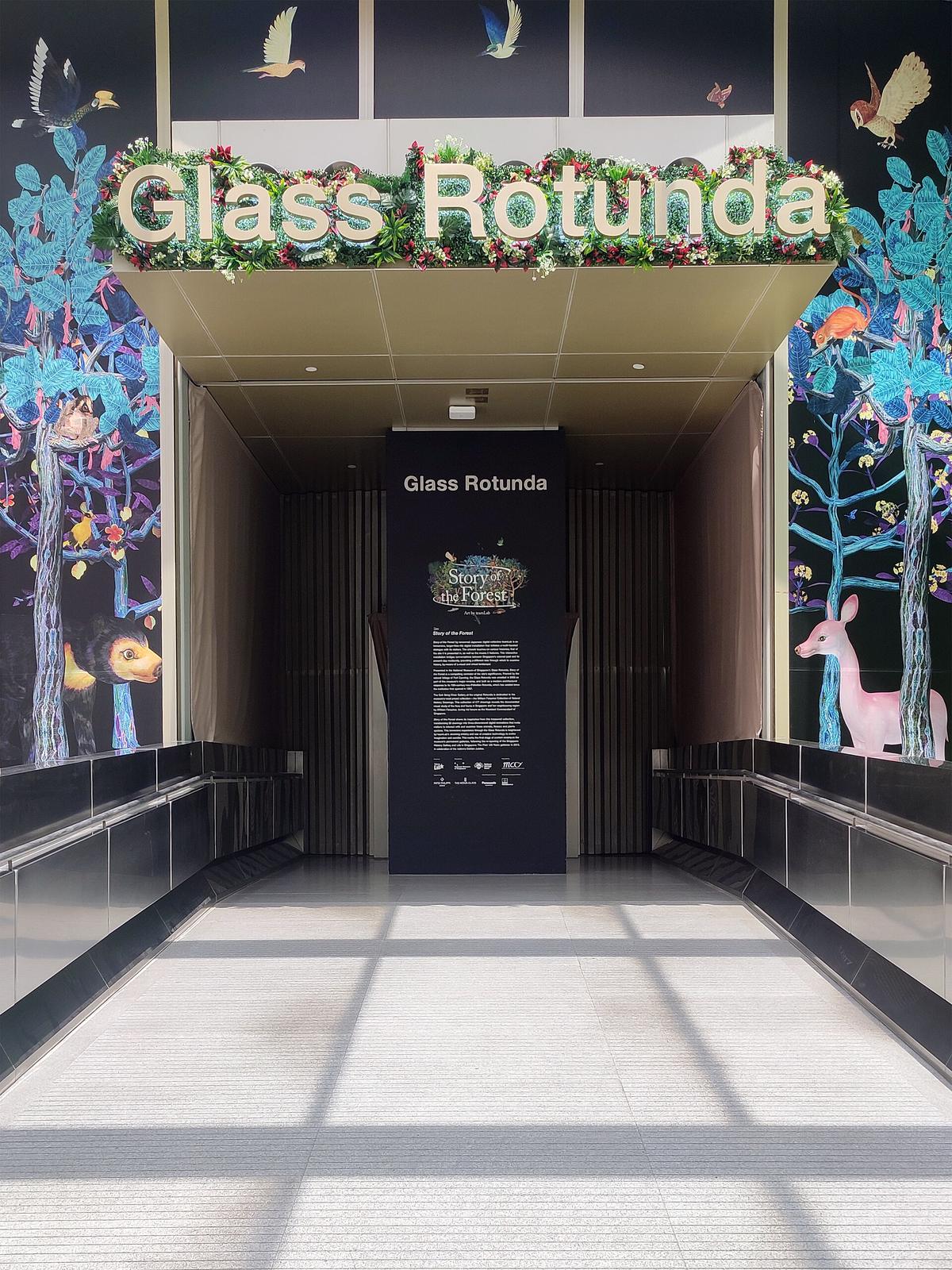
The Glass Rotunda is the emotional payoff. It is a circular dome attached to the modernist wing, and inside it hangs a permanent digital art piece called Story of the Forest. The work is based on a 19th century natural history drawing of the region, but animated in glowing projection across every surface of the dome. You lie on the floor or sit on a bench and watch flora and fauna drift across the ceiling. It takes about ten minutes to cycle through. It costs nothing extra. The circular hall is sometimes free to enter even when the rest of the museum requires a ticket, depending on whether a temporary exhibition occupies the ground floor. Check the National Heritage Board website before you go.
The Building and When to Arrive
The building itself deserves a look. The original 1887 wing is neoclassical with a colonnaded front that holds up better against the humidity than the glass addition does. The glass dome sweats in the heat and the air conditioning in the circular gallery struggles between 11am and 3pm. Plan your visit for the morning or late afternoon to avoid the worst of it.
How to Get in and What to Book
Tickets and Who Pays
The standard adult ticket for tourists was SGD 15 in 2024, set by the National Heritage Board and revised annually. Children under six enter free. Students and seniors over 60 pay a concession rate of SGD 10 in 2024. Singapore citizens and permanent residents enter the permanent galleries for free, so if you are staying with a local friend, go together.
When to Book Ahead
You do not need to book the permanent gallery in advance on a normal weekday. Weekends and school holidays are busier, but capacity is generous. The exception is the rotating major exhibition that changes every few months. Those sell out on weekends. Book the major exhibition online through the museum's ticketing page during peak periods: December, January, and the June July school holidays. The museum closes on some public holidays, including Chinese New Year, so check dates before you make a trip.
Enter through the main door on Stamford Road. The ticket counter is straight ahead. If you only want the dome and the ground floor galleries, you can sometimes walk in without a ticket, but ask at the front desk first. The museum does not have timed entry for the permanent collection. Arrive when it opens at 10am to beat the crowd and the midday heat.
Who Should Skip This Museum
When to Choose a Different Museum
Skip the National Museum if your interest is art. That is what the National Gallery Singapore is for, housed in the former Supreme Court and City Hall a ten minute walk away. Skip it if your interest is pan Asian artefacts. That belongs at the Asian Civilisations Museum along the Singapore River. The National Museum tells one story only: the story of this specific island, and it tells it with moral weight. If you want a light diversion or a quick photo in an air conditioned room, go to the dome for free and leave. The rest demands attention.
How to Use Your Time
The mistake most visitors make is trying to see the museum as part of a rushed civic district walk between the Raffles Hotel and the Singapore Art Museum. Budget the full two to three hours. Rush it and you leave with a slideshow of colonial dates and nothing about the occupation that reshaped the city. Do the history gallery first, then the dome, then leave the Life in Singapore galleries for the very end or skip them entirely. The museum is directly behind Fort Canning Park. Walk out the rear exit, cross the pedestrian path, and spend fifteen minutes under the trees before you head to your next stop.
| Category | Cost | Notes |
|---|---|---|
| Standard adult (tourist) | SGD 15 | set by National Heritage Board, revised annually |
| Singapore citizen/PR | Free | Permanent galleries only |
| Child (tourist, under 6) | Free | No ticket needed |
| Concession (tourist, student/senior 60+) | SGD 10 | bring valid ID |
| Rotunda only | Free or included | Check at front desk before buying a ticket |
Common Questions
Is the National Museum of Singapore the same as the National Gallery Singapore?
No. The National Gallery shows Southeast Asian art in the former Supreme Court and City Hall. The National Museum tells Singapore's own history from the 14th century to the present.
How long does it take to see the National Museum of Singapore?
Two to three hours. The Singapore History Gallery takes about 90 minutes if you read everything. The rotunda adds 15 minutes. The Life in Singapore galleries add another 30 if you choose to see them.
Do I need to book tickets in advance?
For the permanent galleries, no. For the rotating major exhibitions, yes, especially during December, January, June, July, and the Formula 1 Grand Prix weekend in September. Book online through the National Heritage Board ticketing page.
Is the Glass Rotunda free?
Sometimes. The rotunda and ground floor exhibitions are occasionally free to enter without a ticket, but this varies depending on the exhibition schedule. Ask at the front desk before buying a ticket if you only want the rotunda.
What is the difference between the National Museum and the Asian Civilisations Museum?
The Asian Civilisations Museum covers pan Asian cultures and artefacts. The National Museum focuses on Singapore's national story only.
When is the best time of day to visit?
Arrive at 10am when the museum opens. The air conditioning handles the heat better in the morning, and the crowds are thinner. Avoid 11am to 3pm when the glass rotunda gets hot and the museum fills with tour groups.
What MRT station serves the National Museum?
Bras Basah on the Circle Line (CC2) is the closest. Dhoby Ghaut station, served by three MRT lines, is a five minute walk away.
Read next
-
 Singapore eSIM, Tourist SIM Cards and Free Public Wi-Fi Compared
Singapore offers eSIMs, 100GB tourist SIM cards from S$12 at Changi, and free public Wi-Fi. The real essential is downloading Grab before you land, because setup requires an SMS code.
Singapore eSIM, Tourist SIM Cards and Free Public Wi-Fi Compared
Singapore offers eSIMs, 100GB tourist SIM cards from S$12 at Changi, and free public Wi-Fi. The real essential is downloading Grab before you land, because setup requires an SMS code.
-
 Singapore Hotels by Type and Budget Not by Neighbourhood
Singapore hotels sorted by property type and price band, skyline towers, shophouse boutiques, family chains, and transit sleepers, with honest notes on what S$400 actually buys here.
Singapore Hotels by Type and Budget Not by Neighbourhood
Singapore hotels sorted by property type and price band, skyline towers, shophouse boutiques, family chains, and transit sleepers, with honest notes on what S$400 actually buys here.
-
 Where to Stay in Singapore for Neighbourhood Character Not Just a Bed
Compare Singapore's neighbourhoods by the experience of waking up there, hawker breakfasts, shophouse streets, or skyline views, not by distance to a landmark the MRT erases.
Where to Stay in Singapore for Neighbourhood Character Not Just a Bed
Compare Singapore's neighbourhoods by the experience of waking up there, hawker breakfasts, shophouse streets, or skyline views, not by distance to a landmark the MRT erases.
-
 Flying Into Changi Airport Singapore and Making the Stopover Work
Changi Airport turns a Singapore stopover into a free mini-trip. How long you need to clear immigration, eat a hawker meal, and still make your connection.
Flying Into Changi Airport Singapore and Making the Stopover Work
Changi Airport turns a Singapore stopover into a free mini-trip. How long you need to clear immigration, eat a hawker meal, and still make your connection.
-
 Singapore Things to Do With Only Three Days and Brutal Midday Heat
Hard calls on which Singapore sights earn limited days: Gardens by the Bay and Botanic Gardens are non-negotiable, Sentosa is skippable, and everything bends around the 11am-to-3pm heat.
Singapore Things to Do With Only Three Days and Brutal Midday Heat
Hard calls on which Singapore sights earn limited days: Gardens by the Bay and Botanic Gardens are non-negotiable, Sentosa is skippable, and everything bends around the 11am-to-3pm heat.
-
 Best Time to Visit Singapore When One Degree From the Equator
Singapore sits one degree from the equator so temperature barely shifts, plan around monsoon rains, Chinese New Year hawker closures, haze season, and F1 hotel price spikes instead.
Best Time to Visit Singapore When One Degree From the Equator
Singapore sits one degree from the equator so temperature barely shifts, plan around monsoon rains, Chinese New Year hawker closures, haze season, and F1 hotel price spikes instead.
-
 Gardens by the Bay
-
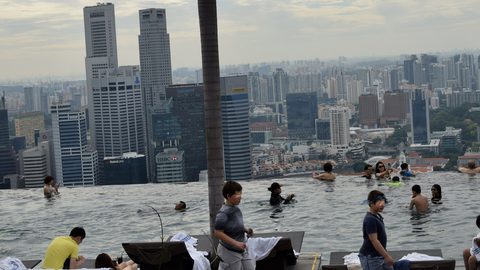 Marina Bay Sands
-
 Singapore Zoo and the Mandai parks