Choosing Between Beijing Capital and Daxing Airports
A comparison of Beijing Capital and Daxing airports, and the booking mistake that can cost you an afternoon in transit.
.jpg)
The Booking Mistake That Costs an Afternoon
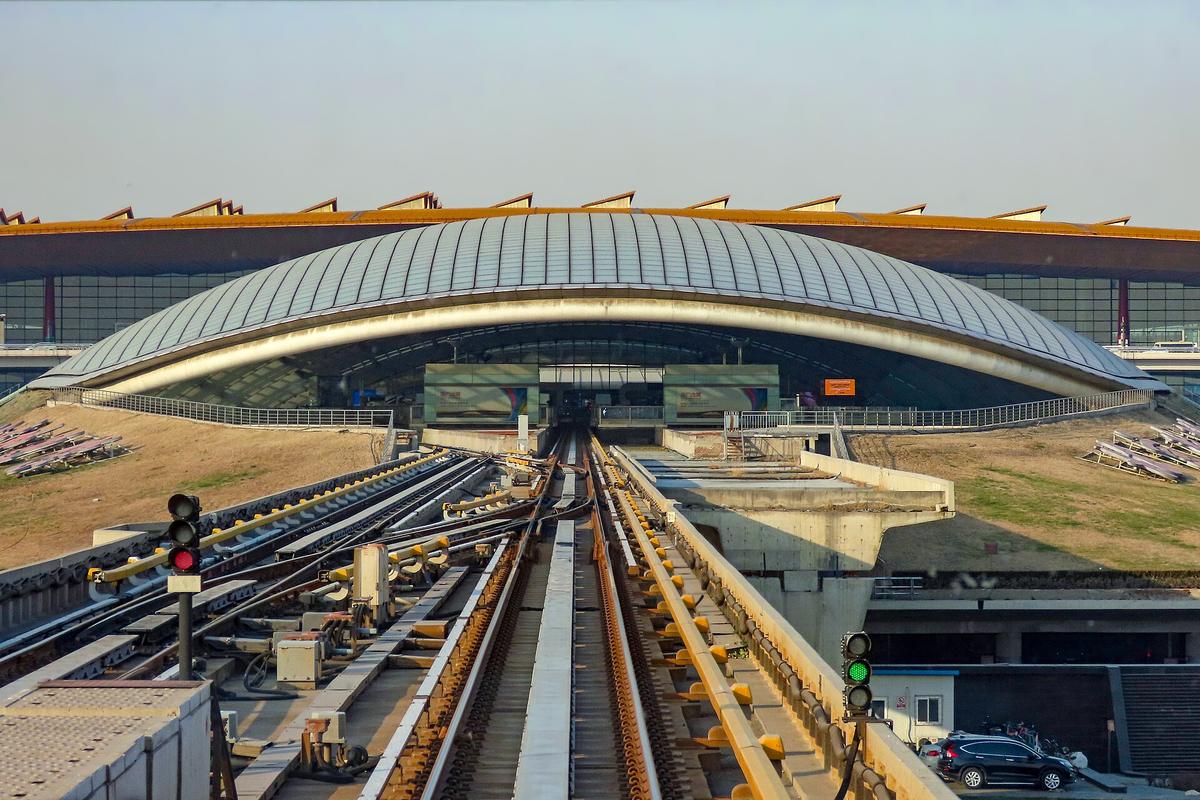
You book a cheap flight into Beijing Daxing, pat yourself on the back for saving ¥300, and then spend the next hour and a half in a taxi crawling north while your friend who landed at Capital is already ordering a beer in Sanlitun. That is the mistake. It is the single practical thing you need to avoid when you face PEK versus PKX. The choice between Beijing Capital International Airport and Beijing Daxing International Airport is not about which terminal has better architecture. It is about where your hotel is, which airline you fly, and how much of your first afternoon you are willing to give to a transfer.
What the Two Airports Give You
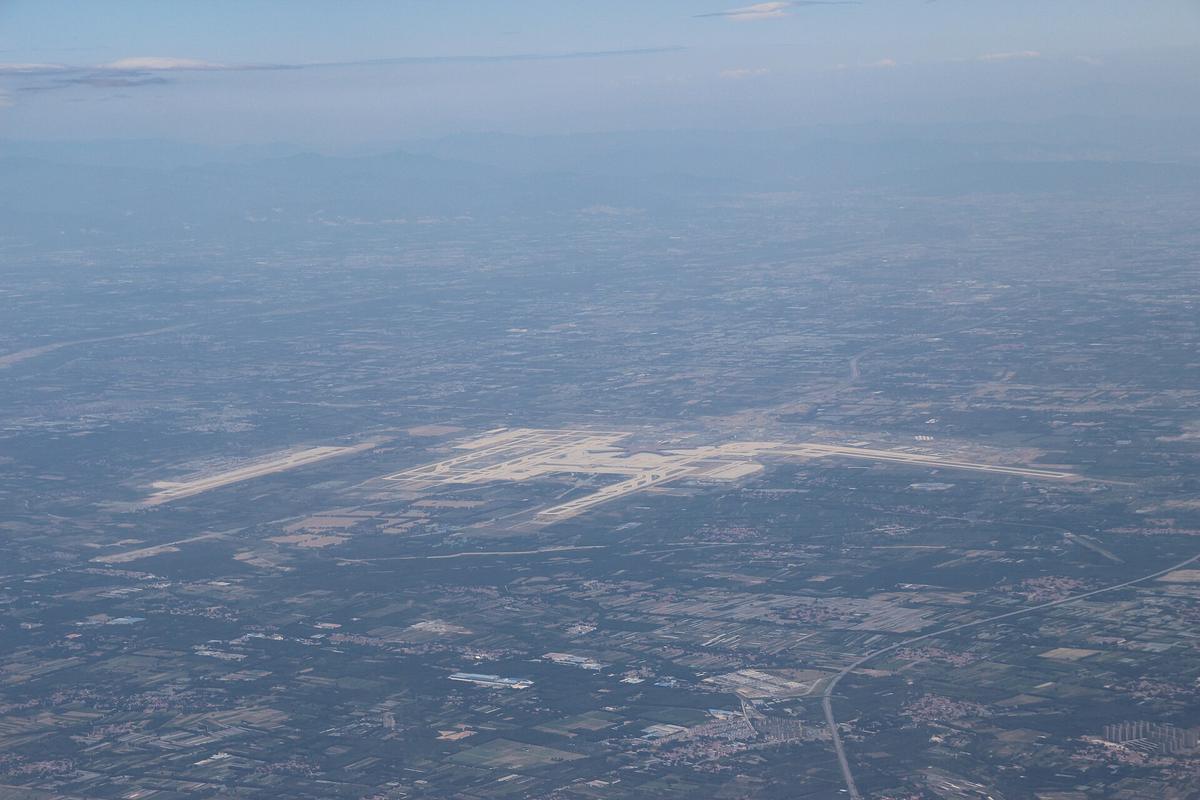
Beijing has two major airports because the city outgrew one. Capital (PEK) handled roughly 67 million passengers in 2024, making it one of the busiest in the world. Daxing (PKX) opened in 2019 and handled about 49 million in the same year, but it was designed with room to scale to 100 million. The difference in passenger volume is real: PEK is denser, older, and more chaotic. PKX is newer, faster through security, and emptier by design. Their locations put them in completely different parts of what is a sprawling, traffic-heavy capital.
Where They Sit
PEK is northeast of the city centre, roughly a 25-minute ride on the Airport Express to Dongzhimen. That puts it close to Chaoyang, Sanlitun, and the business towers where most visitors and expats stay. PKX is south of the city, near the border of Hebei province. The Daxing Express runs from Caoqiao, a 20-minute trip, but Caoqiao itself is south of the centre. If your hotel is in Dongcheng or Chaoyang, you add 40 to 60 minutes of travel time versus arriving at PEK. The numbers from the research are blunt: a taxi from PEK to Sanlitun runs 25 to 40 minutes. A taxi from PKX to Sanlitun runs 60 to 90 minutes. That is the difference between unpacking at 5pm and unpacking at 6.30pm.
What It Costs
The Airport Express from PEK costs ¥25 and takes 25 to 30 minutes. The Daxing Express costs ¥35 to ¥40 for a standard ticket, or ¥50 for business class, and takes 20 to 35 minutes. So the train from PKX is slightly faster and slightly more expensive. The problem is what happens after the train. From Dongzhimen you can transfer to metro Line 2 or Line 13 and reach most of central Beijing in another 10 to 20 minutes. From Caoqiao you transfer to Line 10 or Line 19, which takes you through south Beijing before you curve north to Dongcheng or Chaoyang. That adds 15 to 30 minutes of metro time. Taxi fares confirm the same geography. A taxi from PEK to the city centre costs ¥100 to ¥160 and takes 40 to 70 minutes. From PKX the same ride costs ¥150 to ¥250 and takes 50 to 90 minutes. PKX is not cheaper to reach. It is further and costs more unless you find a flight that is significantly discounted.
| Factor | PEK (Capital) | PKX (Daxing) |
|---|---|---|
| Distance to centre | Northeast, ~25 min train | South, ~20 min train + transfer |
| Taxi to Sanlitun | 25-40 min, ¥100-¥160 | 60-90 min, ¥150-¥250 |
| Airport Express fare | ¥25 | ¥35-¥40 (¥50 business) |
| Express terminus | Dongzhimen (Line 2, 13) | Caoqiao (Line 10, 19) |
| Dominant alliance | Star Alliance | SkyTeam |
| Main hub carrier | Air China, Hainan Airlines | China Eastern, China Southern |
| Typical fare difference | ¥100-¥300 higher domestic | ¥100-¥300 lower domestic |
| International fare difference | ¥300-¥800 higher | ¥300-¥800 lower |
| Security queue peak | 20-40 min | 10-25 min |
| Terminal layout | 3 terminals, train between | 1 terminal, walk to all gates |
Which Airline Goes Where and Why it Matters
Airline allocation is not a suggestion. It is the law of the airport. Air China, which dominates PEK, runs its entire Beijing hub out of Capital. Hainan Airlines also bases its Beijing operations at PEK. If you fly Star Alliance, PEK is your airport. SkyTeam carriers China Eastern and China Southern both moved their main Beijing bases to Daxing. They keep limited domestic routes at PEK, mainly shuttle flights to Shanghai and other big cities, but their international long-haul flights depart from PKX almost exclusively. The practical result is that your airline choice decides your airport. And if you book a flight on China Eastern because it is cheap, you are flying into PKX regardless of where you want to sleep.
The Transfer Trap
The most common booking mistake is price driven. A traveller sees a ¥400 saving on a China Eastern flight to Daxing and books it without checking the transfer time to their hotel. If that hotel is in Dongcheng near the Forbidden City or in Chaoyang near Sanlitun, they have just added 60 to 90 minutes to their arrival, plus ¥50 to ¥100 in extra taxi fare. The saving evaporates. The research says PKX is better for stays in south or west Beijing: Fengtai, Daxing district itself, or areas near Beijing South Railway Station or Beijing West Railway Station. For those locations, Daxing can actually be faster. Beijing South Station is only 35 to 50 minutes from PKX by taxi, compared to 50 to 70 minutes from PEK. But if you are staying in Dongcheng or Chaoyang, you pick PEK unless the fare difference is large enough to cover the extra time and taxi cost. A saving of several hundred yuan on a ¥2000 ticket is real. A ¥100 saving on a ¥1200 ticket is not worth 90 minutes.
Connection Quality And Terminal Experience
If you are connecting through Beijing to another Chinese city or an international destination, the airport matters for more than just the transfer to your hotel. PKX is a single terminal with a centralised security checkpoint and dedicated luggage racks on the Daxing Express. The minimum connection time for domestic to domestic at PKX is 60 minutes. At PEK it is 90 minutes. PKX also handles domestic to international connections in the same terminal without a train ride. At PEK, switching from domestic to international requires riding the automated people mover from T3C to T3E, going through immigration, and clearing security again. The minimum connection at PEK for international-domestic or domestic-international is 120 minutes. At PKX it is 90 minutes. If you are on a multi-segment itinerary and your connection is tight, PKX is the safer bet. But only if your onward flight is also on a SkyTeam carrier. Mixed alliance connections at either airport are weaker because the lounges and transfers are not integrated. A Star Alliance traveller connecting at PKX will find limited lounge options and a longer walk between piers.
Worth it if
- Choose PEK if you fly Star Alliance, Air China or Hainan Airlines.
- Choose PEK if your hotel is in Dongcheng, Chaoyang, Sanlitun, Wangjing or Shunyi.
- Choose PEK if you want the shortest taxi ride from airport to hotel.
- Choose PKX if you fly SkyTeam, China Eastern or China Southern.
- Choose PKX if your hotel is in south or west Beijing, Fengtai, Daxing, or near Beijing South or West Railway stations.
- Choose PKX if you need the fastest terminal connection times for domestic or international transfers.
Skip it if
- Do not choose PKX if your hotel is in Dongcheng or Chaoyang unless the fare saving is substantial per person.
- Do not choose PEK if you are on China Eastern or China Southern international long-haul, because they do not operate those from Capital.
.jpg)
The Single Decision That Gets it Right
Open your booking app. Look at your hotel address. If it is in Dongcheng or Chaoyang, filter your flight search to only show arrivals at PEK. If a PKX flight is significantly cheaper per person and you are travelling alone or as a couple, the math might shift. But for a direct comparison on the same route, pick the airport that matches your airline and your district. That is the whole system. PKX for SkyTeam and south or west Beijing. PEK for Star Alliance, Hainan, and anywhere north of the Forbidden City. Book the wrong one and you lose an afternoon you could have spent eating zhajiangmian in a hutong or walking the Temple of Heaven before the tour groups arrive.
Read next
-
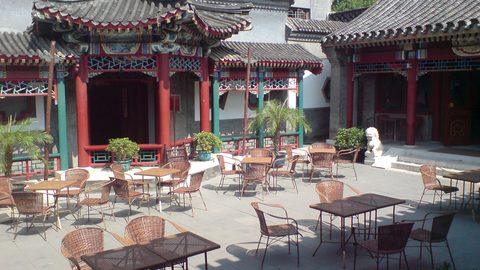
 Beijing Hotels by Price Band and Property Type
Beijing hotels split into hutong courtyards, international chains and functional business towers. Here is what each price band actually buys you.
Beijing Hotels by Price Band and Property Type
Beijing hotels split into hutong courtyards, international chains and functional business towers. Here is what each price band actually buys you.
-
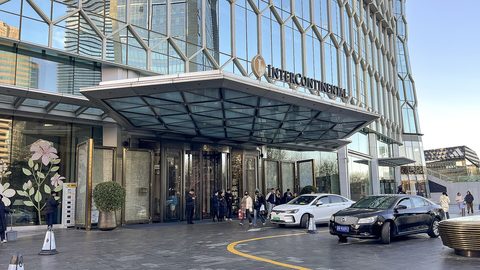 Where to Stay in Beijing by District and Travel Style
Dongcheng puts you beside the Forbidden City, Chaoyang beside the nightlife. Here is how Beijing's districts compare for different travellers.
Where to Stay in Beijing by District and Travel Style
Dongcheng puts you beside the Forbidden City, Chaoyang beside the nightlife. Here is how Beijing's districts compare for different travellers.
-
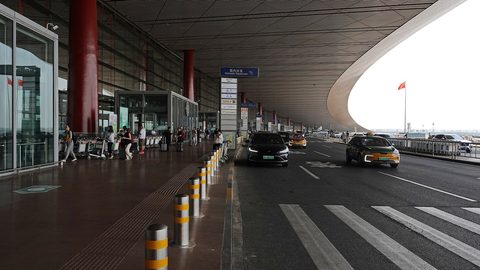 Beijing Flights PEK vs PKX Which Airport Actually Works for You
PEK or PKX? What each Beijing airport costs you in time, money, and logistical friction depending on where you are staying.
Beijing Flights PEK vs PKX Which Airport Actually Works for You
PEK or PKX? What each Beijing airport costs you in time, money, and logistical friction depending on where you are staying.
-
 Beijing Things to Do Worth Your Limited Days
The Forbidden City and Great Wall are essential, but Beijing's meaning lives in temple courtyards, hutong lanes and food streets. Here is what earns your days.
Beijing Things to Do Worth Your Limited Days
The Forbidden City and Great Wall are essential, but Beijing's meaning lives in temple courtyards, hutong lanes and food streets. Here is what earns your days.
-
 Best Time to Visit Beijing, Month by Month Tradeoffs
April and October bring blue skies and queues, July brings heat, January brings empty sites and hazardous air. Here is Beijing month by month.
Best Time to Visit Beijing, Month by Month Tradeoffs
April and October bring blue skies and queues, July brings heat, January brings empty sites and hazardous air. Here is Beijing month by month.
-
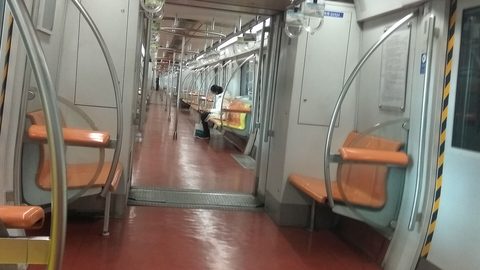 Getting Around Beijing Without Losing Half Your Day
Beijing's metro is clean and cheap but stops early, and taxis rarely speak English. Here is how to move around without burning half your day.
Getting Around Beijing Without Losing Half Your Day
Beijing's metro is clean and cheap but stops early, and taxis rarely speak English. Here is how to move around without burning half your day.
-
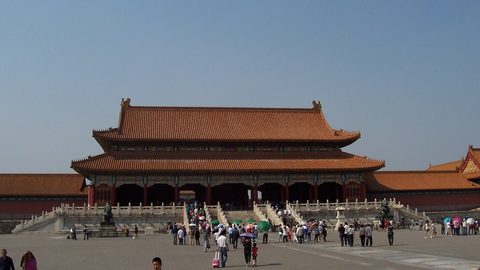 Forbidden City
 tickets require booking seven days ahead on WeChat with a passport. Here is the route to take once you are inside to avoid wasting the visit.
Forbidden City
Forbidden City tickets require booking seven days ahead on WeChat with a passport. Here is the route to take once you are inside to avoid wasting the visit.
-
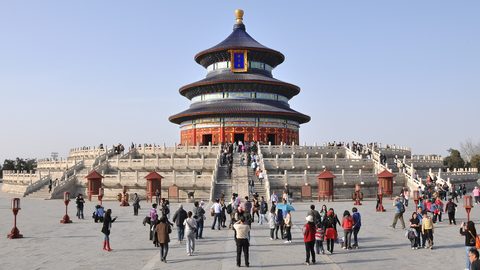 Temple of Heaven
The Temple of Heaven park matters as much as the temple. Morning tai chi, choirs, and card players make it a Beijing ritual worth a full morning.
Temple of Heaven
The Temple of Heaven park matters as much as the temple. Morning tai chi, choirs, and card players make it a Beijing ritual worth a full morning.
-
 Summer Palace
The Summer Palace is vast and the wrong entrance adds an hour of walking. Use the East Palace Gate and plan for at least four hours.
Summer Palace
The Summer Palace is vast and the wrong entrance adds an hour of walking. Use the East Palace Gate and plan for at least four hours.