What Beijing Is Like During Chinese New Year
Temple fairs, a half-shut city, and a real argument for visiting Beijing during Chinese New Year anyway.
.jpg)
What Beijing is Like During Chinese New Year
The common assumption is that Beijing Chinese New Year means empty streets, closed everything, and a dead city. That is half right and half misleading. What actually happens is a city that splits in two. Roughly 40-50% of permanent residents leave, draining the residential districts, the hutongs, and the family-run kitchen tables. The remaining population, plus domestic tourists arriving from provinces that do not celebrate as intensely, fills the temple fairs, the major sights, and the metro. So the question is not whether Beijing is empty. It is whether the parts you want are open or shut.
Beijing during this period is not a ghost town. It is a city that has swapped its everyday rhythm for a festive one. The Forbidden City, the Temple of Heaven, the Summer Palace, and every Great Wall section stay open. The metro runs. The chain eateries Haidilao, McDonald's, and KFC operate normally. What disappears is the fabric of daily life: the noodle stall in the hutong that has no English sign and no online presence, the small hotpot place that the owner closes for two weeks to see family, the breakfast cart that sells jianbing on the corner. That loss is real, and if your trip depends on spontaneous local eating, the first seven days of the lunar year will frustrate you.
Beijing Temple Fair: the Best Reason to Go During Spring Festival
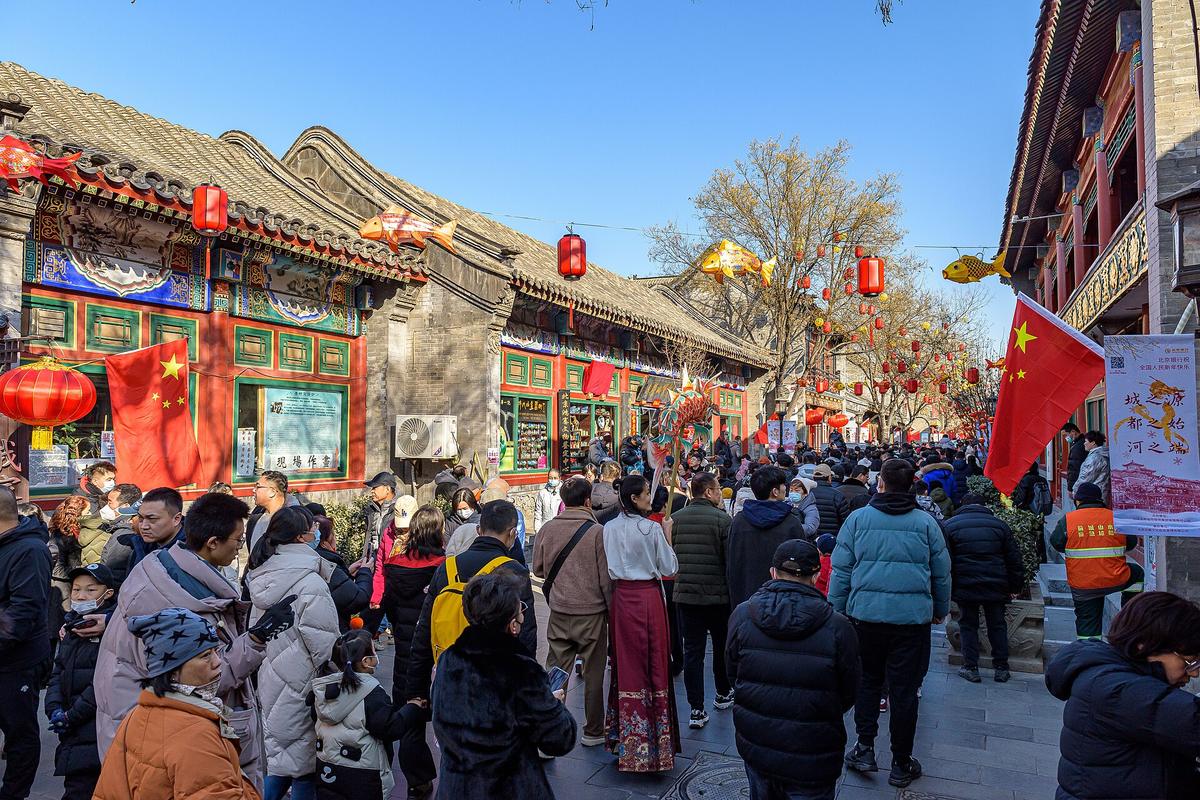
If you visit Beijing during Chinese New Year, the temple fairs are the single thing you cannot replicate at any other time of year. They are loud, crowded, and chaotic in the best way. They are also the main event that makes the trip worthwhile.
Ditan Temple Fair Beijing
The Ditan Temple Fair at Ditan Park in Dongcheng District is the largest and most traditional. It runs from New Year's Day through Day 7 of the lunar year, entry is ¥10, and on peak days it draws 100,000-200,000 visitors. The centrepiece is a recreated Qing imperial sacrifice ceremony, but the real draw is the perimeter: folk performances, food stalls selling tang hulu and lamb skewers, and a crowd that is equal parts Beijing locals and domestic tourists. Arrive before 10:00 or after 14:00 to avoid the worst crush. The metro stop is Dongzhimen, then a ten minute walk through the park's north gate.
Longtan Temple Fair
Longtan Park, also in Dongcheng, hosts a fair with a different character. It emphasises sports, folk games, acrobatics, and a more local east Beijing crowd. Entry is also ¥10, same dates. If Ditan feels too overwhelming, Longtan is the alternative that still delivers the atmosphere without the shoulder to shoulder density.
Changdian and Baiyunguan
Changdian Temple Fair, in the Liulichang and Hufangqiao area of Xicheng, is free and the oldest of the Beijing fairs. It specialises in antiques, calligraphy, books, and traditional crafts rather than carnival rides. Baiyunguan Temple Fair, at the Baiyunguan Taoist Temple in Xicheng, costs ¥10 and is quieter. Its defining ritual is touching the stone monkey for luck. Both are worth an hour, and both run New Year's Day through Day 7.
Beijing Spring Festival Travel: What the Transport Reality Feels Like
Beijing Spring Festival travel coincides with Chunyun, the 40 day national migration period that runs 15 days before to 25 days after Chinese New Year. In 2024, Chunyun generated 8.4 billion passenger trips nationwide. Within Beijing, the effect is uneven. The metro and roads that serve residential areas thin out noticeably. The lines that connect the railway stations and airports swell. Taxi and ride hailing wait times at Beijing Capital International Airport (PEK) and Beijing Daxing International Airport (PKX) can stretch to 30-40 minutes during the three days before New Year's Eve, when the outward exodus peaks.
When to Arrive
For your own planning: arrive on or after Day 3 of the new year. The week after Chinese New Year is the sweet spot. Beijing's population stays 40-50% below normal, metro carriages have empty seats, and major sights operate with minimal queues. The temple fairs end by Day 7, but the city itself remains uncrowded through roughly Day 10. If you want both temple fair access and empty sightseeing, target Day 3 to Day 7. If you want only empty sightseeing, Day 8 to Day 10 is better.
Beijing CNY Restaurant Closures: What You Can and Cannot Eat
Beijing CNY restaurant closures follow a predictable pattern, and knowing it saves you from walking hungry. The closure window for small independently owned restaurants is 7 to 14 days, typically from New Year's Eve through Day 7 or 8 of the new year. Hutongs are worst affected: the small noodle shops, the lamb hotpot places, the breakfast stalls. Many post no notice; the decision is made day to day by the owner. Do not trust a hutong street to feed you during the first week unless you see the stove lit.
What Stays Open
What stays open: every major chain. McDonald's, KFC, Haidilao, and surprisingly Quanjude roast duck continue operating. Hotel restaurants run normally, though on New Year's Eve most independent restaurants close by 18:00, and the hotel dining rooms become the only reliable option at prices between ¥300 and ¥1,000 per person. If you want Beijing kaoya at Da Dong or Siji Minfu, check their holiday schedule online before you go. Some flagship locations stay open; neighbourhood branches may close.
The Traditional Food Moment
For the traditional food moment: dumplings are eaten at midnight on New Year's Eve. If you are in a hotel that offers a dumpling making activity, book it. If you are in a chain restaurant, they will have them. Do not expect to stumble into a hutong home for a bowl.
Ditan Temple Fair Beijing: Why it is Worth the Crowd
Ditan Temple Fair Beijing is not a place for a quiet afternoon. It is a place for an experience. The crowd is part of it. The food stalls sell tang hulu, the candied hawthorn skewers that appear on street carts across Beijing in autumn and winter, and lamb skewers grilled over charcoal. The folk performances include stilt walkers, drum troupes, and the imperial sacrifice reenactment. The entry fee of ¥10 is negligible. The real cost is your patience for dense crowds. If you have none, skip it and visit Longtan or Changdian instead. But if you can tolerate being pressed into a moving mass of 100,000 people for the chance to see Beijing celebrate the way it has for centuries, Ditan delivers.
Practical Points
Practical point: carry your passport. You need it to enter the park, as with all major Beijing landmarks. The metro to Ditan is Dongzhimen on Line 2 or Line 13, then exit A and walk south along Andingmen Outer Street. The queue at the ticket booth moves fast. Bring ¥10 cash or a phone with Alipay. Do not bring a large backpack; security check is routine.
The Quiet Beijing That Appears Once a Year
There is a version of Beijing that exists only during the week after Chinese New Year. The hutongs lose their tour groups. The residential lanes around Gulou and Shichahai empty out. The Drum and Bell Towers have no queue. Jingshan Park, which normally offers a packed view of the Forbidden City, has space to stand and look. That quiet is the trade off for the closed restaurants, and for many travellers it is worth more than the temple fairs.
Where to Find the Quiet
The Forbidden City is open from New Year's Day onward. It closes only on New Year's Eve. On Day 2, when the temple fairs are at their peak, the Forbidden City's visitor count drops. Book your ticket online one to seven days ahead. The Temple of Heaven in the early morning, when locals practice tai chi and play cards before the gates fill, is at its calmest during this week. The Summer Palace, a 40-60 minute metro ride from the centre, has lakeside paths that feel genuinely empty.
This is the argument for coming anyway. You lose the spontaneous food, but you gain a Beijing that tourists almost never see: a monumental city with room to breathe.

Fireworks, Lanterns, and What You Actually See
Fireworks are banned inside Beijing's 5th Ring Road since 2005, and the ban was extended to most suburban districts by 2022. Enforcement is real: police and neighbourhood patrols issue fines up to ¥500 for individuals. You will not see fireworks in central Beijing. From a high floor in Chaoyang or Dongcheng, you may spot distant flashes from suburban districts like Yanqing, Miyun, or Pinggu, where designated retail points sell fireworks during the ten days before Chinese New Year. But there is no official central display. Manage expectations accordingly.
Lantern Festival
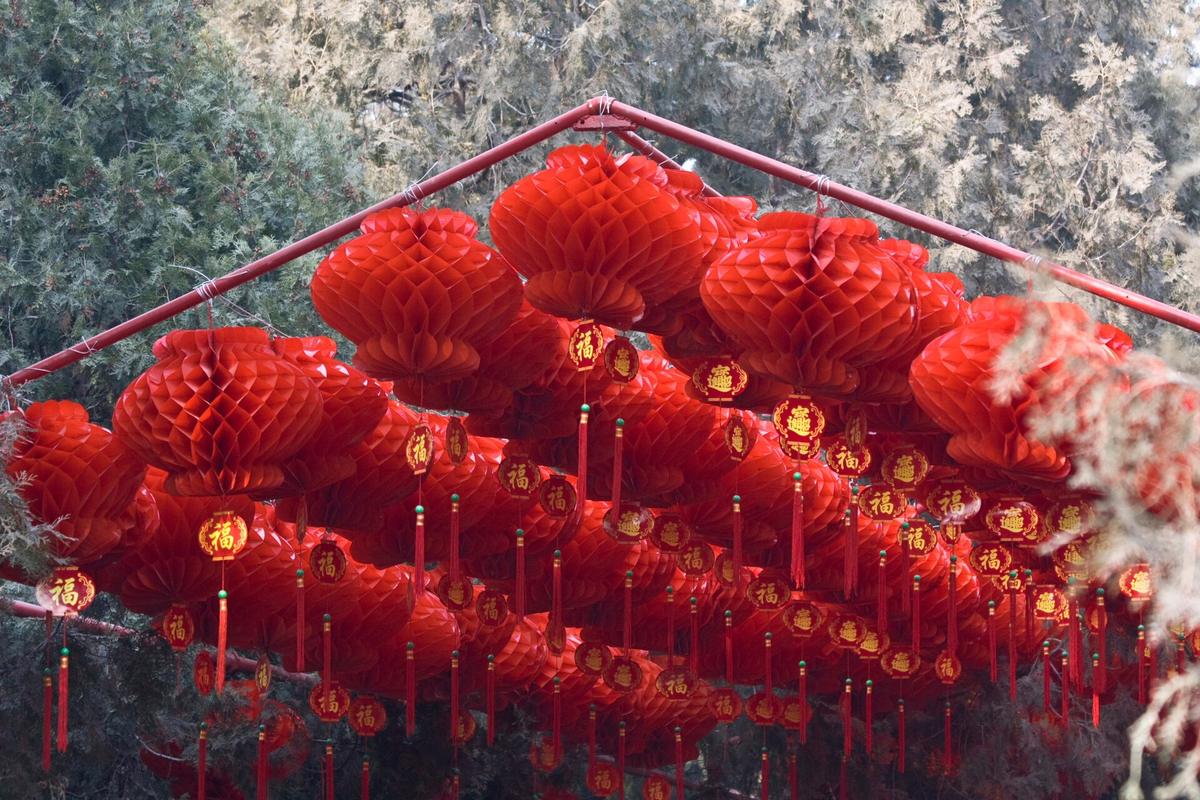
The Lantern Festival falls on Day 15 of the first lunar month, 15 days after Chinese New Year. If you are still in Beijing, you can find yuanxiao, the glutinous rice balls with sweet fillings of sesame, peanut, or red bean, sold boiled or fried at the temple fairs and at some hotel restaurants. The Lantern Festival itself is not a major public spectacle in Beijing. The temple fairs are done by then. It is a quieter, family oriented night.
| Fair | Location | Dates | Entry Fee | Character |
|---|---|---|---|---|
| Ditan Temple Fair | Ditan Park, Dongcheng | New Year's Day to Day 7 | ¥10 | Largest and most traditional; Qing imperial sacrifice, folk performances, food stalls |
| Longtan Temple Fair | Longtan Park, Dongcheng | New Year's Day to Day 7 | ¥10 | Sports, folk games, acrobatics, local east Beijing crowd |
| Changdian Temple Fair | Liulichang, Xicheng | New Year's Day to Day 7 | Free | Oldest Beijing fair; antiques, calligraphy, books, traditional crafts |
| Baiyunguan Temple Fair | Baiyunguan Taoist Temple, Xicheng | New Year's Day to Day 7 | ¥10 | Taoist rituals, stone monkey touching for luck, quieter |
Worth it if
- Major sights including the Forbidden City and Great Wall remain open with minimal queues after Day 3
- Temple fairs at Ditan, Longtan, Changdian, and Baiyunguan offer a cultural experience unique to this period
- Beijing feels quiet in residential areas and hutongs, rare for a city of 22 million
- Metro and roads are uncrowded the week after Chinese New Year
Skip it if
- Family run restaurants in hutongs close for 7 to 14 days, eliminating spontaneous local eating
- Transport is packed during the three days before New Year's Eve due to Chunyan internal migration
- Fireworks are banned inside the 5th Ring Road, so no central display
- New Year's Eve dinner is limited to hotel restaurants at ¥300 to ¥1,000 per person
Who Should Time Their Trip to Chinese New Year and Who Should Skip
Beijing during Chinese New Year suits the traveller who wants temple fairs, traditional food served at stalls rather than restaurants, and the rare experience of seeing a monumental city with open space. It suits the traveller willing to trade spontaneous eating for a planned meal schedule and to book everything 30 to 90 days ahead. It suits anyone who finds the idea of 100,000 people at Ditan Temple Fair exciting rather than exhausting.
It does not suit the traveller who needs small local restaurants open on demand, who wants hutong shopping without closure notices, or who plans to travel between cities by high speed rail during the first three days of the new year. It does not suit anyone looking for a quiet, romantic, or intimate atmosphere. If you want Kyoto or Luang Prabang levels of preserved charm, come in April or October. If you want to eat your way through hutong kitchens without a reservation, come in May. But if you want to see Beijing celebrate the lunar new year the way it has for centuries, with all the noise and compromise that entails, the week after Chinese New Year is the only time to do it.
Read next
-
 Beijing Hotels by Price Band and Property Type
Beijing hotels split into hutong courtyards, international chains and functional business towers. Here is what each price band actually buys you.
Beijing Hotels by Price Band and Property Type
Beijing hotels split into hutong courtyards, international chains and functional business towers. Here is what each price band actually buys you.
-
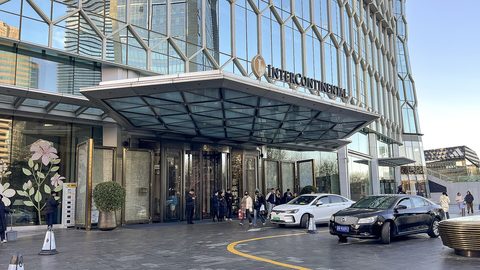 Where to Stay in Beijing by District and Travel Style
Dongcheng puts you beside the Forbidden City, Chaoyang beside the nightlife. Here is how Beijing's districts compare for different travellers.
Where to Stay in Beijing by District and Travel Style
Dongcheng puts you beside the Forbidden City, Chaoyang beside the nightlife. Here is how Beijing's districts compare for different travellers.
-
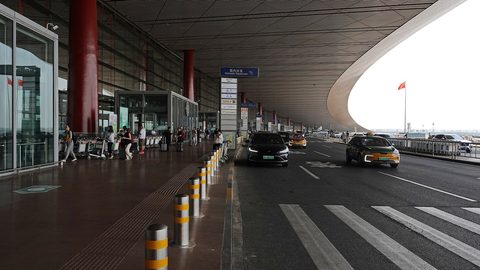 Beijing Flights PEK vs PKX Which Airport Actually Works for You
PEK or PKX? What each Beijing airport costs you in time, money, and logistical friction depending on where you are staying.
Beijing Flights PEK vs PKX Which Airport Actually Works for You
PEK or PKX? What each Beijing airport costs you in time, money, and logistical friction depending on where you are staying.
-
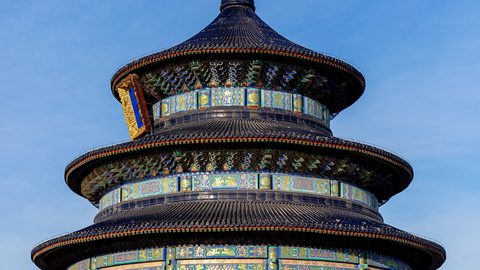 Beijing Things to Do Worth Your Limited Days
The Forbidden City and Great Wall are essential, but Beijing's meaning lives in temple courtyards, hutong lanes and food streets. Here is what earns your days.
Beijing Things to Do Worth Your Limited Days
The Forbidden City and Great Wall are essential, but Beijing's meaning lives in temple courtyards, hutong lanes and food streets. Here is what earns your days.
-
 Best Time to Visit Beijing, Month by Month Tradeoffs
April and October bring blue skies and queues, July brings heat, January brings empty sites and hazardous air. Here is Beijing month by month.
Best Time to Visit Beijing, Month by Month Tradeoffs
April and October bring blue skies and queues, July brings heat, January brings empty sites and hazardous air. Here is Beijing month by month.
-
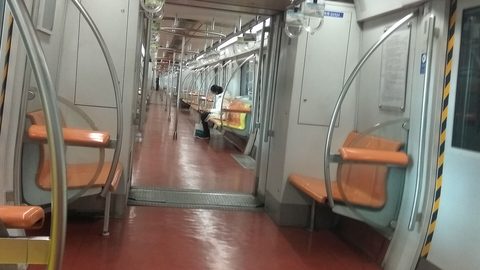 Getting Around Beijing Without Losing Half Your Day
Beijing's metro is clean and cheap but stops early, and taxis rarely speak English. Here is how to move around without burning half your day.
Getting Around Beijing Without Losing Half Your Day
Beijing's metro is clean and cheap but stops early, and taxis rarely speak English. Here is how to move around without burning half your day.
-
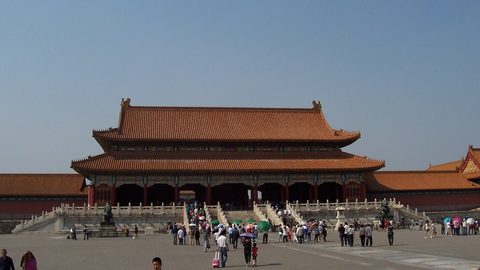 Forbidden City
 tickets require booking seven days ahead on WeChat with a passport. Here is the route to take once you are inside to avoid wasting the visit.
Forbidden City
Forbidden City tickets require booking seven days ahead on WeChat with a passport. Here is the route to take once you are inside to avoid wasting the visit.
-
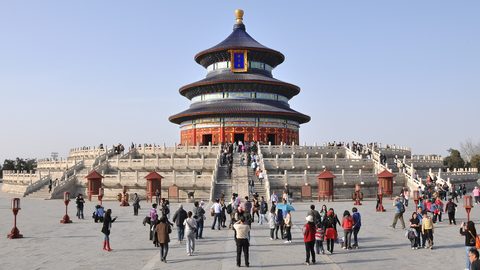 Temple of Heaven
The Temple of Heaven park matters as much as the temple. Morning tai chi, choirs, and card players make it a Beijing ritual worth a full morning.
Temple of Heaven
The Temple of Heaven park matters as much as the temple. Morning tai chi, choirs, and card players make it a Beijing ritual worth a full morning.
-
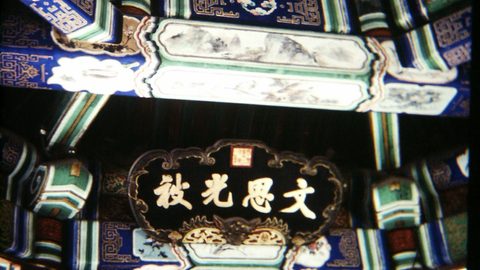 Summer Palace
The Summer Palace is vast and the wrong entrance adds an hour of walking. Use the East Palace Gate and plan for at least four hours.
Summer Palace
The Summer Palace is vast and the wrong entrance adds an hour of walking. Use the East Palace Gate and plan for at least four hours.