The Best Six Weeks of the Beijing Year
The best six weeks of the Beijing year for weather and foliage, and the National Day week inside them to avoid at any cost.
.jpg)
The Best Six Weeks of the Beijing Year
Most visitors get the timing wrong by exactly one week. They book for the tenth month, see the golden foliage in photos, and land in a city where the Imperial Palace sells out by breakfast, the Great Wall cable car queue runs two to four hours, and hotel rates have tripled. Beijing in autumn is the best version of this monumental city. But the golden window is narrower than you think, and one week inside it is a trap.
The window runs from the third week of September through the first week of November. That gives you roughly six weeks of blue skies, temperatures that let you walk all day without wilting, and foliage that turns the imperial parks into something close to a painting. The problem is that the entire domestic tourism industry also knows this. National Day Golden Week runs from 1 to 7 October every year, and those seven days account for 700 to 800 million domestic trips nationwide. The China National Tourism Administration publishes the exact figure annually, and you should check it before booking, because the 2024 rate was already above 800 million. The Palace Museum releases tickets seven days in advance, and during Golden Week they vanish within minutes of release. High-speed train tickets on all G and D class trains book out one to two weeks before departure. Hotel rates spike to 200 to 400 percent of the standard seasonal rate.
The fix is simple. Shift your trip to 24 to 30 September or 8 to 14 October. The first window gives you the Mid-Autumn Festival in 2026 (the date is 25 September) where mooncakes appear on every street corner for ¥10 to ¥60 per piece, and the foliage has just begun to turn. The second window catches the peak colours without the crowds. Either way, you get the weather without the crush.
The Temperature and Sky Reality
What the Numbers Actually Mean
Mid-September runs 14°C to 26°C. You need a light jacket or cardigan and long trousers. The tenth month drops to 8°C to 19°C. That is not coat weather yet, but it is layer weather: a mid-weight coat, a scarf, and something you can peel off when the sun hits you in a courtyard. Early November falls to 0°C to 12°C. By mid-November the average low drops below freezing, and you need a winter coat, hat, and gloves for mornings and evenings.
September air quality averages 50 to 80 on the AQI, which is Good to Moderate. The tenth month averages 60 to 100, still Moderate. November climbs to 100 to 180, moving into Unhealthy for sensitive groups by late in the month. The Beijing Municipal Environmental Monitoring Center publishes the daily index. Check it. If you are sensitive to pollution, carry N95 masks for November visits.
The blue-sky frequency hits its highest in October. Summer haze is gone. Winter smog has not arrived. You get clear light that makes the gold roofs of the Palace Museum read as actual gold, not grey metal.
Where the Colour Actually is
Not every park is worth your limited days. Be strategic.
Ginkgo Avenues
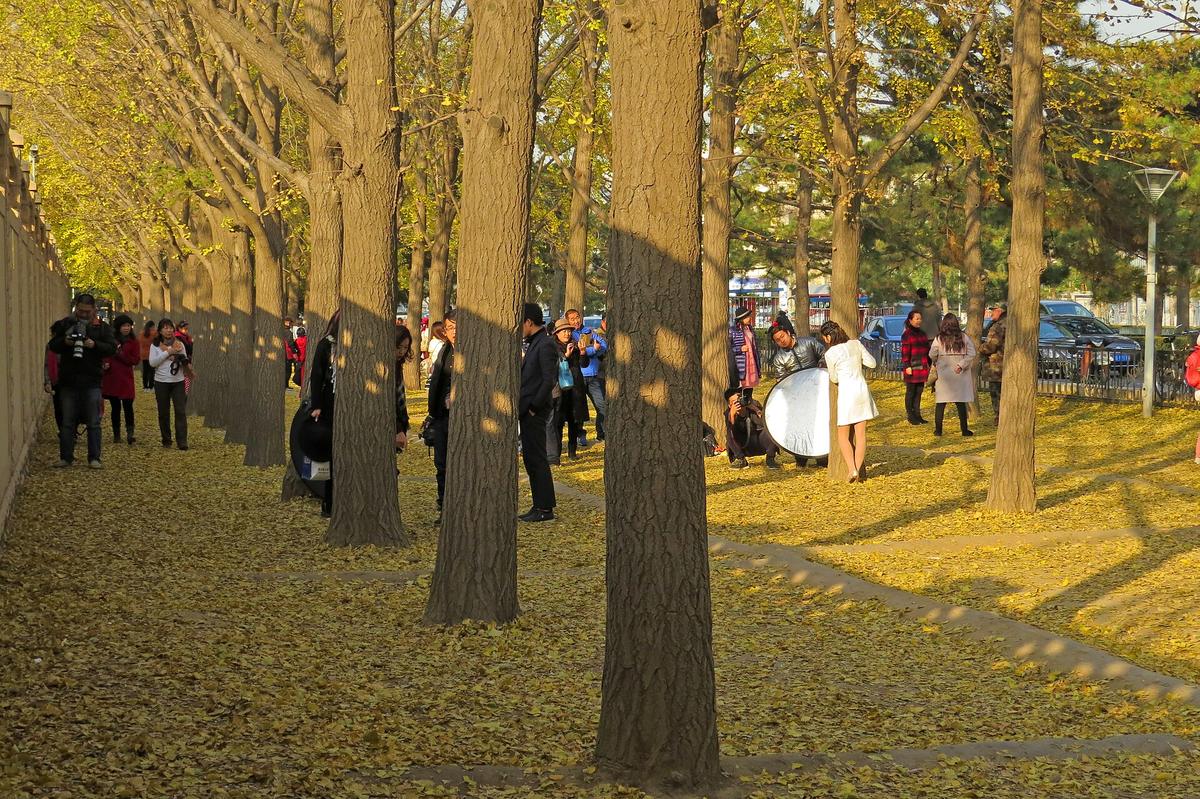
The ginkgo trees peak in the first week of November. That is late in the window, and you need to time it precisely because the leaves drop fast after a wind or rain. Three locations matter.
- Lama Temple approach: Yonghegong Dajie, the street between the subway station and the temple gate. Two rows of mature ginkgo trees that turn the walking approach into a yellow tunnel. You enter through the temple anyway, so this costs you nothing extra.
- Diaoyutai: Diaoyutai Dongqiang, west side of Sanlihe Road in Haidian District. A diplomatic compound wall lined with ginkgo on both sides. Quieter than the temple approach because fewer tourists know about it.
- Ditan Park: the main north-south axis path inside the park. The least crowded of the three, and the most relaxed for photography without weaving through people.
Red Leaves at Fragrant Hills
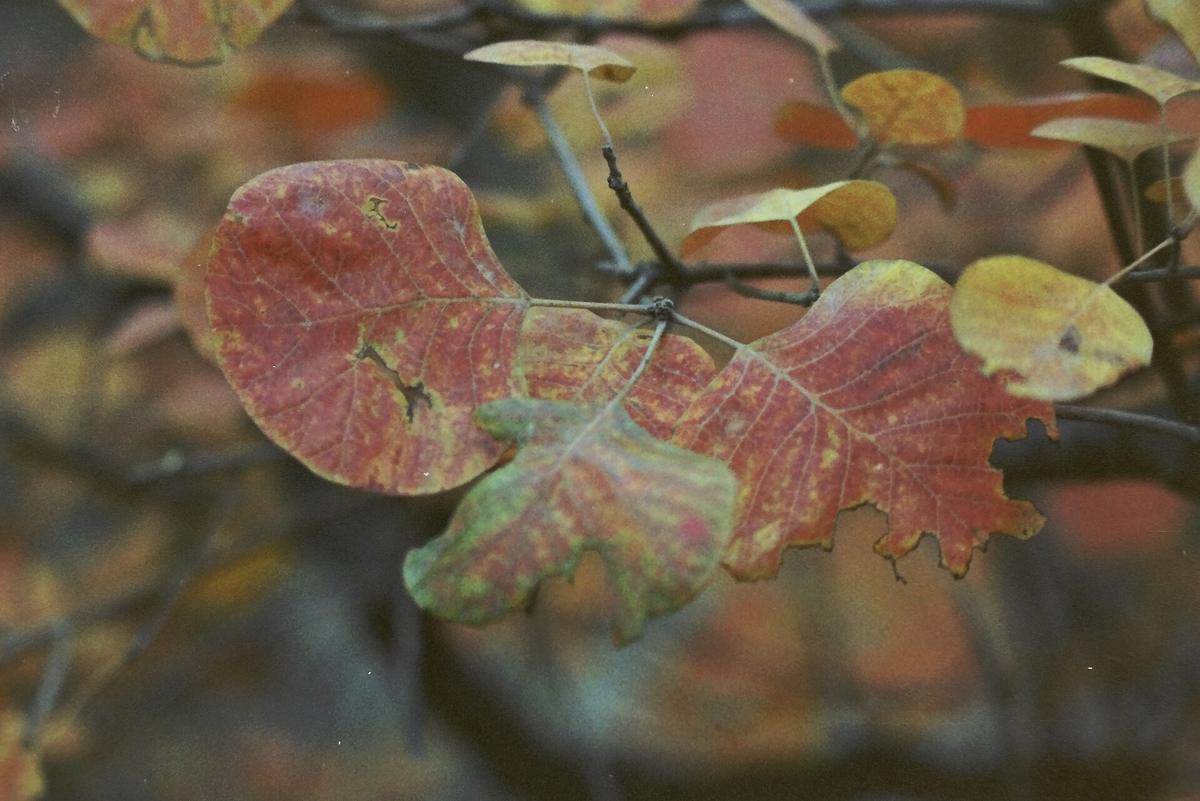
Fragrant Hills gets the coverage, and it deserves the caveat. The red-leaf peak hits the last week of October, and on a weekend in that week daily visitors hit 60,000 to 100,000. The cable car queue alone can eat two hours. Skip the main gate. Arrive before 07:00, or use the west gate via the Xishan Forest Park trail, which most visitors miss.
Skip Fragrant Hills entirely if you only have one day for autumn colour and do not want a fight. The ginkgo avenues and Jingshan Park give you more return per minute.
Jingshan and Beihai for Light
Jingshan Park gives you the Palace Museum panorama for ¥2. The best light runs 16:00 to 17:30 in October. The low golden light hits the rooftops and the red walls in a way that midday flat light cannot touch. Beihai Park, five minutes north, gives you a west-facing White Dagoba reflection from 15:30 to 17:00. Hit them in sequence: Beihai first, then Jingshan for the sunset.
The Great Wall in Autumn
Badaling during Golden Week is a human traffic jam with a 2 to 4 hour cable car queue. Do not go. Mutianyu, 1.5 hours from the city, is the better restored section for autumn colour because the tree cover around the wall turns red and gold, and the cable car exists. Jinshanling, 2.5 hours out, is semi-wild and gives you the dramatic wall-on-ridge photographs. The trade-off is longer travel and no cable car. Both are good in October. Neither is good in Golden Week. Book a pre-arranged car or tourist bus; public transport to both is slow and inconsistent.
_October_1984.jpg)
What to Pack and How to Move
Layers, Not a Single Coat
The temperature swing between morning and afternoon in October is 11°C. A single jacket that works for 8°C will be too warm at 19°C. Pack a base layer, a mid-layer, and an outer shell that you can carry. A scarf is not decorative. You need it for mornings on the wall or in an unheated hutong courtyard. Comfortable walking shoes are non-negotiable. The Palace Museum alone is a 3 to 5 kilometre walk if you see the full east-west axis.
Metro Reality
The metro is your primary mode. 27 lines, flat fares ¥3 to ¥10, English signage at every station. Get a Beijing Transportation Smart Card (Yikatong) or set up Alipay or WeChat Pay with a transport QR code before you leave. Cash ticket machines exist but move slower. The main trap is exits: station names and letter exits are numerous, and surfacing through the wrong letter can leave you on the wrong side of a 10-lane road with a 10 minute walk to the correct side. Confirm your exit letter before you leave the platform.
The One Thing That Changes Everything
Carry your passport every single day. You need it for Tiananmen Square, the Palace Museum, the National Museum, and many parks. Security checks at metro stations and landmarks are routine. Budget an extra 5 to 10 minutes per major site. Underestimating transfer and queuing time is the single most common mistake travellers make: planning the Palace Museum, Temple of Heaven, Summer Palace, and Great Wall in two days is a fantasy. The Palace Museum alone consumes a morning. The Summer Palace is a 40 to 60 minute metro ride from the centre. Pick two sights per day maximum, and let the rest of the time go to walking a hutong, eating zhajiangmian, or sitting in a park watching the morning tai chi crowds.
Read next
-
 Beijing Hotels by Price Band and Property Type
Beijing hotels split into hutong courtyards, international chains and functional business towers. Here is what each price band actually buys you.
Beijing Hotels by Price Band and Property Type
Beijing hotels split into hutong courtyards, international chains and functional business towers. Here is what each price band actually buys you.
-
 Where to Stay in Beijing by District and Travel Style
Dongcheng puts you beside the Forbidden City, Chaoyang beside the nightlife. Here is how Beijing's districts compare for different travellers.
Where to Stay in Beijing by District and Travel Style
Dongcheng puts you beside the Forbidden City, Chaoyang beside the nightlife. Here is how Beijing's districts compare for different travellers.
-
 Beijing Flights PEK vs PKX Which Airport Actually Works for You
PEK or PKX? What each Beijing airport costs you in time, money, and logistical friction depending on where you are staying.
Beijing Flights PEK vs PKX Which Airport Actually Works for You
PEK or PKX? What each Beijing airport costs you in time, money, and logistical friction depending on where you are staying.
-
 Beijing Things to Do Worth Your Limited Days
The Forbidden City and Great Wall are essential, but Beijing's meaning lives in temple courtyards, hutong lanes and food streets. Here is what earns your days.
Beijing Things to Do Worth Your Limited Days
The Forbidden City and Great Wall are essential, but Beijing's meaning lives in temple courtyards, hutong lanes and food streets. Here is what earns your days.
-
 Best Time to Visit Beijing, Month by Month Tradeoffs
April and October bring blue skies and queues, July brings heat, January brings empty sites and hazardous air. Here is Beijing month by month.
Best Time to Visit Beijing, Month by Month Tradeoffs
April and October bring blue skies and queues, July brings heat, January brings empty sites and hazardous air. Here is Beijing month by month.
-
 Getting Around Beijing Without Losing Half Your Day
Beijing's metro is clean and cheap but stops early, and taxis rarely speak English. Here is how to move around without burning half your day.
Getting Around Beijing Without Losing Half Your Day
Beijing's metro is clean and cheap but stops early, and taxis rarely speak English. Here is how to move around without burning half your day.
-
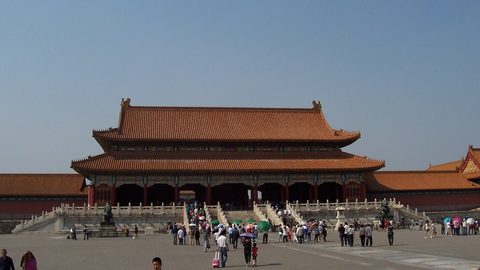 Forbidden City
 tickets require booking seven days ahead on WeChat with a passport. Here is the route to take once you are inside to avoid wasting the visit.
Forbidden City
Forbidden City tickets require booking seven days ahead on WeChat with a passport. Here is the route to take once you are inside to avoid wasting the visit.
-
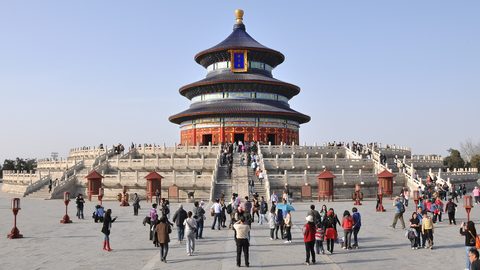 Temple of Heaven
The Temple of Heaven park matters as much as the temple. Morning tai chi, choirs, and card players make it a Beijing ritual worth a full morning.
Temple of Heaven
The Temple of Heaven park matters as much as the temple. Morning tai chi, choirs, and card players make it a Beijing ritual worth a full morning.
-
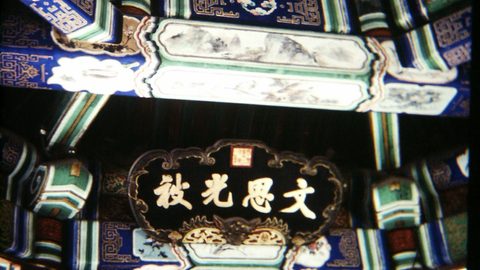 Summer Palace
The Summer Palace is vast and the wrong entrance adds an hour of walking. Use the East Palace Gate and plan for at least four hours.
Summer Palace
The Summer Palace is vast and the wrong entrance adds an hour of walking. Use the East Palace Gate and plan for at least four hours.