Where Beijing Actually Goes Out After Dark
A guide to Beijing's real nightlife in Gulou and Sanlitun, and why Houhai's lakeside bars are a tourist tax.
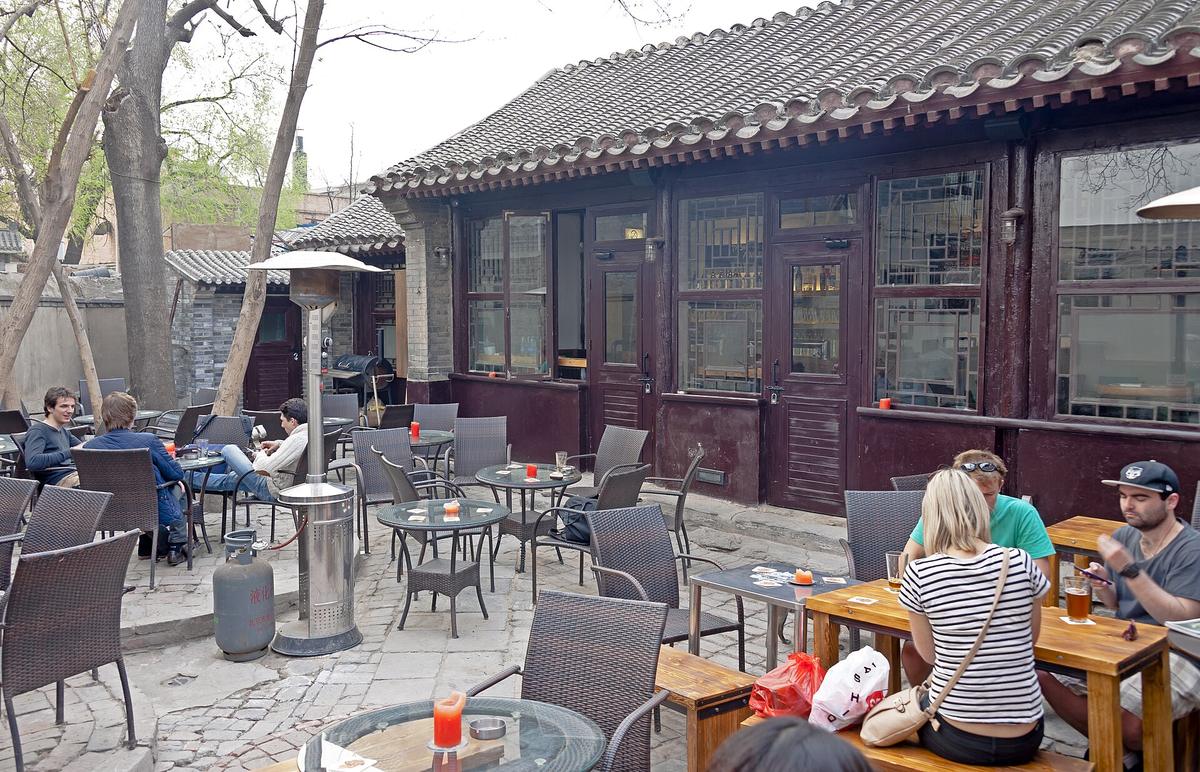

You are standing on the shore of Shichahai Lake, a plastic cup of warm beer in hand, watching a pair of hired singers belt a pop ballad at the next table while a middle-aged man tries to photograph a Peking opera mask with his iPad. The bill arrives in a lacquered folder. It is painful: ¥80 for a domestic beer, a cocktail made from an off-brand spirit and a syrup you could buy at a Chinese convenience store.
This is Houhai, and it exists to separate tourists from their money under the prettiest possible lighting. The lakes are beautiful. The bars are a trap. Beijing residents do not go there. They go elsewhere, and the difference matters for your trip because you have only four nights. Each one is a chance to see the city as it actually is, not as it curates itself for the casual visitor.
Gulou: Where the City’s Indie Pulse Beats
Start With the Beers That Built a Scene
Begin in the Gulou area, anchored by the Drum and Bell Towers. This is the centre of Beijing's independent youth culture. You find it along Gulou Dongdajie and the warren of hutungs around it: Fangjia Hutong, the lane by the Lama Temple. The character here is live music, dive bars, craft beer, and an unpretentiousness that Houhai could not fake with a thousand strings of lanterns.
Great Leap Brewing opened its original taproom in Doujiao Hutong in 2010, a date that marks the start of proper craft beer in a city that had no significant beer culture before it. Their beers are straightforward, drinkable, and priced for repeat visits, not one-off spectacle. Jing-A Brewing pushes harder into experimental styles. Slow Boat Brewery, in Dongsi Batiao, does the hamburger-and-pint thing better than anywhere in the city. Arrow Factory Brewing, near Liangmahe in Chaoyang, rounds out the set. None of these places charge Houhai prices. None of them feel like a production.
Live Music Without the Souvenir Factor
School Bar, at 53 Wudaoying Hutong, is the venue. It is small, unglamorous, and loud in the way that a basement should be. The bands are local, the crowd is young, and the listings run almost entirely in Chinese on WeChat official accounts. You find them by following the venue accounts before you arrive, or by asking at the bar. Yugong Yishan, once the anchor of the scene, closed in 2019. DDC has moved locations, most recently to Chaoyang. The reliable constants are School Bar and the various Modernsky spaces, whose event schedules shift with the month. This is not a scene you book three weeks ahead. Walk in and figure it out.
Sanlitun: the Moneyed End of the Night
Sanlitun is the expat and professional-class centre of Beijing nightlife. The bar strip in Chaoyang District is where you go when you want a proper cocktail, a club that stays open past 02:00, and the feeling of being in an international city rather than a hutong village. It is also where you pay for that privilege: ¥70 and up for a cocktail, depending on the venue, and ID checks at the door of every Workers' Stadium-area club. You need your passport. Not a photocopy.
Skip the loud, branded mega-clubs on the Workers' Stadium strip unless you specifically want to stand in a queue of 200 people while a promoter shouts at you in Mandarin. Instead, head for the smaller cocktail bars tucked into the side streets off Gongti Beilu. They rotate fast. Ask a bartender at Great Leap or Jing-A for a current recommendation. The benefit of this district is reliability: the bars are well-stocked, the drinkers speak English, and the metro runs until around 23:00, which gives you a solid window before you switch to Didi. The drawback is that it feels like a global corporate nightlife district in any city. It is not a specifically Beijing experience.
Wudaoying and Fangjia Hutongs: Quieter Courtyard Nights
Between the drumbeats of Gulou and the polish of Sanlitun lies a third option. The lane near the Lama Temple and Fangjia Hutong, off Andingmennei Dajie, are quieter than Gulou and less commercial than Sanlitun. The bars here are courtyard conversions, low-lit, with one person tending the room and a pour-over coffee menu on the blackboard at 21:00. They suit a night when you want to talk, not shout. A night when the point is the company, not the venue.
Eat dinner first at Ghost Street, Guijie, on Dongzhimennei Dajie. The restaurants there stay open until 02:00 or 04:00, depending on the venue, and serve the full spectrum of Beijing late-night eating: lamb hotpot, Sichuan crayfish, hand-pulled noodles. It is a street, not a secret, but it works. Then walk ten minutes to the hutong and end the night in a courtyard bar where the drink list is a single sheet of paper.
What to Avoid and Why
Houhai is the most obvious mistake, but it is not the only one. The tourist-oriented Peking opera at Liyuan Theatre in Qianmen and the acrobatics at Chaoyang Theatre are nightly productions that start around 19:30. They are designed for people who want to tick a box and go to bed. They are not designed for anyone who cares about performance. Skip them unless you are genuinely curious and have no other evening plan. The real Peking opera fan goes to an academy performance or a small teahouse, which you find by asking a Chinese friend, not a hotel concierge.
Also avoid the temptation to treat the club strip at Workers' Stadium as a must-do. The venues are large, loud, and expensive. The bouncers are serious about your documents. The crowd is there to spend money, not to talk to you. If that is your scene, fine. If it is not, do not let the guidebooks make you feel obligated.
.jpg)
Logistics: Getting Home
Metro, Didi, and the Art of the Pickup Point
The metro stops. Last trains run between 22:30 and 23:30, varying by line and station. Check the board in the station, because your line might be the early one. After that, you need Didi, which operates 24/7. The longest waits fall between 02:00 and 04:00 on Friday and Saturday nights, when the clubs empty and everyone is trying to hail a ride at once. Good pickup points are crucial in a city of ten-lane roads and no-name intersections.
In Gulou, walk to the north side of the Drum Tower and request the car there. In Sanlitun, use the taxi stand on Gongti Beilu, not the entrance to the bar strip itself. Near the Lama Temple, stand at the east gate. Drivers do not speak English, so have the Chinese characters for your destination visible on your phone screen. Payment is through Alipay or WeChat Pay. Bars and clubs increasingly do not accept cash, and a Didi ride cannot be paid in cash on arrival.
The Risk: Bar Street Clearances
Beijing has a periodic practice of clearing bar streets without notice. These affect Sanlitun, Gulou, and the hutong lanes, generally on an annual schedule. There is no predicting the date and no official announcement. If you arrive and find your planned bar shuttered, the rest of the district is the backup plan. This is a city-level pattern, not a venue-level failure. Also note that club ID checks are now standard at Workers' Stadium and Sanlitun clubs, and they require a passport, not a photocopy or a phone photo.
Who This Suits and Who it Does Not
This version of Beijing nightlife suits you if you are willing to use a ride-hailing app, navigate a Chinese-language bar listing, and accept that some venues vanish without warning. It suits you if you care more about the room and the beer than the view of a lake. It does not suit you if you want a scenic evening with no friction, if you expect English at every bar, or if your plan is to sit by water and order cocktails in a language you understand. For that, Houhai exists. For everything else, Gulou, Sanlitun, and the hutongs are waiting.
Read next
-
 Beijing Hotels by Price Band and Property Type
Beijing hotels split into hutong courtyards, international chains and functional business towers. Here is what each price band actually buys you.
Beijing Hotels by Price Band and Property Type
Beijing hotels split into hutong courtyards, international chains and functional business towers. Here is what each price band actually buys you.
-
 Where to Stay in Beijing by District and Travel Style
Dongcheng puts you beside the Forbidden City, Chaoyang beside the nightlife. Here is how Beijing's districts compare for different travellers.
Where to Stay in Beijing by District and Travel Style
Dongcheng puts you beside the Forbidden City, Chaoyang beside the nightlife. Here is how Beijing's districts compare for different travellers.
-
 Beijing Flights PEK vs PKX Which Airport Actually Works for You
PEK or PKX? What each Beijing airport costs you in time, money, and logistical friction depending on where you are staying.
Beijing Flights PEK vs PKX Which Airport Actually Works for You
PEK or PKX? What each Beijing airport costs you in time, money, and logistical friction depending on where you are staying.
-
 Beijing Things to Do Worth Your Limited Days
The Forbidden City and Great Wall are essential, but Beijing's meaning lives in temple courtyards, hutong lanes and food streets. Here is what earns your days.
Beijing Things to Do Worth Your Limited Days
The Forbidden City and Great Wall are essential, but Beijing's meaning lives in temple courtyards, hutong lanes and food streets. Here is what earns your days.
-
 Best Time to Visit Beijing, Month by Month Tradeoffs
April and October bring blue skies and queues, July brings heat, January brings empty sites and hazardous air. Here is Beijing month by month.
Best Time to Visit Beijing, Month by Month Tradeoffs
April and October bring blue skies and queues, July brings heat, January brings empty sites and hazardous air. Here is Beijing month by month.
-
 Getting Around Beijing Without Losing Half Your Day
Beijing's metro is clean and cheap but stops early, and taxis rarely speak English. Here is how to move around without burning half your day.
Getting Around Beijing Without Losing Half Your Day
Beijing's metro is clean and cheap but stops early, and taxis rarely speak English. Here is how to move around without burning half your day.
-
 Forbidden City
 tickets require booking seven days ahead on WeChat with a passport. Here is the route to take once you are inside to avoid wasting the visit.
Forbidden City
Forbidden City tickets require booking seven days ahead on WeChat with a passport. Here is the route to take once you are inside to avoid wasting the visit.
-
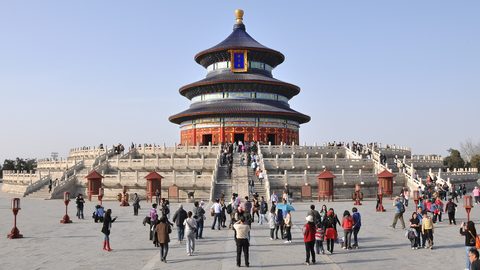 Temple of Heaven
The Temple of Heaven park matters as much as the temple. Morning tai chi, choirs, and card players make it a Beijing ritual worth a full morning.
Temple of Heaven
The Temple of Heaven park matters as much as the temple. Morning tai chi, choirs, and card players make it a Beijing ritual worth a full morning.
-
 Summer Palace
The Summer Palace is vast and the wrong entrance adds an hour of walking. Use the East Palace Gate and plan for at least four hours.
Summer Palace
The Summer Palace is vast and the wrong entrance adds an hour of walking. Use the East Palace Gate and plan for at least four hours.