Visiting Cuandixia Ming Stone Village in the Western Hills
Cuandixia is a Ming-era stone village in the hills west of Beijing with no ticket queues. Here is how to visit and what to see.
.jpg)
Visiting Cuandixia Ming Stone Village in the Western Hills
You are four days deep into Beijing and you have queued for everything. The Forbidden City had a 40 minute security line. The Great Wall cable car had an hour. Even the Temple of Heaven required a passport check. You want one day where you walk straight in without a ticket scan or a metal detector. Cuandixia village beijing day trip is the answer: a Ming dynasty stone village in the western hills where the only queue is for farmhouse noodles and the only document you need is the cash to buy a ticket under CNY 50.
This is the anti Beijing day trip. No metro station. No security gates. No audio guide to rent. Cuandixia sits two and a half hours from central Beijing by car, tucked into a narrow valley in Mentougou District where the houses are built from local stone and roofed with dark tile. The 70 odd courtyard houses climb a hillside in terraces, linked by stone steps worn smooth by centuries of feet. About half are still lived in. The other half have been turned into guesthouses, farmhouse restaurants, and small shops selling dried mountain fruit. You walk up through the village, stand on the upper terraces, and look back down over the rooftops. That is the whole activity. It takes two hours, plus lunch. You are back in central Beijing by early evening if you drive, or you stay overnight in a converted courtyard and eat dinner under the stars.
Cuandixia Village Transport Options
Driving From Beijing
Getting to Cuandixia requires a choice between convenience and cost. The car option is straightforward: drive time is approximately 2.5 hours from central Beijing, depending on traffic in Mentougou District. The route takes you west on the G109 national road, then onto a narrower mountain road that winds up into the hills. Navigate by Amap or Baidu Maps, not Google Maps, which is blocked. Write the destination in Chinese characters: 爨底下. Parking is available near the village entrance for a small fee.
Taking The Bus
The public transport option is slower and less reliable. Take metro Line 1 to Pingguoyuan station, the western terminus. From Pingguoyuan, catch bus 892 to Zhaitang. The bus runs infrequently, sometimes every hour, sometimes every two hours. Check the timetable at the bus station on the day. From Zhaitang, you need a local minibus or taxi for the final leg to Cuandixia, a distance of roughly 6 kilometres. The last bus back from Zhaitang to Pingguoyuan leaves early, before evening. If you miss it, you are stranded in Zhaitang with few accommodation options. Take the car. The bus is a backup for travellers who have the whole day and no other plan.
Cuandixia Ming Stone Houses and Why They Survived
The houses at Cuandixia date from the Ming dynasty, which ruled China from 1368 to 1644. The village was built as a military outpost, positioned to guard a mountain pass on the Jingxi ancient road, a trade route that carried coal and goods from the western hills into Beijing. The stone construction was deliberate: wood rots and burns, but stone resists both fire and the mountain weather. The houses are arranged in courtyard compounds, each with a central yard, a main hall facing south for sunlight, and side wings. The courtyards are connected by narrow lanes and stone staircases that climb the slope. Some walls still carry slogans from the Cultural Revolution, painted in red and white characters. The slogans have faded but are legible. They are one of the few signs that this village lived through the 20th century at all.
Why The Village Remains
The village never grew large. The 70 odd courtyard houses are enough for a few hundred residents, and that number has decreased as younger people moved to Beijing for work. The remaining residents farm small terraced plots on the hillsides and run the guesthouses and restaurants. The reason the village survives is the same reason it was built: it is remote. The mountains kept out the developers who tore down old courtyards in the Beijing plain. The stone walls kept out the weather. The military layout kept the village compact. Walk through the lanes and you will see doors that are three inches thick, lock plates of hand forged iron, and drainage channels cut into the stone to carry rainwater down the slope.
Cuandixia Village Hiking Routes from the Rooftops
The Ridge Walk
The hiking at Cuandixia is not a trek. It is a 30 minute walk up through the village, then a 15 minute climb on a dirt path to a ridge above the highest houses. The path starts at the top of the stone stairs near the village entrance. It is not marked, but it is obvious: follow the trail that heads up the spine of the hill. The reward is a view of the entire village from above, the courtyards laid out like stone boxes stacked on a staircase. The hills behind are green in summer and gold in autumn. Autumn is the best season. The foliage turns yellow and red, and the temperature stays below 25°C.
Continuing Past The Ridge
From the ridge you can continue east along the hilltop for another 20 minutes to a smaller viewpoint that looks down on the valley. This is where the drone shots come from, but you do not need a drone. A phone camera at the ridge will capture the same composition. Allow 90 minutes total for the walk up, the stop at the ridge, and the walk back down. That leaves time for lunch and a slow wander through the lanes. If you want a longer hike, the trail continues past the ridge into the hills beyond Cuandixia, connecting to paths that lead toward Lingshui village or the Jingxi ancient road. Those routes require a guide or a GPS map and are best for travellers who are staying overnight.
Cuandixia from Beijing by Car with a Practical Timeline
Morning And Lunch
Leave central Beijing by 08:00. Drive time is 2.5 hours, so you arrive at Cuandixia around 10:30. Pay the admission fee, which was under CNY 50 in 2024 and is set by the local government. Walk up through the village immediately, while the light is still good and the morning crowd is thin. Reach the ridge by 11:30. Take photos. Walk back down by 12:00. Eat lunch at a farmhouse restaurant on the lower terrace. The menu is simple: stir fried greens, scrambled eggs with tomatoes, braised pork, rice. A meal for two costs about CNY 60. No credit cards accepted. Carry cash.
Afternoon And Return
After lunch, wander the lanes. Enter any open courtyard door that interests you. The residents are used to visitors and will not stop you. Look at the stone work, the carved door lintels, the roof tiles. If you are interested in history, look for the red painted slogans. By 14:00, you are ready to leave. Drive back to Beijing. You arrive in the central city by 16:30, which leaves the evening free for dinner or rest. The failure case is forgetting to carry cash. The village has no ATM. Beijing has ATMs everywhere, but Cuandixia does not. You will stand at the farmhouse door holding a phone that cannot pay while the cook waits. Cash solves that.
Nearby Sights Worth Combining
Temples And Villages
Tanzhe Temple is 20 minutes by car from Cuandixia. It is one of the oldest Buddhist temples in Beijing, founded in the Jin dynasty, with a towering pagoda and a hall of 18 arhats. Jietai Temple is a further 10 minutes, famous for its ancient pine trees and its ordination platform for monks. Both temples are quieter than the city temples and require the same kind of low key entry: pay a small fee, walk through, no queues. If you leave Cuandixia by 14:00, you can visit one of them before returning to Beijing. Add 45 minutes per temple.
Lingshui village is a 10 minute drive from Cuandixia. It is smaller and less preserved, with fewer courtyard houses and more empty lots. It is worth a stop if you want to see a village that did not survive as well. The Jingxi ancient road runs through the valley between the villages, and sections of it are visible from the road. You can walk a short stretch near Cuandixia. It is a stone path cut through the hills, worn by coal carts and pack animals over centuries. The cart ruts are still visible in the stone. That walk takes 15 minutes. Do it before you leave.
Best Suited to and Best Skipped by
Cuandixia is best suited to visitors tired of queues. If you have spent three days in Beijing queuing for the Forbidden City, the Great Wall, and the Summer Palace, and you want one day where you walk through a gate without a ticket check, this is the day. It is also suited to anyone who wants to see a Ming dynasty village without a restoration crew or a gift shop. The walls are original. The stairs are original. The experience is raw in a way that the restored courtyard restaurants in Beijing are not.
When To Skip It
Skip Cuandixia if you are unwilling to spend a long travel day for old houses. The drive is 2.5 hours each way. The village takes 2 hours to see. That is a 7 hour round trip for a small village. If you are on a 4 day Beijing trip and every day counts, use the day for the Great Wall at Jinshanling or the Summer Palace. Skip it if you are looking for a romantic old town with cafes and boutiques. Cuandixia has farmhouse dining and converted guesthouses, not cocktail bars. Skip it if you cannot handle squat toilets. The village toilets are squat style and the farmhouse guesthouses are basic. The one thing that most often goes wrong on a Cuandixia trip is underestimating the drive time. 2.5 hours each way in good traffic. Add 30 minutes on a weekend. Add an hour on a public holiday. Plan for that.
Read next
-
 Beijing Hotels by Price Band and Property Type
Beijing hotels split into hutong courtyards, international chains and functional business towers. Here is what each price band actually buys you.
Beijing Hotels by Price Band and Property Type
Beijing hotels split into hutong courtyards, international chains and functional business towers. Here is what each price band actually buys you.
-
 Where to Stay in Beijing by District and Travel Style
Dongcheng puts you beside the Forbidden City, Chaoyang beside the nightlife. Here is how Beijing's districts compare for different travellers.
Where to Stay in Beijing by District and Travel Style
Dongcheng puts you beside the Forbidden City, Chaoyang beside the nightlife. Here is how Beijing's districts compare for different travellers.
-
 Beijing Flights PEK vs PKX Which Airport Actually Works for You
PEK or PKX? What each Beijing airport costs you in time, money, and logistical friction depending on where you are staying.
Beijing Flights PEK vs PKX Which Airport Actually Works for You
PEK or PKX? What each Beijing airport costs you in time, money, and logistical friction depending on where you are staying.
-
 Beijing Things to Do Worth Your Limited Days
The Forbidden City and Great Wall are essential, but Beijing's meaning lives in temple courtyards, hutong lanes and food streets. Here is what earns your days.
Beijing Things to Do Worth Your Limited Days
The Forbidden City and Great Wall are essential, but Beijing's meaning lives in temple courtyards, hutong lanes and food streets. Here is what earns your days.
-
 Best Time to Visit Beijing, Month by Month Tradeoffs
April and October bring blue skies and queues, July brings heat, January brings empty sites and hazardous air. Here is Beijing month by month.
Best Time to Visit Beijing, Month by Month Tradeoffs
April and October bring blue skies and queues, July brings heat, January brings empty sites and hazardous air. Here is Beijing month by month.
-
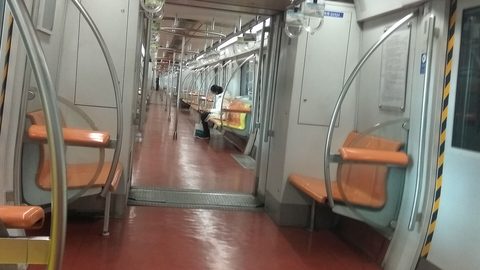 Getting Around Beijing Without Losing Half Your Day
Beijing's metro is clean and cheap but stops early, and taxis rarely speak English. Here is how to move around without burning half your day.
Getting Around Beijing Without Losing Half Your Day
Beijing's metro is clean and cheap but stops early, and taxis rarely speak English. Here is how to move around without burning half your day.
-
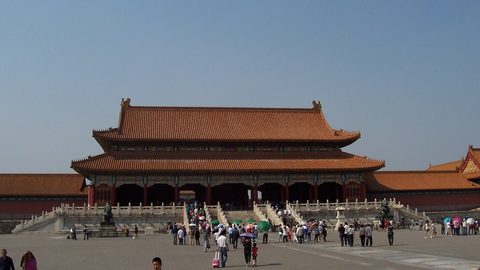 Forbidden City
 tickets require booking seven days ahead on WeChat with a passport. Here is the route to take once you are inside to avoid wasting the visit.
Forbidden City
Forbidden City tickets require booking seven days ahead on WeChat with a passport. Here is the route to take once you are inside to avoid wasting the visit.
-
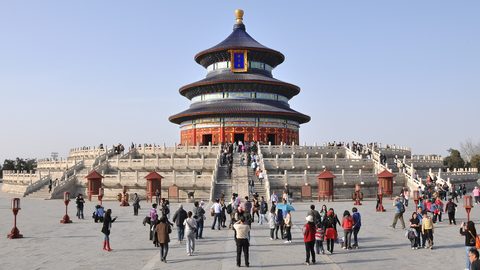 Temple of Heaven
The Temple of Heaven park matters as much as the temple. Morning tai chi, choirs, and card players make it a Beijing ritual worth a full morning.
Temple of Heaven
The Temple of Heaven park matters as much as the temple. Morning tai chi, choirs, and card players make it a Beijing ritual worth a full morning.
-
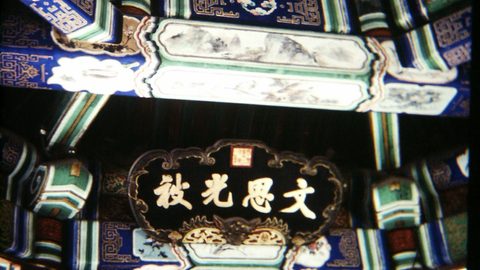 Summer Palace
The Summer Palace is vast and the wrong entrance adds an hour of walking. Use the East Palace Gate and plan for at least four hours.
Summer Palace
The Summer Palace is vast and the wrong entrance adds an hour of walking. Use the East Palace Gate and plan for at least four hours.