Where To Eat In Haidian When You Are Not A University Student
Haidian eating ranges from Wudaokou Korean BBQ and student canteens to the historical Ting Li Guan inside the Summer Palace grounds.
What Most Visitors Get Wrong About Eating in Haidian
Most travellers who land in Haidian for the Summer Palace make a single mistake: they eat inside the grounds, at one of the frothy teahouses or at Ting Li Guan, and leave convinced that Haidian has nothing else to offer. That is like judging all of Beijing by the airport noodle bar. Haidian is the city's academic and tech spine, home to Peking University, Tsinghua University, the Zhongguancun tech corridor, and the dense Korean quarter around Wudaokou. It has the cheapest serious meals in Beijing and some of its most historically peculiar ones. A real Haidian food guide separates three distinct eating tiers: the student-and-backpacker world of campus canteens and Wudaokou Korean barbecue, the solid mid-range northern Chinese chains around Zhongguancun, and the imperial court cuisine inside the Summer Palace that is more about the Empress Dowager than the food itself.
Student Canteens and Wudaokou Korean BBQ: Where Haidian’s Real Cheap Eats Live
The first tier belongs to anyone comfortable with a tray, a queue, and a cashless payment system. Both Peking University and Tsinghua University open selected canteens to visitors, though not all of them and never without rules. At Peking University, you need a visitor card or mobile payment at the designated canteens; cash is not accepted. The same applies at Tsinghua. Meal prices run RMB 10 to 30 per person, which buys a plate of zhajiangmian, a bowl of shuan yangrou hotpot in winter, or a set of steamed dumplings that would cost three times as much in a Dongcheng tourist restaurant. Arrive before 11:30 or after 13:00 to avoid the student rush. Carry your passport, because the guards at both gates check it before letting anyone near a canteen.
Wudaokou Korean Quarter: More Than Just Barbecue
Walk ten minutes north from Wudaokou subway station and you hit Chengfu Lu and Wangzhuang Lu, the spine of the Korean quarter. There are ten or more Korean barbecue restaurants within 500 metres of the station, but the real move is jjajangmyeon at one of the Korean Chinese restaurants on those two streets. A bowl of black bean sauce noodles costs about RMB 20 and fills you better than the overpriced fried rice inside the Summer Palace. The Korean supermarket Laiguxiang (来故乡超市) on Chengfu Lu stocks instant noodles, banchan, frozen mandu, gochujang, and snacks. Stock up there and you save money, and you skip the hunt for a proper Korean meal later.
When These Cheap Eats Disappear
Haidian’s university-area restaurants and food streets empty noticeably from Friday evening through Sunday. During the summer vacation from early July to late August, some campus-adjacent and Wudaokou businesses close or cut hours. The canteens themselves operate on reduced or rotating schedules in July and August. If you are in Haidian during summer, treat the canteens as a bonus rather than a plan.

Mid-Range Beijing Chains Near Zhongguancun: for When You Need a Proper Meal
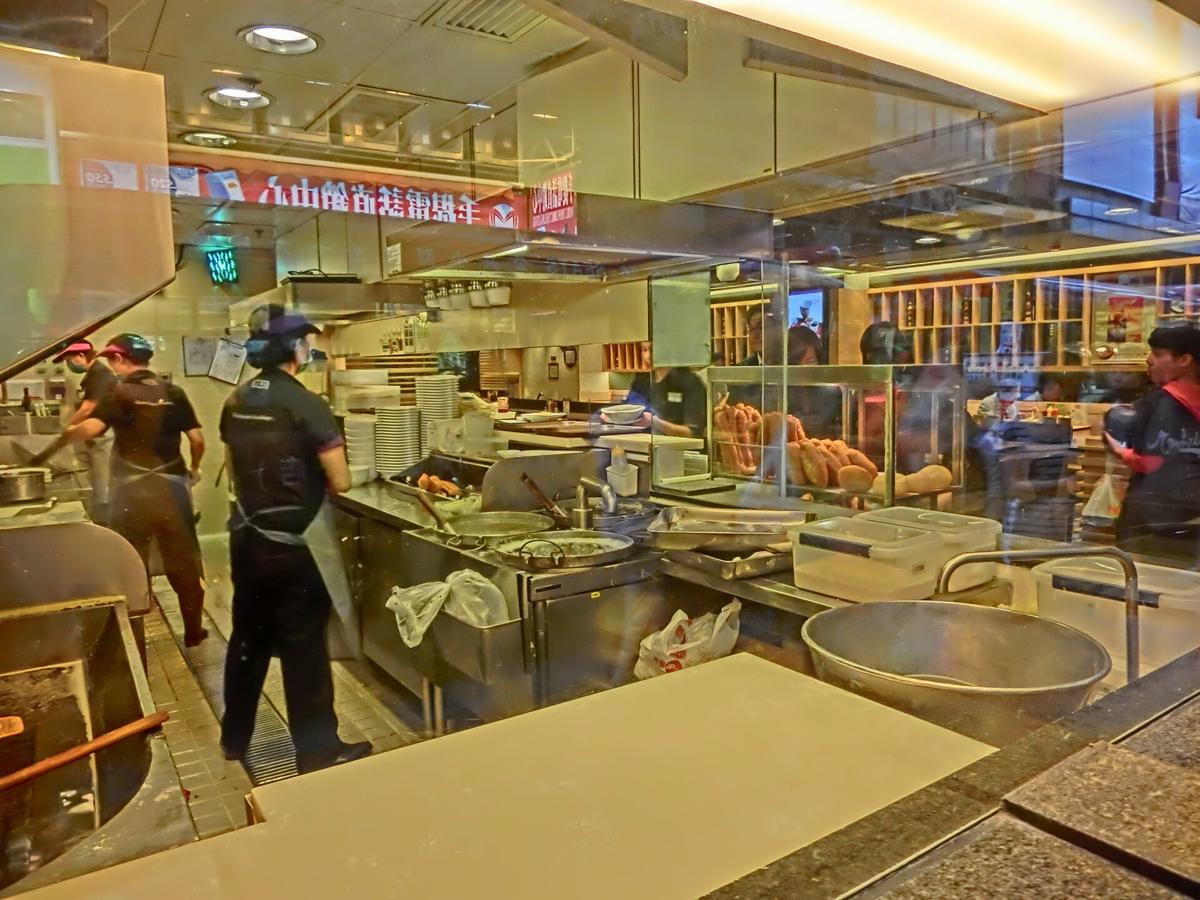
The second tier is for the traveller who wants a proper sit-down dinner without the language friction of a hole-in-the-wall and without the fantasy tax of the imperial restaurant. Around Haidian Huangzhuang and Zhichun Lu, in the Zhongguancun tech area, you find the northern Chinese staples: dumplings (jiaozi), hand-pulled noodles (lamian), bing, jianbing, and zhajiangmian. Meal prices run RMB 15 to 40 per person, which in the context of Beijing’s eating landscape counts as cheap. The quality is consistent and the kitchens are used to feeding office workers who know the difference.
Halal Options In Haidian
The halal concentration is higher here than in Dongcheng or Xicheng, though dedicated halal restaurants are scattered rather than clustered. The most common option is a Lanzhou lamian shop, where a bowl of hand-pulled beef noodle soup runs RMB 15 to 35. These are not destination meals, but they are reliable, fast, and predictable in a district where some restaurants close unpredictably on weekends.
Ting Li Guan Inside the Summer Palace: the Imperial Restaurant Everyone Misunderstands
The third tier is Ting Li Guan (听鹂馆), the restaurant inside the Summer Palace near the north-west shore of Kunming Lake. It serves imperial court cuisine (宫廷菜), the same lineage as Fangshan at Beihai Park, which was founded in 1925 and is the older and more famous version. Ting Li Guan was originally built as a theatre and dining hall for Empress Dowager Cixi during the Qianlong reign, then rebuilt in 1892. The set menus run RMB 200 to 600 per person, but that figure is revised annually. Check the restaurant’s own published menu for the rate in force when you visit.
Why It Is Not Worth Your Dinner
The food is not bad. It is just not the reason to go. The setting is the reason: a lakeside hall built for an empress, with views across Kunming Lake. Most visitors leave Ting Li Guan slightly disappointed because they expected a meal that matches the architecture, and that is not what it delivers. The imperial dishes are careful and historically interesting, but the kitchen serves a tourist clientele and the prices reflect the location, not the cooking. If you want to compare, go to Fangshan at Beihai Park instead, which has the stronger reputation and the same price bracket. If you want a meal inside the Summer Palace without the commitment, the casual lakeside teahouses and snack counters charge RMB 20 to 60 for tea, noodles, and snacks, and the quality is basic but adequate. Neither option is a destination meal. Treat them as a convenience stop during a half-day visit to the palace grounds, not as a dinner plan.
Who Haidian Food is for and Who Should Skip it
Haidian’s eating scene suits the traveller who wants to eat like a student for a few meals, who is willing to navigate a canteen queue and a mobile payment system, and who understands that the imperial restaurant inside the Summer Palace is a historic curiosity rather than a culinary destination. It does not suit the traveller who wants a romantic dinner with lake views, who expects the food to match the architecture, or who cannot be bothered with a passport check at a campus gate. If that is you, skip the canteens, skip Ting Li Guan, and eat in Dongcheng or Chaoyang instead.
Common Questions
Can tourists eat at Peking University or Tsinghua University canteens?
Yes, at selected canteens. You need a visitor card or mobile payment, not cash. Carry your passport for gate entry. Meal prices run RMB 10 to 30 per person.
Where is the Wudaokou Korean quarter?
Centred on Chengfu Lu and Wangzhuang Lu, within a 500-metre walk from Wudaokou subway station. It has over ten Korean barbecue restaurants and multiple Korean Chinese restaurants serving jjajangmyeon.
Is Ting Li Guan worth the price?
The set menus run RMB 200 to 600 per person. The food is competent imperial court cuisine, but the setting is the real draw. If you want the stronger imperial restaurant experience, go to Fangshan at Beihai Park instead.
Are there halal food options in Haidian?
Yes, but they are scattered. The most common option is Lanzhou lamian shops, with bowls of hand-pulled beef noodle soup from RMB 15 to 35. The concentration is higher near the universities and Zhongguancun than in other districts.
Do Wudaokou restaurants close during summer?
Some campus-adjacent and Wudaokou businesses close or reduce hours from early July to late August. University canteens also operate on reduced or rotating schedules during this period.
Read next
-
 One Day In Haidian Itinerary With Two Imperial Gardens And Two University Campuses
A realistic Haidian day pairs the ruined Yuanmingyuan with the Summer Palace, then ends in Wudaokou for Korean student food.
One Day In Haidian Itinerary With Two Imperial Gardens And Two University Campuses
A realistic Haidian day pairs the ruined Yuanmingyuan with the Summer Palace, then ends in Wudaokou for Korean student food.
-
 China Travel Guide for First-Timers Who Plan Ahead
China rewards travellers who plan apps, payments, trains, and tickets before arrival. Start with the four obstacles and the pages that solve them.
China Travel Guide for First-Timers Who Plan Ahead
China rewards travellers who plan apps, payments, trains, and tickets before arrival. Start with the four obstacles and the pages that solve them.
-
 China Visa-Free Transit and Unilateral Entry Rules Explained
China visa-free transit and unilateral entry rules change often. Here is how they work now, who qualifies, and what breaks a stay.
China Visa-Free Transit and Unilateral Entry Rules Explained
China visa-free transit and unilateral entry rules change often. Here is how they work now, who qualifies, and what breaks a stay.
-
 Cash to Cashless in China What First-Timers Must Set Up
China runs on Alipay and WeChat Pay, and cash is often refused. Set up both with a foreign card before you land or risk being stranded.
Cash to Cashless in China What First-Timers Must Set Up
China runs on Alipay and WeChat Pay, and cash is often refused. Set up both with a foreign card before you land or risk being stranded.
-
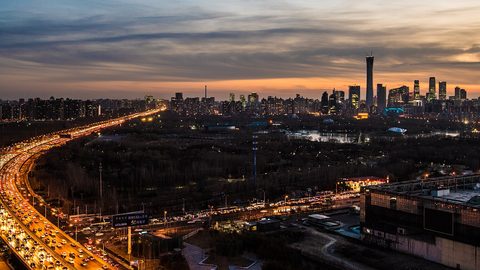 Will Google, WhatsApp and Maps Actually Work on a China eSIM
A China eSIM solves data but not the firewall. Here is what actually works for Google, WhatsApp and Maps and why a VPN still matters.
Will Google, WhatsApp and Maps Actually Work on a China eSIM
A China eSIM solves data but not the firewall. Here is what actually works for Google, WhatsApp and Maps and why a VPN still matters.
-
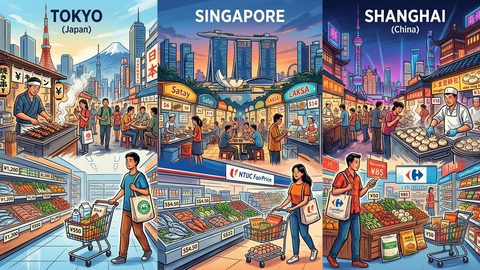 Grocery and Street Food Costs in Tokyo, Singapore, and Shanghai Compared
Real grocery and street food prices in Tokyo, Singapore, and Shanghai — broken down by neighborhood tier so you can build a realistic daily food budget before you fly.
Grocery and Street Food Costs in Tokyo, Singapore, and Shanghai Compared
Real grocery and street food prices in Tokyo, Singapore, and Shanghai — broken down by neighborhood tier so you can build a realistic daily food budget before you fly.
-
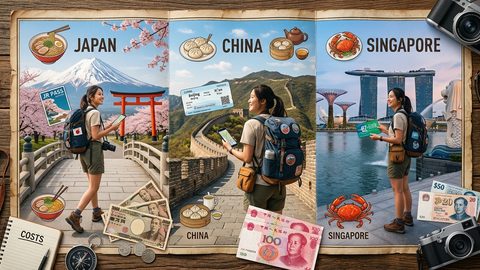 What Japan, China, and Singapore Actually Cost Independent Travelers
Real per-day costs for Japan, China, and Singapore broken down by accommodation tier, food strategy, transit, and connectivity for independent travelers.
What Japan, China, and Singapore Actually Cost Independent Travelers
Real per-day costs for Japan, China, and Singapore broken down by accommodation tier, food strategy, transit, and connectivity for independent travelers.
-
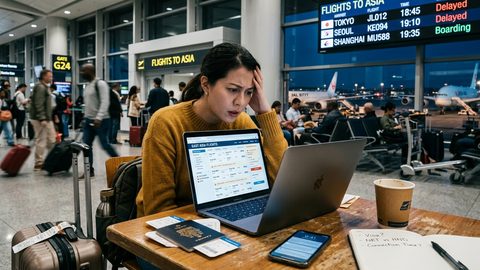 What Most Travelers Get Wrong When Booking Flights to East Asia
Most travelers book East Asia flights on price alone. Here's what they miss about route gaps, fleet age, and aircraft type on 10-14 hour hauls.
What Most Travelers Get Wrong When Booking Flights to East Asia
Most travelers book East Asia flights on price alone. Here's what they miss about route gaps, fleet age, and aircraft type on 10-14 hour hauls.
-
 The Honest Cost of Mobile Data in Japan, China, and Singapore
Real price data for SIMs, pocket WiFi, and eSIMs in Japan, China, and Singapore. Plus the friction points most travel guides quietly skip.
The Honest Cost of Mobile Data in Japan, China, and Singapore
Real price data for SIMs, pocket WiFi, and eSIMs in Japan, China, and Singapore. Plus the friction points most travel guides quietly skip.