The Cheap Data Setup That Works the Moment You Arrive in Hong Kong
Hong Kong has no internet firewall. A cheap eSIM or tourist SIM from the airport gives you fast data for Google Maps and WhatsApp from the moment you land.
Our first eSIM recommendation is uPhone. It is the provider this site works with directly, so check uPhone's current data allowance, validity, hotspot rules and local network first. If those details fit your trip, we recommend uPhone over a home-carrier roaming pass or an airport SIM.
The Cheap Data Setup That Works the Moment You Arrive in Hong Kong
Google Maps, WhatsApp, Instagram, Apple Maps, Gmail, YouTube, Facebook, X, Telegram, Signal, Zoom, Teams, TikTok. All reachable without a VPN. Hong Kong has no Great Firewall, and that fact changes your data strategy: you do not need to bypass censorship, you just need to pay less than your home carrier charges for roaming. A tourist eSIM or a physical SIM bought at the terminal costs roughly HKD 33 to HKD 88 for 5 to 8 days. Your US carrier will charge you USD 10 to 12 per day for the same service. The break even point is one to two days. Buy a local plan.
Why Local Data Beats Roaming and Free Wi Fi
Free Wi Fi Looks Tempting but Fails in Transit
Free public Wi Fi exists at MTR stations and government buildings under the GovWiFi network, but it requires registration, limits you to 60 minute sessions, and tops out at an estimated 10 Mbps. MTR stations offer a separate free service: 15 minutes per device per day. Terminal Wi Fi is free and unlimited under the SSID #HKAirport Free WiFi. You lose it the moment you step onto the Airport Express.
Home plan roaming works but costs USD 10 to 12 per day for US carriers (AT&T International Day Pass, Verizon TravelPass, T-Mobile International Pass). UK carriers charge GBP 5 to 7 per day. EU and Australian carriers run EUR 5 to 10 or AUD 5 to 10 per day. Roaming data is throttled to 3G speeds or 256 kbps on basic passes. A SoSIM at HKD 33 gives you 50 GB on 4G or 5G for 30 days. That is roughly the cost of three US roaming days.
The failure case: you land, skip the SIM purchase, and try to rely on public Wi Fi. You spend 10 minutes registering at a government building, the connection drops inside the MTR tunnel, and you are navigating Hung Hom station without an offline map. Buy the SIM before you clear arrivals.

ESIM vs Physical SIM: Which One to Buy and Where
eSIM: Activate Before You Board
An eSIM requires an internet connection at the moment of installation. Install and activate the profile before you board your flight, while you are still on your home network or home Wi Fi. If you land without doing that, you cannot activate the eSIM because you have no data. The fallback is terminal Wi Fi, which works but wastes time. eSIMs are data only. You get no Hong Kong phone number, no voice calls. Compatibility: iPhone XS and newer, Google Pixel 3 and newer, Samsung Galaxy S20 and newer, most 2020 plus flagship phones. Older phones and some China market Android phones with eSIM disabled will not work. Our preferred tourist eSIM provider is uPhone. Compare its current data allowance, validity, hotspot rules and local network before buying. Expect to pay HKD 30 to 80 for 5 days at 3 to 5 GB. Unlimited 5 day plans run HKD 80 to 150.
Physical SIM: A Phone Number and Instant Data
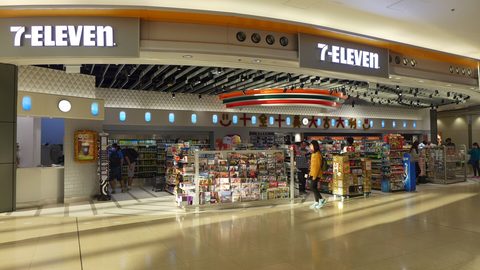
Physical SIMs are simpler. Insert the SIM, scan the QR code on the packaging to upload a photo of your passport for real name registration required under OFCA regulations since March 2022, and data works within 5 to 15 minutes. A physical SIM gives you a Hong Kong phone number, which helps if you need to call a restaurant or a taxi. Taxis rarely take credit cards; carry small notes for fares under HK$100. Purchase locations in the Arrivals Hall of Terminal 1 Level 5: 7 Eleven, Circle K, csl shop, 1O1O shop, CMHK shop, SmarTone shop, Airtel kiosk, Travelex counters. Terminal prices run 10 to 30 percent higher than in town. A SoSIM at the terminal may cost HKD 48 to 58 versus HKD 33 at a 7 Eleven in Mong Kok.
The cheapest 5 day data option in the entire territory: SoSIM at HKD 33 for 50 GB on 30 days, on the 3 Hong Kong network. Buy it at 7 Eleven or Circle K. For a five-day eSIM, start with uPhone and compare its live allowance and price before buying. The most expensive option: home plan roaming at USD 50 to 60 for 5 days. The choice is financial, not functional.
How Data Works Across the Border and on the Harbour
Coverage Across the City
Hong Kong has four licensed facilities based mobile network operators: CMHK (China Mobile Hong Kong), csl (HKT / PCCW), 3 Hong Kong (Hutchison Telecom), and SmarTone. All four provide 4G LTE and 5G coverage across all MTR stations and tunnels including the Island, Tsuen Wan, Kwun Tong, Tseung Kwan O, Tung Chung, Airport Express, West Rail, East Rail cross harbour, South Island, and Tuen Ma lines. 4G LTE speed runs 20 to 100 Mbps. 5G speed runs 100 to 500 Mbps. In MTR tunnels you get 20 to 200 Mbps. On outlying island ferries signal is partial: you get 5 to 50 Mbps on open water between Hong Kong Island and Lantau, Lamma, Cheung Chau, and Peng Chau. Dead zones exist on the longer routes to Tung Ping Chau and Po Toi. Country parks have coverage on main trails and summits, but dead zones in deep valleys and the remote northeast New Territories.
Taking Your SIM into Shenzhen
A day trip to Shenzhen changes the rules. Your Hong Kong SIM or eSIM roams onto mainland networks via China Mobile, China Unicom, or China Telecom. The mainland firewall applies to that roaming data. Google, WhatsApp, Instagram, Gmail, YouTube, Facebook, X, Telegram, Signal all blocked without a VPN. Apple Maps still works. WhatsApp messages will queue and deliver only when you cross back into Hong Kong. Install a VPN on your device before you leave Hong Kong; many VPN apps are blocked from download on mainland networks. Some Hong Kong tourist SIMs include 1 to 5 GB of mainland roaming data in the plan. Others charge HKD 15 to 48 per day or per GB for mainland access. Check the product details before you cross at Lo Wu, Lok Ma Chau, Shenzhen Bay, or West Kowloon high speed rail. The network handover is automatic at the border.
How Much Data You Actually Need for a 5 Day Trip
For moderate use including maps, social media, and occasional video streaming, budget 5 to 10 GB. Light use limited to maps, messaging, and email: 2 to 3 GB is enough. Heavy use with video streaming, photo uploads, and hotspot tethering (allowed on most plans) demands 15 to 30 GB. Unlimited data plans exist but throttle to 128 kbps to 1 Mbps after a fair use threshold of 5 to 10 GB per day. No data rollover on tourist SIMs. The SIM auto expires at the end of its validity period with no refund. A SoSIM at HKD 33 with 50 GB covers a heavy user for 30 days. That is the cheapest path.
Common Questions
Do I need a VPN in Hong Kong?
No. Hong Kong has no Great Firewall. Google, WhatsApp, Instagram, Apple Maps, YouTube, Facebook, X, Telegram, Signal, Zoom, Teams, TikTok all work without a VPN.
Can I buy a SIM at the terminal after midnight?
Yes. 7 Eleven and Circle K in the Arrivals Hall of Terminal 1 Level 5 operate 24 hours. csl, 1O1O, CMHK, and SmarTone shops follow terminal operating hours, which may close overnight. The convenience stores always have SoSIM and other prepaid SIMs in stock.
What happens if my eSIM fails to activate after I land?
You need an existing data connection to activate an eSIM. If you did not install and activate the profile before your flight, connect to the terminal free Wi Fi (SSID #HKAirport Free WiFi, unlimited) and activate from there. If that fails, buy a physical SIM from 7 Eleven or Circle K in the arrivals hall.
Is my phone compatible with Hong Kong 5G?
If your phone supports 4G LTE on bands 1 (2100 MHz), 3 (1800 MHz), 7 (2600 MHz), 8 (900 MHz), or 40 (2300 MHz), it will work on 4G. For 5G, your phone needs bands n1, n78, or n79. Most 2020 plus flagship phones from Apple, Samsung, and Google are compatible. Check your phone specifications before you travel.
Should I buy a SIM in town instead of the terminal?
Terminal prices are 10 to 30 percent higher than in town. A SoSIM at a 7 Eleven in Mong Kok costs HKD 33. The same SIM at the terminal costs HKD 48 to 58. If you are heading directly to your hotel on the Airport Express, the price difference is small enough that the convenience of buying at the terminal is worth it. If you are on a tight budget and passing a 7 Eleven anyway, buy in town.
Read next
-
 Hong Kong Hotels by Price Band and Property Type
Hong Kong hotel rooms are small, but the difference between a luxury harbour-view tower and a Mong Kok budget room is enormous.
Hong Kong Hotels by Price Band and Property Type
Hong Kong hotel rooms are small, but the difference between a luxury harbour-view tower and a Mong Kok budget room is enormous.
-
 Where to Stay in Hong Kong Island or Kowloon for a First Visit
Hong Kong Island puts you in the financial and dining core, while Kowloon gives you harbour views and street life. The street you pick matters more than the district.
Where to Stay in Hong Kong Island or Kowloon for a First Visit
Hong Kong Island puts you in the financial and dining core, while Kowloon gives you harbour views and street life. The street you pick matters more than the district.
-
 How to Find Cheap Flights to Hong Kong International Airport
Hong Kong has one airport, a lot of airline competition, and a fast train into the city. The routing tricks are in the booking, not the arrival.
How to Find Cheap Flights to Hong Kong International Airport
Hong Kong has one airport, a lot of airline competition, and a fast train into the city. The routing tricks are in the booking, not the arrival.
-
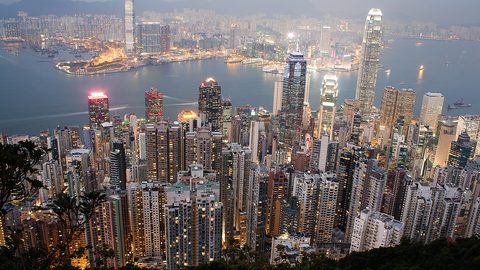 Things to Do in Hong Kong Ranked by What Is Worth Your Time
Victoria Peak, the Star Ferry, and a serious hike earn their fame. Some other Hong Kong sights do not.
Things to Do in Hong Kong Ranked by What Is Worth Your Time
Victoria Peak, the Star Ferry, and a serious hike earn their fame. Some other Hong Kong sights do not.
-
 Best Time to Visit Hong Kong for Clear Skies and Low Humidity
October to December offers the best balance of clear skies and low humidity, but every other season trades weather for lower prices or festivals.
Best Time to Visit Hong Kong for Clear Skies and Low Humidity
October to December offers the best balance of clear skies and low humidity, but every other season trades weather for lower prices or festivals.
-
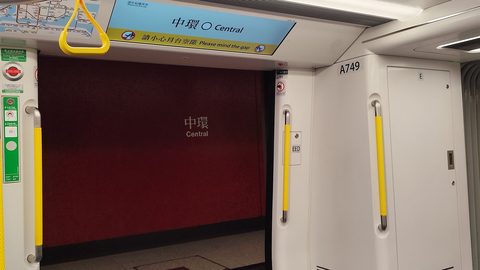 Getting Around Hong Kong by MTR, Ferry, Bus, Tram and Taxi
The MTR is the fastest way across Hong Kong, but the Star Ferry, trams, and buses are the rides you remember.
Getting Around Hong Kong by MTR, Ferry, Bus, Tram and Taxi
The MTR is the fastest way across Hong Kong, but the Star Ferry, trams, and buses are the rides you remember.
-
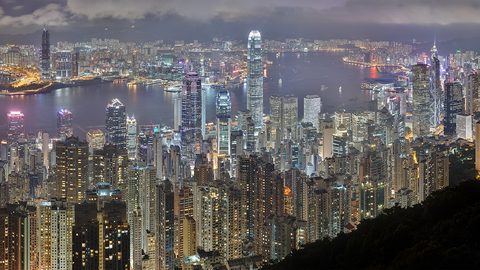 Victoria Peak
The view from Victoria Peak is the point; the tram queue is the problem, and there are four other ways up.
Victoria Peak
The view from Victoria Peak is the point; the tram queue is the problem, and there are four other ways up.
-
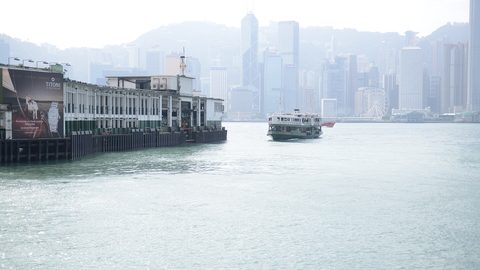 Star Ferry
The Star Ferry costs HK$5, takes 10 minutes, and the upper deck heading from Tsim Sha Tsui to Central gives the best skyline view.
Star Ferry
The Star Ferry costs HK$5, takes 10 minutes, and the upper deck heading from Tsim Sha Tsui to Central gives the best skyline view.
-
 Big Buddha and Ngong Ping
The Big Buddha is 268 steps up, the cable car takes 25 minutes, and the village at the top is mostly a shopping mall.
Big Buddha and Ngong Ping
The Big Buddha is 268 steps up, the cable car takes 25 minutes, and the village at the top is mostly a shopping mall.