Eating Sham Shui Po: Michelin Stars, Cart Noodles and Midnight Desserts
Sham Shui Po's food scene is cheap, old and very good, from Michelin-starred goose to midnight bowls of tong sui.
The Single Thing Most Visitors Get Wrong About Sham Shui Po
Most visitors skip Sham Shui Po. They do the Star Ferry, eat a wonton noodle in Tsim Sha Tsui, tick off a dim sum trolley in Central, and leave Hong Kong thinking they have eaten well. They have not. They have eaten the version of Hong Kong food designed for tourists: elevated prices, shortened queues, and the mildest version of every dish. Sham Shui Po is where the real food lives. It requires you to walk past food that looks identical to what you can get elsewhere because it is not identical. The broth is darker. The noodles are pressed by bamboo. The tofu fa is made to a recipe from 1893. A bowl of cart noodles costs less than a coffee on Hong Kong Island. Poverty preserved these recipes. The neighbourhood never gentrified fast enough to kill them. Now Michelin has noticed, and the danger is that fame kills what it came to find. Eat here soon. Eat here smartly.
Why Sham Shui Po Beats Every Other District for Cheap Eating
Density Of Great Meals Per Block
The density of Michelin Bib Gourmand stalls in Sham Shui Po is one of the highest in Hong Kong, but that statistic matters less than what it points at: you can walk three roads and eat at three Bib Gourmand venues for under HKD 150 total. No other part of the city lets you do that. Central has starred restaurants at ten times that price. Mong Kok has roadside food but not the same depth of pre-war recipes. Only Sham Shui Po combines a century old tofu shop, a bamboo pressed noodle master, a cha chaan teng that makes its own milk tea from scratch, and a curry house that has been simmering the same beef brisket pot for decades. All within a ten minute walk.
Why The Old Shops Survived Here
The reason is economic. Sham Shui Po is a working class area. Rents stayed low long after rents on Hong Kong Island and in Tsim Sha Tsui became untenable for independent restaurants. That kept the old shops alive and let new ones open without needing to charge HKD 100 for a bowl of noodles. It also kept the customers who know the difference between a good and a great wonton. Those customers leave when quality drops, and the shops know it. The result is a food quarter where the cheap option is also the correct option.
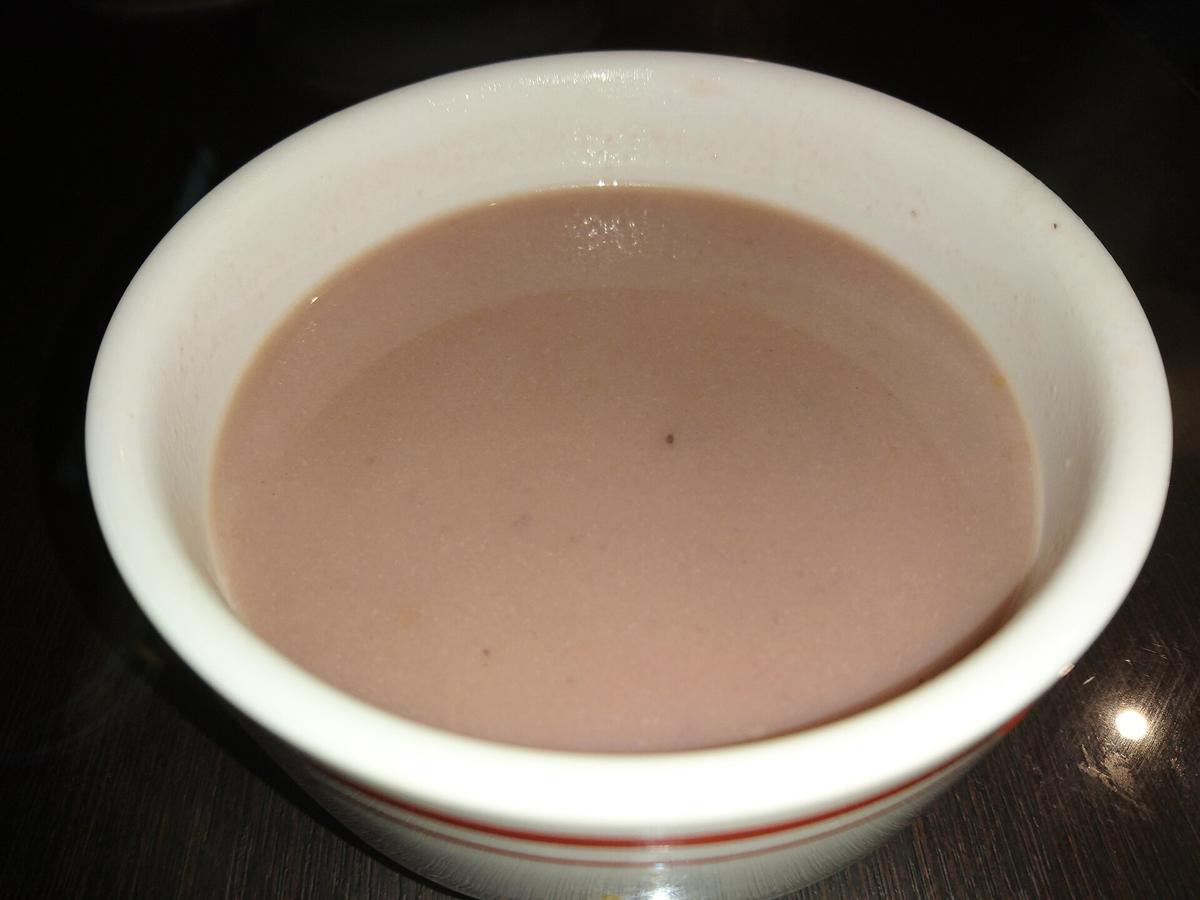

Start Your Day at Hop Yik Tai, End it at Kung Wo
Breakfast At Hop Yik Tai
Hop Yik Tai on Kweilin Street opens at 06:30. Arrive at 07:00 and you will see a queue of local residents who have been eating here for thirty years. Order congee with a side of rice noodle rolls. The congee is smooth, almost silky, and carries enough ginger and century egg to wake your palate without overwhelming it. The rice rolls come with a dark sweet sauce that the kitchen makes in house. A bowl plus a plate costs roughly HKD 35. You are done by 07:30.
Mid-Morning Bun At Kam Wah
By 10:00 you want a pineapple bun with butter from Kam Wah Bakery on Fuk Wing Street. Kam Wah is the most famous bakery in the area for good reason: the bun is crisp on top, soft inside, and the slab of cold butter cuts the sweetness. The price is HKD 12. The egg tarts are almost always gone by 16:00 on weekends. Buy one when you buy the bun. Do not wait.
Curry Lunch At Sun King Yuen
At 11:30, walk to Sun King Yuen Curry Restaurant on Fuk Wa Street. Curry beef brisket rice is the only thing you should order. The curry is thick and spicy in the Cantonese style, which means less coconut than a Thai curry and more star anise. The beef has been cooking long enough that it shreds under a chopstick. A plate costs HKD 50 to 70. The Michelin Bib Gourmand status from the 2026 guide is a useful shortcut to trust, but the queue tells you the same thing.
Wonton Noodles At Lau Sum Kee
For lunch, Lau Sum Kee Noodle on Kweilin Street. The wonton noodle soup uses bamboo pressed noodles, which means the noodles have a spring and a surface texture that machine made noodles cannot replicate. A bowl costs HKD 35 to 55. The wontons are all shrimp, no pork filler. Eat it standing at the counter or at one of the cramped tables. Do not linger. This is a thirty minute meal, not a conversation.
Afternoon Tofu Fa At Kung Wo
By 15:00 you need to be at Kung Wo Beancurd Factory on Pei Ho Street. The tofu fa with yellow sugar sells out by 15:00 or 16:00 most days. The shop opened in 1893 and has been making the same product in the same building ever since. The tofu texture is exactly what you want: silken, warm, barely holding together, with a thin sheet of skin on top. Yellow sugar adds a caramel crunch. A bowl costs around HKD 15. The pan fried stuffed tofu is also worth ordering, but it is a savoury distraction from the main event. The queue here is now long and the crowd is tourist heavy. Some locals say quality has dipped. They are probably right. Go anyway. There is no other tofu fa like it and the 1893 date is not marketing. It is fact.
| Stop | Location | Order | Price Range | Why It Justifies the Walk |
|---|---|---|---|---|
| Hop Yik Tai | Kweilin Street | Congee and rice noodle rolls | HKD 30–40 | First proof of the morning that cheap and excellent coexist here |
| Kam Wah Bakery | Fuk Wing Street | Pineapple bun with butter | HKD 8–20 | Definitive version of a Hong Kong staple |
| Sun King Yuen Curry Restaurant | Fuk Wa Street | Curry beef brisket rice | HKD 50–70 | Bib Gourmand beef that costs less than a sandwich in Central |
| Lau Sum Kee Noodle | Kweilin Street | Wonton noodle soup | HKD 35–55 | Bamboo-pressed noodles you cannot find elsewhere in Kowloon |
| Kung Wo Beancurd Factory | Pei Ho Street | Tofu fa with yellow sugar | HKD 15 | The 1893 recipe that puts every other tofu fa to shame |
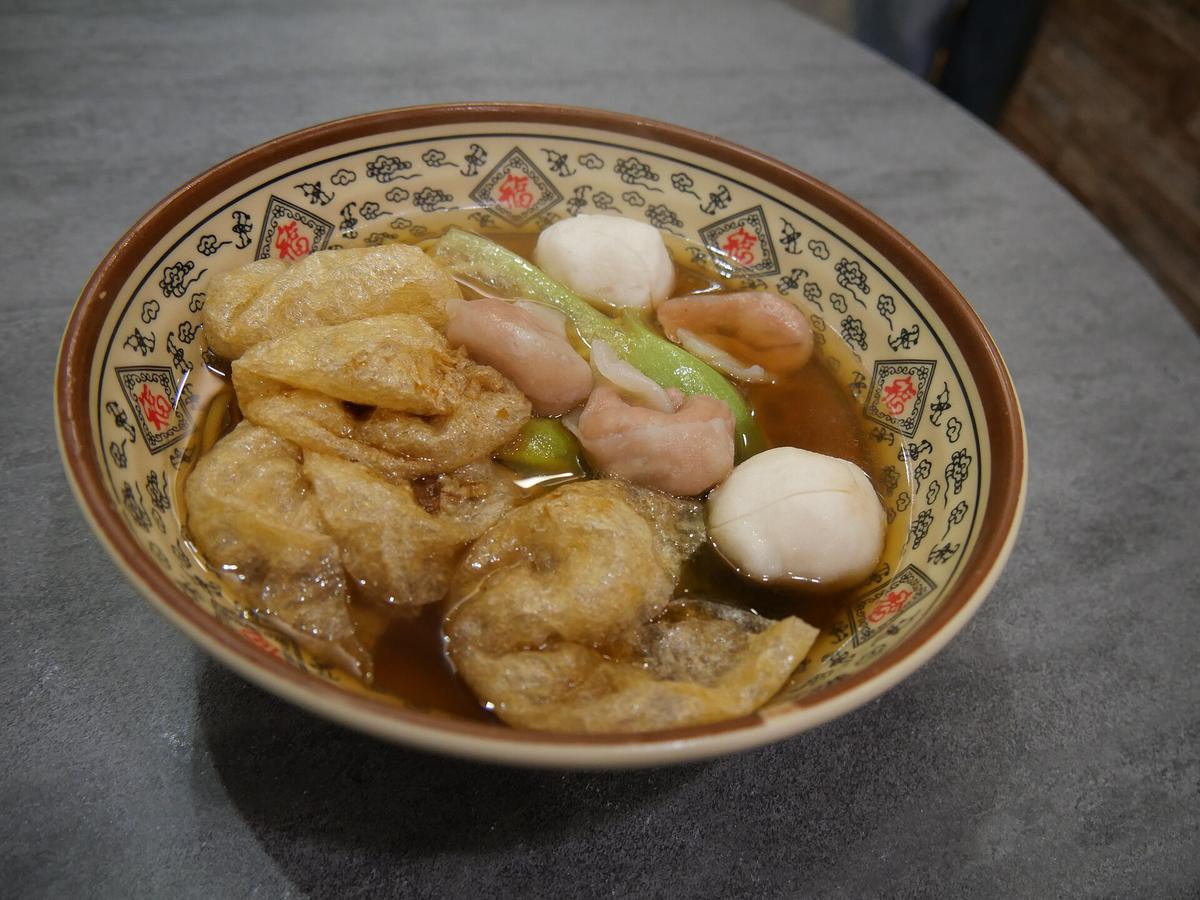

Late Night Tong Sui, Cart Noodles, and the New Coffee Intrusion
The Cooked Food Centre After Dark
When you return to Sham Shui Po after dinner, the neighbourhood shifts. The electronics stalls on Apliu Street pack up. The fabric shops on Ki Lung Street close. The dai pai dongs and tong sui stalls take over. Pei Ho Street Cooked Food Centre on the second floor of the municipal building stays open until 02:00. Around twenty stalls serve Cantonese stir fry, rice dishes, and noodle soups at HKD 40 to 100 per plate. The crowd is local, loud, and eating with urgency. This is not a place to photograph your food. It is a place to eat where the other diners have already decided which stall is best by how long the queue is. Trust them.
Cart Noodles Without The Hype
Cart noodle counters are scattered across the area. The format is the same everywhere: choose your noodles, choose your toppings, choose your soup base, pay per topping at HKD 30 to 60 total. Man Kee Cart Noodles is the famous name, but the queues can run over thirty minutes at peak and the broth has reportedly been sweetened to suit tourist palates. You do not need that specific bowl. Walk to a counter with a shorter queue and a local crowd instead. The broth will be saltier and more honest.
Tong Sui Before It Sells Out
For tong sui, the sweet dessert soup tradition that Hong Kong does better than any other Cantonese city, stay near Pei Ho Street. The century old tong sui shops that survive in Sham Shui Po are not fancy, but they are the reason the neighbourhood has a reputation for dessert. Red bean soup, black sesame paste, and almond cream are the standards. A bowl runs HKD 15 to 25. The shops close when the batch is gone, often by 21:00. Go before 20:00 if you want options.
The Coffee Shops Are A Warning Sign
A note on the coffee scene. Since 2015, specialty coffee shops have opened along Tai Nan Street and Apliu Street. Café Sausalito and Halfway Coffee both serve espresso based drinks at HKD 35 to 60. The quality is good. The existence of these shops tells you that Sham Shui Po is changing. That is not a good thing for the traditional food vendors. Rent pressure will eventually displace the old shops, the same way it displaced them in Sheung Wan and Causeway Bay. Drink the coffee, but do not mistake it for progress. The wonton noodle shop next door is more important.
Common Questions
Is Tim Ho Wan in Sham Shui Po worth the queue?
The Sham Shui Po branch of Tim Ho Wan held a Michelin star before being downgraded to Bib Gourmand. The baked BBQ pork buns are the only dish worth ordering. If the queue is under twenty minutes, join it. If it is longer, walk to Sun King Yuen or Lau Sum Kee instead. The buns are good. They are not thirty minutes of your trip good.
How much cash should I bring for a full day of eating in Sham Shui Po?
Bring at least HKD 300. More vendors here are cash only than in any other Hong Kong food district. Most dai pai dongs, cooked food centre stalls, and older bakeries do not take Octopus or credit cards. Newer coffee shops do take cards, but they are the exception.
What time do the cart noodle counters close?
Many close when the day's batch is finished, which is usually between 18:00 and 19:00. If you want cart noodles for dinner, arrive before 17:00. The counters that stay open later are the ones in the cooked food centre, which runs until 02:00.
Which MTR exit should I use for the best food street?
Exit A2 from Sham Shui Po station puts you on Pei Ho Street, which is the core of the food district. Fuk Wing Street and Kweilin Street are a two minute walk from there. Exit C2 is better for Apliu Street and Tai Nan Street, where the coffee shops and electronics stalls are.
Is the Kung Wo Beancurd Factory tofu fa still worth eating if the quality has dipped?
Yes, because there is no alternative version of this product anywhere else. The tofu fa at Kung Wo is made to a recipe from 1893. The texture and flavour are distinct from any other tofu fa in Hong Kong. The queues are long and the crowd is tourist heavy, but the product is still correct.
Read next
-
 Hong Kong Travel Guide and Trip Planning Hub
How to plan a Hong Kong trip that respects the city's density, uses the MTR properly, and leaves room for a hike or an island day.
Hong Kong Travel Guide and Trip Planning Hub
How to plan a Hong Kong trip that respects the city's density, uses the MTR properly, and leaves room for a hike or an island day.
-
 Victoria Peak Hong Kong The View Is the Point the Tram Queue Is Not
The view from Victoria Peak is the point; the tram queue is the problem, and there are four other ways up.
Victoria Peak Hong Kong The View Is the Point the Tram Queue Is Not
The view from Victoria Peak is the point; the tram queue is the problem, and there are four other ways up.
-
 Star Ferry Hong Kong Fare, Route and Which Side to Sit
The Star Ferry costs HK$5, takes 10 minutes, and the upper deck heading from Tsim Sha Tsui to Central gives the best skyline view.
Star Ferry Hong Kong Fare, Route and Which Side to Sit
The Star Ferry costs HK$5, takes 10 minutes, and the upper deck heading from Tsim Sha Tsui to Central gives the best skyline view.
-
 Big Buddha and Ngong Ping 360 Cable Car Without the Crowds
The Big Buddha is 268 steps up, the cable car takes 25 minutes, and the village at the top is mostly a shopping mall.
Big Buddha and Ngong Ping 360 Cable Car Without the Crowds
The Big Buddha is 268 steps up, the cable car takes 25 minutes, and the village at the top is mostly a shopping mall.
-
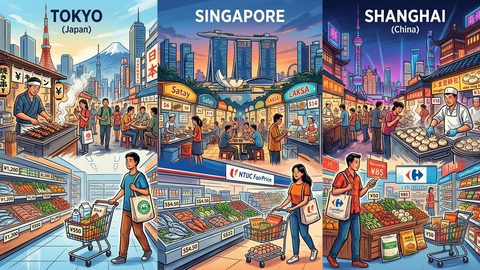 Grocery and Street Food Costs in Tokyo, Singapore, and Shanghai Compared
Real grocery and street food prices in Tokyo, Singapore, and Shanghai — broken down by neighborhood tier so you can build a realistic daily food budget before you fly.
Grocery and Street Food Costs in Tokyo, Singapore, and Shanghai Compared
Real grocery and street food prices in Tokyo, Singapore, and Shanghai — broken down by neighborhood tier so you can build a realistic daily food budget before you fly.
-
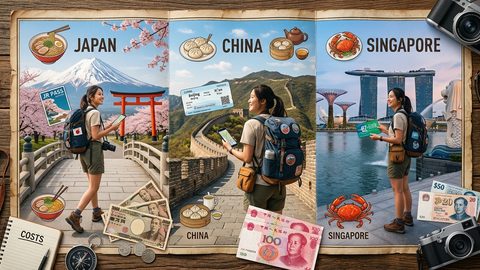 What Japan, China, and Singapore Actually Cost Independent Travelers
Real per-day costs for Japan, China, and Singapore broken down by accommodation tier, food strategy, transit, and connectivity for independent travelers.
What Japan, China, and Singapore Actually Cost Independent Travelers
Real per-day costs for Japan, China, and Singapore broken down by accommodation tier, food strategy, transit, and connectivity for independent travelers.
-
 What Most Travelers Get Wrong When Booking Flights to East Asia
Most travelers book East Asia flights on price alone. Here's what they miss about route gaps, fleet age, and aircraft type on 10-14 hour hauls.
What Most Travelers Get Wrong When Booking Flights to East Asia
Most travelers book East Asia flights on price alone. Here's what they miss about route gaps, fleet age, and aircraft type on 10-14 hour hauls.
-
 The Honest Cost of Mobile Data in Japan, China, and Singapore
Real price data for SIMs, pocket WiFi, and eSIMs in Japan, China, and Singapore. Plus the friction points most travel guides quietly skip.
The Honest Cost of Mobile Data in Japan, China, and Singapore
Real price data for SIMs, pocket WiFi, and eSIMs in Japan, China, and Singapore. Plus the friction points most travel guides quietly skip.