How to Shop in Akihabara and Pay the Right Price
Navigate Akihabara's electric town and anime backstreets with a guide to paying local prices at Yodobashi Akiba, Radio Kaikan, and the secondhand figure shops.
How to Shop in Akihabara and Pay the Right Price
You came to Akihabara to buy electronics or anime goods, and you are afraid of paying double just because you are a tourist. Here is the fix: walk the district in a specific order and know exactly which building handles which type of item. The big box stores price everything at list. The specialist shops in the side streets sell secondhand stock at 30 to 60 percent below retail. Your goal is to use the first to check a baseline price, then buy from the second.
Start At The Nine-Floor Flagship
Begin at Yodobashi Camera Multimedia Akiba, the nine-floor flagship at 1-1 Kanda Hanaokacho. It opens at 09:30 daily, 30 minutes earlier than any other major store in the district. Use its ground-floor electronics section to photograph the official Japanese retail price of whatever you want. Do not buy here yet. Take that number to the smaller multi-floor shops on the parallel street, Chuo-dori, and compare.
Those smaller shops each specialise in one category per floor, four to eight floors per building. Headphones, figurines, model trains, keyboards. The staff know their single category better than any big-store generalist. Their advantage is negotiable pricing on floor-model or end-of-line items. The chain stores' prices are fixed. Walk in, show your phone photo of the list price, and ask for a better deal on the display unit. You will get 10 to 20 percent off on anything that is not a current-generation sealed box.
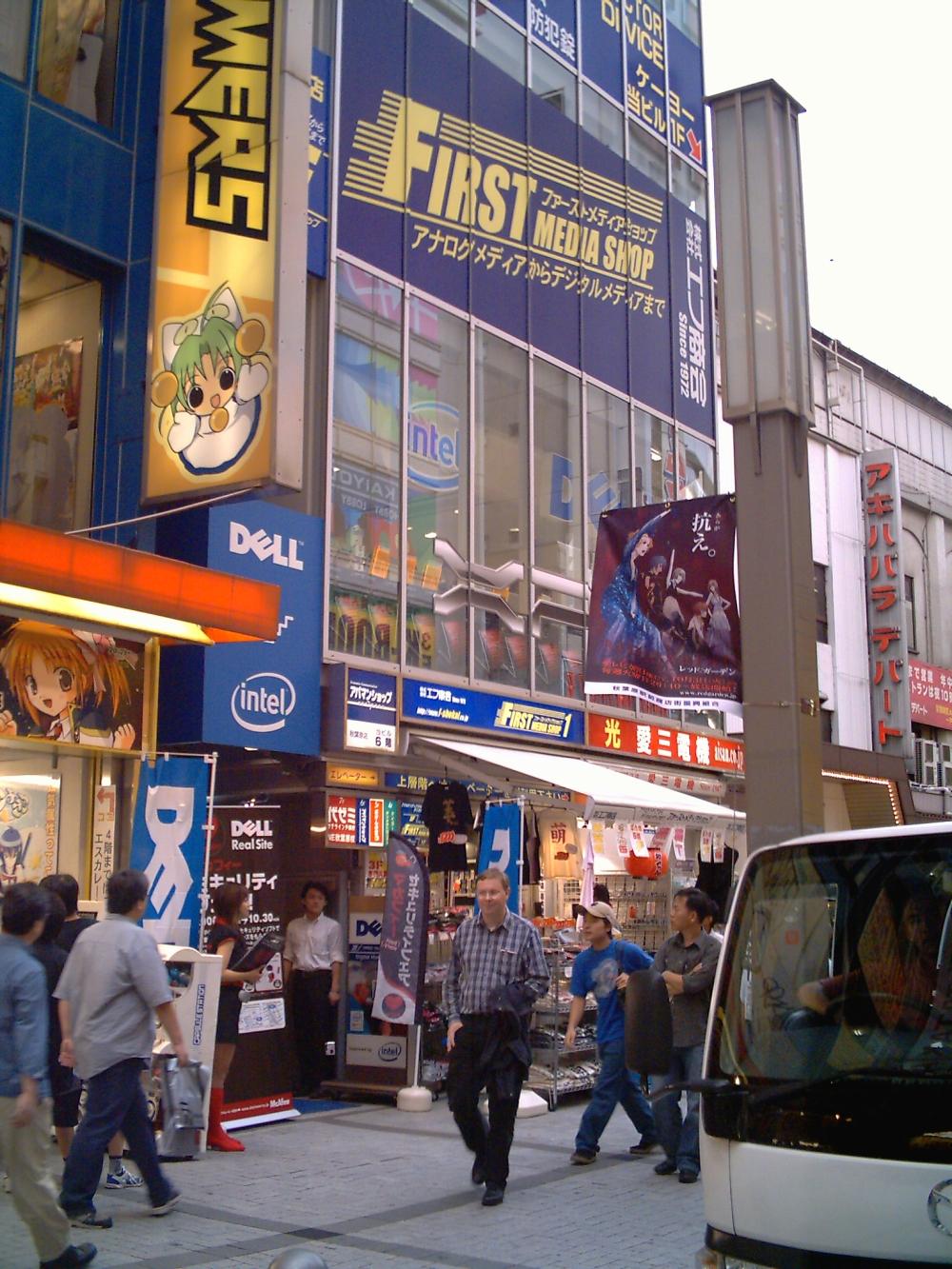

Which Street for Electronics and Which for Anime
Chuo-dori Versus The Radio Center
Akihabara divides cleanly along two parallel streets. Chuo-dori, the main north-south road, holds the big electronics retailers and the chain anime stores. The parallel street one block west, under the JR Sobu Line elevated tracks, is Akihabara Radio Center at 1-14-2 Sotokanda. That alley has roughly 30 tiny shops selling individual components: resistors, capacitors, LEDs, connectors, soldering gear, Arduino boards, Raspberry Pi units, cables and switches. If you need a specific capacitor value or a connector you cannot find online for less than a 50-unit minimum, walk the Radio Center. Prices run 10 to 30 percent cheaper than online for small-quantity parts.
The Secondhand Anime Chains
For anime goods, your targets are two secondhand chains and two doujinshi specialists. Mandarake Complex at 3-11-12 Sotokanda covers eight floors, opens 12:00 to 20:00 daily. Surugaya runs two stores: the game store at 3-14-10 Sotokanda and the figure store at 4-2-3 Sotokanda. Both open 11:00 to 21:00 weekdays, 10:00 to 21:00 weekends. Their condition grading is printed on the price tag. Mandarake uses letters: A (like new, complete), B (minor damage, may lack obi), C (visible damage, may lack parts), J (junk). Surugaya uses Japanese labels: like new, excellent, good, fair, damaged, junk. Damage is also marked with red circle stickers or handwritten notes on the sealed bag. Read the tag before you carry an item to the counter.
Doujinshi: Two Targets
Doujinshi buyers go to Melonbooks Akihabara 1 at 3-14-2 Sotokanda, open 11:00 to 21:00 weekdays and 10:00 to 21:00 weekends, or to the smaller Toranoana location on the fourth floor of Akihabara UDX at 4-14-1 Sotokanda, open 11:00 to 20:00 daily. New doujinshi run ¥500 to ¥1,500 per book. Secondhand at Mandarake runs ¥300 to ¥3,000 depending on the circle and condition. Melonbooks does not offer tax-free. Toranoana may offer it. Ask at the counter before you queue.
Retro Gaming: Super Potato Versus Trader
For retro games, two stores define the price spread. Super Potato at 3-11-6 Sotokanda, north of Chuo-dori, has three retail floors on levels three through five. It opens 11:00 to 20:00 weekdays, 10:00 to 20:00 weekends. Its stock is curated and clean. It charges a 20 to 50 percent premium above market price for the convenience. A loose Famicom cartridge of a common title costs ¥300 to ¥3,000 at Super Potato. A rare title like Gimmick or Recca jumps to ¥5,000 to ¥50,000. Boxed complete multiplies the loose price by two to five times. Use Super Potato as a museum to identify what exists. Buy from Trader.
Trader operates multiple stores along Chuo-dori. The main store is at 3-14-10 Sotokanda. Trader prices are closer to actual market value, and the condition range is wider. A loose Super Famicom cartridge costs ¥500 to ¥5,000 for common titles, ¥10,000 to ¥80,000 for rare titles like Rendering Ranger R2. PC Engine HuCards run ¥500 to ¥4,000 common, ¥8,000 to ¥30,000 rare. Neo Geo AES cartridges start at ¥10,000 and cross ¥200,000 for the rarest. Trader 2 and Trader 3 offer tax-free. Super Potato does not. The failure case if Super Potato is sold out on a rare title is to walk to Trader 2 and check its glass display. If both are empty, try Mandarake Complex floors five and six, which carry retro games at negotiable prices.
| Store | Tax-Free Counter Floor | Processing Fee | Minimum Purchase | Tax-Free Available |
|---|---|---|---|---|
| Yodobashi Camera Multimedia Akiba | 8F | 0% (full 10% refunded) | ¥5,500 total across taxable goods (2026 threshold) | Yes |
| Bic Camera AKIBA | B1F | 0% (full 10% refunded) | ¥5,500 total across taxable goods (2026 threshold) | Yes |
| Mandarake Complex | 1F | Not specified | Standard ¥5,500 threshold applies | Yes |
| Surugaya Game-kan and Figure-kan | At counter | Not specified | Standard ¥5,500 threshold applies | Yes |
| Super Potato Akihabara | N/A | N/A | N/A | No |
| Melonbooks Akihabara 1 | N/A | N/A | N/A | No |

.jpg)
How Tax-Free Shopping Works and Where it Fails
The tax-free minimum at both major chains is ¥5,500 total across taxable goods, based on the 2026 threshold that Japan's Customs and Tariff Bureau publishes annually. You need your original physical passport. Copies and phone photos are not accepted. The consumption tax refunded is the full 10 percent at both stores with zero processing fee. At Yodobashi, the tax-free counter is on the eighth floor. At Bic Camera AKIBA, it is on the basement floor. The counters operate during store hours, but weekend queues add 20 to 40 minutes to your visit. Avoid Saturday and Sunday afternoons. Go on a weekday before 11:00 or after 19:00.
Your passport will receive either a paper slip stapled in or a digital customs record via the Visit Japan Web QR code. Consumables such as food, drinks and cosmetics are sealed in a bag that you must not open before leaving Japan. Non-consumable goods like electronics and figurines do not require sealing. Duty-free allowances at your home country are not Akihabara's concern, but they are your problem after landing. Check your home country's rules before you buy. The 2026 duty-free allowance for the United States is $800 total goods, 1 liter of alcohol and 200 cigarettes. For Australia it is A$900 total goods. For the United Kingdom it is £390. For Canada it is C$800 after a 48-hour absence. For China it is ¥5,000. For South Korea it is $800. If you exceed the limit, you pay duty on the excess at your arrival airport.
The Mistake That Costs You Half Your Figure Budget
The most common mistake in Akihabara is buying new at the big chains for an item that exists used in perfect condition three blocks away for half the price. A used Nendoroid at Surugaya for ¥2,000 that Mandarake grades A is functionally identical to the same figure at the flagship store for full retail. The failure happens because tourists walk into the bright, English-signed showroom first, see the displays, buy immediately, and never step into Mandarake or Surugaya. Do the comparison walk. Photograph the price at the big store. Then go to the secondhand specialist. Only return to the chain if the used stock is junk grade or missing parts.
Akihabara rewards the disciplined shopper who carries a passport, compares three prices before buying, and can walk past a shiny display case. It punishes the impulse buyer who wants everything now and is willing to pay list price for the convenience of a single transaction. If that is you, stay at the big store and accept the premium.
Common Questions
Where should I buy a limited edition Nendoroid in Akihabara?
Check Surugaya Figure-kan first for a used Nendoroid at ¥1,500 to ¥7,000, then Mandarake Complex at ¥2,000 to ¥8,000. New stock goes to the big chains, but you will pay full retail without negotiating.
Can I get tax-free on secondhand goods at Mandarake or Surugaya?
Yes. Both stores offer tax-free at their counters on the same ¥5,500 minimum threshold. Mandarake's counter is on the first floor. Ask at Surugaya before you fill your basket.
What do I do if Yodobashi Akiba is closed and I need a charger cable at 10pm?
Yodobashi closes at 22:00. Bic Camera closes at 21:00. After that, convenience stores near Akihabara Station sell basic USB cables and adapters at a 30 percent markup. Accept it or wait until 09:30 the next day.
Will a Japanese rice cooker or hair dryer work on US or Australian voltage?
No. Japanese rice cookers are designed for 100V only. Japanese hair dryers are 100V only. A 100V device on 120V will overheat and fail. Buy a dual-voltage travel model outside Japan or bring a 1,000-watt step-down transformer.
Read next
-
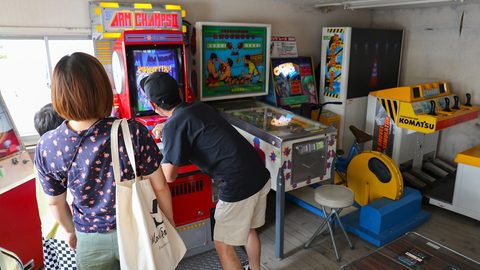
 Akihabara Beyond Shopping Arcades and Themed Cafes in Two Hours
Spend two hours in Akihabara without filling a shopping bag, from retro game arcades and themed cafe rituals to the quiet of Kanda Myojin Shrine.
Akihabara Beyond Shopping Arcades and Themed Cafes in Two Hours
Spend two hours in Akihabara without filling a shopping bag, from retro game arcades and themed cafe rituals to the quiet of Kanda Myojin Shrine.
-
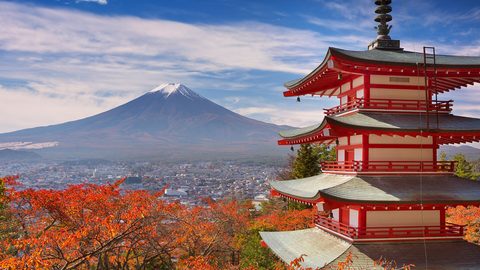 Japan Travel Guide for First-Timers Who Like Order but Not Crowds
Japan delivers deep tradition and futuristic efficiency, but the language barrier and density of rules can exhaust first-timers. Here is what to actually expect.
Japan Travel Guide for First-Timers Who Like Order but Not Crowds
Japan delivers deep tradition and futuristic efficiency, but the language barrier and density of rules can exhaust first-timers. Here is what to actually expect.
-
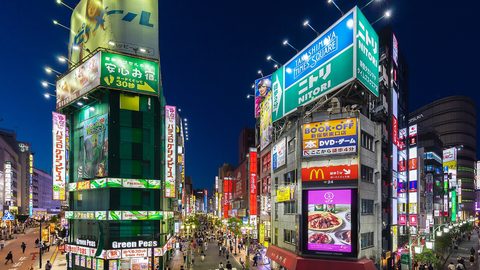 Japan eSIM vs Pocket WiFi vs Physical SIM for Staying Connected
Free public WiFi across Japan is unreliable and slow. Compare eSIM plans from Ubigi and Airalo against renting a pocket WiFi device at Narita or Haneda.
Japan eSIM vs Pocket WiFi vs Physical SIM for Staying Connected
Free public WiFi across Japan is unreliable and slow. Compare eSIM plans from Ubigi and Airalo against renting a pocket WiFi device at Narita or Haneda.
-
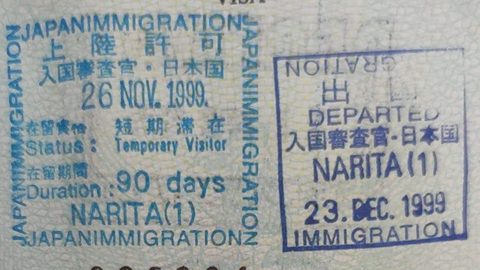 Japan Visa-Free Entry and the Visit Japan Web Digital Form
Visa-free entry covers many nationalities, but the Visit Japan Web digital form and QR codes determine how quickly you clear immigration at Narita or Haneda.
Japan Visa-Free Entry and the Visit Japan Web Digital Form
Visa-free entry covers many nationalities, but the Visit Japan Web digital form and QR codes determine how quickly you clear immigration at Narita or Haneda.
-
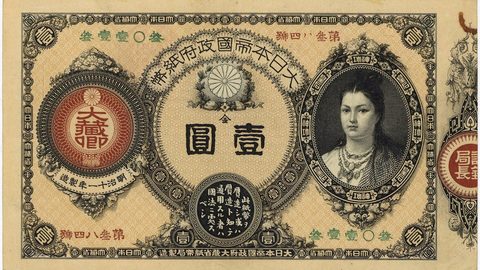 Cash and IC Cards Are the Real Payment System in Japan
Japan projects a high-tech image but many small restaurants, temples, and rural buses demand cash. IC cards like Suica and Icoca bridge the gap for daily spending.
Cash and IC Cards Are the Real Payment System in Japan
Japan projects a high-tech image but many small restaurants, temples, and rural buses demand cash. IC cards like Suica and Icoca bridge the gap for daily spending.
-
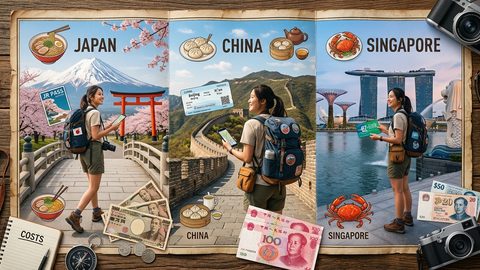 What Japan, China, and Singapore Actually Cost Independent Travelers
Real per-day costs for Japan, China, and Singapore broken down by accommodation tier, food strategy, transit, and connectivity for independent travelers.
What Japan, China, and Singapore Actually Cost Independent Travelers
Real per-day costs for Japan, China, and Singapore broken down by accommodation tier, food strategy, transit, and connectivity for independent travelers.
-
 What Most Travelers Get Wrong When Booking Flights to East Asia
Most travelers book East Asia flights on price alone. Here's what they miss about route gaps, fleet age, and aircraft type on 10-14 hour hauls.
What Most Travelers Get Wrong When Booking Flights to East Asia
Most travelers book East Asia flights on price alone. Here's what they miss about route gaps, fleet age, and aircraft type on 10-14 hour hauls.
-
 The Honest Cost of Mobile Data in Japan, China, and Singapore
Real price data for SIMs, pocket WiFi, and eSIMs in Japan, China, and Singapore. Plus the friction points most travel guides quietly skip.
The Honest Cost of Mobile Data in Japan, China, and Singapore
Real price data for SIMs, pocket WiFi, and eSIMs in Japan, China, and Singapore. Plus the friction points most travel guides quietly skip.
-
 Fifth Freedom Flights Are the Award Sweet Spot Nobody Searches For
Fifth-freedom flights let you fly a foreign airline between two other countries, and they often have award seats when the airline's own hub routes are sold out.
Fifth Freedom Flights Are the Award Sweet Spot Nobody Searches For
Fifth-freedom flights let you fly a foreign airline between two other countries, and they often have award seats when the airline's own hub routes are sold out.