The Asian Civilisations Museum Is Singapore's Trade-Route Museum, and the Tang Shipwreck Justifies the Entry Fee
The Asian Civilisations Museum in Singapore tells the trade-route story of Asia, and the 9th-century Tang Shipwreck gallery alone justifies the ticket.
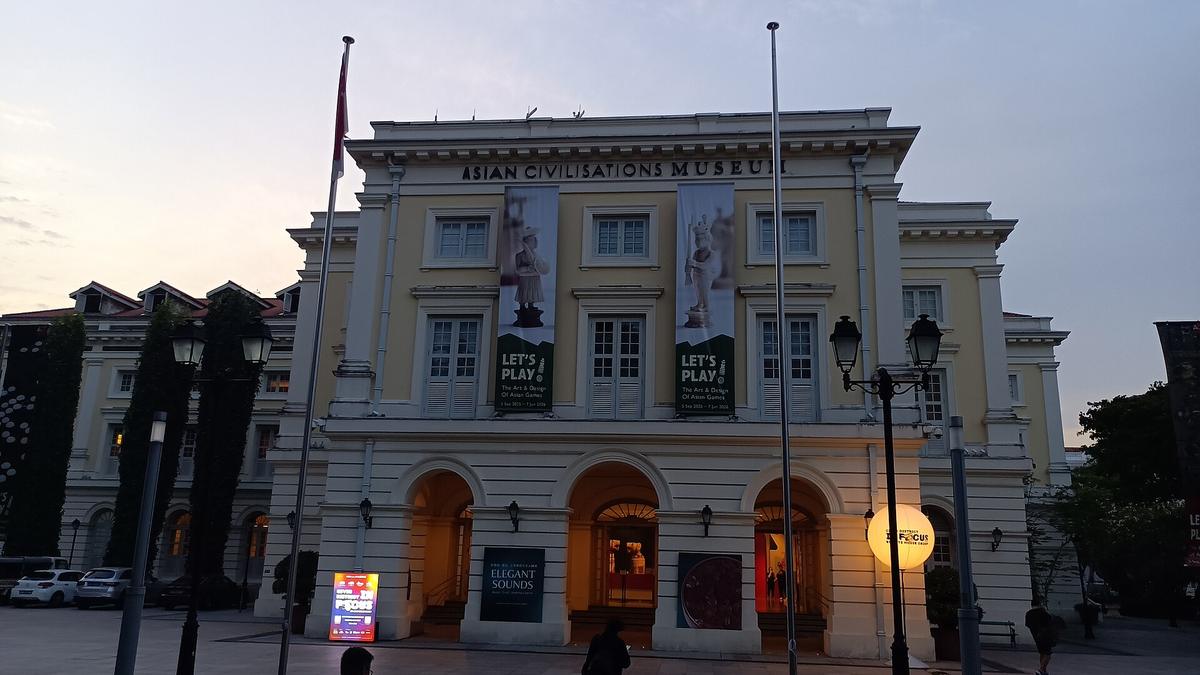

The Asian Civilisations Museum is Singapore’s Trade-Route Museum, and the Tang Shipwreck Justifies the Entry Fee
At 2pm on a Tuesday in Singapore the sun pins you to the pavement. You have done Gardens by the Bay, you have done the Marina Bay Sands SkyPark, and your shirt is glued to your back. This is the moment the Asian Civilisations Museum was built for. It sits on the north bank of the Singapore River in the Empress Place Building, a neoclassical colonnade completed in 1867 as colonial government offices and gazetted a National Monument in 1992. The building is your air-conditioned escape. The reason you pay the SGD 20 foreign-resident ticket is the Tang Shipwreck display, a standing collection of around 60,000 objects recovered from a 9th-century Arab dhow found in 1998 off Belitung Island in the Gaspar Strait, Indonesia. That shipwreck is the single largest consignment of Tang-dynasty export ceramics ever excavated. It transforms the museum from a respectable cultural stop into the one indoor activity in the colonial core you should not skip.
- Organising Concept: Cross-cultural exchange and trade routes across Asia, not a chronological or national survey
- Standing Collections: 11 rooms total, including the Tang Shipwreck display (standing) and 3 faith and belief spaces: Ancestors and Rituals, Islamic Art, Christian Art
- Tang Shipwreck Display: Standing display. The vessel is a 9th-century Arab dhow discovered in 1998 near Belitung Island, Indonesia. Cargo: approx. 60,000 objects, dominated by Changsha ware ceramics from Tang-dynasty China produced c. 830s CE. Single largest consignment of 9th-century Tang export ceramics ever recovered.
- Building: Empress Place Building, completed 1867 as colonial government offices. National Monument of Singapore (gazetted 1992). Located on the north bank of the Singapore River. Museum opened at this site in 2003.
- Ticket Prices (Foreign Resident): Standard adult: SGD 20. Concession (seniors 60+, students, persons with disabilities): SGD 15. Children 7-12: SGD 15. Children 6 and under: free. The Singapore Tourism Board and the museum's official website publish the current rates; the figures at the time of writing are given here and should be verified at the source before visiting.
- Free Entry: All visitors: Fridays 7pm, 9pm. Free admission for Singapore citizens and permanent residents year-round.
- Visit Duration: 2-3 hours typical
- Nearest MRT: Raffles Place (East-West Line, North-South Line), approx. 5 minutes walk
- Connection to National Gallery Singapore: Approx. 500 m and 7 minutes on foot via Cavenagh Bridge or Anderson Bridge, along the Singapore River promenade
What the Tang Shipwreck Collection Actually is and Why it Matters
Most museums in Singapore arrange their artefacts by nation or dynasty. The Asian Civilisations Museum does not. Its organising concept is cross-cultural exchange and the maritime trade routes that made this island. The 11 standing rooms trace how goods, faiths and techniques travelled from the Middle East to East Asia, and the Tang Shipwreck display is the proof of concept.
In 1998, fishermen diving for sea cucumbers off Belitung Island found pottery scattered across the seabed. Archaeologists later identified the wreck as an Arab dhow, a sewn-plank vessel of a type that did not survive in any other record. The dhow was carrying roughly 60,000 objects, mostly Changsha ware ceramics from Tang-dynasty China produced around the 830s CE. To understand the scale: this is the single largest consignment of 9th-century Tang export ceramics ever recovered. The room displays thousands of these bowls, ewers and storage jars, many still stacked as they were packed in the hold. You see the celadon glaze, the iron-oxide painted designs, the spur marks where kiln supports were snapped off. It is not a pristine exhibition. The cargo was at the bottom of the Gaspar Strait for more than a thousand years, and the pieces show it. That is the point. You are looking at objects that were actually in transit when the ship sank, not ritual goods placed in a tomb.
Let the Shipwreck Be Your Anchor, Not Your Only Stop
You should budget 45 minutes for this room alone. Arrive when the museum opens at 10am and go straight to it. The morning light through the river-facing windows hits the ceramics well, and the room is quiet before the tour groups arrive from the National Gallery Singapore 500 metres away.
The mistake most visitors make is treating the Tang Shipwreck as the whole museum and rushing the rest. The three faith and belief spaces, Ancestors and Rituals, Islamic Art, Christian Art, hold objects that demonstrate how religion travelled the same routes as the ceramics. A Ming-dynasty Buddhist sculpture sits a few metres from a Quran manuscript produced in Java. The Southeast Asian art in the Khoo Teck Puat room is worth your time if you have seen enough Chinese porcelain in other museums. It covers the material cultures of Thailand, Vietnam, Cambodia and the Indonesian archipelago, and it is the section of the museum that most directly explains the Peranakan heritage you will see in the shophouses of Katong and Joo Chiat.
How to Get In, What it Costs, and When to Book
The standard foreign-resident adult ticket is SGD 20. Concessions for seniors 60 and over, students, and persons with disabilities are SGD 15. Children aged 7 to 12 also pay SGD 15; children 6 and under enter free. Rates change. The Singapore Tourism Board and the museum's official website set and publish the figures in force, so check before you buy. You do not need to print anything. Your email confirmation with a QR code gets you through the turnstile on the river side of the Empress Place Building.
Free Entry on Friday Night Is the Budget Play
Singapore citizens and permanent residents enter free at all times. For everyone else, free admission runs every Friday from 7pm to 9pm. The museum operates reduced rooms in that window, but the Tang Shipwreck display stays open. If you are on a tight budget, this is your move. The rooms are quiet on Friday evenings because most visitors are at the Supertree Grove light show at 7.45pm or 8.45pm. Use that.
Special exhibitions require a separate ticket or a timed slot. Book these in advance on the museum's website. Same-day slots disappear by 11am on weekends. The museum closes on some public holidays. The full closure calendar is published on the museum's official site, not on third-party booking platforms. Check that page before you schedule your visit or you risk arriving at a locked door.
The Train, Not the Taxi
The nearest MRT is Raffles Place on the East-West and North-South lines. Exit through the Singapore River pedestrian tunnel and walk five minutes along the river promenade. Do not take a taxi. The drive from Orchard Road takes longer than the train and the drop-off point at the Empress Place Building is a kerbside zone with no shelter from the rain.
How to Do it Well and What to Skip
Arrive at 10am opening. The Tang Shipwreck display takes 45 minutes. The faith spaces take another 30 minutes combined. The Khoo Teck Puat room of Southeast Asian art needs 20 minutes if you read the labels. That is about two hours for a focused visit. You can stretch it to three by including the riverfront building itself, which is worth a slow circuit for the 1867 architecture and the views across the Singapore River to the National Gallery Singapore.
What to skip: the temporary exhibition space when the special show is not of obvious interest. The standing collection is the draw, and the temporary rooms are often installed in a small space on the second floor that feels cramped. If the special exhibition is sold out, do not repurchase a timed ticket just to see that space. You have already seen the thing that justifies the fee.
Who Should Skip the Museum
Anyone with less than three full days in Singapore. If you are on a 48-hour stopover, your time is better spent walking the colonial core, eating at Maxwell Food Centre, and seeing the Gardens by the Bay light show. This museum demands a slow pace. You cannot absorb the Tang Shipwreck in 20 minutes and rush out. The jet lag and heat of a short trip will work against you. Come back on a longer visit or save it for a rainy afternoon.
Who should pay full price without hesitation: first-time visitors who have done one museum in Asia before and found it dry. The Tang Shipwreck is not a diorama with a voiceover. It is a cargo of ceramics laid out the way it was packed, salt-crusted and broken, and it tells a story of 9th-century maritime trade that no other museum in the world can match. That is the reason to pay and the reason the museum belongs on a three-day itinerary for the colonial core.
Common Questions
Is the Tang Shipwreck display always on show?
Yes. The display is standing. You do not need to worry about it being replaced by a travelling exhibition. The artefacts are a fixed part of the museum's collection and have been on continuous show since the room opened.
Can I book the Friday 7pm, 9pm free ticket in advance?
No. No booking is required for the free Friday evening slot. You walk in and present yourself at the ticket counter. Arrive by 6.45pm to avoid the queue that forms at the door. The rooms taper down toward 9pm, so the last entry is usually 8.30pm.
Is the museum stroller-friendly?
Yes. The Empress Place Building has lifts to all floors, wide corridors, and accessible toilets. The museum is part of Singapore's public infrastructure and meets the city's standard for accessibility. Strollers are permitted in all rooms including the Tang Shipwreck space.
How does this compare to the National Museum of Singapore?
The National Museum of Singapore tells the story of the nation from colonial settlement to independence. The Asian Civilisations Museum tells the story of the region through trade and material culture. They are complementary but not interchangeable. Do one per day if you have the time.
Read next
-
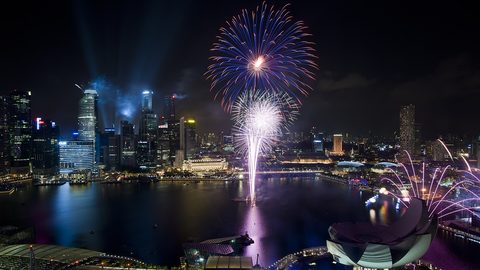
 Singapore eSIM, Tourist SIM Cards and Free Public Wi-Fi Compared
Singapore offers eSIMs, 100GB tourist SIM cards from S$12 at Changi, and free public Wi-Fi. The real essential is downloading Grab before you land, because setup requires an SMS code.
Singapore eSIM, Tourist SIM Cards and Free Public Wi-Fi Compared
Singapore offers eSIMs, 100GB tourist SIM cards from S$12 at Changi, and free public Wi-Fi. The real essential is downloading Grab before you land, because setup requires an SMS code.
-
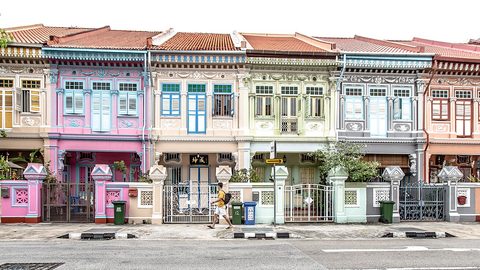 Singapore Hotels by Type and Budget Not by Neighbourhood
Singapore hotels sorted by property type and price band, skyline towers, shophouse boutiques, family chains, and transit sleepers, with honest notes on what S$400 actually buys here.
Singapore Hotels by Type and Budget Not by Neighbourhood
Singapore hotels sorted by property type and price band, skyline towers, shophouse boutiques, family chains, and transit sleepers, with honest notes on what S$400 actually buys here.
-
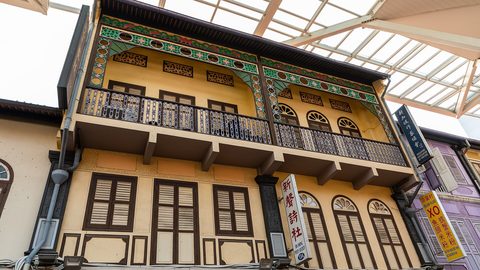 Where to Stay in Singapore for Neighbourhood Character Not Just a Bed
Compare Singapore's neighbourhoods by the experience of waking up there, hawker breakfasts, shophouse streets, or skyline views, not by distance to a landmark the MRT erases.
Where to Stay in Singapore for Neighbourhood Character Not Just a Bed
Compare Singapore's neighbourhoods by the experience of waking up there, hawker breakfasts, shophouse streets, or skyline views, not by distance to a landmark the MRT erases.
-
 Flying Into Changi Airport Singapore and Making the Stopover Work
Changi Airport turns a Singapore stopover into a free mini-trip. How long you need to clear immigration, eat a hawker meal, and still make your connection.
Flying Into Changi Airport Singapore and Making the Stopover Work
Changi Airport turns a Singapore stopover into a free mini-trip. How long you need to clear immigration, eat a hawker meal, and still make your connection.
-
 Singapore Things to Do With Only Three Days and Brutal Midday Heat
Hard calls on which Singapore sights earn limited days: Gardens by the Bay and Botanic Gardens are non-negotiable, Sentosa is skippable, and everything bends around the 11am-to-3pm heat.
Singapore Things to Do With Only Three Days and Brutal Midday Heat
Hard calls on which Singapore sights earn limited days: Gardens by the Bay and Botanic Gardens are non-negotiable, Sentosa is skippable, and everything bends around the 11am-to-3pm heat.
-
 Best Time to Visit Singapore When One Degree From the Equator
Singapore sits one degree from the equator so temperature barely shifts, plan around monsoon rains, Chinese New Year hawker closures, haze season, and F1 hotel price spikes instead.
Best Time to Visit Singapore When One Degree From the Equator
Singapore sits one degree from the equator so temperature barely shifts, plan around monsoon rains, Chinese New Year hawker closures, haze season, and F1 hotel price spikes instead.
-
 Gardens by the Bay
-
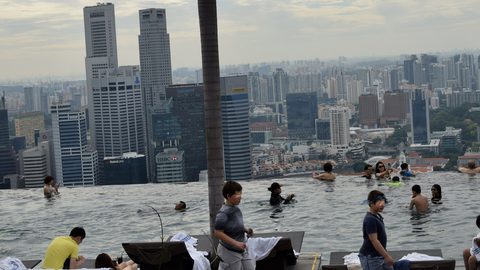 Marina Bay Sands
-
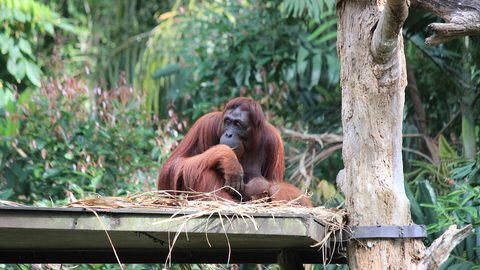 Singapore Zoo and the Mandai parks