What the Beijing AQI Number Actually Means
What the Beijing AQI number means, when it goes bad, and what to actually do about it for your health and itinerary.

What the Beijing AQI Number Actually Means
You check the air quality index on your phone and see a reading in the 150s. The app calls it "Unhealthy." You wonder if that means skip the Great Wall or just wear a mask. Here is what that number means for your lungs and your day.
The China Ministry of Ecology and Environment publishes the AQI scale under standard HJ 633-2012. A reading of 0 to 50 is Good, and normal outside activity is fine. From 51 to 100 is Moderate. From 101 to 150 is Unhealthy for Sensitive Groups. That is where children, older adults, and anyone with respiratory conditions should reduce prolonged exertion. At 151 to 200, the scale hits Unhealthy. That is the threshold for moving open-air sights indoors. At 201 to 300 it is Very Unhealthy. Above 300 it is Hazardous. The PM2.5 concentration corresponding to an AQI of 151 to 200 is 116 to 150 micrograms per cubic metre. That is the zone where Beijing air quality becomes a real problem for the average traveller.
When Beijing Air Quality Goes Bad: Winter Smog and Spring Sandstorms
Winter Smog Season
Beijing has two bad air seasons. The first runs from November through February, driven by the heating season that starts 15 November and ends 15 March. Coal and biomass heating from the surrounding region, combined with temperature inversions on windless days, trap PM2.5 close to the ground. In January 2024 the monthly average PM2.5 was 34 µg/m³. In February it was 44. In March it hit 50. Those are monthly averages, meaning individual days spike much higher.
Spring Sandstorms And Summer Relief
The second bad period is spring. March and April bring sandstorms from the Gobi Desert, which push coarse particulate matter into the city. The April 2024 average was 38 µg/m³, noticeably higher than the summer months. June through September are the best air months. In August 2024 the monthly average was 20 µg/m³. That is within the Good range.
Why The Long-Term Trend Matters
The long-term trend is real. Beijing annual average PM2.5 in 2013 was 89.5 µg/m³. In 2024 it was 32.0 µg/m³, a 64 percent improvement. The Beijing Municipal Ecology and Environment Bureau publishes these figures. The coal share of Beijing energy consumption dropped from roughly 25 percent in 2013 to under 2 percent by 2023. Coal use fell from about 23 million tonnes to about 1.3 million tonnes. The primary source of PM2.5 in 2021 shifted to vehicles at roughly 46 percent, with regional transport at roughly 26 percent and dust at roughly 11 percent. Coal combustion fell to roughly 3 percent. You still need to check the index daily, but the baseline is far better than a decade ago.
Beijing AQI Today: Where to Check the Real Number
Do not rely on the US Embassy Beijing PM2.5 feed. It is located in Chaoyang District and without a VPN the feed is often blocked or unreliable. Use a Chinese app instead.
The China National Environmental Monitoring Centre app, labelled in Chinese as 中国环境监测总站, gives the official government reading. The Beijing Air Quality app, labelled 北京空气质量, is specific to the city. The Blue Map app by the Institute of Public and Environmental Affairs, called 蔚蓝地图, is the most useful for travellers because it shows trends and forecasts. Moji Weather, labelled 墨迹天气, and Caiyun Weather, labelled 彩云天气, include AQI alongside weather. The website aqicn.org is often reachable without a VPN and aggregates multiple monitoring stations. The Beijing Municipal Ecology and Environment Monitoring Centre site at bjmemc.com.cn publishes official data directly.
Beijing Air Pollution Mask: What to Buy and Where
Which Mask Actually Works
A surgical mask does not filter PM2.5. It does not seal against your face. You need a particulate-filtering mask rated KN95 under the Chinese standard GB 2626-2019, or N95 under the US NIOSH standard, or FFP2 under the European EN 149 standard. KN90 masks offer less filtration and are not recommended for AQI above 150.
Where To Buy One Today
You can buy KN95 masks at Beijing pharmacies such as Tongrentang, Jinsheng, and Jiashitang. Convenience stores including 7-Eleven, FamilyMart, and Lawson stock them. Supermarkets such as Wu-Mart, Jingkelong, and Hema carry them. E-commerce platforms JD.com, Meituan, and Eleme deliver within hours. The price range for a single KN95 mask in Beijing is roughly 2 to 10 yuan. The price varies by brand and pack size.
When To Wear It
Carry a mask in your day bag from November through March. On days when the AQI climbs above 150, wear it for any time spent outside including waiting at bus stops, walking between metro exits, and queueing at sight entrances. On days above 200, stay indoors unless you have no choice.
Beijing Winter Smog: Adjusting Your Itinerary on Bad Days
What To Do At AQI 151 To 200
When the AQI hits 151 to 200, move open-air sights indoors. The National Museum of China requires a passport and advance reservation but entry is free. The Capital Museum is a less crowded alternative for Beijing history. The 798 Art Zone is mostly indoors across its galleries and you can spend hours walking between Bauhaus factory buildings without spending much time outside. The Lama Temple is enclosed and the incense-heavy courtyard is brief. The Confucius Temple and Guozijian complex is compact.
What To Skip At AQI 201 Or Above
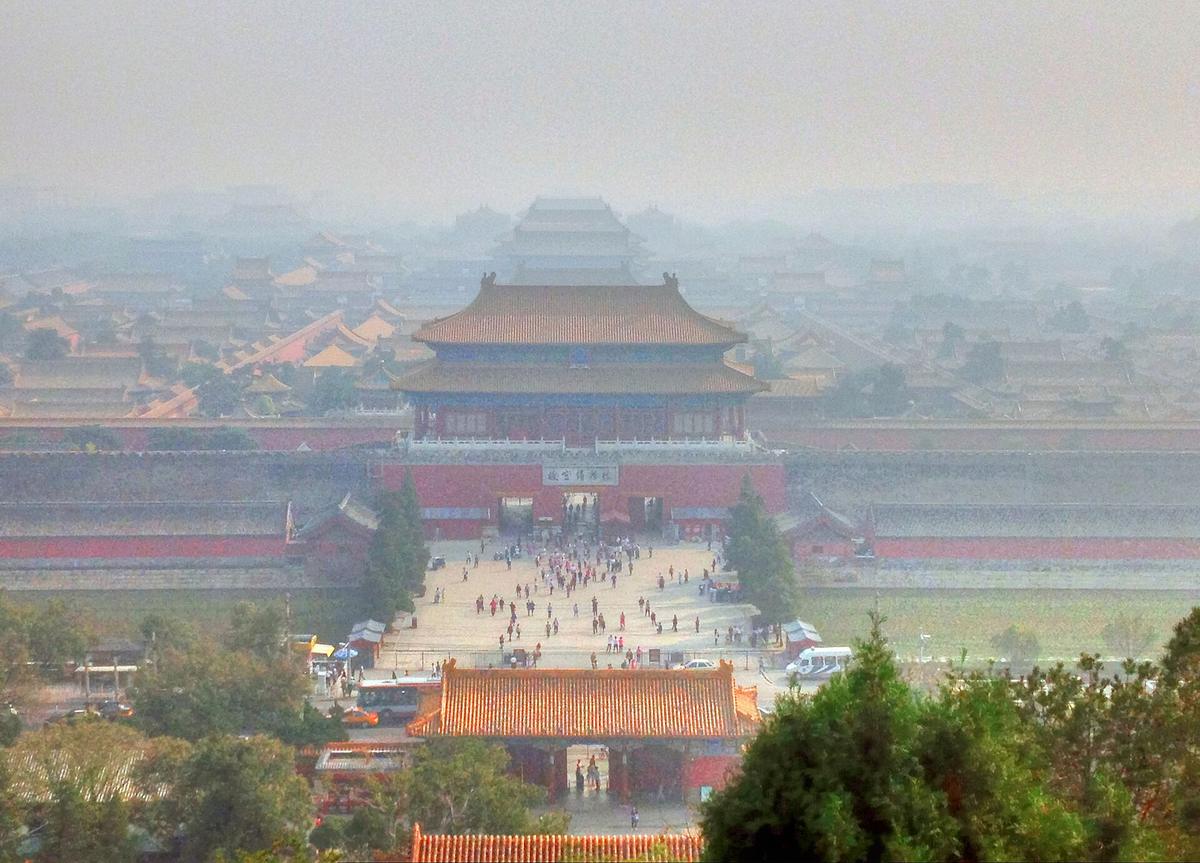
When the AQI hits 201 or above, stay indoors entirely. That is the threshold for cancelling all outdoor exertion. The Forbidden City requires long walks between halls with no shelter. The Great Wall at Mutianyu or Jinshanling involves an hour or more of continuous exposure. The Temple of Heaven is a large park with minimal indoor cover. Do not attempt any of these on a red alert day.
How The Warning System Works
Beijing issues heavy pollution warnings at four levels: blue, yellow, orange, and red. The trigger for a red alert under the 2016 rules is an AQI above 200 for four or more days, or above 300 for two days, or above 500 for one day. An orange alert requires AQI above 200 for three days or above 300 for one day. Yellow requires AQI above 200 for two days. Blue requires AQI above 200 for one day. The lead time for a heavy pollution warning can be under 24 hours, so check the forecast in the morning and have a backup indoor plan ready.

Indoor Sights That Work on Bad Air Days
These sights require minimal outside time and most have air purifiers.
National Museum of China
Located on the east side of Tiananmen Square. Free entry but you need a passport and an advance reservation booked online. Allow three hours. The museum is vast and the permanent exhibitions on ancient and modern China fill the time.
Capital Museum
In Xicheng District, far less crowded than the National Museum. Covers Beijing city history with well-labelled exhibits in Chinese and English. Allow two hours.
798 Art Zone
Galleries occupy former factory buildings. Some are large and some are small. You can move between them quickly. The complex has cafés and restaurants. Allow half a day.
Lama Temple
The walk from the metro exit to the entrance is under five minutes. The temple halls are covered. The incense smoke adds to the particulate load but the building itself provides shelter. Allow 90 minutes.
Confucius Temple and Imperial College
Next to the Lama Temple. The courtyards are open but the halls are enclosed. The complex is compact and you can see it in 45 minutes.
Hotels with Air Purifiers in Beijing
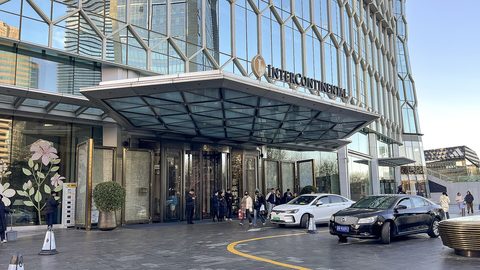
Many mid-range and luxury hotels in Beijing include in-room air purifiers. The list includes The Peninsula Beijing, Waldorf Astoria Beijing, Four Seasons Hotel Beijing, Aman Summer Palace, The Opposite House, CHAO Sanlitun, Mandarin Oriental Wangfujing, Rosewood Beijing, Bulgari Hotel Beijing, NUO Hotel Beijing, Hotel Éclat Beijing, Park Hyatt Beijing, China World Summit Wing, The Ritz-Carlton Beijing Financial Street, InterContinental Beijing Sanlitun, Regent Beijing, Kerry Hotel Beijing, Grand Hyatt Beijing, Beijing Hotel NUO, East Beijing, Cordis Beijing Capital Airport, Hilton Beijing Wangfujing, Conrad Beijing, The St. Regis Beijing, Shangri-La Beijing, China World Hotel Beijing, Sofitel Beijing Central, Novotel Beijing Peace, Holiday Inn Beijing Chang An West, Beijing Marriott Hotel Northeast, Renaissance Beijing Wangfujing Hotel, JW Marriott Hotel Beijing, The Westin Beijing Chaoyang, The Westin Beijing Financial Street, Sheraton Grand Beijing Dongcheng Hotel, Le Méridien Beijing, Fairmont Beijing, Swissôtel Beijing Hong Kong Macau Center, Hotel New Otani Chang Fu Gong, Beijing Friendship Hotel, Beijing International Hotel, Beijing Landmark Towers, Beijing Asia Hotel, Beijing Minzu Hotel, Beijing Prime Hotel Wangfujing, Beijing Hotel, Beijing Dongfang Hotel, Beijing Xinqiao Hotel, Beijing Jinglun Hotel, Beijing Jianguo Hotel, Beijing Qianmen Jianguo Hotel, Beijing Yanshan Hotel, Beijing Jingguang Centre Apartments, and Beijing Pangu 7 Star Hotel.
If you book a room in one of these hotels, confirm at check-in that the purifier is in the room and working. If your hotel is not on this list, call ahead and ask. A portable desktop purifier is not sufficient for a full hotel room.
| AQI Range | Label | PM2.5 (µg/m³) | What to Do |
|---|---|---|---|
| 0 to 50 | Good | 0 to 35 | Normal outdoor activity |
| 51 to 100 | Moderate | 36 to 75 | Normal outdoor activity |
| 101 to 150 | Unhealthy for Sensitive Groups | 76 to 115 | Sensitive groups reduce prolonged exertion |
| 151 to 200 | Unhealthy | 116 to 150 | Move outdoor sights indoors |
| 201 to 300 | Very Unhealthy | 151 to 250 | Stay indoors |
| 301 to 500 | Hazardous | 251 to 500 | Stay indoors, seal windows |
Read next
-
 Beijing Hotels by Price Band and Property Type
Beijing hotels split into hutong courtyards, international chains and functional business towers. Here is what each price band actually buys you.
Beijing Hotels by Price Band and Property Type
Beijing hotels split into hutong courtyards, international chains and functional business towers. Here is what each price band actually buys you.
-
 Where to Stay in Beijing by District and Travel Style
Dongcheng puts you beside the Forbidden City, Chaoyang beside the nightlife. Here is how Beijing's districts compare for different travellers.
Where to Stay in Beijing by District and Travel Style
Dongcheng puts you beside the Forbidden City, Chaoyang beside the nightlife. Here is how Beijing's districts compare for different travellers.
-
 Beijing Flights PEK vs PKX Which Airport Actually Works for You
PEK or PKX? What each Beijing airport costs you in time, money, and logistical friction depending on where you are staying.
Beijing Flights PEK vs PKX Which Airport Actually Works for You
PEK or PKX? What each Beijing airport costs you in time, money, and logistical friction depending on where you are staying.
-
 Beijing Things to Do Worth Your Limited Days
The Forbidden City and Great Wall are essential, but Beijing's meaning lives in temple courtyards, hutong lanes and food streets. Here is what earns your days.
Beijing Things to Do Worth Your Limited Days
The Forbidden City and Great Wall are essential, but Beijing's meaning lives in temple courtyards, hutong lanes and food streets. Here is what earns your days.
-
 Best Time to Visit Beijing, Month by Month Tradeoffs
April and October bring blue skies and queues, July brings heat, January brings empty sites and hazardous air. Here is Beijing month by month.
Best Time to Visit Beijing, Month by Month Tradeoffs
April and October bring blue skies and queues, July brings heat, January brings empty sites and hazardous air. Here is Beijing month by month.
-
 Getting Around Beijing Without Losing Half Your Day
Beijing's metro is clean and cheap but stops early, and taxis rarely speak English. Here is how to move around without burning half your day.
Getting Around Beijing Without Losing Half Your Day
Beijing's metro is clean and cheap but stops early, and taxis rarely speak English. Here is how to move around without burning half your day.
-
 Forbidden City
 tickets require booking seven days ahead on WeChat with a passport. Here is the route to take once you are inside to avoid wasting the visit.
Forbidden City
Forbidden City tickets require booking seven days ahead on WeChat with a passport. Here is the route to take once you are inside to avoid wasting the visit.
-
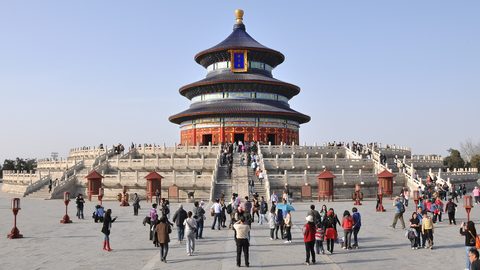 Temple of Heaven
The Temple of Heaven park matters as much as the temple. Morning tai chi, choirs, and card players make it a Beijing ritual worth a full morning.
Temple of Heaven
The Temple of Heaven park matters as much as the temple. Morning tai chi, choirs, and card players make it a Beijing ritual worth a full morning.
-
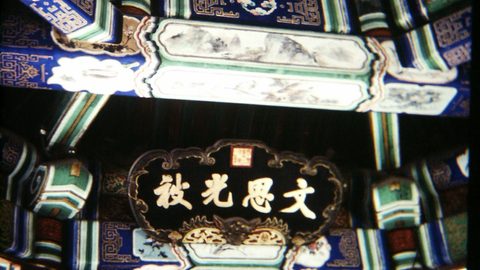 Summer Palace
The Summer Palace is vast and the wrong entrance adds an hour of walking. Use the East Palace Gate and plan for at least four hours.
Summer Palace
The Summer Palace is vast and the wrong entrance adds an hour of walking. Use the East Palace Gate and plan for at least four hours.