What Actually Causes Offence in Beijing and What Does Not
A practical guide to what genuinely offends in Beijing, and the several etiquette rules that are overstated or outdated.

What Actually Causes Offence in Beijing and What Does Not
Most advice about Beijing etiquette mistakes is written by someone who spent a weekend in a hotel lobby. The real friction points are narrower and the list of supposedly critical rules is longer than useful. Tipping is not expected. Chopstick placement in a casual noodle shop matters about as much as which hand you hold your fork with. What actually gets you stared at, questioned, or turned away is a handful of specific behaviours that involve other people's space, beliefs, and security protocols. The rest is worry you do not need to carry.
Beijing Temple Etiquette: What Gets You Quietly Asked to Leave
Inside Working Temples
Inside a working temple in Beijing, three rules matter and the rest do not. Do not point at Buddha statues with one finger. Use an open palm, as if gesturing toward something you are showing a friend. The one-finger point is rude in the same way pointing at a person is rude. Do not photograph Buddha statues. Most temples in Beijing, including Lama Temple and the Temple of Heaven's inner halls, prohibit photography of the statues themselves. You will see a sign or a monk will remind you. Do not photograph worshippers without permission. People praying, lighting incense, or touching prayer wheels are not part of the decor. Ask with a gesture and a smile, or skip the shot. Walk clockwise around stupas and prayer wheels. That is not a suggestion; it is the direction the space is designed to move. The rest of temple etiquette, removing shoes, covering shoulders, how to hold incense, is indicated by signs and other visitors. Follow what locals do and you will be fine.
At The Temple of Heaven
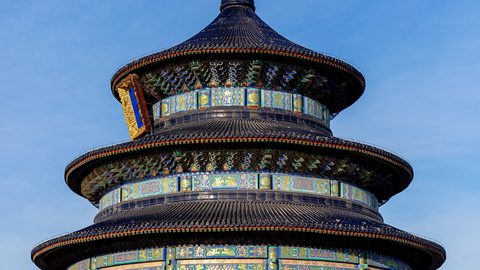
At the Temple of Heaven, the park itself is a public space. The morning rituals, taichi, fan dancing, singing, are performed by locals who are accustomed to being watched. Do not walk through them or block their space, but standing at a respectful distance is fine. The echo walls and the circular altar are the main draw, and photography of the buildings is permitted. The prohibition applies only to interior statues, not the architecture.
Beijing Cultural Etiquette: the Behaviours That Actually Create Friction
Pointing And Staring
Pointing at people with one finger is the single most common foreigner behaviour that reads as aggressive in Beijing. Use an open hand or a nod to indicate someone. Staring is normal, especially outside central tourist areas like Sanlitun. A local may look at you for several seconds without any hostile intent. That is not rudeness; it is curiosity. Photographs of foreigners, including of children, are taken openly and without asking. You can wave and smile to discourage it, but the act itself is not considered rude by the person taking the photo.
Queues And Personal Space
Losing patience in queues is a genuine social mistake. Queueing in Beijing is loose. People stand close, 0 to 15 centimetres apart, and may move around you rather than form a single-file line. That is the local style, not an attempt to cut. Reacting with visible frustration or telling someone to get to the back marks you as unfamiliar with how public space works here. Keep your bag in front of you, hold your space without touching anyone, and move forward when the group moves. It takes about ten minutes to adjust.
Photography And The Law
Photographing police, soldiers, or government buildings is not a cultural offence; it is a legal one. The consequences can include detention, questioning, and deletion of your images. The highest-risk location in Beijing is the security perimeter around Tiananmen Square. Do not photograph the security checkpoints, the guards, or the barriers. Photographing Tiananmen Square itself from a tourist area away from the checkpoints is permitted. The distinction is clear: the square yes, the security apparatus no.
Carry Your Passport
Carrying your passport is a legal requirement, not a suggestion. Foreign nationals in China must carry their passport at all times. Random police checks occur most frequently at metro stations, railway stations, and near Tiananmen. A photocopy of the photo page and visa page is sometimes accepted for short periods, but the legal requirement is the original document. The fine for not carrying it can be up to 2,000 RMB, though the exact amount is set by local regulations. The official figure is published by the Beijing Public Security Bureau. Carry the passport.
Beijing Tipping Guide: What You Actually Do with Money
Tipping in restaurants in Beijing is not done. No service charge is added to the bill. Leave nothing on the table. Tipping in taxis is not done either. The most you should do is round up to the nearest yuan, and even that is unnecessary. In hotels, bellhops may accept a small gratuity if you offer, but they do not expect it. The guide who drives you to Mutianyu Great Wall for the day may accept a tip, but it is not standard and not required.
The custom that does involve money is the bill argument. When a meal ends, the person who invited or the eldest pays. Guests are expected to offer once and then accept the refusal. If you are the host, signal to the server that you are paying before the meal ends. If you are a guest, a single polite offer to split or to pay is sufficient. A brief, animated back-and-forth over who pays is normal. The person who invited usually wins. Let them.
Beijing Bargaining Etiquette: Where it Works and Where it Does Not
Bargaining is expected at tourist markets: Panjiayuan Antiques Market, Hongqiao Pearl Market, and the Silk Market. The starting point is an offer of 10 to 30 percent of the initial asking price. The seller will counter, you go up, they come down. Keep it friendly. Walking away is the strongest negotiating move. If the seller calls you back, you have a deal at something near your price. If they do not call you back, you were too low.
Bargaining does not happen at malls, street food stalls, or any store with fixed prices marked. Do not try. At Wangfujing snack street or a hutong breakfast stall selling xian bing and tang hulu, the price is the price. Pay it and move on.
Table and Gift Customs: Easy to Get Right
At The Table
Three table customs matter in Beijing. Serving chopsticks are used to take food from shared dishes to your own plate or bowl. Use them. Do not use your personal chopsticks to pick from the communal plate. Chopsticks upright in rice is never done. It resembles the incense sticks used at funerals. Rest them across your bowl or on the chopstick rest. The tea tap thank you is small and appreciated: tap your index and middle finger on the table twice when someone pours your tea. Pour for others before yourself, starting with the oldest or highest-status person at the table.
Giving Gifts
Gift customs are straightforward. Avoid white and black wrapping, which is associated with funerals. Avoid the number four in a gift set, four sounds like the word for death in Mandarin. The number eight is preferred because it sounds like wealth. Do not give a clock. The phrase 'giving a clock' sounds like 'attending a funeral'. Safe gifts are food items, tea, or something from your home city. Hand the gift with both hands. That is not a strict requirement in casual settings, but using two hands reads as respectful.
.jpg)
| Behaviour | Offends Locals | Notes |
|---|---|---|
| Pointing at a person with one finger | Yes | Use an open palm instead |
| Photographing Buddha statues in temples | Yes | Prohibited in most active temples |
| Photographing worshippers without permission | Yes | Ask or skip the shot |
| Losing patience in a loose queue | Yes | Personal space is 0–15 cm; this is normal |
| Tipping in a restaurant | No | Not done; leave nothing |
| Using two hands to give a business card | No | Polite but not required in casual settings |
| Chopsticks upright in rice | Yes | Never do this; resembles funeral incense |
| Staring at foreigners | No | Common; not considered rude |
| Bargaining at a street food stall | No | Prices are fixed; pay the marked amount |
| Photographing Tiananmen Square from tourist areas | No | Permitted; do not photograph security checkpoints |
| Smoking in a restaurant | Yes, and illegal | Banned indoors in Beijing since 2015 |
| Giving a clock as a gift | Yes | Sounds like 'attending a funeral' in Mandarin |
The Single Most Practical Thing to Do Before You Arrive
Write down every address you need in Chinese characters. Your hotel, the Forbidden City booking counter, the Great Wall meeting point, a restaurant you booked. Taxi drivers in Beijing speak near zero English. Ride-hailing apps require a Chinese-language destination. A phone with offline Mandarin Chinese translation and a card with your destinations written in Chinese characters is the single tool that prevents the most common and most avoidable problem: being stranded in the wrong place with no way to explain where you need to go. Do that one thing and the rest of the etiquette is easy enough to learn in the first hour.
Read next
-
 Beijing Hotels by Price Band and Property Type
Beijing hotels split into hutong courtyards, international chains and functional business towers. Here is what each price band actually buys you.
Beijing Hotels by Price Band and Property Type
Beijing hotels split into hutong courtyards, international chains and functional business towers. Here is what each price band actually buys you.
-
 Where to Stay in Beijing by District and Travel Style
Dongcheng puts you beside the Forbidden City, Chaoyang beside the nightlife. Here is how Beijing's districts compare for different travellers.
Where to Stay in Beijing by District and Travel Style
Dongcheng puts you beside the Forbidden City, Chaoyang beside the nightlife. Here is how Beijing's districts compare for different travellers.
-
 Beijing Flights PEK vs PKX Which Airport Actually Works for You
PEK or PKX? What each Beijing airport costs you in time, money, and logistical friction depending on where you are staying.
Beijing Flights PEK vs PKX Which Airport Actually Works for You
PEK or PKX? What each Beijing airport costs you in time, money, and logistical friction depending on where you are staying.
-
 Beijing Things to Do Worth Your Limited Days
The Forbidden City and Great Wall are essential, but Beijing's meaning lives in temple courtyards, hutong lanes and food streets. Here is what earns your days.
Beijing Things to Do Worth Your Limited Days
The Forbidden City and Great Wall are essential, but Beijing's meaning lives in temple courtyards, hutong lanes and food streets. Here is what earns your days.
-
 Best Time to Visit Beijing, Month by Month Tradeoffs
April and October bring blue skies and queues, July brings heat, January brings empty sites and hazardous air. Here is Beijing month by month.
Best Time to Visit Beijing, Month by Month Tradeoffs
April and October bring blue skies and queues, July brings heat, January brings empty sites and hazardous air. Here is Beijing month by month.
-
 Getting Around Beijing Without Losing Half Your Day
Beijing's metro is clean and cheap but stops early, and taxis rarely speak English. Here is how to move around without burning half your day.
Getting Around Beijing Without Losing Half Your Day
Beijing's metro is clean and cheap but stops early, and taxis rarely speak English. Here is how to move around without burning half your day.
-
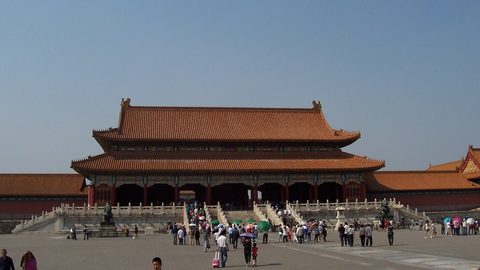 Forbidden City
 tickets require booking seven days ahead on WeChat with a passport. Here is the route to take once you are inside to avoid wasting the visit.
Forbidden City
Forbidden City tickets require booking seven days ahead on WeChat with a passport. Here is the route to take once you are inside to avoid wasting the visit.
-
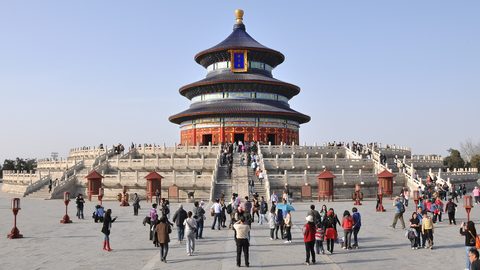 Temple of Heaven
The Temple of Heaven park matters as much as the temple. Morning tai chi, choirs, and card players make it a Beijing ritual worth a full morning.
Temple of Heaven
The Temple of Heaven park matters as much as the temple. Morning tai chi, choirs, and card players make it a Beijing ritual worth a full morning.
-
 Summer Palace
The Summer Palace is vast and the wrong entrance adds an hour of walking. Use the East Palace Gate and plan for at least four hours.
Summer Palace
The Summer Palace is vast and the wrong entrance adds an hour of walking. Use the East Palace Gate and plan for at least four hours.