Where To Sleep In Dongcheng When The Location Premium Actually Matters
Dongcheng hotels put you walking distance from the Forbidden City and hutong lanes, but courtyard charm often means thin walls and small rooms.
What the Location Premium Actually Buys You
A room inside a converted siheyuan courtyard hotel on a lane off Nanluoguxiang costs you ¥700 to ¥2,000 per night. A room in a chain hotel a short walk from the Forbidden City ticket entrance costs ¥1,000 to ¥2,500. Both sit inside Dongcheng district, and both put you inside the Second Ring Road. The difference is not proximity to the sights. It is what you are willing to trade for atmosphere. Decide whether the Dongcheng premium is worth paying for your trip.
Your Decision Between Atmosphere and Reliability
Dongcheng is the imperial core of Beijing. The Forbidden City, Jingshan Park, the Drum and Bell Towers, the main shopping artery, and the surviving hutong lanes all fall inside its boundary. It is also the most expensive place to sleep in the city. A hotel of equivalent star rating twenty minutes out on Line 2 costs far less, landing between ¥300 and ¥600 per night. You pay for the walkable radius. The question is which radius you actually need.
Courtyard Hotels Near the Drum Tower
A courtyard hotel near the Drum Tower or Nanluoguxiang puts you inside the hutong network. Your room, 12 to 20 square metres, opens directly onto a central courtyard that doubles as the hotel common area. The walls are original brick and timber. Sound transmission is normal. There is almost never a lift. Winter heating is radiator or split AC, and bathrooms and courtyards are cold. Taxis cannot enter the lane; expect a 100 to 500 metre walk from the nearest main road with your luggage. These properties suit couples, solo travellers, photographers, and repeat China visitors who want a heritage setting. They are unsuited to guests with large luggage, mobility limitations, light sleepers, or winter stays.
Chain Hotels on the Main Commercial Strip
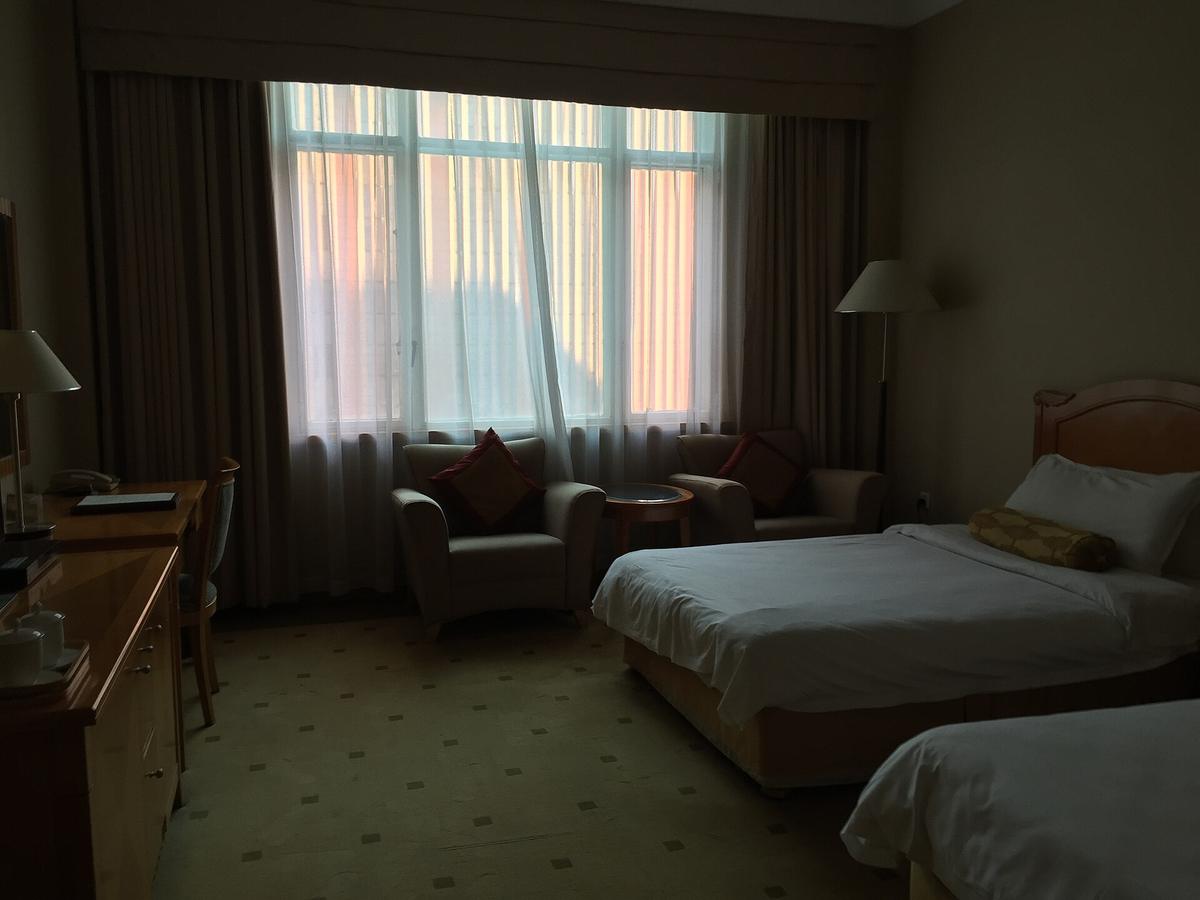
A chain hotel near the main shopping district offers the opposite. Consistent room size, working lifts, double glazing on Second Ring Road sides, reliable hot water, and front desk staff who are used to foreign passports. The tradeoff is zero cultural character. You sleep in a room that could be in any global business district. But you also sleep. The soundproofing is better, the heating works in winter, and you do not walk 500 metres with a suitcase.
.JPG)
How the Walking Distance Breaks Down for Each Option
Courtyard Hotels Near the Drum Tower and Nanluoguxiang
From a courtyard hotel at Gulou or Nanluoguxiang, you can walk to the Drum and Bell Towers in under ten minutes. Jingshan Park is a fifteen minute walk. The park opens at 06:30 year round, which means you can reach Wanchun Pavilion before sunrise for the view over the Forbidden City. You are also inside the hutong grid for early morning walks before the crowds arrive. The tradeoff is the Forbidden City itself. The nearest entrance is a 25 to 35 minute walk or a short taxi ride. The Forbidden City opens at 08:30. If you want to be at the gate by 08:15, leave your courtyard room by 07:30 and account for the walk to a main road where a taxi can pick you up.
Chain Hotels on the Commercial Strip
The hotel cluster on the main shopping avenue includes the Hilton Beijing Wangfujing, The Peninsula Beijing, Mandarin Oriental Wangfujing, Novotel Beijing Peace, and Sunworld Dynasty Hotel Beijing Wangfujing. From any of these, the Forbidden City entrance is a five to ten minute walk. Leave your room at 08:00 and be at the ticket gate by 08:15. Tiananmen Square is the same distance. The street itself offers snack stalls and big brand flagships, useful for late night food but not for atmosphere. The Dongdan group, including Legendale Hotel Beijing and Howard Johnson Paragon Hotel Beijing Central, sits five minutes south and offers similar proximity. Neither location gives you hutong access. You have to take a taxi or metro to reach the lanes.
The Dongzhimen Alternative
Dongzhimen sits at the northeastern edge of Dongcheng. The hotels there, including Ascott Raffles City Beijing and East Beijing, attach directly to the Dongzhimen Airport Express station. The train to Beijing Capital International Airport takes 25 minutes to Terminal 3 and 20 minutes to Terminal 2, running from 06:00 to 22:30, and costs ¥25. Dongzhimen is also the start of Ghost Street, Gui Jie, where many restaurants operate 24 hours or until 04:00. The tradeoff is that Dongzhimen is a business tower area. You are not walking to the Forbidden City from here. You need the metro or a taxi, roughly 20 minutes. This location works best for travellers with an early flight or a late restaurant agenda, not for sightseeing on foot.
Beijing Hutong Courtyard Hotel: What You Actually Get for ¥700 to ¥2,000
A siheyuan courtyard hotel in Dongcheng is a converted quadrangle residence. The central courtyard is the shared space. Rooms open directly onto it. The construction is original brick and wood. Sound transmission is a real problem. If your neighbour speaks at normal volume, you hear it. If they flush the toilet at 02:00, you hear that too. Bathrooms are compact, and in winter the bathroom floor is cold even with the radiator running. Some larger converted properties have added small lifts, but this is rare. Most courtyard hotels have no lift at all. The staircases are narrow and steep.
The Foreign Guest Licence Requirement
These hotels require a foreign guest licence to accept non Chinese nationals. Not all small hutong guesthouses hold this licence. Confirm with the hotel directly before booking. The booking platform listing may not state the licence status. If you arrive with a reservation at an unlicensed property, the hotel cannot check you in. You then need to find a room at a licensed hotel on the same night, which in peak season between April and May or September and October means paying whatever is available.
Who Should Book a Courtyard Hotel
The guest profile for these properties tends toward couples, solo travellers, and photographers who have visited China before and want a heritage setting. If this is your first trip to Beijing, the language friction is higher at a courtyard hotel. The front desk may not speak English. Payment is through Alipay or WeChat Pay, not cash or international cards. The local friction of public toilets that are squat style and may lack soap or toilet paper, the need to carry your passport daily for entry to Tiananmen Square and the Forbidden City, and the routine security checks at metro stations all feel harder when your hotel base has no lift, no double glazing, and no one who can explain the metro exit letters in English.
Chain Hotel Location: Why the Commercial Strip Wins for Practicality
The chain hotel location on the main shopping avenue is the most practical base in Dongcheng for a first time visitor. From a hotel here, walk to the Forbidden City entrance in under ten minutes. Walk to Tiananmen Square in the same time. You are on a wide commercial street with metro access, taxis, and restaurants that accept foreign cards. The rooms are 25 to 40 square metres, not 12 to 20. Lifts exist. The heating works. The windows have double glazing. The front desk holds your passport in the safe and returns it when you need it for sight entry.
The downside is that this is a shopping street. It is not atmospheric. The snack stalls are tourist oriented. The hutong lanes are a taxi ride away. You do not get the early morning experience of stepping out of a courtyard into a quiet lane before the city wakes. You get a wide road with buses and delivery scooters. If atmosphere matters more to you than convenience, choose the courtyard. If convenience matters more than atmosphere, choose the chain hotel on the commercial strip.
Forbidden City Hotel Walking Distance: the Real Number You Need
The Forbidden City hotel walking distance claim matters only if you are willing to leave early. The Forbidden City opens at 08:30 year round. Last entry is 16:00 from April to October and 15:30 from November to March. It is closed on Mondays except national holidays. The ticket reservation system requires booking one to seven days ahead. If you have a courtyard hotel near Gulou, the walk to the Forbidden City gate is roughly 30 minutes. If you have a chain hotel on the commercial strip, the walk is five to ten minutes. That 20 minute difference translates to leaving your room at 08:00 instead of 07:30. Over four days, that saves you two hours of waking up earlier.
The same calculus applies to Jingshan Park. From a Gulou courtyard hotel, walk 15 minutes to the park entrance. From a chain hotel on the commercial strip, walk 20 minutes. But Jingshan Park opens at 06:30 year round and the Wanchun Pavilion sunrise view is accessible before sunrise. If you want that view, the courtyard hotel is closer. If you want the Forbidden City at opening, the chain hotel is closer. Pick the sight that matters more to you and let that decide your base.
Dongcheng Hotel Price: When the Premium is and is Not Worth it
A Dongcheng hotel price between ¥600 and ¥1,200 for a midrange room is the baseline for staying inside the imperial core. For that money you get a licensed chain hotel, likely in the Dongdan or Dongzhimen groups, with a lift, working heating, and a front desk that handles foreign passports. The premium over a comparable hotel twenty minutes out on Line 2, which costs ¥300 to ¥600, is steep. You pay that premium to avoid 20 minutes of metro each way per sight.
The premium for a siheyuan courtyard hotel, ¥700 to ¥2,000, buys atmosphere at the cost of convenience. You pay more for a smaller room, no lift, cold bathrooms in winter, and a walk to a taxi. That premium is worth it if you are a photographer, a solo traveller, or a repeat China visitor who has already seen the imperial sights and wants the hutong experience. It is not worth it if you are a first time visitor with four days, large luggage, or a low tolerance for cold showers and thin walls.
The Hostel Middle Ground
For travellers who need the location premium but do not want the courtyard tradeoffs, the Nanluoguxiang hostel cluster offers a middle option. Private doubles at properties like The Orchid Hotel and Peking Yard Hostel run ¥250 to ¥450 per night. Dorm beds run ¥80 to ¥150. These are not siheyuan conversions. They are boutique hostels in converted buildings with lifts, working heating, and licensed foreign guest status. They sacrifice the full courtyard experience but keep the hutong location and reduce the price. This is the pragmatic choice for most first time visitors who want to stay in the lanes without the cold bathroom.
Common Questions
What is the difference between a siheyuan courtyard hotel and a chain hotel in Dongcheng?
A siheyuan courtyard hotel is a converted quadrangle residence with original brick and wood walls, rooms of 12 to 20 square metres, no lift, radiator or split AC heating, and a central courtyard as common space. A chain hotel on the main commercial strip has 25 to 40 square metre rooms, lifts, double glazing, reliable heating, and a front desk that handles foreign passports. The courtyard hotel has atmosphere but thin walls and cold bathrooms. The chain hotel has consistency but zero character.
Which Dongcheng hotel is closest to the Forbidden City?
Hotels on the main commercial avenue, including the Hilton Beijing Wangfujing, The Peninsula Beijing, Mandarin Oriental Wangfujing, Novotel Beijing Peace, and Sunworld Dynasty Hotel Beijing Wangfujing, are a five to ten minute walk from the Forbidden City ticket entrance. Hotels in the Dongdan area are a ten minute walk. Courtyard hotels near Gulou or Nanluoguxiang are a 25 to 35 minute walk.
Do courtyard hotels in Dongcheng accept foreign guests?
Not all of them. All hotels in Beijing must hold a foreign guest licence to accept non Chinese nationals. Some small hutong guesthouses are unlicensed. Confirm with the hotel directly before booking. The booking platform listing may not state the licence status.
How much does a Dongcheng hotel cost per night?
Midrange Dongcheng hotels cost ¥600 to ¥1,200 per night. International chain hotels on the main commercial strip cost ¥1,000 to ¥2,500. Siheyuan courtyard hotels cost ¥700 to ¥2,000. Private doubles in the Nanluoguxiang hostel cluster cost ¥250 to ¥450. Dorm beds cost ¥80 to ¥150. These figures are based on 2024 data from the China National Tourism Administration annual star rating inspection, and prices change year to year.
Is it better to stay in a courtyard hotel or a chain hotel on the commercial strip for a first visit?
For a first visit, a chain hotel on the commercial strip is the better choice. You get reliable heating, lifts, double glazing, English speaking front desk staff, and a short walk to the Forbidden City. The tradeoff is zero cultural atmosphere. The courtyard hotel is better for repeat visitors, photographers, and solo travellers willing to trade convenience for heritage setting.
How far in advance should I book a Dongcheng hotel?
Book one to two months ahead for April to May and September to October, which are peak seasons with clear skies, manageable temperatures, and peak hotel prices. For Chinese New Year in late January to February, book three months ahead. National Day week from 1 to 7 October is crushingly crowded; avoid it if possible.
Can I walk to the hutong lanes from a hotel on the commercial strip?
Not directly. You need a taxi or metro to reach the hutong lanes from the commercial strip. The nearest hutong area is a 15 minute taxi ride. The chain hotel location gives you proximity to the imperial sights and shopping street, not to the hutong network.
Read next
-
 Dongcheng District Things to Do Walking from the Imperial Core of Beijing
Plan a walkable Dongcheng itinerary from the Forbidden City's north gate through Jingshan Park and into the hutong alleys, all within Beijing's imperial core.
Dongcheng District Things to Do Walking from the Imperial Core of Beijing
Plan a walkable Dongcheng itinerary from the Forbidden City's north gate through Jingshan Park and into the hutong alleys, all within Beijing's imperial core.
-
 Eating in Dongcheng From Roast Duck Courtyards to Wangfujing Snack Streets
Find Beijing's full food spectrum in Dongcheng, from Siji Minfu roast duck near Dengshikou to hutong courtyard noodles and the Wangfujing snack street stalls.
Eating in Dongcheng From Roast Duck Courtyards to Wangfujing Snack Streets
Find Beijing's full food spectrum in Dongcheng, from Siji Minfu roast duck near Dengshikou to hutong courtyard noodles and the Wangfujing snack street stalls.
-
 China Travel Guide for First-Timers Who Plan Ahead
China rewards travellers who plan apps, payments, trains, and tickets before arrival. Start with the four obstacles and the pages that solve them.
China Travel Guide for First-Timers Who Plan Ahead
China rewards travellers who plan apps, payments, trains, and tickets before arrival. Start with the four obstacles and the pages that solve them.
-
 China Visa-Free Transit and Unilateral Entry Rules Explained
China visa-free transit and unilateral entry rules change often. Here is how they work now, who qualifies, and what breaks a stay.
China Visa-Free Transit and Unilateral Entry Rules Explained
China visa-free transit and unilateral entry rules change often. Here is how they work now, who qualifies, and what breaks a stay.
-
 Cash to Cashless in China What First-Timers Must Set Up
China runs on Alipay and WeChat Pay, and cash is often refused. Set up both with a foreign card before you land or risk being stranded.
Cash to Cashless in China What First-Timers Must Set Up
China runs on Alipay and WeChat Pay, and cash is often refused. Set up both with a foreign card before you land or risk being stranded.
-
 Will Google, WhatsApp and Maps Actually Work on a China eSIM
A China eSIM solves data but not the firewall. Here is what actually works for Google, WhatsApp and Maps and why a VPN still matters.
Will Google, WhatsApp and Maps Actually Work on a China eSIM
A China eSIM solves data but not the firewall. Here is what actually works for Google, WhatsApp and Maps and why a VPN still matters.
-
 Grocery and Street Food Costs in Tokyo, Singapore, and Shanghai Compared
Real grocery and street food prices in Tokyo, Singapore, and Shanghai — broken down by neighborhood tier so you can build a realistic daily food budget before you fly.
Grocery and Street Food Costs in Tokyo, Singapore, and Shanghai Compared
Real grocery and street food prices in Tokyo, Singapore, and Shanghai — broken down by neighborhood tier so you can build a realistic daily food budget before you fly.
-
 What Japan, China, and Singapore Actually Cost Independent Travelers
Real per-day costs for Japan, China, and Singapore broken down by accommodation tier, food strategy, transit, and connectivity for independent travelers.
What Japan, China, and Singapore Actually Cost Independent Travelers
Real per-day costs for Japan, China, and Singapore broken down by accommodation tier, food strategy, transit, and connectivity for independent travelers.
-
 What Most Travelers Get Wrong When Booking Flights to East Asia
Most travelers book East Asia flights on price alone. Here's what they miss about route gaps, fleet age, and aircraft type on 10-14 hour hauls.
What Most Travelers Get Wrong When Booking Flights to East Asia
Most travelers book East Asia flights on price alone. Here's what they miss about route gaps, fleet age, and aircraft type on 10-14 hour hauls.