Shopping the Qianmen Streets South of Tiananmen
Navigate Qianmen shopping with a guide to Dashilan's genuinely old brands and the restored facades on Qianmen Street, so you know what is real.
Qianmen Street vs Dashilar Lane: Real Heritage and Restored Facades
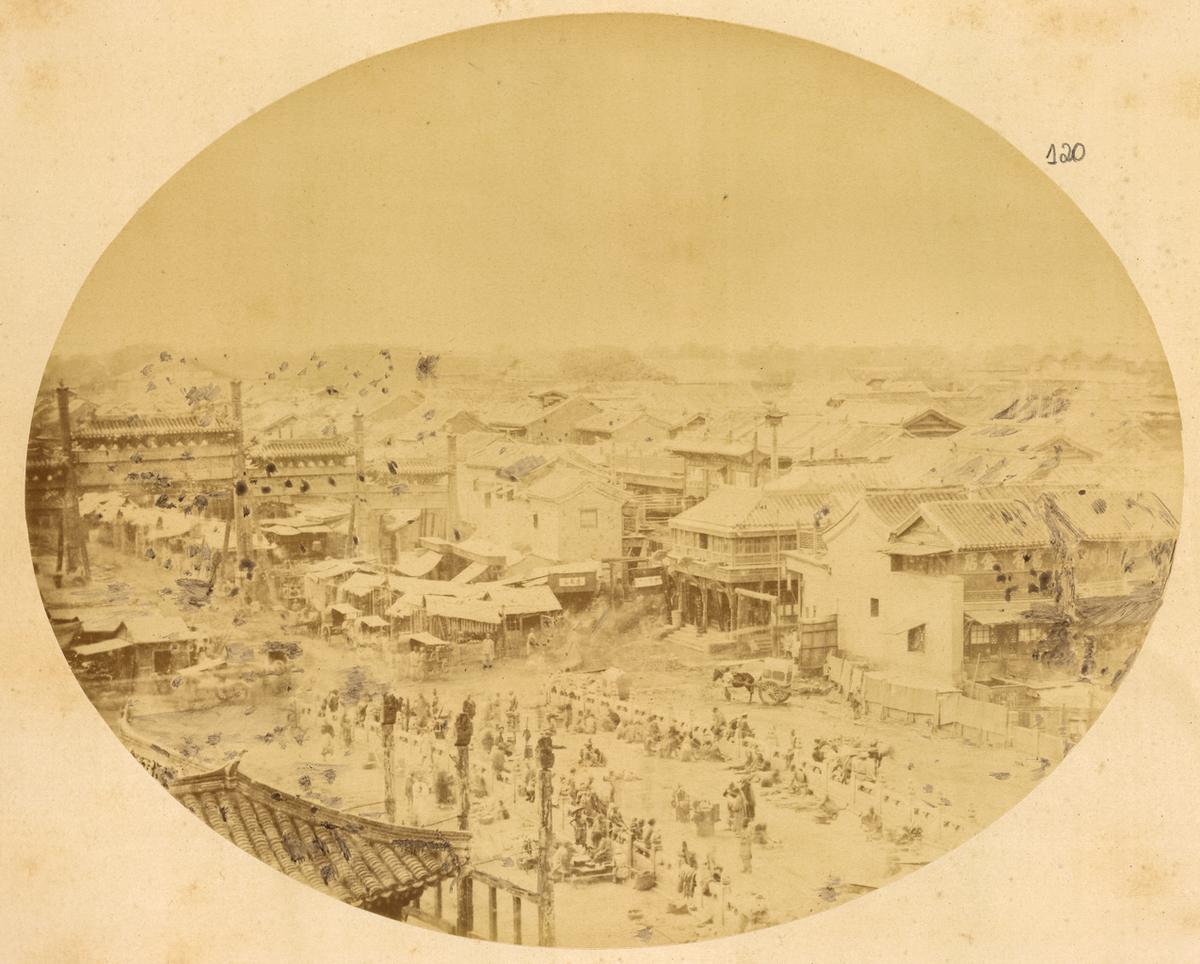
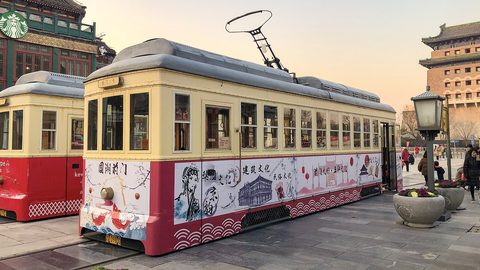
The Dangdang Che tram clangs its brass bell along 840 metres of rebuilt Qing dynasty shopfronts. Every facade is brand new. The 2008 restoration of Qianmen Street gave Beijing a pedestrian mall that looks old but opens as Zara, Uniqlo, and Starbucks. Walk 275 metres west into the side lane called Dashilar, and the veneer cracks. The shops there are genuinely old, some dating to the Ming dynasty, and they never left. The real ones stand out once you know the signs that separate a 1530 pickle shop from a 2008 facsimile.
Seven out of ten storefronts on the main pedestrian strip are national or international chains, according to 2024 commercial surveys. The lane, by contrast, is 80 percent independent shops. That ratio is your first filter. Want a pair of handmade cloth shoes that takes three months to produce? Head into the lane. Want bubble tea? Stay on the main drag.
._Bridge_of_Beggars_is_in_the_Foreground._China,_1874_WDL2110.png)
How to Tell Real from Rebuilt
Three Physical Clues
Three physical clues separate the authentic shops from the restaged ones.
- Materials. Real old shops use unpainted wood or weathered lacquer. Rebuilt facades on Qianmen Street use painted MDF and plastic beams. Touch the window frame. If it feels hollow, it is a 2008 copy.
- Depth. A genuine shop runs deep, often 30 to 50 metres into the block, with multiple courtyards behind. Rebuilt storefronts are shallow, 10 metres at most, with a back wall that meets the next chain store. Look through the doorway. See a service counter 5 metres from the street? It is a set.
- Upstairs. Real shops have an upper floor for storage or family quarters. Facsimiles have a second floor that is a stockroom, not a working space. Tongrentang and Liubiju both have upstairs rooms used by staff for preparation, visible through the glass.
Spotting Mass-Produced Goods
Moulded plastic packaging with uniform pricing and a 'Made in Yiwu' label is your cue that the item was mass produced. Handmade items have an irregular finish, a shop-specific stamp or wax seal, and a negotiable price. Bargain at independent stalls on the lane. Do not bargain at state-owned historic shops. Tongrentang, Liubiju, and Ruifuxiang have fixed prices. Period. At other stalls, make your first counter offer at 30 to 40 percent of the asking price.
The Five Shops That Never Closed
Five businesses on this lane have been operating from the same address since before the 1900 Boxer Rebellion. These are not recreations. They are the originals.
- Liubiju Pickle Shop, No. 3. Founded in 1530, it is the oldest surviving shop on the lane. The pickles ferment in earthenware vats in the basement. Open 09:00 to 19:00. Buy the sesame paste and the sweet cucumber strips.
- Tongrentang Pharmacy, No. 24. Founded in 1669. The clinic on the second floor still dispenses traditional prescriptions written by staff doctors. Open 08:30 to 20:30.
- Ruifuxiang Silk Shop, No. 5. Founded in 1862. Silk by the metre costs CNY 80 to 600 depending on the weight and weave. They cut to order. Do not buy silk anywhere else on this lane.
- Zhang Yiyuan Tea House, No. 22. Founded in 1900. Their jasmine tea costs CNY 60 to 800 per 500 grams. The cheapest grade is fine for casual drinking. Buy the top grade as a gift.
- Neiliansheng Shoe Shop, No. 34. Founded in 1853. Handmade cloth-soled shoes cost CNY 300 to 800. A single pair takes three months to produce because the sole is built from dozens of layers of cotton cloth, stitched and pounded flat by hand. They keep a backlog of orders for months.
| Feature | Authentic Dashilar Shop | Rebuilt Qianmen Street Shop |
|---|---|---|
| Building depth | Deeper than 30 metres with rear courtyards | Shallower than 10 metres, back wall immediately visible |
| Upstairs use | Working space for preparation or storage | Empty or used for chain-store stock |
| Window materials | Weathered wood, hand-painted signage | Painted MDF, plastic trim, backlit signage |
| Packaging | Paper wrapping, shop seal, handwritten label | Moulded plastic, barcode, uniform price tag |
| Bargaining | Accepted at independent stalls, not at historic shops | Not accepted (fixed-price chains) |
When to Go and What it Costs
Opening Hours and the Tram
The lane opens 09:00 to 21:00. Liubiju closes earliest at 19:00. Neiliansheng closes at 20:30. Tongrentang closes at 20:30. Arrive before 10:00 to have the lane uncrowded. The tram on Qianmen Street, the Dangdang Che, runs 08:30 to 22:00 in summer and 09:00 to 21:00 in winter. A one-way fare for the 840-metre ride was CNY 50 in 2024. That price is set by the Beijing municipal transport bureau and may rise annually. The tram is a replica of the 1924 Beijing streetcar. It is not the fastest way to move. It is a novelty ride lasting about 90 seconds.
If The Historic Shop Is Closed Or Sold Out
Arrive after 19:00 and Liubiju will be shut. Tongrentang remains open until 20:30. Neiliansheng until 20:30. If Neiliansheng has no shoes in your size and the backlog is months long, skip the fake 'traditional shoe' shops on the main pedestrian strip. They sell machine-stitched copies with moulded rubber soles for half the price. They will fall apart in three months. Instead, buy a sealed tin of Zhang Yiyuan jasmine tea as a reliable fallback gift. The shop keeps stock for walk-in customers until 19:00.
Get the Right Entrance
Use Qianmen Station on Line 2, Exit C, for the north end of the main strip. Use Zhushikou Station on Line 7, Exit A, for the south end. Enter from the north, walk south for 500 metres, then turn right into the lane. That 275-metre lane contains all five authentic shops. The main pedestrian street has none of them.
Common Questions
How long is Qianmen Street?
It is 840 metres from Qianmen Arrow Tower to Zhushikou. The tram covers the same route one way.
How long is Dashilar Street?
Dashilar is 275 metres long, running west from Qianmen Street.
Which is the oldest shop on Dashilar?
Liubiju Pickle Shop, founded in 1530 during the Ming dynasty, is the oldest.
Can I bargain at Tongrentang or Liubiju?
No. These are state-owned historic shops with fixed prices. Bargaining is only accepted at independent stalls on Dashilar.
What is the tram fare?
A one-way fare was CNY 50 in 2024, set by the Beijing municipal transport bureau. It runs 08:30 to 22:00 in summer and 09:00 to 21:00 in winter.
What does 'Made in Yiwu' mean?
It means the item was mass produced in China's largest wholesale market for plastic goods and souvenirs. It is not handmade and not specific to Beijing.
What should I buy from Neiliansheng?
A pair of handmade cloth-soled shoes. They cost CNY 300 to 800. They take three months to make and are worth the wait.
Read next
-
 Eating at Qianmen The Old Restaurants South of Tiananmen Square
Find the old Beijing restaurants around Qianmen that have served roast duck, zhajiangmian, and copper-pot mutton for over a century.
Eating at Qianmen The Old Restaurants South of Tiananmen Square
Find the old Beijing restaurants around Qianmen that have served roast duck, zhajiangmian, and copper-pot mutton for over a century.
-
 Qianmen Things to Do Beyond the Rebuilt Street
Qianmen's main street is a rebuild, but the lanes behind it still hold old Beijing food, brands, and morning rituals worth finding.
Qianmen Things to Do Beyond the Rebuilt Street
Qianmen's main street is a rebuild, but the lanes behind it still hold old Beijing food, brands, and morning rituals worth finding.
-
 China Travel Guide for First-Timers Who Plan Ahead
China rewards travellers who plan apps, payments, trains, and tickets before arrival. Start with the four obstacles and the pages that solve them.
China Travel Guide for First-Timers Who Plan Ahead
China rewards travellers who plan apps, payments, trains, and tickets before arrival. Start with the four obstacles and the pages that solve them.
-
 China Visa-Free Transit and Unilateral Entry Rules Explained
China visa-free transit and unilateral entry rules change often. Here is how they work now, who qualifies, and what breaks a stay.
China Visa-Free Transit and Unilateral Entry Rules Explained
China visa-free transit and unilateral entry rules change often. Here is how they work now, who qualifies, and what breaks a stay.
-
 Cash to Cashless in China What First-Timers Must Set Up
China runs on Alipay and WeChat Pay, and cash is often refused. Set up both with a foreign card before you land or risk being stranded.
Cash to Cashless in China What First-Timers Must Set Up
China runs on Alipay and WeChat Pay, and cash is often refused. Set up both with a foreign card before you land or risk being stranded.
-
 Will Google, WhatsApp and Maps Actually Work on a China eSIM
A China eSIM solves data but not the firewall. Here is what actually works for Google, WhatsApp and Maps and why a VPN still matters.
Will Google, WhatsApp and Maps Actually Work on a China eSIM
A China eSIM solves data but not the firewall. Here is what actually works for Google, WhatsApp and Maps and why a VPN still matters.
-
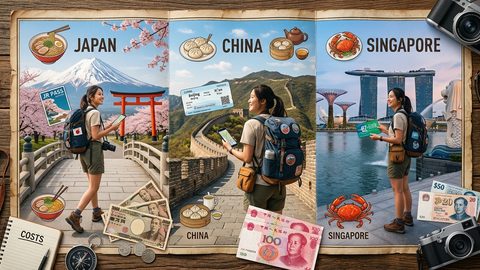 What Japan, China, and Singapore Actually Cost Independent Travelers
Real per-day costs for Japan, China, and Singapore broken down by accommodation tier, food strategy, transit, and connectivity for independent travelers.
What Japan, China, and Singapore Actually Cost Independent Travelers
Real per-day costs for Japan, China, and Singapore broken down by accommodation tier, food strategy, transit, and connectivity for independent travelers.
-
 What Most Travelers Get Wrong When Booking Flights to East Asia
Most travelers book East Asia flights on price alone. Here's what they miss about route gaps, fleet age, and aircraft type on 10-14 hour hauls.
What Most Travelers Get Wrong When Booking Flights to East Asia
Most travelers book East Asia flights on price alone. Here's what they miss about route gaps, fleet age, and aircraft type on 10-14 hour hauls.
-
 The Honest Cost of Mobile Data in Japan, China, and Singapore
Real price data for SIMs, pocket WiFi, and eSIMs in Japan, China, and Singapore. Plus the friction points most travel guides quietly skip.
The Honest Cost of Mobile Data in Japan, China, and Singapore
Real price data for SIMs, pocket WiFi, and eSIMs in Japan, China, and Singapore. Plus the friction points most travel guides quietly skip.