Things to Do in Asakusa Beyond the Main Temple Approach
Asakusa is about timing. When to visit Senso-ji for stillness, which backstreets to wander, and the retro amusement park and garden most visitors miss.
Asakusa Senso-Ji at 7:00 AM
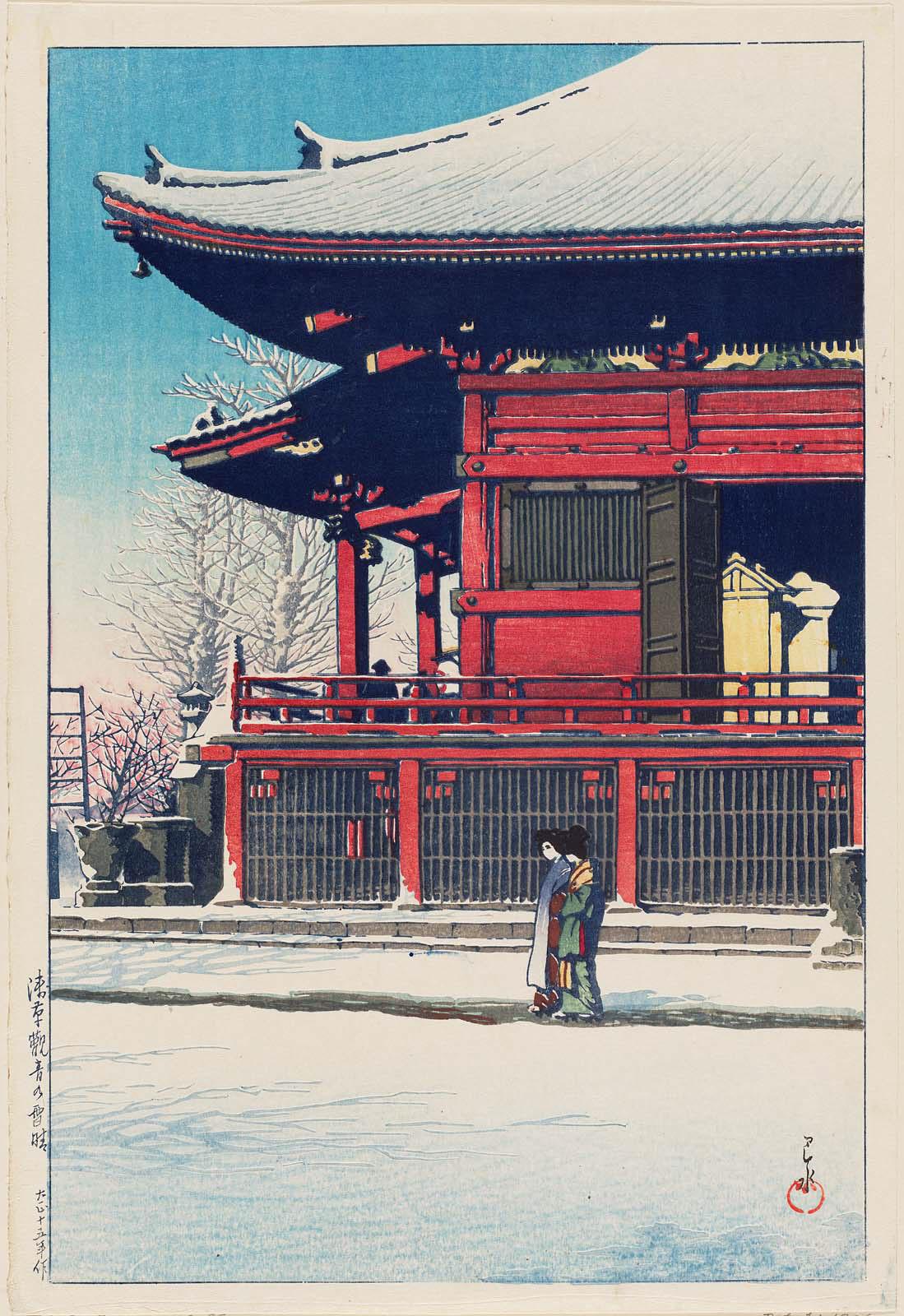
Senso-ji's temple grounds are open 24 hours daily, but the main hall opens at 6:00 (October through March) or 6:00 (April through September). Arrive at 7:00 and you have the courtyard almost to yourself. By 10:00, the 250-metre Nakamise-dori is a wall of bodies. The difference is not subtle. At 7:00, the incense burner in front of the main hall is already lit and self-service. Perform the Jokoro ritual, wafting smoke toward whichever body part needs healing, without waiting in line. The Chozuya water pavilion for the Temizu purification ritual is also empty. Omikuji fortune stalls cost ¥100 per draw, and Senso-ji is known for a higher bad-fortune ratio than other temples. If you draw a bad one, fold the strip and tie it to the designated metal wire rack near the stall. The giant Kaminarimon lantern is 3.9 metres tall and weighs 700 kilograms, with Fujin the wind god on the right and Raijin the thunder god on the left. The Hozomon gate holds 4.5-metre long waraji sandals weighing 400 kilograms each, guarded by the Nio guardian kings. You can see all of this before most tourists have finished breakfast.
The Backstreets Behind the Temple
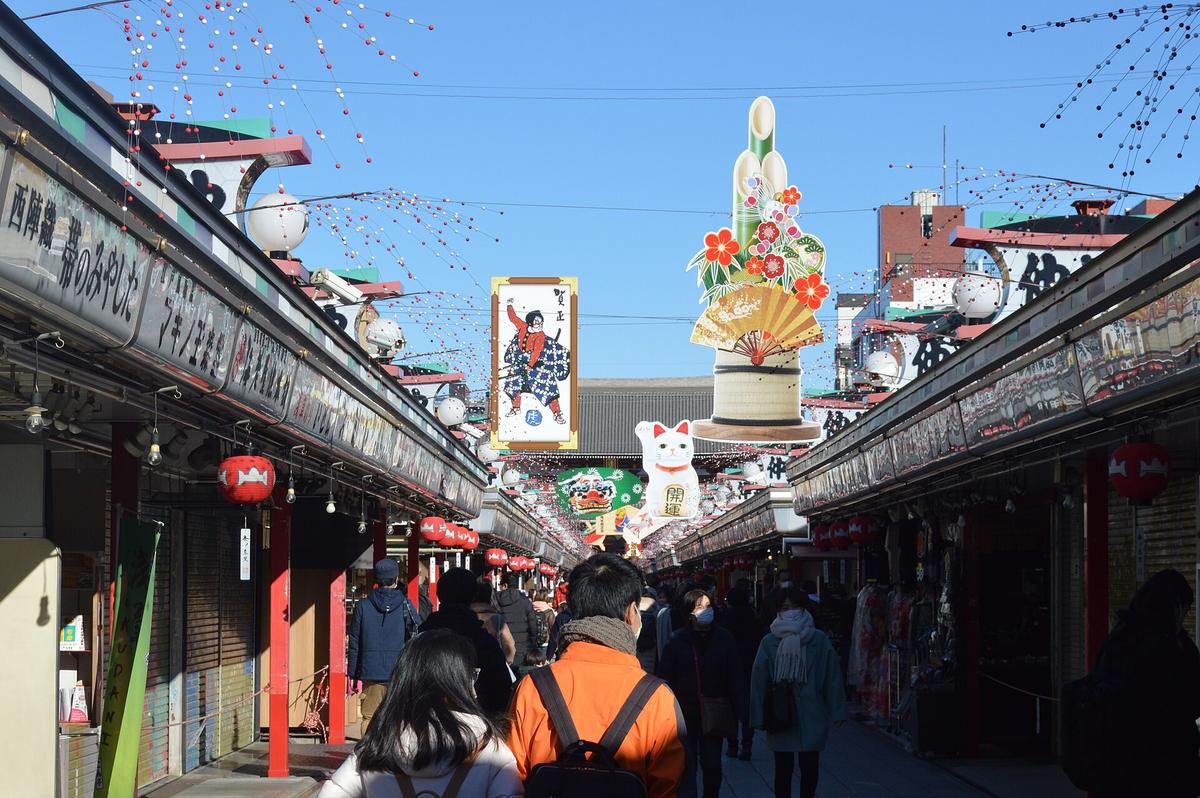
Once the crowds arrive, the obvious route is Nakamise-dori (founded 1685) straight to the main hall. That is the 10:00 crush. Instead, turn left or right before the Hozomon gate and walk into the backstreets. Denboin-dori runs about 200 metres behind the temple grounds with Edo-period style paving, persimmon trees, and traditional shops. Most shops open at 10:00 and close at 18:00, but many close irregularly, some on Wednesdays or Thursdays, so the street is quieter and less commercial than Nakamise-dori. If the shops are shut, the street itself and the paving are still accessible.
Denpoin Garden: Limited Opening Days
The Denpoin garden, attached to the temple's administrative headquarters, opens to the public only a few days each year, usually in spring and autumn. Check the official Senso-ji website before you go; it is not open on a daily or even weekly schedule. On the rare days it is open, arrive by 9:30 to avoid queuing for entry. The garden is a dry-landscape karesansui design, not a strolling garden. Expect contemplation rather than a walk. When it is closed, the garden is invisible from the street.
Hanayashiki: Japan's Oldest Amusement Park
Hanayashiki opened in 1853 and is Japan's oldest amusement park. It sits a few minutes west of Senso-ji's grounds. Adult admission is ¥1,000 (2026 rate published by the park), and a free pass covering all 20 attractions is ¥2,500. The signature ride, Bee Tower, is a rotating observation lift that gives a view over the temple roofs. The park opens at 10:00 and closes at 18:00, but it is closed on some Tuesdays. If you have children aged 5 to 11, child admission is ¥500 and the child free pass is ¥2,200. The park is compact and retro; skip it if you expect modern thrill rides. For a quick, cheap view of the area, the Bee Tower is better value than a rickshaw ride.
Hoppy Street and Rokku Broadway
Hoppy Street is an izakaya alley west of Senso-ji near Asakusa Engei Hall. The name comes from the low-alcohol beer substitute called hoppy, which costs ¥300 to ¥500 per glass. Outdoor seating runs along the narrow lane, and the street is liveliest from 17:00 onward. The covered shopping arcade Rokku Broadway runs between Senso-ji and Kappabashi, with old-school shops selling street food, second-hand kimono, and kitchen tools. Both are walkable in under ten minutes from the temple. If Nakamise-dori is shoulder-to-shoulder, Hoppy Street at lunchtime is calm, and Rokku Broadway at 14:00 is near empty.

Sumida River Cruise and Tokyo Skytree Timing
The Asakusa Pier at Azumabashi Bridge runs Tokyo Cruise (Suijo Bus) services south toward Hamarikyu Gardens and Odaiba. The one-way fare to Hamarikyu is ¥1,200 (adult, 2026 rate from Tokyo Metropolitan Park Association) and the journey takes about 35 minutes. To Odaiba, the fare is ¥1,560 and takes about 60 minutes. First departure from Asakusa is 10:00, last departure is 17:20; both vary by season and route. Board before noon to get a window seat on the right side for the best view of the Skytree. If the queue at Asakusa Pier is longer than 20 people, walk to the next stop upstream at Hinode Pier. Same operator. Often less crowded. The failure case: if the last boat has left, cross Azumabashi Bridge on foot instead. The Sumida River is about 160 metres wide at that point, and the bridge is a straight 15- to 20-minute walk from Senso-ji to the base of Tokyo Skytree. That walk costs nothing.
Skytree Without the Queue
Tokyo Skytree stands 634 metres tall, 1.2 kilometres from Senso-ji. The Tembo Deck at 350 metres costs ¥2,100 on weekdays and ¥2,300 on weekends and holidays (2026 rates). The Tembo Galleria combo ticket at 450 metres costs ¥3,100 on weekdays and ¥3,400 on weekends and holidays. Opening hours are 8:00 to 22:00, last entry at 21:00. Arrive at 8:00 for the first entry and you skip the midday queue. Do not buy a ticket from a third-party reseller on the street near Kaminarimon; buy direct at the Skytree ticket counter or on the official website. The walk from Senso-ji across Azumabashi Bridge takes 15 to 20 minutes and gives a full-length view of the tower you would miss from the cruise.
| Option | Best Time | Cost | Crowd Level at Best Time |
|---|---|---|---|
| Senso-ji Grounds and Main Hall | 7:00-8:00 (grounds open 24h, hall opens 6:00) | Free; ¥100 for omikuji | Very low; fewer than 50 people |
| Denboin-dori and Backstreets | 9:00-10:00 (shops open 10:00, some closed Wed/Thu) | Free to walk | Low; fewer than 30 people |
| Sumida River Cruise to Hamarikyu | First departure 10:00, board by 10:15 | ¥1,200 adult one-way (2026 rate) | Moderate; queue under 10 min at 10:00 |

What You Should Actually Do with Your Morning in Asakusa
Walk to Senso-ji by 7:00. Perform the Temizu ritual at the Chozuya, draw an omikuji fortune, and stand at the incense burner for the Jokoro ritual. Spend 20 minutes in the main hall if it is open. By 7:45, the first tour groups will arrive. Leave the temple grounds and explore Denboin-dori while it is still quiet. If you want to see the Denpoin garden and it is one of its rare open days, arrive at 9:00 for entry. At 10:00, Hanayashiki opens. The ¥1,000 admission is worth it for the Bee Tower observation ride alone, but skip the free pass unless you plan to stay two hours. By 11:00, Nakamise-dori will be dense enough that you should avoid it entirely. If you need souvenirs, buy them on Denboin-dori before 10:00. For lunch, Hoppy Street opens around 11:30, and many izakaya serve grilled skewers and hoppy for ¥500. If you want a river cruise, the 10:00 departure is the quietest. If you want the Skytree, the 8:00 first entry is the quietest. The one thing that goes wrong most often is timing: visitors arrive at 10:00, walk Nakamise-dori in a crowd, miss the backstreets entirely, and leave thinking Asakusa is just a shopping street with a temple at the end. Do not be that visitor.
Common Questions
Is the main hall of Senso-ji open 24 hours?
No. The temple grounds are open 24 hours daily, but the main hall opens only from 6:00 to 17:00 (October to March) or 6:00 to 18:00 (April to September). The grounds and all outdoor features like the Kaminarimon gate, the Hozomon gate, the incense burner, and the water pavilion are accessible at any hour.
What should I do if I draw a bad fortune from the omikuji?
Fold the paper strip and tie it to the designated metal wire rack near the omikuji stall. Senso-ji is known for a higher bad-fortune ratio than other temples. Leaving the bad fortune at the temple is the traditional practice to avoid taking the bad luck home.
Is the Denpoin garden open every day?
No. The Denpoin garden opens only a few days each year, usually in spring and autumn. You must check the official Senso-ji website for the current schedule before you visit. On days it is not open, there is no public access and the garden cannot be seen from the street.
How much does it cost to ride a rickshaw in Asakusa?
The base fare is ¥3,000 to ¥4,000 per person for a 10-minute ride. A 30-minute ride costs approximately ¥8,000 to ¥10,000 per person, and a 60-minute ride costs approximately ¥15,000 to ¥18,000 per person. These are 2026 rates from operators Ebisuya, Jidaiya, and Asakusa Rickshaw. Book on the spot at Kaminarimon or reserve online.
Can I walk from Senso-ji to Tokyo Skytree?
Yes. The distance is approximately 1.2 kilometres, and walking time is 15 to 20 minutes. The route crosses Azumabashi Bridge over the Sumida River, which is about 160 metres wide at that point. The walk is straightforward and costs nothing.
Read next
-
 Eating in Asakusa Tempura Monjayaki and the Oldest Restaurants in Tokyo
Asakusa's food history runs deeper than most Tokyo neighbourhoods: century-old tempura houses, monjayaki streets, and the soba shops that predate the modern city.
Eating in Asakusa Tempura Monjayaki and the Oldest Restaurants in Tokyo
Asakusa's food history runs deeper than most Tokyo neighbourhoods: century-old tempura houses, monjayaki streets, and the soba shops that predate the modern city.
-
 Japan Travel Guide for First-Timers Who Like Order but Not Crowds
Japan delivers deep tradition and futuristic efficiency, but the language barrier and density of rules can exhaust first-timers. Here is what to actually expect.
Japan Travel Guide for First-Timers Who Like Order but Not Crowds
Japan delivers deep tradition and futuristic efficiency, but the language barrier and density of rules can exhaust first-timers. Here is what to actually expect.
-
 Japan eSIM vs Pocket WiFi vs Physical SIM for Staying Connected
Free public WiFi across Japan is unreliable and slow. Compare eSIM plans from Ubigi and Airalo against renting a pocket WiFi device at Narita or Haneda.
Japan eSIM vs Pocket WiFi vs Physical SIM for Staying Connected
Free public WiFi across Japan is unreliable and slow. Compare eSIM plans from Ubigi and Airalo against renting a pocket WiFi device at Narita or Haneda.
-
 Japan Visa-Free Entry and the Visit Japan Web Digital Form
Visa-free entry covers many nationalities, but the Visit Japan Web digital form and QR codes determine how quickly you clear immigration at Narita or Haneda.
Japan Visa-Free Entry and the Visit Japan Web Digital Form
Visa-free entry covers many nationalities, but the Visit Japan Web digital form and QR codes determine how quickly you clear immigration at Narita or Haneda.
-
 Cash and IC Cards Are the Real Payment System in Japan
Japan projects a high-tech image but many small restaurants, temples, and rural buses demand cash. IC cards like Suica and Icoca bridge the gap for daily spending.
Cash and IC Cards Are the Real Payment System in Japan
Japan projects a high-tech image but many small restaurants, temples, and rural buses demand cash. IC cards like Suica and Icoca bridge the gap for daily spending.
-
 What Japan, China, and Singapore Actually Cost Independent Travelers
Real per-day costs for Japan, China, and Singapore broken down by accommodation tier, food strategy, transit, and connectivity for independent travelers.
What Japan, China, and Singapore Actually Cost Independent Travelers
Real per-day costs for Japan, China, and Singapore broken down by accommodation tier, food strategy, transit, and connectivity for independent travelers.
-
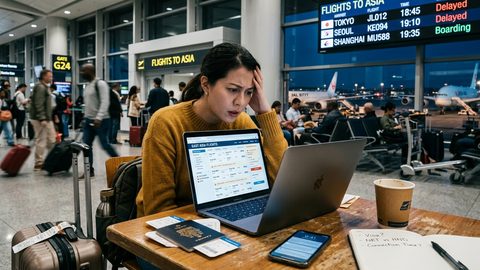 What Most Travelers Get Wrong When Booking Flights to East Asia
Most travelers book East Asia flights on price alone. Here's what they miss about route gaps, fleet age, and aircraft type on 10-14 hour hauls.
What Most Travelers Get Wrong When Booking Flights to East Asia
Most travelers book East Asia flights on price alone. Here's what they miss about route gaps, fleet age, and aircraft type on 10-14 hour hauls.
-
 The Honest Cost of Mobile Data in Japan, China, and Singapore
Real price data for SIMs, pocket WiFi, and eSIMs in Japan, China, and Singapore. Plus the friction points most travel guides quietly skip.
The Honest Cost of Mobile Data in Japan, China, and Singapore
Real price data for SIMs, pocket WiFi, and eSIMs in Japan, China, and Singapore. Plus the friction points most travel guides quietly skip.
-
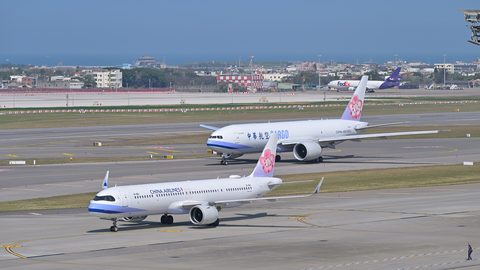 Fifth Freedom Flights Are the Award Sweet Spot Nobody Searches For
Fifth-freedom flights let you fly a foreign airline between two other countries, and they often have award seats when the airline's own hub routes are sold out.
Fifth Freedom Flights Are the Award Sweet Spot Nobody Searches For
Fifth-freedom flights let you fly a foreign airline between two other countries, and they often have award seats when the airline's own hub routes are sold out.