Ueno Park and Its Surrounds Where Tokyos Museums Meet a Market Street
Ueno concentrates Tokyo's best museums, a sprawling park, and the Ameyoko market into one walkable cluster. Plan the order that avoids backtracking.
- Flag
-
- ISO code
- JP
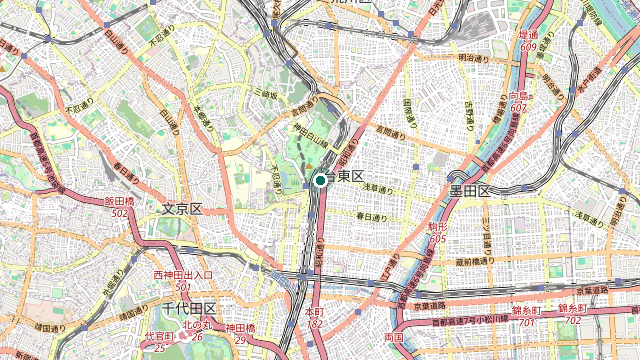
Ueno Park and Its Surrounds Where Tokyos Museums Meet a Market Street
It is nine in the morning, and a cluster of school groups already blocks the path between the JR Ueno Station gate and the stone lanterns marking the park entrance. Step around them, past a man practicing calligraphy with a water brush on the pavement, and the noise of the Yamanote Line fades almost immediately into bird calls and the rustle of bamboo. This is the trick of Ueno: the densest concentration of cultural institutions in Tokyo sits inside a 53-hectare park that feels, for a few moments, like a forest.
The same density that makes Ueno efficient also makes it easy to waste time. Five major museums, a zoo, a temple, and a 600-meter market street all sit within walking distance. But they are laid out without a logical sequence. You will spend your day backtracking across Shinobazu Pond unless you treat the park as a spine and the market as a finish line, not a detour.
.jpg)
The Morning Sequence Museums That Reward Your First Hours
Start At The Tokyo National Museum
Begin at the north end of the museum row. Exit JR Ueno Station through the Park Exit, not the Shinobazu Exit, and walk straight past the statue of Saigo Takamori. The Tokyo National Museum is your first stop, and it demands priority for one reason: scale. With roughly 120,000 items spread across the Honkan, Toyokan, and Heiseikan, you cannot skim this building in under two hours and leave satisfied. Arrive when it opens at 09:30, pay the ¥1,000 admission, and head directly to the Honkan on the second floor. The sword gallery and the Edo-period screens draw the crowds. The real value is the Toyokan. It is quieter and holds Korean celadon and Chinese Buddhist sculpture you will not see represented well elsewhere in Tokyo. Skip the Gallery of Horyuji Treasures unless you have a specialist interest; its single-room display of 7th-century temple objects is exquisite but narrow, and your morning has a schedule.
The National Museum Of Western Art
Exit TNM by 11:30 and walk two minutes south to the National Museum of Western Art. This building is the exhibit. Le Corbusier designed it, and UNESCO listed it in 2016. The permanent collection is compact enough to handle in 45 minutes, and the ¥500 admission makes it the cheapest quality art stop in the park. Do not confuse the rotating special exhibitions on the upper floor with the main collection. Unless the current show is a known priority, stay on the ground floor and the basement. That is where the Rodin sculptures and the 16th- and 17th-century European paintings live.
Choose Your Third Stop
Cross the plaza to the Tokyo Metropolitan Art Museum only if a specific exhibition interests you. The permanent collection is not always on display, and the building functions primarily as a rental gallery for travelling shows. Check the schedule the night before. If nothing lines up with your taste, skip it without guilt and walk instead to the National Museum of Nature and Science, 200 metres east. This is the best option if you are travelling with children or if rain drives you indoors. The Global Gallery covers earth science and evolution with English labels, and the Japan Gallery traces the archipelago's natural history from prehistoric fauna to modern ecosystems. Budget one hour exactly, and pay ¥630.
The Park Slot Lunch Break and the Zoo Question
Skip The Zoo
By 12:45 you are in the middle of the park, with Shinobazu Pond on your left and Ueno Zoo on your right. The zoo, opened in 1882, covers 14 hectares and houses roughly 3,000 animals including giant pandas. It is a good zoo by city standards, but a bad use of a single day in Ueno. The queues for the panda enclosure eat 40 minutes, and the grounds are large enough to derail your afternoon itinerary. Skip it unless you have a preschool-aged child or a deep commitment to pandas. Use the ¥600 admission elsewhere.
Where To Eat
For lunch, leave the park proper. Exit at the south gate near the Bentendo temple and cross the street into Higashi-Ueno, the area east of JR Ueno Station. This is where the park's visitors eat. The budget accommodation cluster here means cheap ramen and curry shops that serve lunch sets for ¥800 to ¥1,200. Do not eat inside the park at the festival-style food stalls; they charge double for worse quality. A better option: buy a takeaway from one of the depachika counters in Matsuzakaya department store, a three-minute walk from the park's south exit, and eat on a bench beside the Lotus Pond section of Shinobazu. Do this only if you are visiting between mid-July and mid-August, when the lotus flowers are at their peak.
Afternoon Slide Into Ameyoko Market
Enter The Market
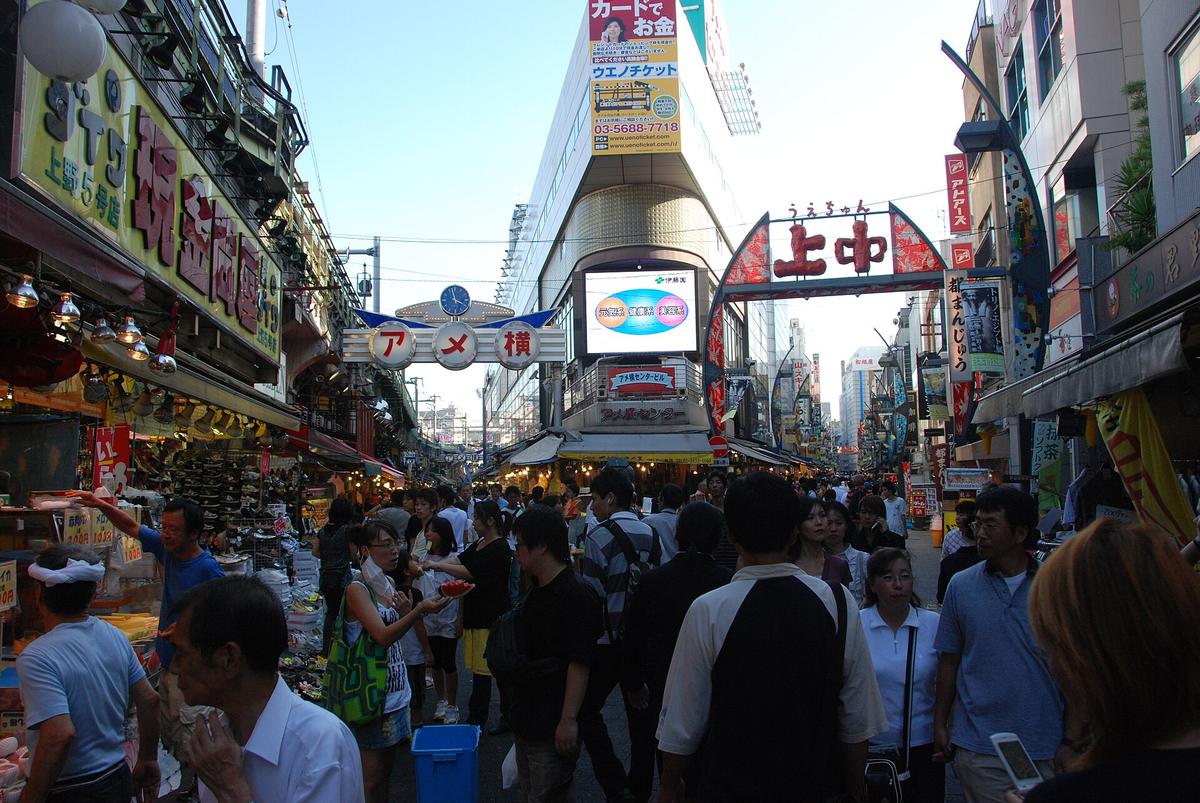
After lunch, the energy of the day shifts. Leave the quiet of the park and walk two blocks south to Ameyoko, the 500-to-600-metre market street that runs along the railway tracks between Ueno and Okachimachi stations. This is not a museum quarter. This is a post-war black market that survived by adapting. The name is a contraction of "America" and "yokocho", and its origin as a black market for American goods after 1945 is still visible in the mix of international snack stalls, knock-off sneakers, and fresh seafood sellers shouting over each other.
Time It Right
Ameyoko is active from about 10:00 to 20:00, but the afternoon window of 14:00 to 16:00 is the sweet spot. The morning belongs to wholesale fish buyers and produce deliveries. The evening pulls in commuters grabbing dinner ingredients. Mid-afternoon, the stalls are fully open, the crowd is thick but not gridlocked, and the vendors have time to let you sample dried mango or grilled squid skewers without rushing you.
How To Work It
The market is bad at one thing: seating. There is almost nowhere to sit and eat. You stand, or you walk. Plan your route as a loop from the Ueno end to the Okachimachi end and back, allowing 90 minutes to browse the clothing stalls on the west side and the food stalls on the east side. The seafood section near Okachimachi is where you find the best value. A tray of tuna sashimi for ¥500 is common, and the vendors will portion it for you if you gesture at the piece you want. Do not ask for a discount. Ameyoko has lost its haggling culture over the last decade, and most prices are fixed.
If you finish by 16:00, you have time to return to the park for a walk around Shinobazu Pond's three sections, the Lotus Pond, Boat Pond, and Cormorant Pond. Or visit the Kiyomizu Kannon-do temple, the small wooden structure on a hill near the zoo entrance that most tourists walk past. It is a 10-minute detour, it is free, and it gives you the view of the park that the crowds below miss.
.jpg)
| Museum | Admission Fee | Minimum Visit Time | Best For |
|---|---|---|---|
| Tokyo National Museum | ¥1,000 | 2 hours | Japanese and Asian art; large collection |
| National Museum of Western Art | ¥500 | 45 minutes | Le Corbusier building; Rodin sculptures |
| National Museum of Nature and Science | ¥630 | 1 hour | Natural history; families |
| Tokyo Metropolitan Art Museum | Varies by exhibition | 30 minutes (or skip) | Travelling shows only |
Common Questions
Can I visit all five Ueno museums in one day?
No, not in any meaningful way. Pick two of the major ones, the Tokyo National Museum plus either the National Museum of Nature and Science or the National Museum of Western Art, and treat the rest as bonuses you see only if a specific exhibition pulls you in. The Tokyo Metropolitan Art Museum's permanent collection is not always on display, so check before you plan around it.
Which entrance to Ueno Station should I use for the park?
The Park Exit from JR Ueno Station. The Shinobazu Exit puts you on the wrong side of the pond and adds a 10-minute walk. For Ameyoko, exit from the south side of the station toward the Yamada Denki building.
What time does Ameyoko close, and is it open every day?
Most stalls operate between 10:00 and 20:00, but individual shops set their own hours. The market is open year-round except during the New Year period, December 31 to January 3, when many shops close entirely.
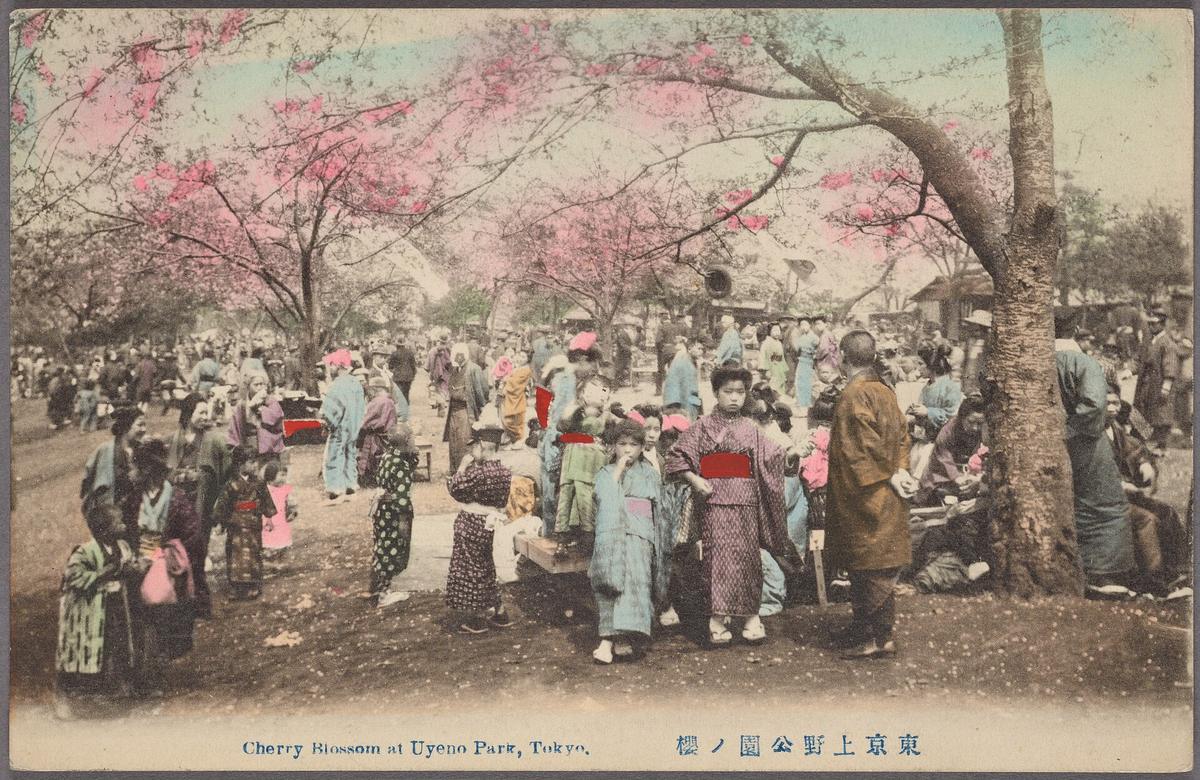
Is Ueno Park worth visiting outside cherry blossom season?
Yes, but for different reasons. In summer, the lotus flowers on Shinobazu Pond peak from mid-July to mid-August. In autumn, the foliage around the pond and the temple grounds is strong but less famous than other Tokyo spots. The park works best as the container for the museums, not as a destination on its own.
How do I get to Narita Airport from Ueno?
Take the Keisei Skyliner from Keisei Ueno Station, not JR Ueno Station. The journey takes 55 to 70 minutes and costs about ¥2,570. The Keisei Main Line also runs to Narita but is slower and cheaper.
Read next
-
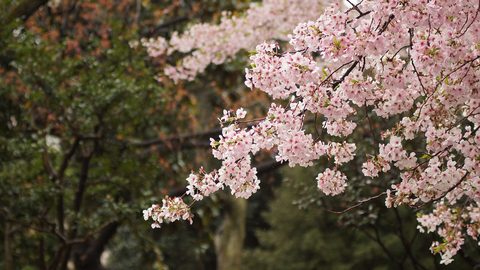 Ueno Park Museums and Ameyoko Market in One Day
Map a single day in Ueno from the quiet morning galleries of the Tokyo National Museum to the loud Saturday bustle of the Ameyoko market stalls.
Ueno Park Museums and Ameyoko Market in One Day
Map a single day in Ueno from the quiet morning galleries of the Tokyo National Museum to the loud Saturday bustle of the Ameyoko market stalls.
-
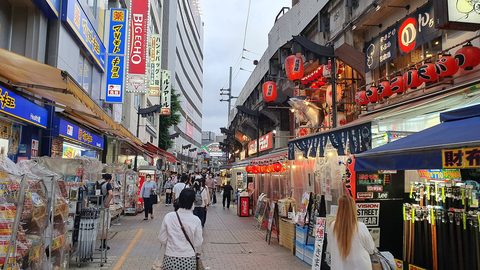 Eating in Ueno Ameyoko Stalls and the Cheap End of Central Tokyo
Eat cheaply in central Tokyo around Ueno's Ameyoko market, from standing yakitori stalls under the train tracks to a century-old unagi restaurant nearby.
Eating in Ueno Ameyoko Stalls and the Cheap End of Central Tokyo
Eat cheaply in central Tokyo around Ueno's Ameyoko market, from standing yakitori stalls under the train tracks to a century-old unagi restaurant nearby.
-
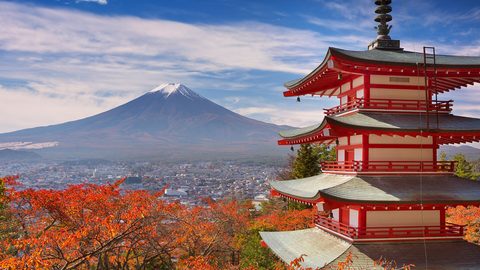 Japan Travel Guide for First-Timers Who Like Order but Not Crowds
Japan delivers deep tradition and futuristic efficiency, but the language barrier and density of rules can exhaust first-timers. Here is what to actually expect.
Japan Travel Guide for First-Timers Who Like Order but Not Crowds
Japan delivers deep tradition and futuristic efficiency, but the language barrier and density of rules can exhaust first-timers. Here is what to actually expect.
-
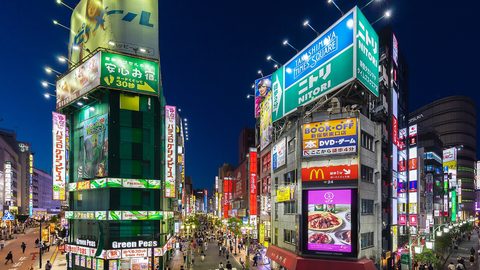 Japan eSIM vs Pocket WiFi vs Physical SIM for Staying Connected
Free public WiFi across Japan is unreliable and slow. Compare eSIM plans from Ubigi and Airalo against renting a pocket WiFi device at Narita or Haneda.
Japan eSIM vs Pocket WiFi vs Physical SIM for Staying Connected
Free public WiFi across Japan is unreliable and slow. Compare eSIM plans from Ubigi and Airalo against renting a pocket WiFi device at Narita or Haneda.
-
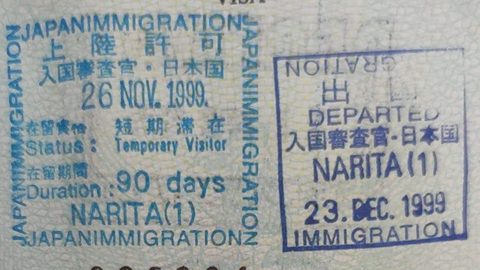 Japan Visa-Free Entry and the Visit Japan Web Digital Form
Visa-free entry covers many nationalities, but the Visit Japan Web digital form and QR codes determine how quickly you clear immigration at Narita or Haneda.
Japan Visa-Free Entry and the Visit Japan Web Digital Form
Visa-free entry covers many nationalities, but the Visit Japan Web digital form and QR codes determine how quickly you clear immigration at Narita or Haneda.
-
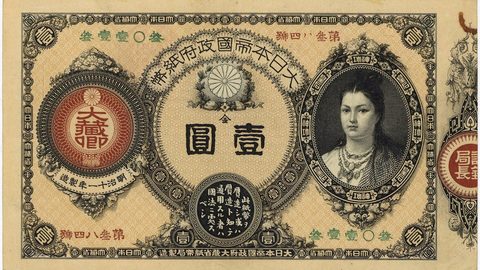 Cash and IC Cards Are the Real Payment System in Japan
Japan projects a high-tech image but many small restaurants, temples, and rural buses demand cash. IC cards like Suica and Icoca bridge the gap for daily spending.
Cash and IC Cards Are the Real Payment System in Japan
Japan projects a high-tech image but many small restaurants, temples, and rural buses demand cash. IC cards like Suica and Icoca bridge the gap for daily spending.
-
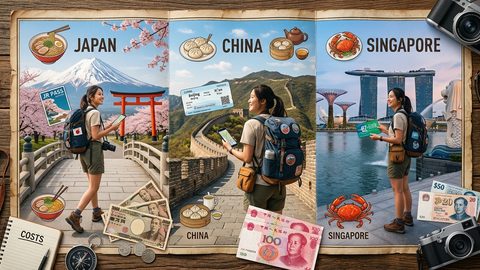 What Japan, China, and Singapore Actually Cost Independent Travelers
Real per-day costs for Japan, China, and Singapore broken down by accommodation tier, food strategy, transit, and connectivity for independent travelers.
What Japan, China, and Singapore Actually Cost Independent Travelers
Real per-day costs for Japan, China, and Singapore broken down by accommodation tier, food strategy, transit, and connectivity for independent travelers.
-
 What Most Travelers Get Wrong When Booking Flights to East Asia
Most travelers book East Asia flights on price alone. Here's what they miss about route gaps, fleet age, and aircraft type on 10-14 hour hauls.
What Most Travelers Get Wrong When Booking Flights to East Asia
Most travelers book East Asia flights on price alone. Here's what they miss about route gaps, fleet age, and aircraft type on 10-14 hour hauls.
-
 The Honest Cost of Mobile Data in Japan, China, and Singapore
Real price data for SIMs, pocket WiFi, and eSIMs in Japan, China, and Singapore. Plus the friction points most travel guides quietly skip.
The Honest Cost of Mobile Data in Japan, China, and Singapore
Real price data for SIMs, pocket WiFi, and eSIMs in Japan, China, and Singapore. Plus the friction points most travel guides quietly skip.