Which Singapore Laws Are Actually Enforced for Tourists
Which Singapore laws are enforced against tourists and which are overblown myths, from chewing gum and jaywalking fines to public intoxication.

Which Singapore Laws Tourists Actually Need to Worry About
You have heard the warnings: Singapore is a "fine city" where gum gets you caned and forgetting to flush a toilet lands you in court. The truth is more useful and less theatrical. A small set of statutes is actively enforced against visitors. A larger set applies only in theory. Some of the most repeated "laws" are pure internet fiction. Here is what to budget for, what to ignore, and what could actually get you arrested.
The laws genuinely enforced against tourists fall into four groups: import restrictions at the border, public-order offences on the street, smoking and littering rules in public spaces, and the blanket ban on drugs. Each carries a specific penalty. Everything else, the stories about caning for litter, jail for gum, or arrest for eating on the train, is either a misreading of the statute or a story that has grown in the telling. Here is exactly how each law works and whether you need to care about it.
Drug Offences: the One Law That Can End Your Trip
The Misuse of Drugs Act 1973 is the only Singapore law that carries a mandatory death penalty, and it applies to visitors exactly as it applies to residents. Importing, trafficking, or manufacturing more than 15 grams of heroin, 30 grams of cocaine, 500 grams of cannabis, or 250 grams of methamphetamine triggers a mandatory death sentence on conviction. There is no discretion. Consumption of a controlled drug inside Singapore is an offence under Section 8(b) of the same Act. Refusal to provide a urine sample when asked is itself an offence under Section 31(2).
Drug Consumption Abroad Does Not Apply To Visitors
Section 8A of the Act makes it an offence for a Singapore citizen or permanent resident to consume a controlled drug anywhere in the world. This section does not apply to visitors. A tourist who consumed cannabis legally in Thailand before flying to Singapore is not committing an offence under Singapore law for that prior consumption. The risk lies in the metabolite still present in the body at the border. Random urine tests at Changi Airport and the land checkpoints are real. A positive result for an imported controlled drug is treated as consumption inside Singapore unless you can prove otherwise.
What To Do At The Border
Do not bring any controlled drug into Singapore under any circumstances. Do not carry paraphernalia. If you have taken a substance legally abroad, check the detection window before you travel. The penalty for a positive urine test with no prior authorisation is prosecution under Section 8(b), which carries a fine up to SGD 20,000 or imprisonment up to 10 years or both for a first offence.
Vaping: a Border Offence That is Actually Enforced
Vaping is where the gap between popular belief and enforcement widens. Many travellers assume that because gum is a famous Singapore prohibition, vaping must be a similarly minor, rarely-policed infraction. It is not. The Tobacco (Control of Advertisements and Sale) Act makes possession, purchase, use, and import of vaporisers illegal. The Health Sciences Authority conducts checks at Changi Airport, Woodlands checkpoint, and Tuas checkpoint. Devices are confiscated on detection. The penalty for import is a fine up to SGD 10,000 or imprisonment up to 6 months or both for a first conviction. Possession carries a fine up to SGD 2,000. This is enforced against visitors. Do not pack a vape. Do not pack pods. Do not assume the device will be waved through because it is small.
Chewing Gum: the Most Famous Law You Can Ignore
The gum prohibition is the single most misunderstood Singapore law among tourists. Here is the precise legal situation. The Regulation of Imports and Exports (Chewing Gum) Regulations 2004 prohibits the import of gum into Singapore. The penalty for a first conviction on import is a fine up to SGD 10,000 or imprisonment up to 2 years. The Sale of Food Act, Section 17(1), prohibits the sale of gum, punishable by a fine up to SGD 2,000. There is no statute that prohibits possessing or consuming gum. Bringing a personal pack through customs is technically an import offence, but there is no known enforcement against visitors for a small quantity intended for personal use. You will not be stopped for having gum on the street. You will not be fined for a pack in your bag. The prohibition is enforced at the wholesale and retail level, not against the traveller who forgot to leave a pack at home.
| Offence | Statute | Penalty | Enforced Against Visitors |
|---|---|---|---|
| Jaywalking within 50 metres of a crossing | Road Traffic Act, Section 140(6) | Fine up to SGD 1,000 or imprisonment up to 3 months; SGD 50 composition fine for first offence | Yes - composition fines issued |
| Eating or drinking on MRT premises | Rapid Transit Systems Regulations, Regulation 14(3) | Fine up to SGD 500 | Yes - LTA officers issue fines |
| Littering (first offence) | Environmental Public Health Act, Section 17 | Fine up to SGD 2,000 in court; SGD 300 composition fine for minor offence | Yes - composition fines issued |
| Smoking in a prohibited place | Smoking (Prohibition in Certain Places) Act | Fine up to SGD 1,000; up to SGD 2,000 on court conviction | Yes - NEA officers issue fines |
| Public consumption of alcohol (22:30 to 07:00) | Liquor Control (Supply and Consumption) Act | Fine up to SGD 1,000; repeat offence up to SGD 2,000 or imprisonment up to 3 months | Yes - police issue fines |
| Vaping possession or use | Tobacco Act, Section 16(2A) | Fine up to SGD 2,000 | Yes - HSA enforcement at border and in public |
| Importing chewing gum | Regulation of Imports and Exports (Chewing Gum) Regulations | Fine up to SGD 10,000 or imprisonment up to 2 years | No known enforcement for personal quantities |
Jaywalking, Eating on the MRT, and Public Drinking: the Everyday Offences You Will See Enforced
These laws catch visitors by surprise because they are enforced quietly and consistently, not with drama but with a fine slip handed over by a uniformed officer.
Jaywalking
The Road Traffic Act forbids crossing a road within 50 metres of a designated pedestrian crossing. The penalty is a fine up to SGD 1,000 or imprisonment up to 3 months. In practice a first offence attracts a composition fine of SGD 50. The enforcement is real. Officers stand at busy intersections in the central business district, Orchard Road, and around Marina Bay. They issue fines on the spot. Do not cross against the light or jaywalk between crossings. An empty street is not a safe bet.
Eating And Drinking On The MRT
Regulation 14(3) of the Rapid Transit Systems Regulations prohibits consumption of food or drink in MRT premises. The fine is up to SGD 500. Land Transport Authority officers patrol trains and stations and enforce this. A bottle of water taken out at the wrong moment is enough. The rule applies to stations and platforms as well as trains. Finish your drink before you tap through the fare gate.
Alcohol In Public Places After 22:30
The Liquor Control (Supply and Consumption) Act prohibits consumption of alcohol in all public places between 22:30 and 07:00. The fine for a first offence is up to SGD 1,000. This applies to streets, parks, beaches, and void decks of residential buildings. It does not apply inside licensed premises such as bars or restaurants. In designated Liquor Control Zones, Little India and Geylang are the two you are most likely to encounter, the restrictions are stricter: no public consumption of alcohol from 07:00 on Saturday to 07:00 on Monday, and from 19:00 on the eve of a public holiday to 07:00 the day after. Takeaway alcohol sales from supermarkets and convenience stores stop at 22:30 nationwide. In the Liquor Control Zones they stop at 18:00 on weekends and public holiday eves. Plan your drinks accordingly.

Littering: the Fine is Real, the Caning is a Myth
The Environmental Public Health Act sets fines for littering: a composition fine of SGD 300 for a minor first offence, rising to a court-imposed fine of up to SGD 2,000. A second conviction can bring a fine up to SGD 4,000. A third or subsequent conviction can bring a fine up to SGD 10,000. The court may also impose a Corrective Work Order requiring the offender to clean public areas in a bright vest for up to 12 hours. This is real. A Corrective Work Order is not a caning. Caning is a judicial punishment under the Criminal Procedure Code reserved for robbery, sexual assault, vandalism (with a penalty of caning up to 8 strokes for damaging property), and immigration offences. Dropping a receipt will not get you caned. Dropping a cigarette butt, however, will get you a fine. If the National Environment Agency officer is watching, the fine will be issued on the spot.
Cigarettes: No Duty-Free Allowance at All
Singapore allows zero duty-free cigarette import. The Customs Act makes it an offence to bring in cigarettes without declaring them and paying the duty. The penalty is a fine up to 40 times the duty evaded or SGD 10,000, whichever is greater, or imprisonment up to 6 years, or both. Customs scanning at Changi Airport and the land checkpoints detects undeclared packs. Do not bring a carton. Do not bring a single pack and assume it is within some allowance. There is none. The only legal way to bring cigarettes into Singapore is to declare them at the red channel and pay the duty. Most travellers find it simpler to buy tobacco at the duty-free shop on departure or in a Singapore convenience store after arrival.
The Durian Rule is Real (And Oddly Specific)
Regulation 14(4) of the Rapid Transit Systems Regulations prohibits carrying durians on MRT trains and stations. The fine is up to SGD 500. Public buses also display "No Durians" signage as a condition of carriage. Station staff will refuse entry if they see or smell a durian. The rule exists because the fruit's odour is extremely strong and persistent. If you buy a whole durian, arrange for delivery or eat it at a hawker centre where the vendor provides seating.
Read next
-
 Singapore eSIM, Tourist SIM Cards and Free Public Wi-Fi Compared
Singapore offers eSIMs, 100GB tourist SIM cards from S$12 at Changi, and free public Wi-Fi. The real essential is downloading Grab before you land, because setup requires an SMS code.
Singapore eSIM, Tourist SIM Cards and Free Public Wi-Fi Compared
Singapore offers eSIMs, 100GB tourist SIM cards from S$12 at Changi, and free public Wi-Fi. The real essential is downloading Grab before you land, because setup requires an SMS code.
-
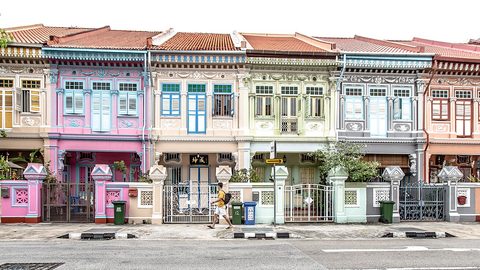 Singapore Hotels by Type and Budget Not by Neighbourhood
Singapore hotels sorted by property type and price band, skyline towers, shophouse boutiques, family chains, and transit sleepers, with honest notes on what S$400 actually buys here.
Singapore Hotels by Type and Budget Not by Neighbourhood
Singapore hotels sorted by property type and price band, skyline towers, shophouse boutiques, family chains, and transit sleepers, with honest notes on what S$400 actually buys here.
-
 Where to Stay in Singapore for Neighbourhood Character Not Just a Bed
Compare Singapore's neighbourhoods by the experience of waking up there, hawker breakfasts, shophouse streets, or skyline views, not by distance to a landmark the MRT erases.
Where to Stay in Singapore for Neighbourhood Character Not Just a Bed
Compare Singapore's neighbourhoods by the experience of waking up there, hawker breakfasts, shophouse streets, or skyline views, not by distance to a landmark the MRT erases.
-
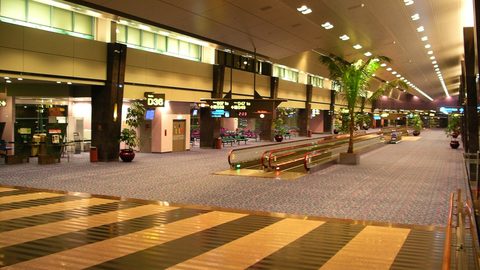 Flying Into Changi Airport Singapore and Making the Stopover Work
Changi Airport turns a Singapore stopover into a free mini-trip. How long you need to clear immigration, eat a hawker meal, and still make your connection.
Flying Into Changi Airport Singapore and Making the Stopover Work
Changi Airport turns a Singapore stopover into a free mini-trip. How long you need to clear immigration, eat a hawker meal, and still make your connection.
-
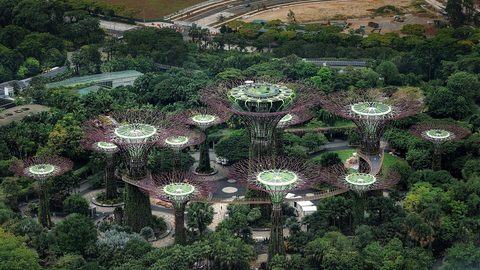 Singapore Things to Do With Only Three Days and Brutal Midday Heat
Hard calls on which Singapore sights earn limited days: Gardens by the Bay and Botanic Gardens are non-negotiable, Sentosa is skippable, and everything bends around the 11am-to-3pm heat.
Singapore Things to Do With Only Three Days and Brutal Midday Heat
Hard calls on which Singapore sights earn limited days: Gardens by the Bay and Botanic Gardens are non-negotiable, Sentosa is skippable, and everything bends around the 11am-to-3pm heat.
-
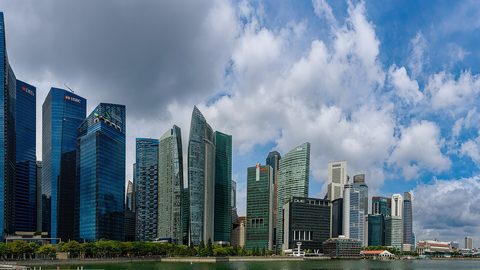 Best Time to Visit Singapore When One Degree From the Equator
Singapore sits one degree from the equator so temperature barely shifts, plan around monsoon rains, Chinese New Year hawker closures, haze season, and F1 hotel price spikes instead.
Best Time to Visit Singapore When One Degree From the Equator
Singapore sits one degree from the equator so temperature barely shifts, plan around monsoon rains, Chinese New Year hawker closures, haze season, and F1 hotel price spikes instead.
-
 Gardens by the Bay
-
 Marina Bay Sands
-
 Singapore Zoo and the Mandai parks