Shopping in Krabi Is the Thinnest Part of the Province and Here Is What Exists
Shopping in Krabi is the province's thinnest offering—here is what exists, from the weekend Walking Street to the air-conditioned Vogue mall.
Krabi Shopping is the Thinnest Part of the Province and Here is Why
Most travellers land in Krabi expecting a retail scene to match the karst views. It does not. The province does not compete with Bangkok or Chiang Mai. Krabi shopping serves a functional role for a transit town, not a destination. People come for limestone karsts, Railay climbing, and island hopping, not for malls or bazaar rows that stretch for blocks. If you arrived hoping for a serious shopping day, adjust expectations now.
The town sits 15 km inland on a muddy river estuary, far from any beachfront promenade. It is a scruffy, functional Thai provincial capital designed around transport and logistics. Pavements are narrow, broken, or blocked by parked motorbikes. Through traffic never stops. A casual stroll with shopping bags is harder than expected. This is not a place for retail tourism, but it does offer a few modest, practical options worth knowing about.
What exists is thin. A weekend night bazaar focused on food and crafts. A small air conditioned mall with a supermarket in the basement. A wet market that operates in the morning. A row of century old shophouses selling dim sum and dry goods. The real shopping in Krabi is the edible kind: southern curry pastes, fresh cashew nuts, bazaar snacks you eat on the spot. Save your serious retail energy for Bangkok. Spend your Krabi cash on what leaves in a stomach, not a suitcase.


Shopping in Krabi Town: What Exists and What Does Not
Krabi Town has no department store, no branded outlet zone, no pedestrian shopping street. The commercial spine is Uttarakit Road, a strip of banks, phone shops, hardware stores, and local eateries that close by early evening. Need a phone charger, a SIM card, or basic toiletries? This road has you covered. Want a curated boutique? You will be disappointed.
The only indoor retail space is Vogue Shopping Centre, a modest two storey building on the edge of town. It contains a supermarket in the basement, a few clothing and electronics stalls on the ground floor, and a food court upstairs. The supermarket stocks essentials, snacks, drinks, and a limited selection of souvenirs. It is air conditioned, which matters during the heat of the day. Do not expect anything beyond basic necessity. It works as a pit stop for a bottle of water and a tube of sunscreen, not a shopping expedition.
Tesco Lotus, Big C, and Makro sit on the outskirts of town in the Sai Thai area. These are standard Thai hypermarkets, identical to what you find in any provincial centre. Use them for bulk water, snacks for a longtail trip, or a cheap meal at their food courts. They are not a reason to visit Krabi.
What to Buy and What to Skip
Krabi province grows cashews, so fresh cashew nut stir fries appear at bazaars and roadside stalls. The nuts are local, not imported, and make a gift that actually comes from here. Dried cashews sold in sealed packets are fine to pack and fly home with.
Southern curry pastes, particularly the spicy gaeng som and gaeng tai pla blends, are worth buying from the morning wet market or small shophouse stalls. They are vacuum sealed and survive the flight.
Ao Nang beach road, about 2 km of continuous shop fronts, offers beachwear, souvenirs, tailored clothing, sunglasses, and swimwear. Bargaining is expected there. Initial offers often run 30 to 50 percent above the acceptable price. Quality varies wildly. Skip gemstones entirely. They are imported and sold at inflated prices. Electronics have limited selection and no warranty advantage. Brand name clothing is almost always a copy.
Dry bags, useful for island trips, are available at Ao Nang beach road shops, dive shops, Tesco Lotus, and Big C. Expect to pay 200 to 800 THB depending on size, 5 to 30 litres, and brand. Buy yours the day before your longtail trip, not the morning of.
Krabi Markets: Three Worth Your Time, One You Live in
Krabi Town has three distinct bazaar experiences. Each serves a different purpose and runs at a different time of day. Miss the timing and you will find an empty street or a closed shutter.
Krabi Walking Street Bazaar
The Krabi Walking Street bazaar operates Friday, Saturday, and Sunday from approximately 17:00 to 22:00. This is the closest Krabi Town gets to a night market scene. Primary goods are street food, local crafts, batik, cotton clothing, and accessories. The batik requires attention: some pieces are factory made outside Krabi, while hand stamped local batik from groups such as the Andaman Batik workshop carries genuine provenance. Want the local version? Ask the seller directly and look for uneven stamp impressions that indicate a hand process.
Thai cotton items available include scarves, shirts, trousers, and table linens. Prices are fixed or nearly so on food, but modest negotiation on crafts is acceptable. The street is dead on weekdays. Plan your Krabi Town stay to include a Friday, Saturday, or Sunday evening if you want to see it.
The Morning Wet Market
This fresh food market operates during daytime, roughly 06:00 to 18:00. The best time to visit is 06:00 to 09:00, when the produce is at its peak and the crowd is local. This is a wet market in the traditional sense: raw fish, vegetables, spices, and cooked food sold from concrete stalls. You will find kanom jeen, fermented rice noodles with southern style fish curry, served for breakfast only. Buy a portion for 20 THB and eat it standing at a plastic table. This market is not for souvenirs. It is for watching how Krabi Town actually shops and eating something that tastes like the province.
Chao Fah Market
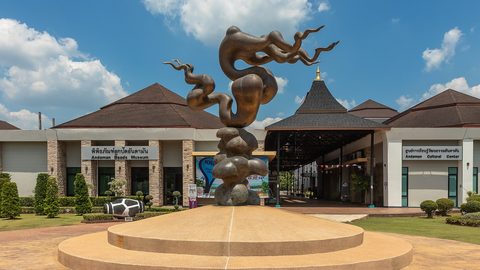
Chao Fah Market runs similar hours, 06:00 to 18:00, and sits near the riverside promenade with the giant crab sculpture. It overlaps with the morning wet market in type, a daytime fresh food market, but feels slightly more tourist adjacent because of its location near Chao Fah Park and the evening food stalls along the river. Use it as a backup if the main wet market is too far from your guesthouse, or visit both in one morning to compare the produce quality.
Krabi Town Markets at a Glance
Use this table to decide which bazaar fits your schedule and what you want to buy.
| Market | Days | Hours | Type | Best For |
|---|---|---|---|---|
| Krabi Walking Street | Fri, Sat, Sun | 17:00–22:00 | Night bazaar | Street food, batik, cotton clothing, accessories |
| Morning Wet Market | Daily | 06:00–18:00 | Fresh food market | Local produce, kanom jeen breakfast, curry pastes |
| Chao Fah Market | Daily | 06:00–18:00 | Fresh food market | Produce, nearby riverside stalls, backup to main wet market |
| Vogue Shopping Centre | Daily | 10:00–21:00 | Mall | Air conditioned break, supermarket, basics |
| Talat Kao Old Market | Daily | 06:00–12:00 | Wet market and shophouses | Dim sum, dry goods, century old architecture |
Krabi Walking Street Bazaar: Your Best Bet for Evening Retail
The Krabi Walking Street bazaar is the only retail experience in Krabi Town that a traveller might call enjoyable. It runs along a section of road closed to traffic on Friday, Saturday, and Sunday evenings from 17:00 to 22:00. The primary goods are street food and local crafts, not electronics or branded goods. This is where you buy a hand stamped batik sarong, a bag of dried cashews, and a plate of grilled squid with spicy tamarind dip, all in one 50 metre stretch.
Food dominates. Krabi style grilled squid with spicy tamarind dip is a night bazaar staple here, and it tastes different from the sweeter versions found elsewhere in Thailand. Roti with masaman curry, served from Muslim influenced street stalls near the Chao Fah pier end of the bazaar, is worth queuing for. O aew, a banana flour jelly desert with shaved ice and red beans specific to the Krabi Phuket area, provides a cold finish. Buy it from the stall that has the longest local queue, not the one with the most colourful sign.
Craft stalls sell batik, cotton scarves, and accessories. The batik provenance matters: some pieces are factory made outside Krabi and stamped with a generic pattern. Hand stamped local batik from the Andaman Batik group or similar workshops shows uneven colour distribution and slight pattern misalignment, evidence of the hand process. Ask politely. The seller will tell you which is which.
Bargaining is not customary for food. A 60 THB plate of squid does not have margin for negotiation. Crafts have more flexibility, but keep it modest. Offer 200 THB for a 250 THB item. That is fine. Offering 100 THB is rude.
Krabi Mall: Vogue Shopping Centre and the Hypermarkets
Krabi Town has one indoor mall: Vogue Shopping Centre. It is not a mall in the Bangkok or Phuket sense. It is a two storey building with a supermarket in the basement, a handful of clothing and electronics stalls on the ground floor, and a small food court upstairs. Use the supermarket for water, snacks, sunscreen, and any toiletries you forgot to pack. The air conditioning is the main attraction. On a 34 degree November afternoon, the 15 minute cool down inside Vogue is worth the detour.
The hypermarkets sit on the outskirts of town: Tesco Lotus in Sai Thai, Big C further south, and Makro near the bypass road. These are large format grocery and household stores aimed at local residents, not tourists. Need a dry bag for island trips? Tesco Lotus stocks them in the sports section for under 400 THB. Need cheap flip flops or a pack of instant noodles? These stores work. They are not worth a dedicated trip unless you are already passing through Sai Thai on the way to or from the airport.
Do not go to any of these expecting a shopping experience. They exist for necessity and comfort, not discovery.
The Morning Circuit: Wet Market and Talat Kao
If you have one morning in Krabi Town, spend it at the main wet market and Talat Kao, the old market. They sit a few hundred metres apart and together form the most authentic retail experience in the province.
The wet market operates from 06:00 to 18:00, but the action peaks between 06:00 and 09:00. This is where local families buy fish, vegetables, and spices for the day. Walk the aisles to see baskets of fresh tumeric, piles of tiny southern eggplants, and bins of dried chillies. The smell is intense: raw fish, fermented shrimp paste, wet concrete. The kanom jeen stall is easy to spot. Look for the queue of old Thai men in colared shirts eating silently at a low plastic table. Order one plate, add the vegetables from the basket on the table, and pour the curry over yourself. It costs about 20 THB.
Tal at Kao sits in a cluster of century old shophouses nearby. This is Krabi Town commercial history: wooden shutters, Chinese Thai architecture, and a wet market in the covered section at the back. The morning dim sum houses here serve Krabi's historic Chinese Thai breakfast: small plates of steamed dumplings, pork buns, and rice rolls. Pull up a plastic stool, point at what looks good, and eat. A full breakfast for two costs under 150 THB. The shophouses also sell dry goods, dried fish, and household items. This area has a quiet, faded beauty. You will wish you had planned more than one night.
The Edible Shopping: Cashews, Curry, and Dim Sum
The most honest Krabi shopping basket is entirely edible. The province grows cashews, and local stir fries use the fresh nut, not the dried version you find in airport snack packs. Look for a stall at the Walking Street bazaar or the wet market that stir fries cashews with chillies and Thai basil in front of you. Eat it warm.
Southern curry pastes are the other essential takeaway. The gaeng som paste, sour and orange from tumeric, and the gaeng tai pla, a fermented fish gut curry that is an acquired taste, both travel well if vacuum sealed. Small shophouses on Uttarakit Road sell them in plastic bags for 30 to 50 THB. Buy three, double bag them, and pack them in checked luggage.
Dim sum at Talat Kao in the morning is not shopping in the retail sense, but it is the transaction that matters most in Krabi Town. A basket of pork buns and a plate of rice rolls cost less than 100 THB. The shophouse itself, built in the early 1900s, is worth a photograph. The experience is the souvenir.
Local Commerce and the One Thing That Goes Wrong
The single thing that most often goes wrong with shopping in Krabi Town is timing. The Walking Street bazaar runs only Friday, Saturday, and Sunday. Arrive on a Monday and leave on a Thursday, and you see an empty street. The wet market closes its best stalls by 09:00. The Vogue Shopping Centre supermarket closes at 21:00. The dim sum at Talat Kao is finished by noon. Almost every retail option in Krabi Town operates within a narrow window. Miss that window and you are left with a 7 Eleven or nothing.
Plan your overnight stay to include a Friday, Saturday, or Sunday evening. Wake up early on at least one morning for the wet market. Treat shopping as a secondary activity between island trips, not a reason for the trip. Krabi Town is a transport and logistics hub, not a retail destination. The best thing you buy here is a plate of squid from the Walking Street bazaar, eaten standing up, with tamarind dip running down your wrist. That is the Krabi shopping experience worth having.
Krabi Shopping Questions Answered
Is there any shopping worth doing in Krabi Town, or should I save my retail energy for Bangkok?
Save your serious retail energy for Bangkok. Krabi Town shopping is thin and functional. The only exception is edible goods: southern curry pastes, fresh cashew nuts, and bazaar snacks that you eat on the spot. The Krabi Walking Street bazaar on Friday, Saturday, and Sunday evenings offers decent crafts and food, but it is not a destination shopping experience. Bangkok has everything Krabi has, at better prices and wider selection.
What are the best Krabi markets?
Three bazaars matter for a visitor. Krabi Walking Street bazaar, Friday to Sunday 17:00 to 22:00, for street food and crafts. The main wet market, daily 06:00 to 18:00, for a wet market experience and breakfast kanom jeen. Chao Fah Market, same hours, for produce near the riverside. Talat Kao, the old market, is worth a morning visit for dim sum and shophouse architecture.
Does Krabi have a night market?
Yes. The Krabi Walking Street bazaar on Friday, Saturday, and Sunday evenings from 17:00 to 22:00 is the only proper night bazaar in Krabi Town. It closes promptly at 22:00, and the street returns to traffic. Arrive on a Monday and you miss it.
Where can I buy a dry bag for island trips in Krabi?
Ao Nang beach road shops, dive shops, Tesco Lotus, and Big C all sell dry bags. Prices range from 200 to 800 THB depending on size, 5 to 30 litres, and brand. The Tesco Lotus in Sai Thai is the most reliable option if you are in Krabi Town. Buy it the day before your longtail trip to Railay, not the morning of.
Can I buy local batik in Krabi?
Yes, but check the provenance. Some batik sold at Krabi Walking Street is factory made outside the province. Hand stamped local batik comes from the Andaman Batik group or similar workshops and shows uneven colour distribution. Ask the seller directly. Expect to pay more for the hand stamped version, typically 300 to 500 THB for a sarong.
What should I not buy in Krabi?
Skip gemstones, which are imported and sold at inflated prices. Skip electronics, which have limited selection and no warranty advantage. Skip brand name clothing, which is almost always a copy. Shell and pearl products often claim local origin, but many items are imported; verification is difficult. Stick to food items and crafts.
What is the Vogue Shopping Centre?
Vogue Shopping Centre is the only air conditioned mall in Krabi Town. It has a supermarket in the basement, a few clothing and electronics stalls on the ground floor, and a food court upstairs. Use it for water, snacks, sunscreen, and a 15 minute break from the heat. It is not a shopping destination.
Read next
-
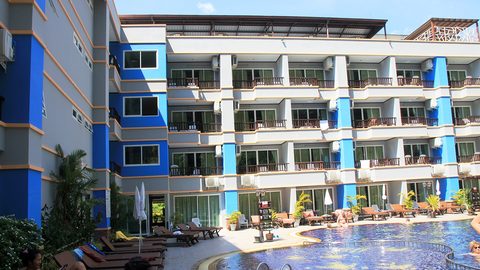
 Krabi Hotels by Area Budget and Property Type
Krabi hotels range from Maharaj Road backpacker guesthouses to Ao Nang beachfront resorts. Sort by area and budget, with the real cost of each location factored in.
Krabi Hotels by Area Budget and Property Type
Krabi hotels range from Maharaj Road backpacker guesthouses to Ao Nang beachfront resorts. Sort by area and budget, with the real cost of each location factored in.
-
 Where to Stay in Krabi Which Base Makes or Breaks Your Trip
Where you stay in Krabi determines everything: your daily transport costs, your evening options, and whether you see a beach at all. Compare every base honestly.
Where to Stay in Krabi Which Base Makes or Breaks Your Trip
Where you stay in Krabi determines everything: your daily transport costs, your evening options, and whether you see a beach at all. Compare every base honestly.
-
 Krabi Flights Getting to KBV Airport and Onward to Town or Ao Nang
Krabi flights and KBV airport arrivals: the white songthaew bus, private taxi and minivan options to Krabi Town and Ao Nang with real costs.
Krabi Flights Getting to KBV Airport and Onward to Town or Ao Nang
Krabi flights and KBV airport arrivals: the white songthaew bus, private taxi and minivan options to Krabi Town and Ao Nang with real costs.
-
 Krabi Things to Do Worth Your Limited Days Ranked and Argued
Krabi things to do ranked honestly: the Tiger Cave Temple climb earns top spot, Railay Beach comes with a last-boat deadline, and some attractions are not worth the drive.
Krabi Things to Do Worth Your Limited Days Ranked and Argued
Krabi things to do ranked honestly: the Tiger Cave Temple climb earns top spot, Railay Beach comes with a last-boat deadline, and some attractions are not worth the drive.
-
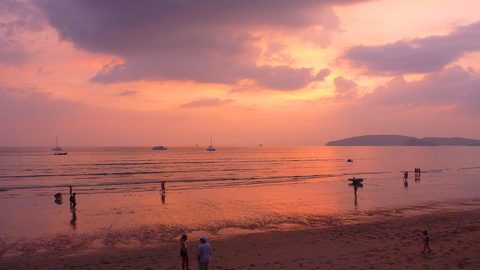 Best Time to Visit Krabi Month by Month Through Monsoon and High Season
The best time to visit Krabi is November to March, but that is also when everything books out. Monsoon months risk longtail suspensions, and Songkran shuts the town down.
Best Time to Visit Krabi Month by Month Through Monsoon and High Season
The best time to visit Krabi is November to March, but that is also when everything books out. Monsoon months risk longtail suspensions, and Songkran shuts the town down.
-
 Getting Around Krabi Without a Map Songthaew Routes Taxis and Longtails
How to navigate Krabi's songthaew network, longtail piers, and taxi reality—with no central route map, no schedule, and services that stop early.
Getting Around Krabi Without a Map Songthaew Routes Taxis and Longtails
How to navigate Krabi's songthaew network, longtail piers, and taxi reality—with no central route map, no schedule, and services that stop early.
-
 Railay
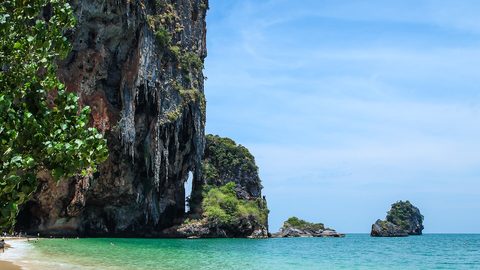
 Beach is a roadless peninsula reached by longtail from Krabi Pier—here is the boat timetable, the tide problem and why missing the last boat strands you.
Railay
Railay Beach is a roadless peninsula reached by longtail from Krabi Pier—here is the boat timetable, the tide problem and why missing the last boat strands you.
-
 Tiger Cave Temple
 in Krabi demands 1,260 steps in tropical heat—here is how hard the climb really is and why the summit view earns every step.
Tiger Cave Temple
Tiger Cave Temple in Krabi demands 1,260 steps in tropical heat—here is how hard the climb really is and why the summit view earns every step.
-
 Thailand Travel Guide From First Timers To Island Hoppers
A realistic Thailand travel guide covering regions, seasons, and pacing so you avoid the classic Bangkok Chiang Mai island mistake.
Thailand Travel Guide From First Timers To Island Hoppers
A realistic Thailand travel guide covering regions, seasons, and pacing so you avoid the classic Bangkok Chiang Mai island mistake.