Starting Krabi Rock Climbing as a Complete Beginner: Course Costs and Choosing the Right Season
How a complete beginner starts Krabi rock climbing, what a half-day or multi-day course costs, and why the dry season months from November to March matter.
.jpeg)
Starting Krabi Rock Climbing as a First-Timer: Course Costs and Choosing the Right Season
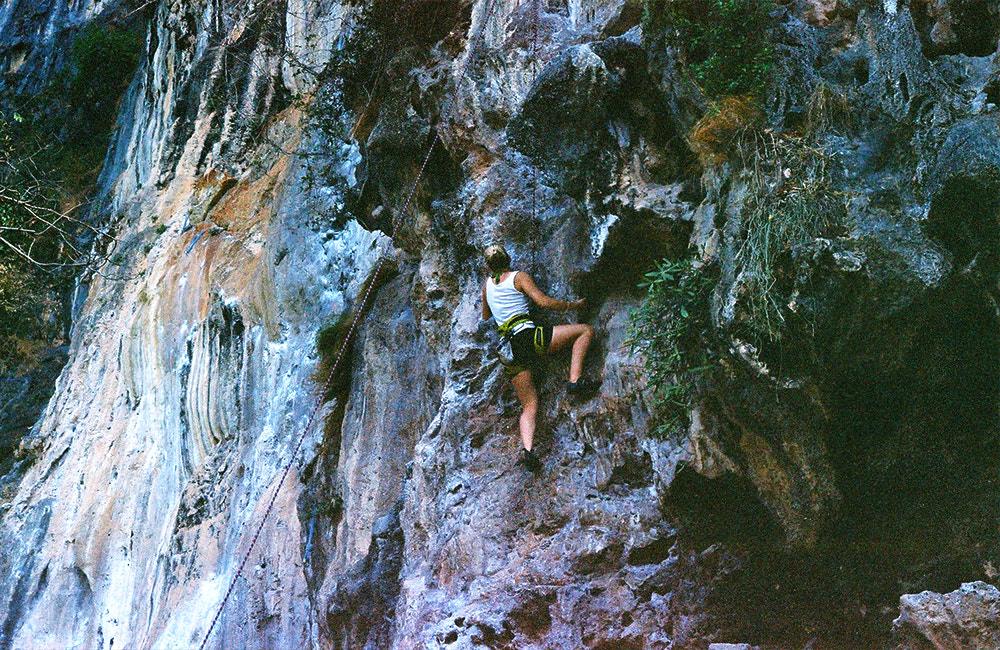
Most newcomers land in Krabi expecting to clip into the overhanging stalactite walls they saw on Instagram. That is a mistake. The limestone karst around Railay Beach and Tonsai Beach is steep, technical, and rated above 6a on the French sport scale. Not a novice grade anywhere. What suits a first-timer is confined mostly to one wall. Which wall that is, what a real first day costs, and why booking in the wrong month leaves you staring at wet rock.
Krabi Climbing Courses: What a Half-Day and Full-Day Actually Cover
Four hours is the standard half-day course. You meet at a climbing shop on Railay East, rent a harness and shoes (300-500 THB for a half-day set), and walk to 123 Wall at the southern end of Phra Nang Beach. The instructor fits your harness, explains the belay device, and you climb two or three top-rope routes on the wall's 15-plus lines under 6a. That is the entire content. You are not learning to lead. You are not climbing Thaiwand Wall or Diamond Cave. You are on the only wall in the area where a 5a feels like a 5a.
Full-Day Course
A full-day course runs seven to eight hours and adds knot tying and a basic abseil to the half-day curriculum. You climb four to six top-rope routes. The cost bracket is 1,800-2,500 THB per person. Group size is capped at four climbers per instructor, and that ratio is the industry standard you should verify before booking. If a school offers a higher ratio on a beginner day, walk away.
Multi-Day Lead Course
After a full-day course you still cannot lead. The multi-day lead climbing course requires a competent top-rope belayer who can climb 6a on top-rope. It runs two to three days and costs 4,000-7,000 THB per person at current rates. Do not skip the prerequisite. Krabi's routes demand clean lead heads and solid footwork on small holds.
Railay Climbing: Why 123 Wall is Your Only Real Option
Every introductory course in Railay uses 123 Wall. It sits at the southern end of Phra Nang Beach, directly accessible from the sand. The grade range runs from 4a to 6b. That 4a is a gentle vertical climb with jugs. The 6b is an overhanging section that stops most first-day climbers cold. The wall reaches around 40 metres, but newcomers stay on the lower sections. The rest of Railay, Thaiwand Wall at up to 100 metres, the steep tufas of Diamond Cave, is not for you yet. Your first day is about learning the belay sequence on a wall where you can see the top from the bottom.
Schools offering courses on Railay East wall are common. Verify they are using 123 Wall specifically. Some guides take a group to an easier section of Railay East, but the concentration of sub-6a routes is highest at 123. If the instructor cannot name 123 Wall, find another school.
Krabi Climbing Season: Dry and Wet Reality on the Karst
The dry season runs November to March. December to February are the optimal months. Humidity drops to 65-75 percent. Limestone is greasy above 80 percent humidity. When it is greasy, friction drops by up to 30 percent. That 5a you could crimp in January becomes a slippery polished slope in June. The wet season, April to October, brings 15 to 22 rain days per month. Rain itself is not the problem. You can climb in a light shower. The problem is the monsoon from September to October when longtail services to Railay from Krabi Pier become unreliable or suspend entirely.
What the Calendar Means for Your Trip
Arrive in mid-April and you hit Songkran. The town becomes a three-day water fight. Many climbing shops close. In the wet season, plan your climbing for the morning. Afternoon rain is the daily pattern, and the rock stays wet into the next morning inside the cave lines. The season dictates which crags are accessible. In the dry months a guide can walk you to sun-exposed walls. In the wet, you are limited to overhangs and cave walls that stay dry underneath.

Tonsai Climbing: What a First-Timer Should Know About the Steepest Crags
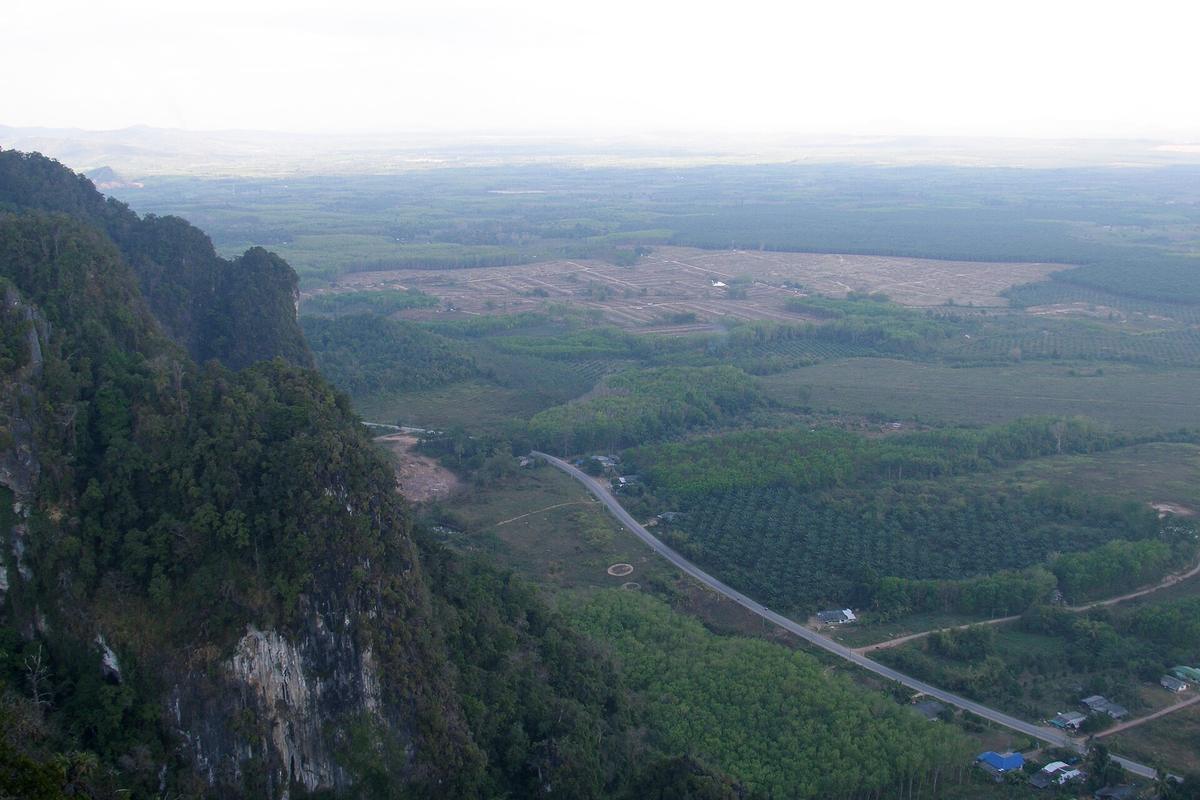
Tonsai Beach is the climber's beach. Not the newcomer's beach. The wall height range is 20 to 80 metres, and the defining feature of Tonsai is the steepest overhanging routes in the area. A first-timer on a half-day course will not be taken to Tonsai. The easiest routes there start at 6a and involve long reaches on tufas. The value of Tonsai for a newcomer is observational. Walk the beach at low tide, watch the lead climbers on the sea-cliff lines, and understand what the next level looks like. The climbing shops on Tonsai rent gear and sell guidebooks. Some offer lead courses for the intermediate climber. Do not book a beginner course based on Tonsai. The beach itself has a scruffier, more communal vibe than Railay, and the accommodation is basic. Want to stay beachside and watch climbing all day? Tonsai is worth a night. Want to climb? Start on Railay.
Read next
-
 Krabi Hotels by Area Budget and Property Type
Krabi hotels range from Maharaj Road backpacker guesthouses to Ao Nang beachfront resorts. Sort by area and budget, with the real cost of each location factored in.
Krabi Hotels by Area Budget and Property Type
Krabi hotels range from Maharaj Road backpacker guesthouses to Ao Nang beachfront resorts. Sort by area and budget, with the real cost of each location factored in.
-
 Where to Stay in Krabi Which Base Makes or Breaks Your Trip
Where you stay in Krabi determines everything: your daily transport costs, your evening options, and whether you see a beach at all. Compare every base honestly.
Where to Stay in Krabi Which Base Makes or Breaks Your Trip
Where you stay in Krabi determines everything: your daily transport costs, your evening options, and whether you see a beach at all. Compare every base honestly.
-
 Krabi Flights Getting to KBV Airport and Onward to Town or Ao Nang
Krabi flights and KBV airport arrivals: the white songthaew bus, private taxi and minivan options to Krabi Town and Ao Nang with real costs.
Krabi Flights Getting to KBV Airport and Onward to Town or Ao Nang
Krabi flights and KBV airport arrivals: the white songthaew bus, private taxi and minivan options to Krabi Town and Ao Nang with real costs.
-
 Krabi Things to Do Worth Your Limited Days Ranked and Argued
Krabi things to do ranked honestly: the Tiger Cave Temple climb earns top spot, Railay Beach comes with a last-boat deadline, and some attractions are not worth the drive.
Krabi Things to Do Worth Your Limited Days Ranked and Argued
Krabi things to do ranked honestly: the Tiger Cave Temple climb earns top spot, Railay Beach comes with a last-boat deadline, and some attractions are not worth the drive.
-
 Best Time to Visit Krabi Month by Month Through Monsoon and High Season
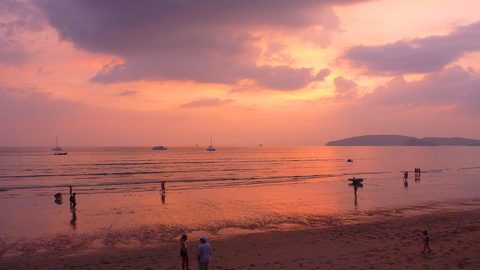
The best time to visit Krabi is November to March, but that is also when everything books out. Monsoon months risk longtail suspensions, and Songkran shuts the town down.
Best Time to Visit Krabi Month by Month Through Monsoon and High Season
The best time to visit Krabi is November to March, but that is also when everything books out. Monsoon months risk longtail suspensions, and Songkran shuts the town down.
-
 Getting Around Krabi Without a Map Songthaew Routes Taxis and Longtails
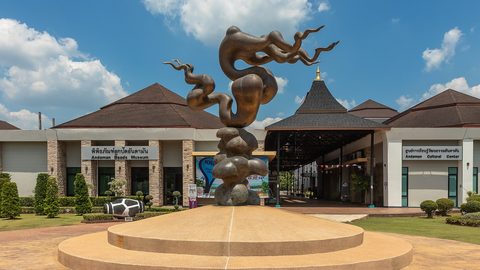
How to navigate Krabi's songthaew network, longtail piers, and taxi reality—with no central route map, no schedule, and services that stop early.
Getting Around Krabi Without a Map Songthaew Routes Taxis and Longtails
How to navigate Krabi's songthaew network, longtail piers, and taxi reality—with no central route map, no schedule, and services that stop early.
-
 Railay
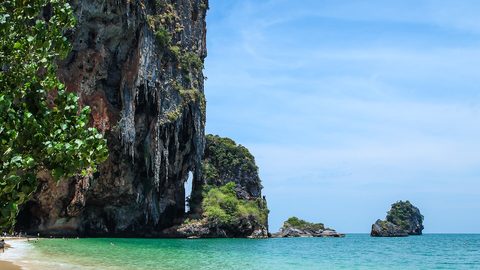
 Beach is a roadless peninsula reached by longtail from Krabi Pier—here is the boat timetable, the tide problem and why missing the last boat strands you.
Railay
Railay Beach is a roadless peninsula reached by longtail from Krabi Pier—here is the boat timetable, the tide problem and why missing the last boat strands you.
-
 Tiger Cave Temple
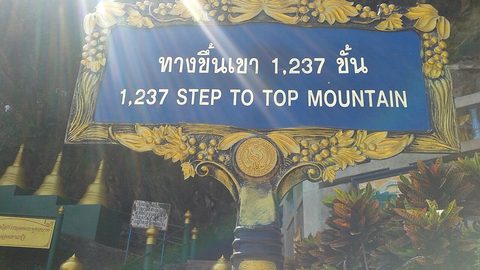
 in Krabi demands 1,260 steps in tropical heat—here is how hard the climb really is and why the summit view earns every step.
Tiger Cave Temple
Tiger Cave Temple in Krabi demands 1,260 steps in tropical heat—here is how hard the climb really is and why the summit view earns every step.
-
 Thailand Travel Guide From First Timers To Island Hoppers
A realistic Thailand travel guide covering regions, seasons, and pacing so you avoid the classic Bangkok Chiang Mai island mistake.
Thailand Travel Guide From First Timers To Island Hoppers
A realistic Thailand travel guide covering regions, seasons, and pacing so you avoid the classic Bangkok Chiang Mai island mistake.