What Actually Feels Unsafe In Beijing And What Is A Non Issue
Beijing is safer than most capitals for petty crime, but air quality, language friction, and security queues are the real daily hassles.
What Actually Feels Unsafe in Beijing and What is a Non Issue
Most first time visitors arrive expecting pickpockets on every corner and a city on edge. The reality is the opposite. Beijing is safe for tourists in the ways that matter most: violent crime against tourists is close to nonexistent. Reported incidents are rare, opportunistic petty theft rather than assault. The fears that should occupy your attention are not muggers or gangs but traffic, air quality, taxi friction, and security queues.
The primary physical danger in Beijing is traffic. Right turning vehicles at crossings do not yield to pedestrians. You yield to them. E bikes in bike lanes travel in the wrong direction, move silently, and move at high speed. Look both ways before stepping into any lane, including bike lanes, even on a green walk signal. These two habits will keep you safer than any amount of vigilance about theft.
.jpg)
Petty Crime: Close to Nonexistent, but Not Zero
Petty theft happens in Beijing, but at a rate far below any Western capital. The crowded entry queue for the Forbidden City and the packed metro car at rush hour are the places where a phone left in a back pocket could walk away. Keep your phone in a front pocket or a zipped bag. Carry your passport in a secure inside pocket. Then move on. You do not need a money belt, a slash proof bag, or a lock for your hostel locker. The scams detailed on the Beijing tourist scams page are a bigger financial risk than any pickpocket.
Beijing Safety for Solo Women
What To Expect And How To Respond
Solo female travellers report feeling safe in Beijing overall. Staring and unwanted attention happen, especially in markets and on quieter streets. Occasional groping on crowded transit has been reported. Violent assault is rare. The practical response is the same as in any large city: sit near the conductor on a late metro train, avoid empty hutongs after midnight, and trust your instinct to cross the street if a group of men makes you uncomfortable.
Help And Medical Care
Beijing has a visible police presence at metro stations, major squares, and landmarks. The emergency number is 110 and operators can transfer to an English line. Hospitals with international wings, such as Beijing United Family Hospital and Peking Union Medical College Hospital International Medical Services, can handle any medical issue. Consultation fees run 800 to 2,500 RMB without insurance.
Beijing Scams to Avoid
Two scams target tourists in Beijing and both are easy to spot once you know the pattern. The tea house scam starts with a friendly stranger who approaches you near a temple or on a busy walking street, claims to be a student or an English teacher, and invites you to a tea ceremony. The bill arrives at hundreds or thousands of RMB. The art student scam follows the same script: a young person invites you to a gallery or exhibition, then pressures you into buying overpriced art.
Decline every unsolicited invitation from a stranger, no matter how polite the approach. If you want tea or art, book it yourself through your hotel or a reputable tour operator. The detailed mechanics of both scams belong on the Beijing tourist scams page, but the rule here is simple: do not follow a stranger into a shop or teahouse.
Air Quality and When You Need a Mask
The Winter Risk Window
The primary seasonal air quality risk window runs November through February. During these months the air quality index can spike above 150 AQI, the threshold at which the air is unhealthy for sensitive groups. At 200 AQI or above the air is unhealthy for everyone. The real time city AQI is published by the China Ministry of Ecology and Environment. The notice period for a sudden shift can be under 24 hours. If you have asthma, a respiratory condition, or you are a parent traveling with young children, carry N95 masks and check the index each morning.
What To Buy And When To Use It
Between March and October air quality is better, with occasional spikes during dust storms in spring. The Beijing air quality page covers this topic in depth. For a short term visitor the rule is: buy a pack of N95 masks at a pharmacy for about 30 RMB and keep them in your day bag. You may not use them. If you need them, you will need them suddenly.
Beijing Security Checks for Tourists: What to Expect
Queues At Major Sights
Security checks are the most persistent friction in Beijing. They happen at every metro station entrance, at all major squares including Tiananmen Square, and at every landmark. You will queue for 15 to 45 minutes to enter Tiananmen Square alone because of bag checks, ID checks, passport checks, and metal detectors at every entrance. The Forbidden City, the National Museum of China, and the Temple of Heaven all have security queues that add 5 to 10 minutes to your entry time. Budget for them. Plan your morning knowing that the queue at the Forbidden City can take 20 minutes even with a pre booked ticket during peak season.
Passport And Camera Rules
Your passport is required for entry to Tiananmen Square, the Forbidden City, the National Museum, and many parks. Carry it every day. Photographing police or military is prohibited and can lead to detention, questioning, and deletion of your photos. Photographing some government buildings is also prohibited, even if no sign is posted. When in doubt, do not raise your camera near any official looking structure.

| Friction | What Happens | What It Costs In Time Or Money | What To Do |
|---|---|---|---|
| Metro security check | Bag scan at every station entrance | 30 seconds to 2 minutes per entry | Have your bag open and phone ready |
| Tiananmen Square entry | Passport check, bag check, metal detector | 15 to 45 minutes | Arrive with at least 30 minutes spare |
| Taxi driver refusing short fare | Driver says no to a ride under 3 km | 5 to 10 minutes finding another cab | Use ride hailing app instead of street taxi |
| Tea house scam | Stranger invites you for tea, bill is inflated | Hundreds to thousands of RMB | Decline all unsolicited invitations |
| AQI spike above 150 | Air becomes unhealthy for sensitive groups | Cost of N95 masks, about 30 RMB | Check AQI each morning in winter |
| Right turning vehicle | Vehicle does not stop at pedestrian crossing | Risk of injury | Wait for vehicle to pass before stepping into road |
Taxi and Transport Friction
Taxis in Beijing present two problems. Some drivers refuse short fares. Some drivers decline to use the meter, which is illegal but reported. Both situations waste your time and money. The fix is to use a ride hailing app through Alipay or WeChat Pay, which shows the fare upfront and eliminates negotiation. If you must take a street taxi, have your destination written in Chinese characters on your phone screen. Drivers rarely speak English.
The airport express train from Beijing Capital International Airport to Dongzhimen runs 25 to 30 minutes and costs 25 RMB. From Beijing Daxing International Airport the express train takes 20 to 35 minutes and costs 35 to 40 RMB. The metro is the dominant mode for getting around once you are in the city, with 27 lines and flat fares between 3 and 10 RMB. Station signs are in Chinese and English, but exits are labeled A, B, C, D. Confirm your exit letter before you surface or you can walk 10 extra minutes on the wrong side of a 10 lane road.
Peak Season and Heat Risks
Best Months And Crowded Weeks
April through May and September through October are the best months for clear skies and manageable temperatures. They also bring peak hotel prices and heavy domestic tourism around Labour Day from May 1 to 5 and National Day from October 1 to 7. National Day week makes the Forbidden City, the Great Wall, and Tiananmen area crushingly crowded. Avoid it if you can.
Summer Heat And Realistic Planning
July and August bring daytime highs of 30 to 38 degrees Celsius with humidity that makes it feel above 40 degrees Celsius. Queue exposure at major sights in summer means unshaded multi hour waits at the Forbidden City, Great Wall sections, and the Temple of Heaven. Carry water, a hat, and a handheld fan.
The Forbidden City alone consumes a morning. The Summer Palace is a 40 to 60 minute metro ride from the centre. The most common mistake visitors make is underestimating distances and security time. Planning the Forbidden City, Temple of Heaven, Summer Palace, and Great Wall in two days guarantees lost hours to metro transfers, ticket queues, and security checks. Four full days is the realistic minimum for the Forbidden City, one Great Wall section, Temple of Heaven, a hutong walk, and one food deep dive without sprinting.
Common Questions
Is Beijing safe for tourists at night?
Yes. The areas where tourists stay and eat, such as Sanlitun, Qianmen, and the hutongs around Gulou and Shichahai, have people on the streets until late. Stick to well lit streets and main roads after midnight. The metro closes around 22:30 to 23:30 depending on the line, so budget for a taxi or ride hailing ride if you are out late.
Do I need to carry my passport at all times?
Yes. Your passport is required for entry to Tiananmen Square, the Forbidden City, the National Museum of China, and many parks. Hotels register guests with police within 24 hours of check in and will not check you in without a passport. Carry a photocopy as backup but the original is required for security checks.
What happens if my VPN stops working?
You lose access to Google Maps, WhatsApp, Gmail, Instagram, and any other blocked service. Install and test your VPN before arrival. If it fails during your trip, buy a local SIM from China Unicom or China Mobile and use a different VPN server. Do not rely on free VPNs.
Are public toilets safe to use?
Public toilets in older areas and some parks are squat style and may lack soap or toilet paper. Carry tissues and hand sanitizer. The toilets in metro stations, malls, and international hotels are clean and have Western style options. Use those when you can.
Should I avoid Beijing during Chinese New Year?
Chinese New Year brings mass internal migration, closed family run restaurants, and packed transport. Major sights stay open. If you want to see temple fairs and fireworks, it is a unique time to visit. If you want restaurants open and a normal schedule, avoid it. The 2026 Chinese New Year falls on February 17.
Read next
-
 Beijing Hotels by Price Band and Property Type
Beijing hotels split into hutong courtyards, international chains and functional business towers. Here is what each price band actually buys you.
Beijing Hotels by Price Band and Property Type
Beijing hotels split into hutong courtyards, international chains and functional business towers. Here is what each price band actually buys you.
-
 Where to Stay in Beijing by District and Travel Style
Dongcheng puts you beside the Forbidden City, Chaoyang beside the nightlife. Here is how Beijing's districts compare for different travellers.
Where to Stay in Beijing by District and Travel Style
Dongcheng puts you beside the Forbidden City, Chaoyang beside the nightlife. Here is how Beijing's districts compare for different travellers.
-
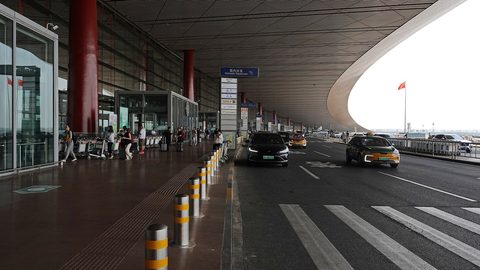 Beijing Flights PEK vs PKX Which Airport Actually Works for You
PEK or PKX? What each Beijing airport costs you in time, money, and logistical friction depending on where you are staying.
Beijing Flights PEK vs PKX Which Airport Actually Works for You
PEK or PKX? What each Beijing airport costs you in time, money, and logistical friction depending on where you are staying.
-
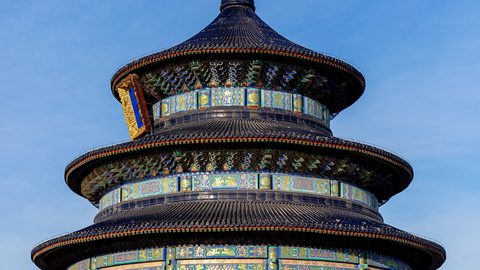 Beijing Things to Do Worth Your Limited Days
The Forbidden City and Great Wall are essential, but Beijing's meaning lives in temple courtyards, hutong lanes and food streets. Here is what earns your days.
Beijing Things to Do Worth Your Limited Days
The Forbidden City and Great Wall are essential, but Beijing's meaning lives in temple courtyards, hutong lanes and food streets. Here is what earns your days.
-
 Best Time to Visit Beijing, Month by Month Tradeoffs
April and October bring blue skies and queues, July brings heat, January brings empty sites and hazardous air. Here is Beijing month by month.
Best Time to Visit Beijing, Month by Month Tradeoffs
April and October bring blue skies and queues, July brings heat, January brings empty sites and hazardous air. Here is Beijing month by month.
-
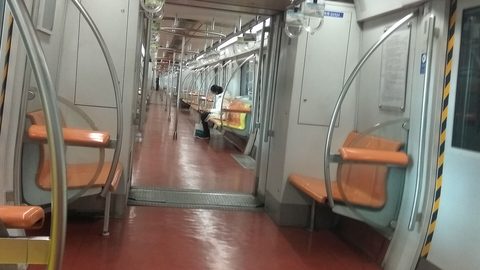 Getting Around Beijing Without Losing Half Your Day
Beijing's metro is clean and cheap but stops early, and taxis rarely speak English. Here is how to move around without burning half your day.
Getting Around Beijing Without Losing Half Your Day
Beijing's metro is clean and cheap but stops early, and taxis rarely speak English. Here is how to move around without burning half your day.
-
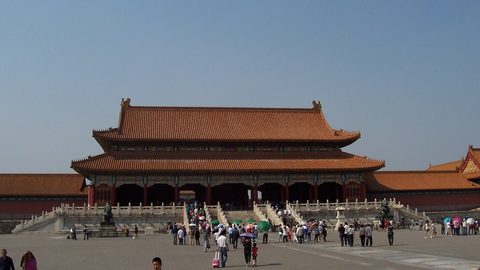 Forbidden City
 tickets require booking seven days ahead on WeChat with a passport. Here is the route to take once you are inside to avoid wasting the visit.
Forbidden City
Forbidden City tickets require booking seven days ahead on WeChat with a passport. Here is the route to take once you are inside to avoid wasting the visit.
-
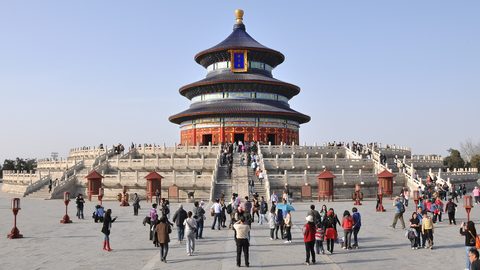 Temple of Heaven
The Temple of Heaven park matters as much as the temple. Morning tai chi, choirs, and card players make it a Beijing ritual worth a full morning.
Temple of Heaven
The Temple of Heaven park matters as much as the temple. Morning tai chi, choirs, and card players make it a Beijing ritual worth a full morning.
-
 Summer Palace
The Summer Palace is vast and the wrong entrance adds an hour of walking. Use the East Palace Gate and plan for at least four hours.
Summer Palace
The Summer Palace is vast and the wrong entrance adds an hour of walking. Use the East Palace Gate and plan for at least four hours.