Which Plugs and Voltage China Uses
China runs on 220V with three possible plug types. Here's exactly what adapter to pack and which devices need a voltage converter.
Plugs and Voltage Across Mainland China
You land at Shanghai Pudong after 14 hours in the air, your phone at 12 percent, and the USB slot in the hotel nightstand is a USB-C port your cable does not fit. You have no plug converter. The concierge has none. The convenience store around the corner is closed. Knowing what waits in the wall is how you avoid that scene.
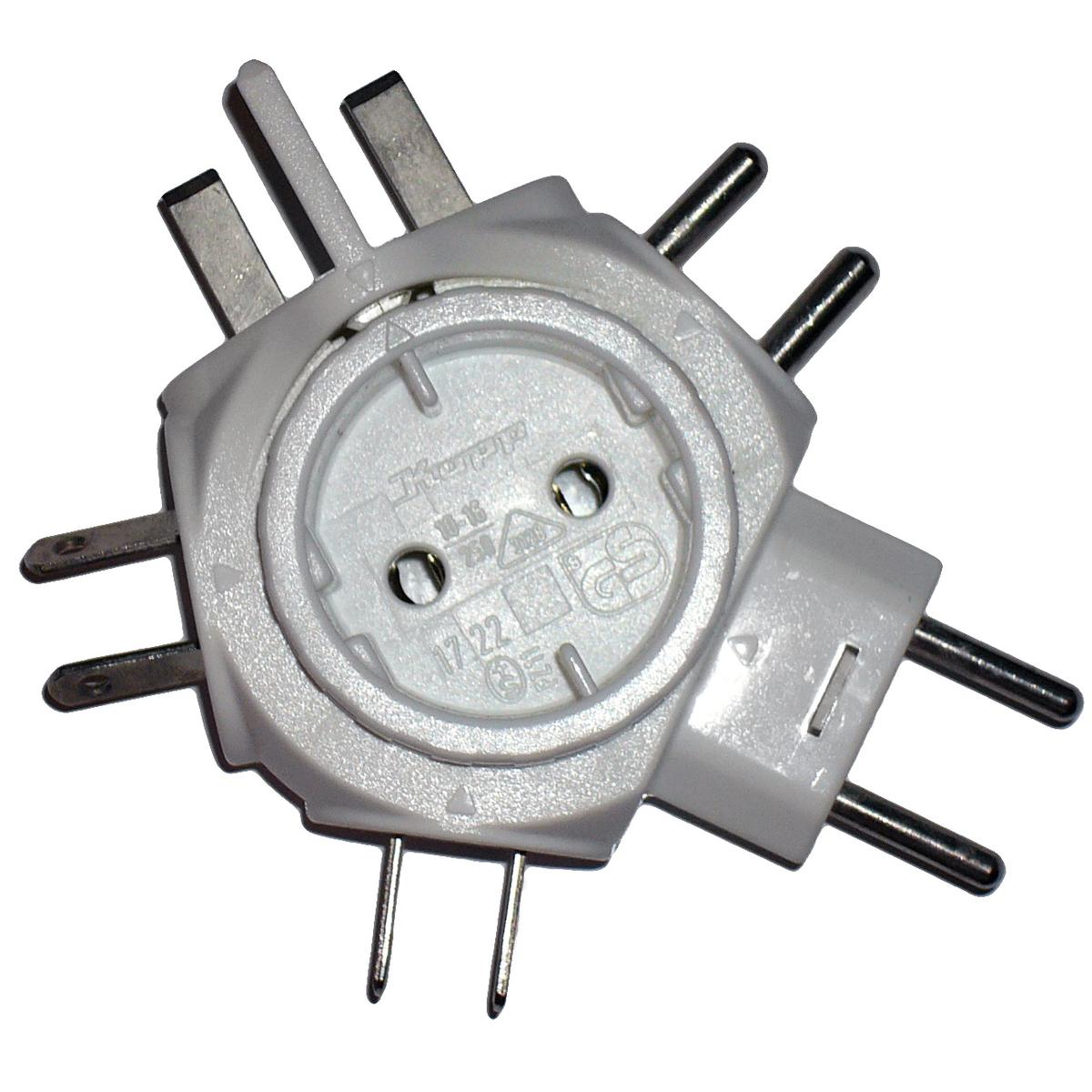
Mainland China runs on 220 V at 50 Hz. Three plug types appear across the country: Type A (two flat parallel blades), Type C (two round pins), and Type I (three flat pins in a triangular arrangement). The voltage and frequency are uniform nationwide. The plug you encounter depends on the age and class of the building.

The Three Plug Types You Will Find
Type A is the two-flat-blade plug familiar from the United States, Canada, Mexico, and Japan. Older Chinese buildings and budget hotels often have only Type A sockets. The socket face shows two vertical flat slots, unpolarised, so the plug goes in either orientation.
Type C is the Europlug with two round pins. It fits sockets across most of Europe. Many mid-range and international hotels in China install multi-standard sockets that accept both Type A and Type C, sometimes also Type I. The socket shape is two round holes.
Type I is the three-flat-pin plug used in Australia, New Zealand, and Argentina. It has two slanted flat slots for live and neutral and one vertical flat slot for the earth pin. Newer buildings and renovated four-star and five-star hotels increasingly use Type I as the primary socket, or they install multi-standard faceplates that accept it alongside Type A and Type C.
What You Will Actually Encounter
The most common socket format in mid-range and international hotels is a multi-standard socket that accepts Type A, Type C, and Type I. Older or budget properties may have only Type A or only Type I. Check your hotel listing for recent photos of the room or email the property before departure.
Voltage, Adapters, and Converters
Your device needs a plug converter when its plug shape does not match the socket. That is all a plug converter does: it changes the physical fit, not the electrical current. You need a voltage converter only when your device is single-voltage for 100-120 V and not rated for 220-240 V. A converter is heavy and unnecessary for most modern electronics.
Check the writing on every power brick and charger. If it reads "Input: 100-240 V 50/60 Hz," the device is dual-voltage and works on Chinese mains with just a plug converter. All modern phone chargers, laptop power bricks, tablet chargers, and camera battery chargers are dual-voltage. The device that often is not dual-voltage is a hair dryer, a straightening iron, or an electric razor from North America. Those appliances run on 100-120 V only and require a heavy step-down converter, not just a plug converter. Your best option is to leave single-voltage appliances at home and buy a cheap dual-voltage travel hair dryer after arrival.
Hotel USB Ports
USB ports in hotel rooms are common but not universal. Three-star and above hotels usually have USB-A ports in nightstands or desk lamps. New or renovated four-star and five-star hotels increasingly add USB-C ports. Budget hotels and older guesthouses may have no USB charging at all. Carry a wall charger with multiple USB outputs and a Chinese plug converter built in.
Hong Kong Is Different
If your trip includes Hong Kong, the plug and voltage change. Hong Kong uses the British-style three-rectangular-pin Type G plug and 220 V. A Type A, C, or I converter from mainland China will not fit a Hong Kong socket. You need a separate Type G converter for Hong Kong, or a universal converter that covers both Type A/C/I and Type G. Add it to your bag before leaving home.
| Specification | Detail |
|---|---|
| Country | China (mainland) |
| Mains voltage | 220 V |
| Mains frequency | 50 Hz |
| Plug type A | Two flat parallel blades (US/Japan style) |
| Plug type C | Two round pins (Europlug) |
| Plug type I | Three flat pins, triangular (Australia/New Zealand style) |
| Hong Kong (separate) | Type G, three rectangular pins, 220 V |
| USB-A in hotels | Common in 3-star and above |
| USB-C in hotels | Common in new or renovated 4-star and 5-star |
| Adapter needed? | Yes, unless your device plug matches Type A, C, or I |
| Converter needed? | Only for single-voltage 100-120 V devices |
Power Banks, Flights, and High-Speed Rail
Carry a power bank. You will use your phone for maps, payments, translation, ride-hailing, and train tickets every minute. The battery drains fast. A power bank rated around 100 Wh gets you through a full day.
Domestic Flight Rules
On Chinese domestic flights, power banks are permitted only in carry-on baggage. They are prohibited in checked baggage entirely. The rules on capacity are strict. A power bank rated up to 100 Wh does not require airline approval. A power bank between 100 Wh and 160 Wh requires airline approval before the flight. Over 160 Wh is banned. The airline also limits you to two power banks per passenger, and the capacity in Wh or mAh plus the voltage must be clearly printed on the device. If the markings are worn off, the gate agent may refuse it.
High-Speed Rail
High-speed rail is more relaxed. Power banks are permitted in carry-on luggage. There is no published national capacity limit, though staff may refuse a damaged or swollen power bank. High-speed trains in China have no checked luggage system; your power bank stays with you on board. Use it to charge your devices during the trip. Many CRH and CR trains also have 220 V sockets at the seats, so you can plug in directly with your converter.
Common Questions
Do I need a voltage converter for my phone charger in China?
No. All modern phone chargers are dual-voltage and accept 100-240 V. You only need a plug converter if the charger plug is not Type A, Type C, or Type I.
Which plug converter should I buy for China?
Buy a universal converter that includes Type A (two flat pins), Type C (two round pins), and Type I (three angled flat pins). Do not buy a single-type converter unless you are certain your hotel uses only that type.
Will my US plug work in China without a converter?
Possibly. Type A is the same two-flat-blade plug used in the US. If the hotel socket is Type A only, your US plug fits. But many newer hotel sockets are Type I, which your US plug will not fit. A universal converter covers both.
Does Hong Kong use the same plugs as mainland China?
No. Hong Kong uses Type G, the three-rectangular-pin British plug. You need a separate Type G converter for Hong Kong. A mainland China converter will not fit.
Can I charge my laptop in China?
Yes if your laptop charger is dual-voltage (check the input range marked on the brick). You will need a plug converter for the socket. Nearly all modern laptop chargers are dual-voltage.
Do Chinese hotel rooms have USB ports?
Often yes in three-star and above hotels, but not guaranteed. USB-A is common; USB-C is increasingly common in new four-star and five-star hotels. Budget hotels and older guesthouses may have none. Bring your own charger.
Can I bring a power bank on a Chinese domestic flight?
Yes, but only in carry-on baggage. Checked baggage is prohibited. The power bank must be under 100 Wh to avoid airline approval. Capacity in Wh or mAh and voltage must be clearly printed on the device.
Read next
-

 China Visa-Free Transit and Unilateral Entry Rules Explained
China visa-free transit and unilateral entry rules change often. Here is how they work now, who qualifies, and what breaks a stay.
China Visa-Free Transit and Unilateral Entry Rules Explained
China visa-free transit and unilateral entry rules change often. Here is how they work now, who qualifies, and what breaks a stay.
-
 Cash to Cashless in China What First-Timers Must Set Up
China runs on Alipay and WeChat Pay, and cash is often refused. Set up both with a foreign card before you land or risk being stranded.
Cash to Cashless in China What First-Timers Must Set Up
China runs on Alipay and WeChat Pay, and cash is often refused. Set up both with a foreign card before you land or risk being stranded.
-
 Will Google, WhatsApp and Maps Actually Work on a China eSIM
A China eSIM solves data but not the firewall. Here is what actually works for Google, WhatsApp and Maps and why a VPN still matters.
Will Google, WhatsApp and Maps Actually Work on a China eSIM
A China eSIM solves data but not the firewall. Here is what actually works for Google, WhatsApp and Maps and why a VPN still matters.
-
 How to Book China High-Speed Rail as a Foreigner
China high-speed rail is the best way between cities, but booking and boarding as a foreigner means passports, Chinese signs and buffer time.
How to Book China High-Speed Rail as a Foreigner
China high-speed rail is the best way between cities, but booking and boarding as a foreigner means passports, Chinese signs and buffer time.
-
 China Public Holidays and What They Do to Travel
China's national holidays trigger massive domestic travel, sold-out trains, and packed sights. Here's when they fall and how to plan around them.
China Public Holidays and What They Do to Travel
China's national holidays trigger massive domestic travel, sold-out trains, and packed sights. Here's when they fall and how to plan around them.
-
 Best Time to Visit China Month by Month Across Climates
China spans several climates and two Golden Weeks. Here is the month-by-month tradeoff so you can pick dates without regret.
Best Time to Visit China Month by Month Across Climates
China spans several climates and two Golden Weeks. Here is the month-by-month tradeoff so you can pick dates without regret.
-
 Guangzhou
A Guangzhou travel guide that puts Cantonese food and real neighbourhoods first, for travellers who prefer chaotic wholesale markets and yum cha to polished tourist sights.
Guangzhou
A Guangzhou travel guide that puts Cantonese food and real neighbourhoods first, for travellers who prefer chaotic wholesale markets and yum cha to polished tourist sights.
-
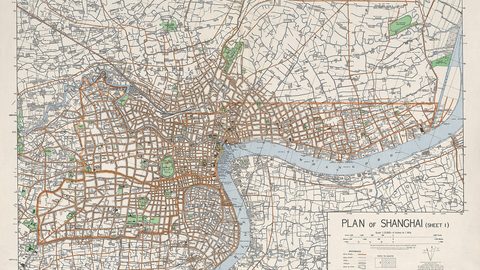 Shanghai
 hits visitors with a disorienting mix of futuristic skyline and lane-house nostalgia. Our hub orients you against Beijing and routes you to every planning page.
Shanghai
Shanghai hits visitors with a disorienting mix of futuristic skyline and lane-house nostalgia. Our hub orients you against Beijing and routes you to every planning page.
-
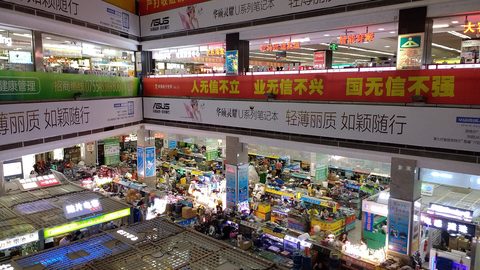 Shenzhen
 is a 40-year-old city built on hardware, ambition, and migrants. This guide tells you what it is actually for and whether it belongs in your trip.
Shenzhen
Shenzhen is a 40-year-old city built on hardware, ambition, and migrants. This guide tells you what it is actually for and whether it belongs in your trip.