Where to Eat in Ginza at Every Price Point
How to eat across Ginza's full spectrum, from grab-and-go basement counter meals to the reservation-only sushi counters that define Tokyo fine dining.
Ginza’s Four Tiers of Eating, From Basement Bento to Reservation Counters
The common assumption is that eating well in Ginza requires a Japanese-speaking hotel concierge and a credit card with no limit. That is true for roughly a dozen counters that charge ¥30,000 at dinner and lock their phone lines to Japanese speakers. For everyone else, Ginza has hundreds of seats where you walk in, point, pay less than a movie ticket, and eat something the concierge crowd envies.
Structure your eating by access level, not by cuisine or neighbourhood. There are four tiers: the basement food halls where you grab a bento and eat standing up, the department store restaurant floors where lunch is a bargain, the standing bars under the train tracks where skewers cost pocket change, and the reservation-only counters where you still eat well if you know how to book. Every tier has specific dishes and exact prices worth knowing before you step inside.
Depachika: the Basement Bento That Beats Any Restaurant
Every major department store in Ginza has a basement food hall called a depachika. No reservation. No Japanese. No need to spend more than ¥1,000 to eat a meal that would cost ¥5,000 upstairs. Target these three: Mitsukoshi Ginza on B2F, Matsuya Ginza on B1F, and Ginza Six on B2F.
What To Buy And When
Bento boxes at Mitsukoshi run ¥1,000 to ¥5,000. Matsuya is cheaper: ¥800 to ¥4,000. Ginza Six tops out at ¥6,000.
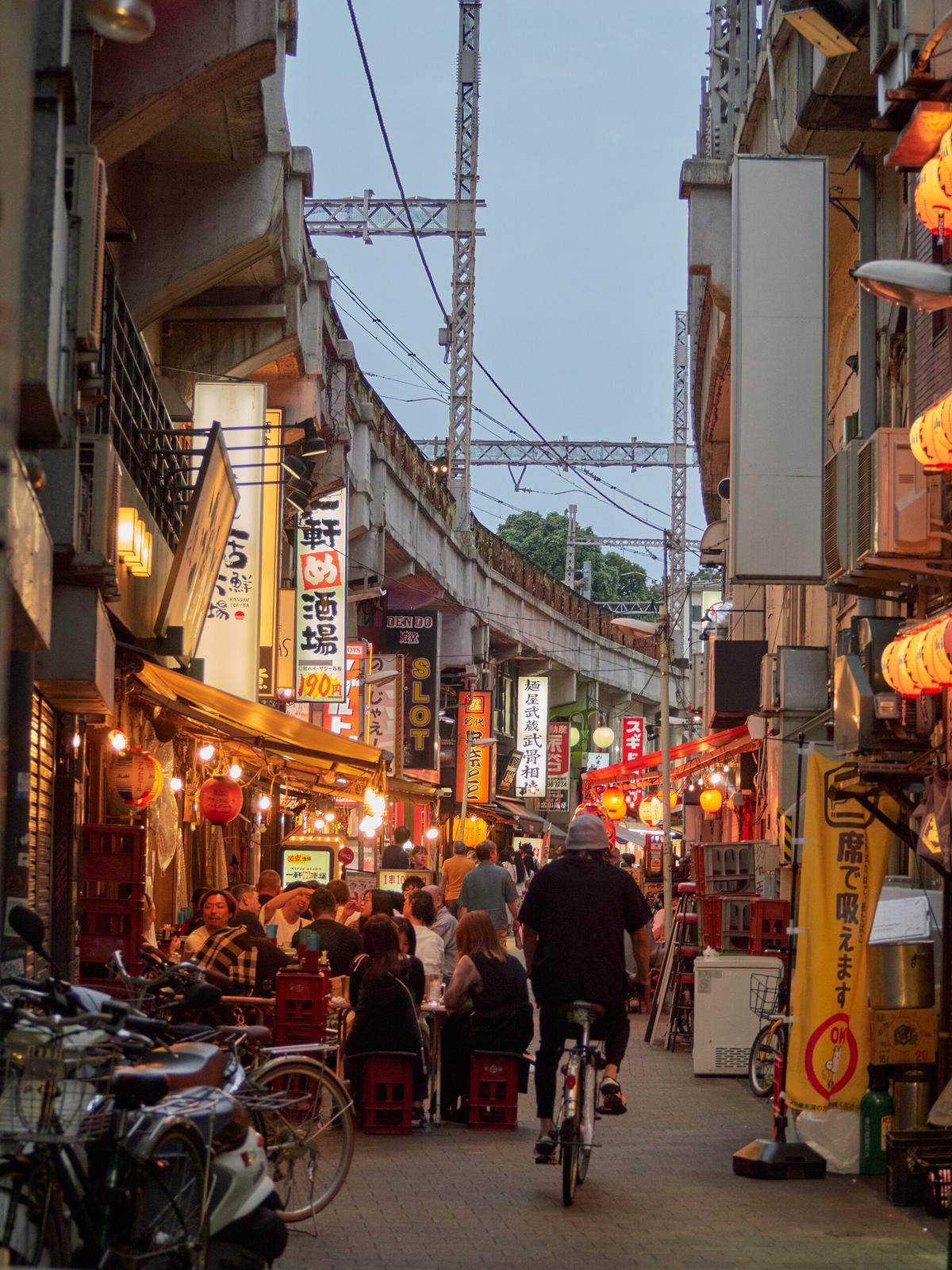
The failure case is showing up too late. Mitsukoshi and Matsuya close at 20:00. Ginza Six closes at 20:30. Arrive between 19:00 and 19:30 to catch the discount stickers that staff start slapping on prepared food. By 20:15 at Ginza Six the shelves are bare. If it is 20:30 and you are hungry, walk to the Yurakucho yakitori alley under the JR tracks, ten minutes north. Stalls there run until 23:00.
Department Store Restaurant Floors: Lunch for the Price of a Coffee
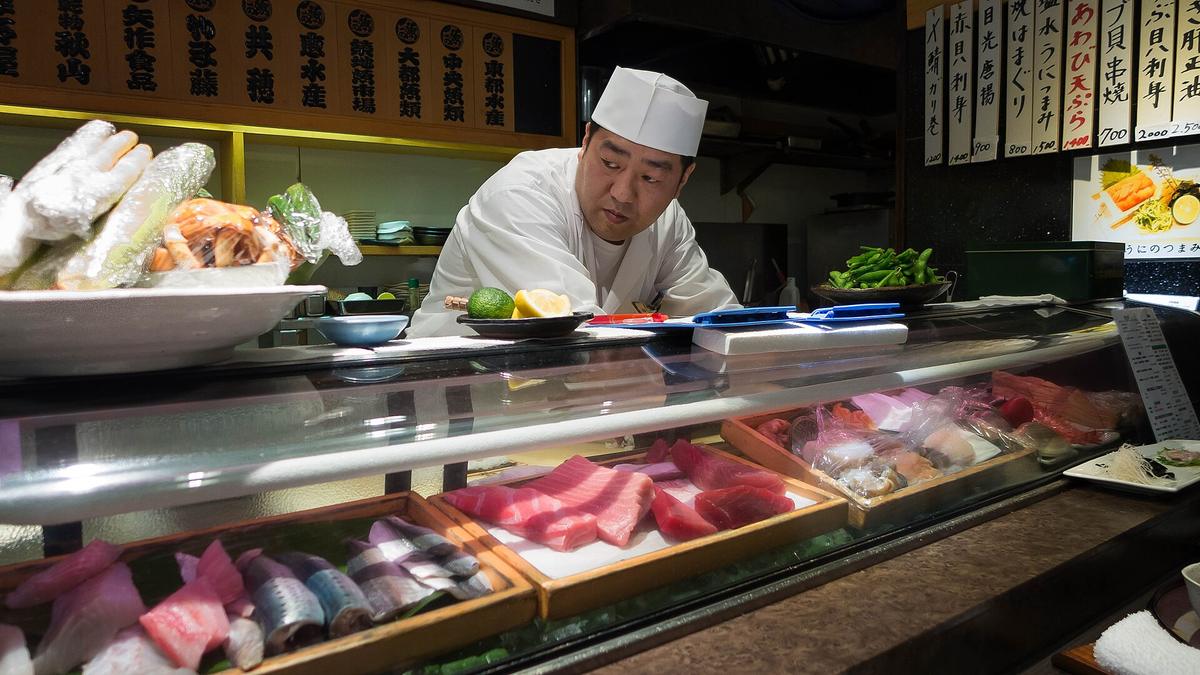
The third to seventh floors of Mitsukoshi and Matsuya are restaurants. Dinner here is expensive. Lunch is not. The high-end sushi counters that charge ¥20,000 to ¥40,000 at dinner slash their prices to ¥3,000 to ¥6,000 at lunch. That is the single most practical thing you can do: eat sushi at lunch, not dinner.
The Lunch Price Drop
Kyubey Ginza charges ¥4,000 to ¥8,000 for lunch versus ¥15,000 to ¥25,000 at dinner. Sushi Aoki: ¥5,000 to ¥10,000 lunch, ¥20,000 to ¥30,000 dinner. Sushi Iwa: ¥5,000 to ¥8,000 lunch, ¥20,000 plus dinner. Even the famous names drop deep. Sushi Kanesaka lunch is ¥5,500 versus ¥20,000 plus at dinner. Sushi Yoshitake lunch is ¥8,000 to ¥15,000 versus ¥30,000 to ¥40,000 at dinner.
The caveat: these lunch counters still fill up. Arrive at 11:15 for the 11:30 opening. If the host says full, ask for the counter, not the table section. Counters have fewer seats but more cancellations.
After Midnight
If you cannot get a counter seat, Sushi Zanmai Ginza is open 24 hours and sells pieces for ¥100 to ¥500 each. The flagship is on the main street. Point at the photo menu. Do not expect Kyubey quality, but it works at 1am.
.jpg)

Read next
-
 Ginza Shopping From Department Store Basements to Rooftop Terraces
A floor-by-floor breakdown of Ginza's department stores, flagship boutiques, and the legendary basement food halls that turn shopping into a full-day pursuit.
Ginza Shopping From Department Store Basements to Rooftop Terraces
A floor-by-floor breakdown of Ginza's department stores, flagship boutiques, and the legendary basement food halls that turn shopping into a full-day pursuit.
-
 Japan Travel Guide for First-Timers Who Like Order but Not Crowds
Japan delivers deep tradition and futuristic efficiency, but the language barrier and density of rules can exhaust first-timers. Here is what to actually expect.
Japan Travel Guide for First-Timers Who Like Order but Not Crowds
Japan delivers deep tradition and futuristic efficiency, but the language barrier and density of rules can exhaust first-timers. Here is what to actually expect.
-
 Japan eSIM vs Pocket WiFi vs Physical SIM for Staying Connected
Free public WiFi across Japan is unreliable and slow. Compare eSIM plans from Ubigi and Airalo against renting a pocket WiFi device at Narita or Haneda.
Japan eSIM vs Pocket WiFi vs Physical SIM for Staying Connected
Free public WiFi across Japan is unreliable and slow. Compare eSIM plans from Ubigi and Airalo against renting a pocket WiFi device at Narita or Haneda.
-
 Japan Visa-Free Entry and the Visit Japan Web Digital Form
Visa-free entry covers many nationalities, but the Visit Japan Web digital form and QR codes determine how quickly you clear immigration at Narita or Haneda.
Japan Visa-Free Entry and the Visit Japan Web Digital Form
Visa-free entry covers many nationalities, but the Visit Japan Web digital form and QR codes determine how quickly you clear immigration at Narita or Haneda.
-
 Cash and IC Cards Are the Real Payment System in Japan
Japan projects a high-tech image but many small restaurants, temples, and rural buses demand cash. IC cards like Suica and Icoca bridge the gap for daily spending.
Cash and IC Cards Are the Real Payment System in Japan
Japan projects a high-tech image but many small restaurants, temples, and rural buses demand cash. IC cards like Suica and Icoca bridge the gap for daily spending.
-
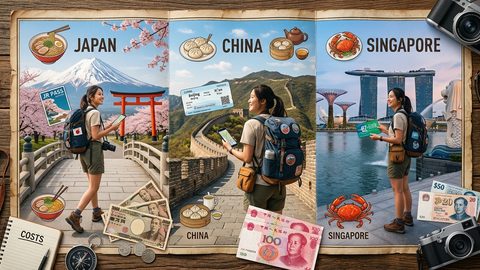 What Japan, China, and Singapore Actually Cost Independent Travelers
Real per-day costs for Japan, China, and Singapore broken down by accommodation tier, food strategy, transit, and connectivity for independent travelers.
What Japan, China, and Singapore Actually Cost Independent Travelers
Real per-day costs for Japan, China, and Singapore broken down by accommodation tier, food strategy, transit, and connectivity for independent travelers.
-
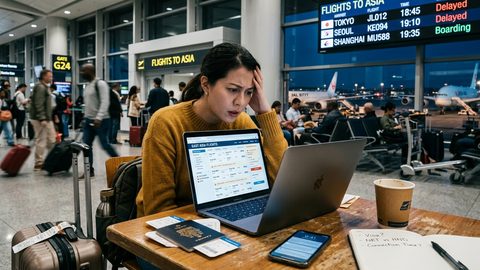 What Most Travelers Get Wrong When Booking Flights to East Asia
Most travelers book East Asia flights on price alone. Here's what they miss about route gaps, fleet age, and aircraft type on 10-14 hour hauls.
What Most Travelers Get Wrong When Booking Flights to East Asia
Most travelers book East Asia flights on price alone. Here's what they miss about route gaps, fleet age, and aircraft type on 10-14 hour hauls.
-
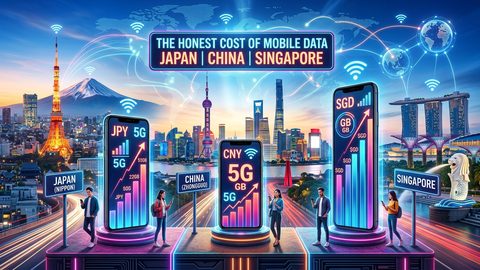 The Honest Cost of Mobile Data in Japan, China, and Singapore
Real price data for SIMs, pocket WiFi, and eSIMs in Japan, China, and Singapore. Plus the friction points most travel guides quietly skip.
The Honest Cost of Mobile Data in Japan, China, and Singapore
Real price data for SIMs, pocket WiFi, and eSIMs in Japan, China, and Singapore. Plus the friction points most travel guides quietly skip.
-
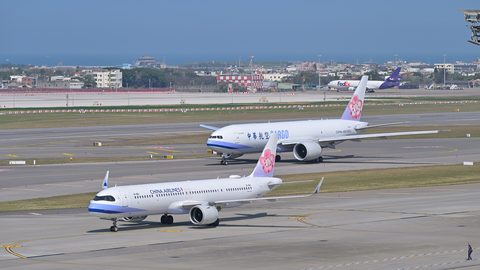 Fifth Freedom Flights Are the Award Sweet Spot Nobody Searches For
Fifth-freedom flights let you fly a foreign airline between two other countries, and they often have award seats when the airline's own hub routes are sold out.
Fifth Freedom Flights Are the Award Sweet Spot Nobody Searches For
Fifth-freedom flights let you fly a foreign airline between two other countries, and they often have award seats when the airline's own hub routes are sold out.