The Ginza Shopping Experience, Floor by Floor
A floor-by-floor breakdown of Ginza's department stores, flagship boutiques, and the legendary basement food halls that turn shopping into a full-day pursuit.
The Ginza Shopping Experience, Floor by Floor
Most visitors assume a Ginza shopping trip means a blur of luxury flagships and designer handbags. The reality is more useful. The few blocks along Chuo-dori hold a half dozen distinct store types, each solving a different problem: where to eat without a reservation, where to find a rest stop without buying anything, which building to enter when you need a ¥200 gift, not a watch. Treat the department stores as vertical neighbourhoods with their own ground rules, markdown schedules, and quiet corners.
Eat First: The Basement Food Halls
Start with the basement. Across Ginza, the department store basement food halls are the district's best strategy for eating well at lunch without a booking. A bento box at Mitsukoshi B3 costs ¥800 to ¥2,500. A comparable restaurant plate on the street runs ¥1,500 to ¥4,000. The tradeoff is timing. Discounts on prepared foods begin around 18:00 at Matsuya B2 and stretch to 18:30 at Mitsukoshi B3. The best value window is 18:30 to 19:30, when markdowns hit 20 to 50 percent off. The failure case: arrive at 17:00 and you pay full retail. Arrive at 20:00 and the best trays are gone. Aim for 18:30.
Mitsukoshi: The Full Vertical Neighbourhood
For the widest selection within a single building, enter Mitsukoshi Ginza at 4-6-16 Ginza. The bronze lion at the main entrance has stood since 1914, before the current 1930 building was rebuilt in 2014. Floors B2 and B3 form the food hall: B2 handles sweets, wagashi, chocolate, and packaged gifts. B3 covers fresh produce, deli, bento, fish, meat, and a bakery. The standing counter on B3 lets you eat immediately. Restaurant floor hours run 11:00 to 22:00, later than the store's 10:00 to 20:00. Mitsukoshi closes 1 January and on occasional irregular days. The rooftop terrace is free, open to the public, and a reliable respite when the crowds on B3 are shoulder to shoulder.
Matsuya And Wako: What They Are For
Three blocks north at 3-6-1 Ginza, Matsuya Ginza runs a tighter edit. Its B2 food hall starts markdowns earlier, around 18:00, and is known for Maison du Chocolat counters and an extensive obento selection. The building's strength is fashion and cosmetics, not food volume. Le Café Doutor on the first floor functions as a de facto meeting point. No rooftop garden here, and no reason to visit Matsuya for food beyond the B2 prepared foods. Use it for fashion edits and the earlier discount window if you are passing through before 19:00.
Wako at 4-5-11 Ginza is not a department store in any practical shopping sense. The Neo-Renaissance building by Jin Watanabe dates to 1932, and the Seiko clock tower chimes on the hour from 10:00 to 20:00. But Wako sells luxury watches and jewellery only. There is no food hall, no rooftop, no cosmetics floor worth visiting for a non-watch buyer. If you are not buying a timepiece, skip the interior. The facade and the clock chime are the attraction, available from the street for free. Hours are 10:30 to 19:00, closed on Mondays except national holidays.
Ginza Six: Space And Sky
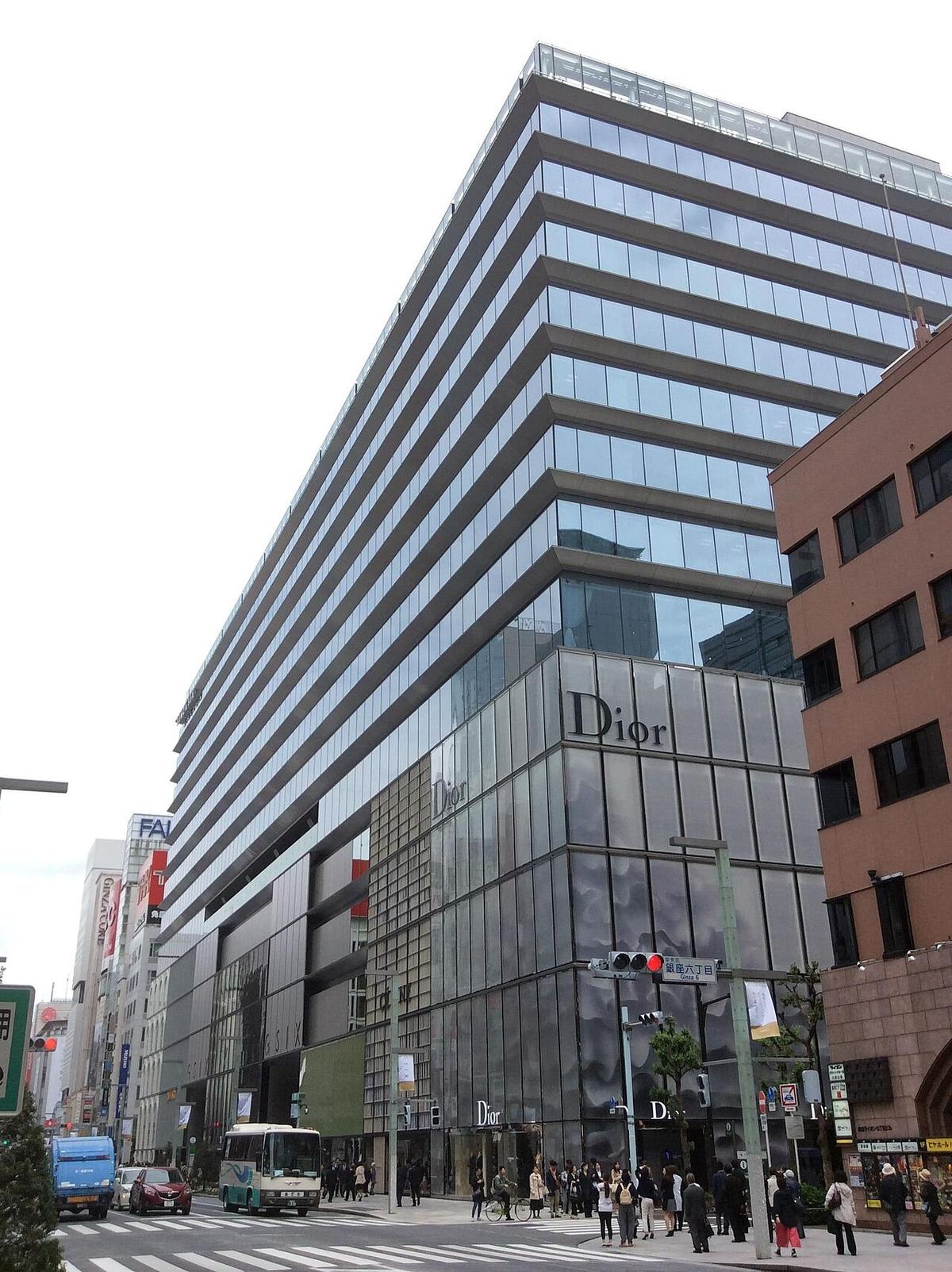
Ginza Six at 6-10-1 Ginza, opened 20 April 2017, is the largest commercial complex in the district at roughly 47,000 square metres of retail. It solves a problem the older stores do not: space. The B2 food hall has proper seating. The 4,000-square-metre rooftop garden, Ginza Six Garden, is free and open 10:30 to 20:30. There is no traditional basement food hall; instead, the B2 food hall carries delicatessen and sweets. Anchor tenants include Dior, Fendi, Saint Laurent, Van Cleef & Arpels, and Rimowa. The B3 also houses the Kanze Nohgakudo, a working Noh theatre. Shop hours are 10:30 to 20:30, restaurants until 23:30. Use Ginza Six for its seating, its garden, and its deep luxury edit. Skip it if you want a proper markdown hunt in a basement food hall.
Flagships And Specialists
Two dedicated flagships sit outside the department-store model but answer specific needs. Uniqlo Ginza at 6-9-5 Ginza in the Ginza Komatsu Building is the largest Uniqlo globally, twelve floors from B1 to 12F, open 11:00 to 21:00. T-shirts run ¥1,500 to ¥3,990, down jackets ¥6,990 to ¥12,900. The multilingual staff and limited Ginza exclusives make it the single best place to stock up on basics. Muji Ginza at 3-3-5 Ginza, in the Muji Hotel Ginja building, runs B1 to 6F retail with the largest Muji food section in Tokyo and fresh produce. Stationery starts at ¥90. Clothing basics run ¥990 to ¥4,990. The Muji Diner on B1 and Muji Bakery on 1F handle eat-in meals. Both operate until 21:00, which means they are the fallback when department stores close at 20:00.
Two specialist stores merit a detour for stationery and traditional goods. Itoya Ginza at 2-7-15 Ginza spans twelve floors from B1 to 12F, plus a rooftop hydroponic farm. Fountain pens run from ¥1,000 to ¥500,000 and notebooks from ¥300 to ¥5,000. The custom stamp and name-card service on 5F is practical for souvenirs. The annex, K.Itoya at 2-7-13, covers art supplies and frames. Hours are 10:00 to 20:00 Monday to Saturday, 10:00 to 19:00 Sunday and holidays. Kyukyodo Ginza at 5-7-04 Ginza, founded in Kyoto in 1663 and in Ginza since 1880, sells Japanese washi paper (sheets ¥100 to ¥2,000), incense (¥500 to ¥10,000), calligraphy brushes, sumi ink, and original Gyokushodo incense blends. The wooden facade on Chuo-dori is a rarity. Hours are 10:00 to 19:00 Monday to Saturday, 11:00 to 19:00 Sunday.
Tax-Free And The Pedestrian Street
Tax-free processing applies at participating stores for temporary visitors with an original physical passport. The minimum purchase is ¥5,000 (excluding tax) per store per day, with consumables (food, cosmetics, medicine) and general goods (clothing, electronics, stationery) tallied separately. The refunded consumption tax is 10 percent standard rate, or 8 percent for takeaway food and beverages. Some stores charge a 1.5 percent handling fee on the refunded amount. Consumables must be sealed in a transparent bag by the retailer and must not be opened before leaving Japan. If you plan to eat a bento immediately, pay the tax-included price and accept you cannot claim the refund.
Chuo-dori pedestrianises Saturdays, Sundays, and national holidays from 12:00 to 17:00 (October to March) or 12:00 to 18:00 (April to September), from Ginza 1-chome to Ginza 8-chome. Motor vehicles are banned. Rickshaws and bicycles may pass at walking speed. This is the only time you can walk the 1.1-kilometre spine without dodging traffic. Plan your visit to land at midday on a Sunday if you want the full retail landscape at pedestrian pace.
The single most practical thing to do: start at Mitsukoshi Ginza B3 at 18:30 on a weekday, pick up a marked-down bento for ¥800 to ¥1,200, take the elevator to the free rooftop terrace, eat there, then walk south on Chuo-dori to Ginza Six for the rooftop garden if you want more sky. That sequence, in that order, costs less than a casual lunch and avoids every reservation problem in the district.
The most common failure: arriving at the basement food hall at 19:45, finding the best trays already cleared, and settling for a full-price pack of wagashi at ¥600 each while the restaurant floor is on a 45-minute wait. Arrive by 18:30.

Common Questions
Which Ginza department store has the best basement food hall for dinner shopping?
Mitsukoshi Ginza, floors B2 and B3. The selection includes sweets, wagashi, fresh produce, deli, bento, fish, meat, and a bakery. Markdowns start around 18:30 on bento, sushi, and deli items. Matsuya starts earlier at 18:00 but offers a narrower food range.
Can I eat the food I buy from the basement food hall inside the store?
Mitsukoshi Ginza B3 has a standing counter for immediate consumption. Ginza Six B2 has a food hall with seating. Matsuya B2 has limited standing space near exits. The only reliable eat-in option with a seat is Ginza Six B2.
What is the tax-free minimum purchase at Ginza department stores?
¥5,000 (excluding tax) per store per day, with consumables and general goods tallied separately. Some stores charge a 1.5 percent handling fee on the refunded amount. A physical passport with a Temporary Visitor stamp is required.
Which Ginza store is best for a free rest stop without buying anything?
Mitsukoshi Ginza's rooftop terrace is free and open to the public. Ginza Six Garden is 4,000 square metres, free, and open 10:30 to 20:30. Both are quieter than street-level options.
What is the best time to walk Chuo-dori safely?
Saturdays, Sundays, and national holidays between 12:00 and 17:00 (October to March) or 12:00 and 18:00 (April to September). The 1.1-kilometre segment from Ginza 1-chome to Ginza 8-chome is closed to all motor vehicles except emergency vehicles.
Read next
-
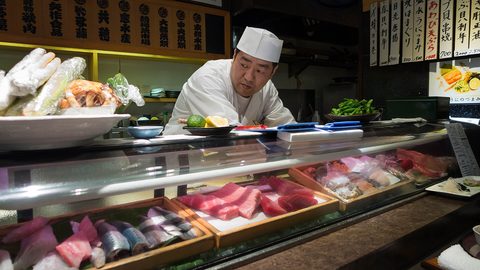
 Eating in Ginza From Basement Counters to Reservation-Only Rooms
How to eat across Ginza's full spectrum, from grab-and-go basement counter meals to the reservation-only sushi counters that define Tokyo fine dining.
Eating in Ginza From Basement Counters to Reservation-Only Rooms
How to eat across Ginza's full spectrum, from grab-and-go basement counter meals to the reservation-only sushi counters that define Tokyo fine dining.
-
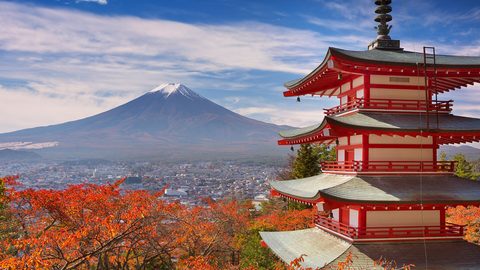 Japan Travel Guide for First-Timers Who Like Order but Not Crowds
Japan delivers deep tradition and futuristic efficiency, but the language barrier and density of rules can exhaust first-timers. Here is what to actually expect.
Japan Travel Guide for First-Timers Who Like Order but Not Crowds
Japan delivers deep tradition and futuristic efficiency, but the language barrier and density of rules can exhaust first-timers. Here is what to actually expect.
-
 Japan eSIM vs Pocket WiFi vs Physical SIM for Staying Connected
Free public WiFi across Japan is unreliable and slow. Compare eSIM plans from Ubigi and Airalo against renting a pocket WiFi device at Narita or Haneda.
Japan eSIM vs Pocket WiFi vs Physical SIM for Staying Connected
Free public WiFi across Japan is unreliable and slow. Compare eSIM plans from Ubigi and Airalo against renting a pocket WiFi device at Narita or Haneda.
-
 Japan Visa-Free Entry and the Visit Japan Web Digital Form
Visa-free entry covers many nationalities, but the Visit Japan Web digital form and QR codes determine how quickly you clear immigration at Narita or Haneda.
Japan Visa-Free Entry and the Visit Japan Web Digital Form
Visa-free entry covers many nationalities, but the Visit Japan Web digital form and QR codes determine how quickly you clear immigration at Narita or Haneda.
-
 Cash and IC Cards Are the Real Payment System in Japan
Japan projects a high-tech image but many small restaurants, temples, and rural buses demand cash. IC cards like Suica and Icoca bridge the gap for daily spending.
Cash and IC Cards Are the Real Payment System in Japan
Japan projects a high-tech image but many small restaurants, temples, and rural buses demand cash. IC cards like Suica and Icoca bridge the gap for daily spending.
-
 What Japan, China, and Singapore Actually Cost Independent Travelers
Real per-day costs for Japan, China, and Singapore broken down by accommodation tier, food strategy, transit, and connectivity for independent travelers.
What Japan, China, and Singapore Actually Cost Independent Travelers
Real per-day costs for Japan, China, and Singapore broken down by accommodation tier, food strategy, transit, and connectivity for independent travelers.
-
 What Most Travelers Get Wrong When Booking Flights to East Asia
Most travelers book East Asia flights on price alone. Here's what they miss about route gaps, fleet age, and aircraft type on 10-14 hour hauls.
What Most Travelers Get Wrong When Booking Flights to East Asia
Most travelers book East Asia flights on price alone. Here's what they miss about route gaps, fleet age, and aircraft type on 10-14 hour hauls.
-
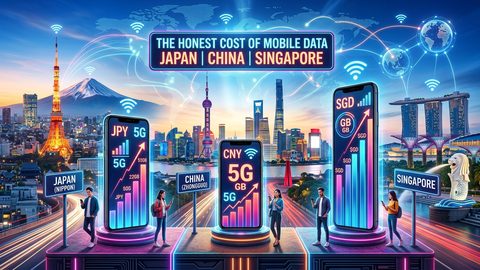 The Honest Cost of Mobile Data in Japan, China, and Singapore
Real price data for SIMs, pocket WiFi, and eSIMs in Japan, China, and Singapore. Plus the friction points most travel guides quietly skip.
The Honest Cost of Mobile Data in Japan, China, and Singapore
Real price data for SIMs, pocket WiFi, and eSIMs in Japan, China, and Singapore. Plus the friction points most travel guides quietly skip.
-
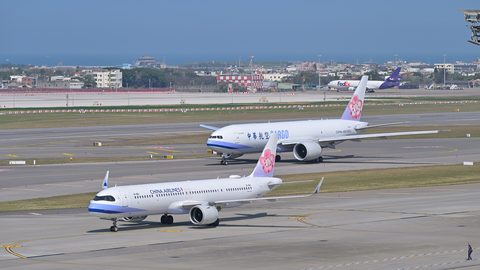 Fifth Freedom Flights Are the Award Sweet Spot Nobody Searches For
Fifth-freedom flights let you fly a foreign airline between two other countries, and they often have award seats when the airline's own hub routes are sold out.
Fifth Freedom Flights Are the Award Sweet Spot Nobody Searches For
Fifth-freedom flights let you fly a foreign airline between two other countries, and they often have award seats when the airline's own hub routes are sold out.