Harajuku Food Beyond the Famous Crepe Stands
Skip the Takeshita-dori crush and find Harajuku's real eating scene in the backstreets, from third-wave coffee roasters to a tucked-away tonkatsu institution.
Ura-Harajuku Backstreets for Lunch and Coffee
The common assumption is that the best food in Harajuku is on Takeshita-dori. It is not. That 350-metre pedestrian strip funnels 3,000 to 4,000 people an hour on weekend afternoons, and the top three crepe shops demand a 20- to 45-minute wait. The real eating happens three blocks west, in the Ura-Harajuku backstreets, where you sit down, order a proper lunch, and pay the same or less than you would for a sugar bomb eaten standing in an alcove. Here is where to go instead and which famous stands might still deserve a visit.
The Two Crepe Shops Worth Knowing About
Marion Crepes and Angel Crepes
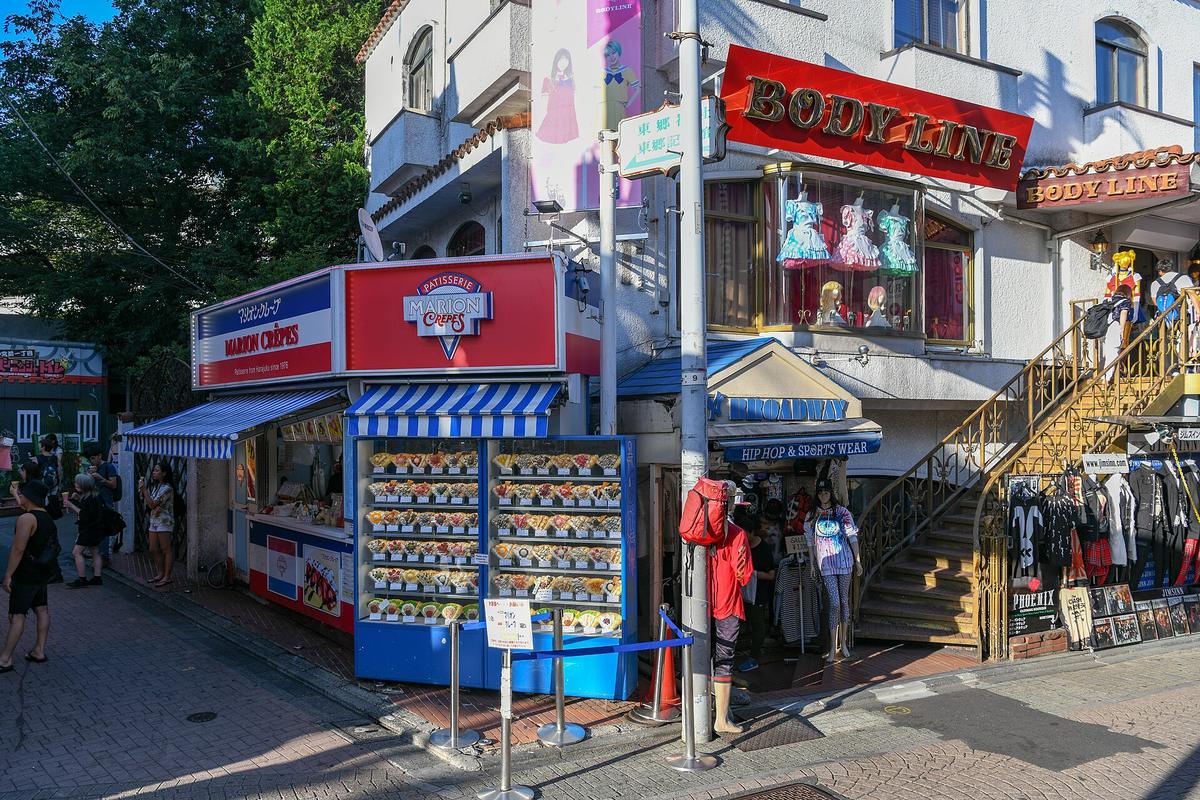
Marion Crepes opened its flagship on the main drag in 1976 and now sells roughly 75 varieties at ¥500 to ¥750 per crepe. Its queue runs single file along the storefront with a staffed handoff window and no interior seating. Angel Crepes opened a year later, in 1977, charging ¥480 to ¥700. Both shops design their queues for turnover: pre-poured batter, assembly-line topping stations, average transaction under 90 seconds. If you want a crepe, pick one of these two. Do not queue at any of the newer shops that opened purely to exploit the photo pipeline.
Totti Candy Factory And The Photo Pipeline
Totti Candy Factory sells a giant rainbow cotton candy for ¥1,000 to ¥1,200. Purchase at the counter, receive the item, step to the adjacent pastel wall for photos, exit. This is not food. It is a prop. The same logic applies to Long! Longer!! Longest!!! and its potato spirals. You buy a skewer, photograph it against the branded backdrop, and walk away. Neither shop is worth a queue, and neither delivers a meal. Skip both unless you need content for a social-media feed and have no other plan.
How To Eat A Crepe Without Breaking The Rules
Ward guidance prohibits eating while walking on the strip. The norm is to stand in shop-adjacent alcoves to consume. Marion Crepes and Angel Crepes both have such alcoves. Expect to stand, eat in three minutes, and move on. If that sounds unappealing, skip the crepe entirely and head to the sit-down options below.
.jpg)
Quiet Streets, Proper Lunch: Ura-Harajuku
The Ura-Harajuku area is the backstreet grid west of Meiji-dori, north of Omotesando, and south of Cat Street (officially the Kyu-Shibuya-gawa Yuhodo, a roughly one-kilometre shared pedestrian and vehicle zone running from Harajuku to Shibuya). Here you find sit-down restaurants, specialty coffee shops, and none of the chaos.
Maisen Tonkatsu: The One Locals Protect
Maisen Tonkatsu operates out of a converted public bathhouse at 4-8-5 Jingumae. Set meals run ¥1,500 to ¥3,500 and the restaurant is open 11:00 to 22:00 daily. Arrive by 11:30 for lunch or by 17:30 for dinner. The queue forms for a reason: this is the best tonkatsu in the district. The building alone , a former sento with high ceilings and tile work , justifies the detour. If you have one substantial meal in Harajuku, make it this one.
Harajuku Gyoza-Ro And Sakuratei
Harajuku Gyoza-ro at 6-2-4 Jingumae charges ¥390 per plate of six gyoza. Cash only. Open 11:30 to 22:00 daily. It is a narrow counter with fast turnover and no frills. Good for a quick, cheap lunch if you are eating alone. Sakuratei at 3-20-1 Jingumae serves okonomiyaki and monjayaki that you cook yourself on teppan tables. Budget ¥1,000 to ¥2,000 per person, open 11:00 to 23:00 daily. This works for a group or a slow dinner.
Afuri Ramen As The Reliable Backup
Afuri Harajuku at 3-63-1 Sendagaya serves its signature yuzu-shio ramen for ¥1,200 to ¥1,400, open 11:00 to 23:00 daily. If Maisen has a 45-minute wait or you want something lighter, Afuri is the correct alternative. The yuzu citrus broth is distinct and the queue moves fast.
| Shop | Espresso Price (2024) | Hours | Closed |
|---|---|---|---|
| Omotesando Koffee | ¥500–¥600 | 10:00–18:00 | Tuesday |
| Koffee Mameya (same building) | Bean sales only, ¥1,500–¥5,000 per 200g bag | 10:00–18:00 | Tuesday |
| Onibus Coffee Jingumae | ¥450–¥550 | 09:00–18:00 | None |
| Fuglen Tokyo | ¥500–¥600 | 08:00–19:00 weekdays, 09:00–19:00 weekends | None |
| Little Nap Coffee Stand | ¥400–¥500 | 09:00–19:00 | Monday |
| Camelback sandwich&espresso | ¥400–¥500 | 08:00–17:00 | Tuesday |
Coffee Strategy: Where to Go and What to Order
Omotesando Koffee at 4-15-3 Jingumae is the anchor. Order an espresso and a baked custard kashi for ¥250 to ¥300. The space has limited seating, so expect to stand or take away. In the same building through a separate entrance is Koffee Mameya, a bean-sales and consultation counter with no seating. Buy a bag for ¥1,500 to ¥5,000 per 200 grams if you want to brew at home, but skip it if you need a drink.
Three Alternatives With Seating
Onibus Coffee Jingumae at 5-17-14 Jingumae serves espresso and opens at 09:00 daily. It has a small upstairs room with seats. Fuglen Tokyo at 1-16-11 Tomigaya is an Oslo transplant (original 1963), open 08:00 to 19:00 weekdays and 09:00 to 19:00 weekends. It has indoor and bench seating. Little Nap Coffee Stand at 5-65-4 Yoyogi, open 09:00 to 19:00 but closed Monday. Camelback sandwich&espresso at 42-2 Kamiyamacho, open 08:00 to 17:00 and closed Tuesday. All four offer seating. Camelback also sells sandwiches for a proper breakfast or lunch.

When the Plan Fails: Meiji Jingu Food Reality
The approach to Meiji Jingu from Harajuku Station is a 700-metre gravel path through forest. Zero food vendors. Zero vending machines. The inner precinct has vending machines only near the rest area by the treasure museum, selling canned drinks at ¥150 to ¥200. If you exit through the north gate on the Yoyogi side, walk to Afuri Yoyogi at 1-36-7 Yoyogi, open 11:00 to 23:00 daily. Exiting through the west gate on the Sangubashi side puts you roughly 400 metres from convenience stores on Koshu Kaido. If you exit through the Harajuku entrance, food stalls and crepe shops are about 200 metres from the torii. Plan your exit before you enter.
Who Harajuku’s Quiet Food Streets Suit and Who They Do Not
Harajuku’s quiet food streets suit the traveller who wants a proper meal and a good espresso without fighting a crowd. They suit the solo diner who will sit at a counter for gyoza and the group that wants to cook okonomiyaki together. They do not suit the traveller whose priority is photographing a rainbow cotton candy or a giant potato spiral for social media. That traveller should queue on Takeshita-dori and accept the 20- to 45-minute wait. The single thing that most often goes wrong in Harajuku is arriving hungry on the main strip, seeing the queues, and defaulting to a ¥600 crepe that leaves you hungry again in 20 minutes. Walk west instead.
Common Questions
Which Harajuku crepe shop is the original?
Marion Crepes opened on Takeshita-dori in 1976. Angel Crepes opened in 1977. Both are originals. Everything else came later.
How long will I queue for a crepe on a weekend afternoon?
20 to 45 minutes for the top three crepe shops. The queue is managed by staff with hand-held signs and stays along the building frontage.
Can I eat a crepe while walking down Takeshita-dori?
No. Ward guidance prohibits eating while walking. Stand in the shop-adjacent alcoves to consume.
Where is the Ura-Harajuku area?
The backstreet grid west of Meiji-dori, north of Omotesando, and south of Cat Street (the Old Shibuya River Promenade).
What is the best sit-down lunch in Harajuku?
Maisen Tonkatsu in a converted public bathhouse at 4-8-5 Jingumae. Set meals ¥1,500 to ¥3,500. Open 11:00 to 22:00 daily.
Is Totti Candy Factory worth the queue?
No. It is a photo prop. The giant rainbow cotton candy costs ¥1,000 to ¥1,200 and the queue is for the photo pipeline.
What do I do if Maisen Tonkatsu is sold out or has a 45-minute wait?
Walk to Afuri Harajuku at 3-63-1 Sendagaya for yuzu-shio ramen. Open until 23:00 daily.
Read next
-
 Harajuku Shopping Route from Takeshita-dori to Cat Street and Omotesando
Walk Harajuku's three shopping personalities in one route, from the packed Takeshita-dori stalls through Cat Street's vintage racks to the wide calm of Omotesando.
Harajuku Shopping Route from Takeshita-dori to Cat Street and Omotesando
Walk Harajuku's three shopping personalities in one route, from the packed Takeshita-dori stalls through Cat Street's vintage racks to the wide calm of Omotesando.
-
 Japan Travel Guide for First-Timers Who Like Order but Not Crowds
Japan delivers deep tradition and futuristic efficiency, but the language barrier and density of rules can exhaust first-timers. Here is what to actually expect.
Japan Travel Guide for First-Timers Who Like Order but Not Crowds
Japan delivers deep tradition and futuristic efficiency, but the language barrier and density of rules can exhaust first-timers. Here is what to actually expect.
-
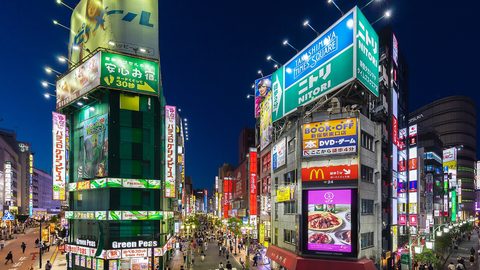 Japan eSIM vs Pocket WiFi vs Physical SIM for Staying Connected
Free public WiFi across Japan is unreliable and slow. Compare eSIM plans from Ubigi and Airalo against renting a pocket WiFi device at Narita or Haneda.
Japan eSIM vs Pocket WiFi vs Physical SIM for Staying Connected
Free public WiFi across Japan is unreliable and slow. Compare eSIM plans from Ubigi and Airalo against renting a pocket WiFi device at Narita or Haneda.
-
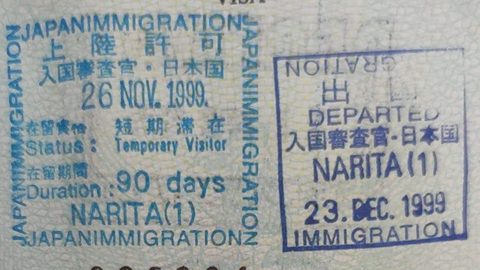 Japan Visa-Free Entry and the Visit Japan Web Digital Form
Visa-free entry covers many nationalities, but the Visit Japan Web digital form and QR codes determine how quickly you clear immigration at Narita or Haneda.
Japan Visa-Free Entry and the Visit Japan Web Digital Form
Visa-free entry covers many nationalities, but the Visit Japan Web digital form and QR codes determine how quickly you clear immigration at Narita or Haneda.
-
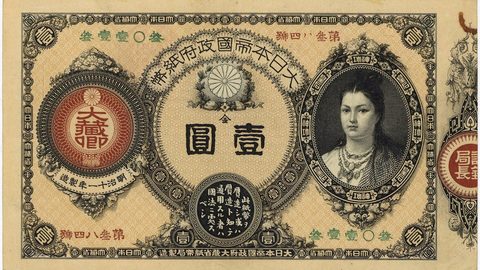 Cash and IC Cards Are the Real Payment System in Japan
Japan projects a high-tech image but many small restaurants, temples, and rural buses demand cash. IC cards like Suica and Icoca bridge the gap for daily spending.
Cash and IC Cards Are the Real Payment System in Japan
Japan projects a high-tech image but many small restaurants, temples, and rural buses demand cash. IC cards like Suica and Icoca bridge the gap for daily spending.
-
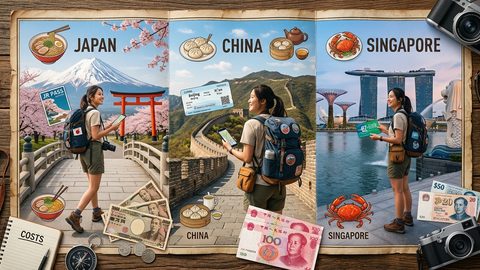 What Japan, China, and Singapore Actually Cost Independent Travelers
Real per-day costs for Japan, China, and Singapore broken down by accommodation tier, food strategy, transit, and connectivity for independent travelers.
What Japan, China, and Singapore Actually Cost Independent Travelers
Real per-day costs for Japan, China, and Singapore broken down by accommodation tier, food strategy, transit, and connectivity for independent travelers.
-
 What Most Travelers Get Wrong When Booking Flights to East Asia
Most travelers book East Asia flights on price alone. Here's what they miss about route gaps, fleet age, and aircraft type on 10-14 hour hauls.
What Most Travelers Get Wrong When Booking Flights to East Asia
Most travelers book East Asia flights on price alone. Here's what they miss about route gaps, fleet age, and aircraft type on 10-14 hour hauls.
-
 The Honest Cost of Mobile Data in Japan, China, and Singapore
Real price data for SIMs, pocket WiFi, and eSIMs in Japan, China, and Singapore. Plus the friction points most travel guides quietly skip.
The Honest Cost of Mobile Data in Japan, China, and Singapore
Real price data for SIMs, pocket WiFi, and eSIMs in Japan, China, and Singapore. Plus the friction points most travel guides quietly skip.
-
 Fifth Freedom Flights Are the Award Sweet Spot Nobody Searches For
Fifth-freedom flights let you fly a foreign airline between two other countries, and they often have award seats when the airline's own hub routes are sold out.
Fifth Freedom Flights Are the Award Sweet Spot Nobody Searches For
Fifth-freedom flights let you fly a foreign airline between two other countries, and they often have award seats when the airline's own hub routes are sold out.