How a Singapore Hawker Centre Actually Works
The unwritten rules of Singapore hawker centres explained: how to grab a seat, order without embarrassment, pay, and avoid a tray-return fine.
.jpg)
The Problem with Your First Hawker Centre Visit
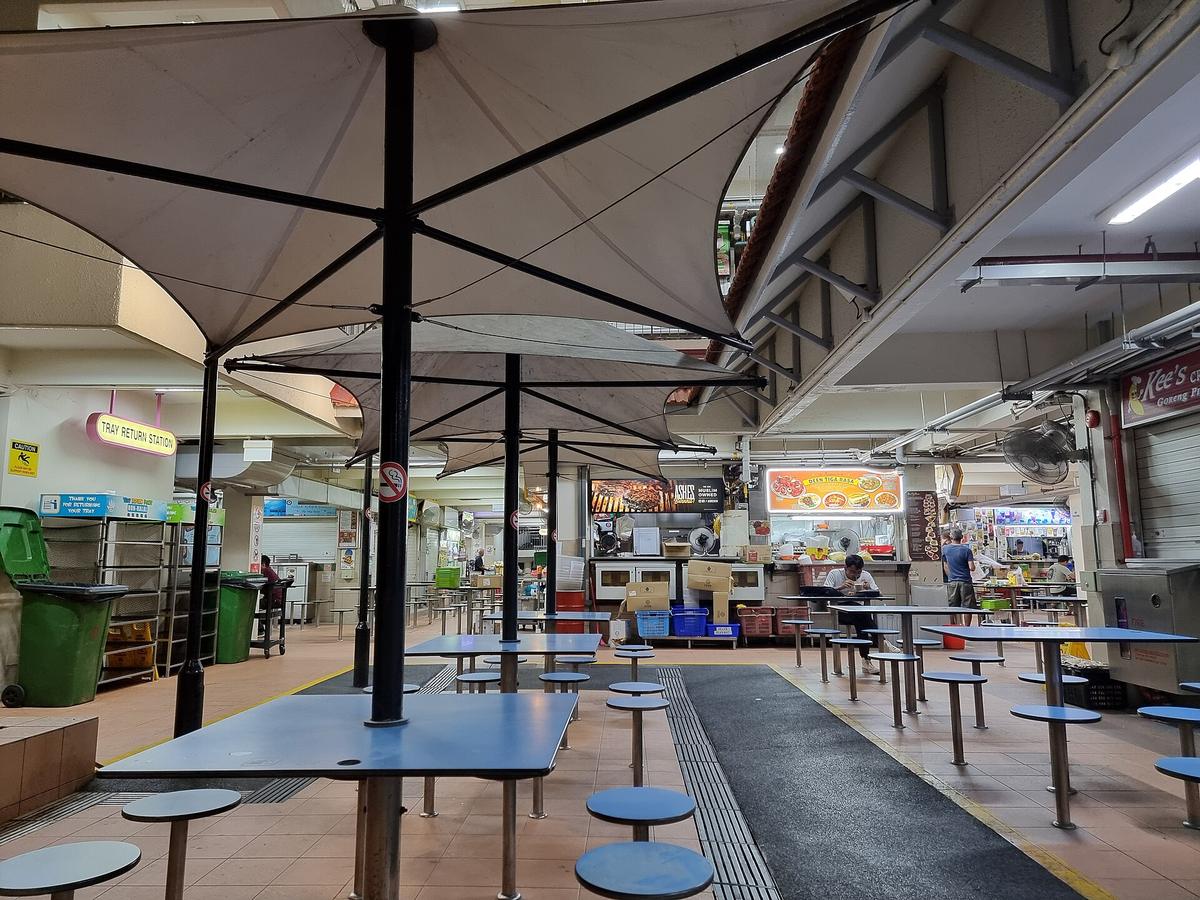
You walk in hungry, see twenty stalls and fifty tables, and have no idea whether you order first or sit first. Here is the rule: secure a table before you approach any stall. The unwritten system for finding a seat, ordering food, and paying at a Singapore hawker centre is precise, respected across all 119 centres, and enforced by social pressure rather than signage. Learn it once. Every hawker centre from Maxwell Food Centre to Old Airport Road Food Centre works the same way.
The Tissue Packet Reservation System
Place a packet of tissues on a table to claim it. This convention is understood and respected across all centres. A folded tissue pack on an empty table means the table is taken, even if nobody is nearby. An umbrella or a personal bag also works but is less common.
Do not sit at a table with a tissue pack on it. Do not move someone else's tissues. If every table has a tissue pack and you have none, buy one from the nearest drinks stall for a dollar or two. Alternatively, stand near a table where someone is finishing and wait. Singaporeans will clear their trays and leave; you step in.
Self Service Versus Stall Delivered Tables
Most hawker centre tables are self service. You order at the stall, take a numbered buzzer or a receipt, and fetch your own food when the buzzer sounds or you hear your number called. Some stalls deliver to your table. This is common at Lau Pa Sat and Newton Food Centre. The stall will ask for your table number, which is printed on a small metal or plastic tag attached to the table edge. If you cannot find a number, tell the stallholder your location relative to a landmark. When delivery is offered, the stallholder carries the tray; you do not hover at the counter. When it is not offered, you hover at the counter.
How to Pay: Cash, Card, and the SGQR Code
Cash Is Universal
Cash is accepted universally. Every stall takes Singapore dollars, and small denominations help. A dish costs between SGD 3.00 and SGD 8.00, so carry coins and SGD 2 and SGD 5 notes.
Cashless Payment and the SGQR Code
Cashless payment is increasingly common through the SGQR code, a single QR that accepts PayNow, GrabPay, and some card payments. The code is displayed at the stall front. Scan it with the banking app on your phone, or with the Grab app. Not all stalls accept cards directly. Do not assume a stall takes contactless. Ask before you order if you have no cash. The drinks stall almost always takes cash and may take PayNow but rarely takes credit cards. Get your drinks from a central drinks stall first, then move to individual food stalls.
The Tray Return Fine You Cannot Ignore
Since 1 June 2021, returning your tray, plates, and used tissues to a designated rack after eating is mandatory under the Environmental Public Health Act. The first offence earns a written warning. A repeat offence costs SGD 300. Non payment can lead to a court fine of up to SGD 2,000. Enforcement officers patrol the larger centres, especially during lunch and dinner peak hours.
You return your own tray. You do not leave it for a cleaner. Clear all dishes, pour leftover liquid into the slop bucket provided, and place crockery and cutlery in the correct slots on the trolley. This applies at every centre, every time.
Free Drinking Water Dispensers
Every hawker centre has a free drinking water dispenser, usually located near the toilet block or the common seating area. The water is filtered and potable. Bring a reusable bottle. The dispenser provides room temperature and cool water. You do not need to buy bottled water from a drinks stall. If you cannot find the dispenser, look for a stainless steel cabinet with a push button and a green dot. The cups beside it are not always restocked. Carry your own bottle.
When Stalls Are Open and When They Are Not
Operating Hours and Shift Gaps
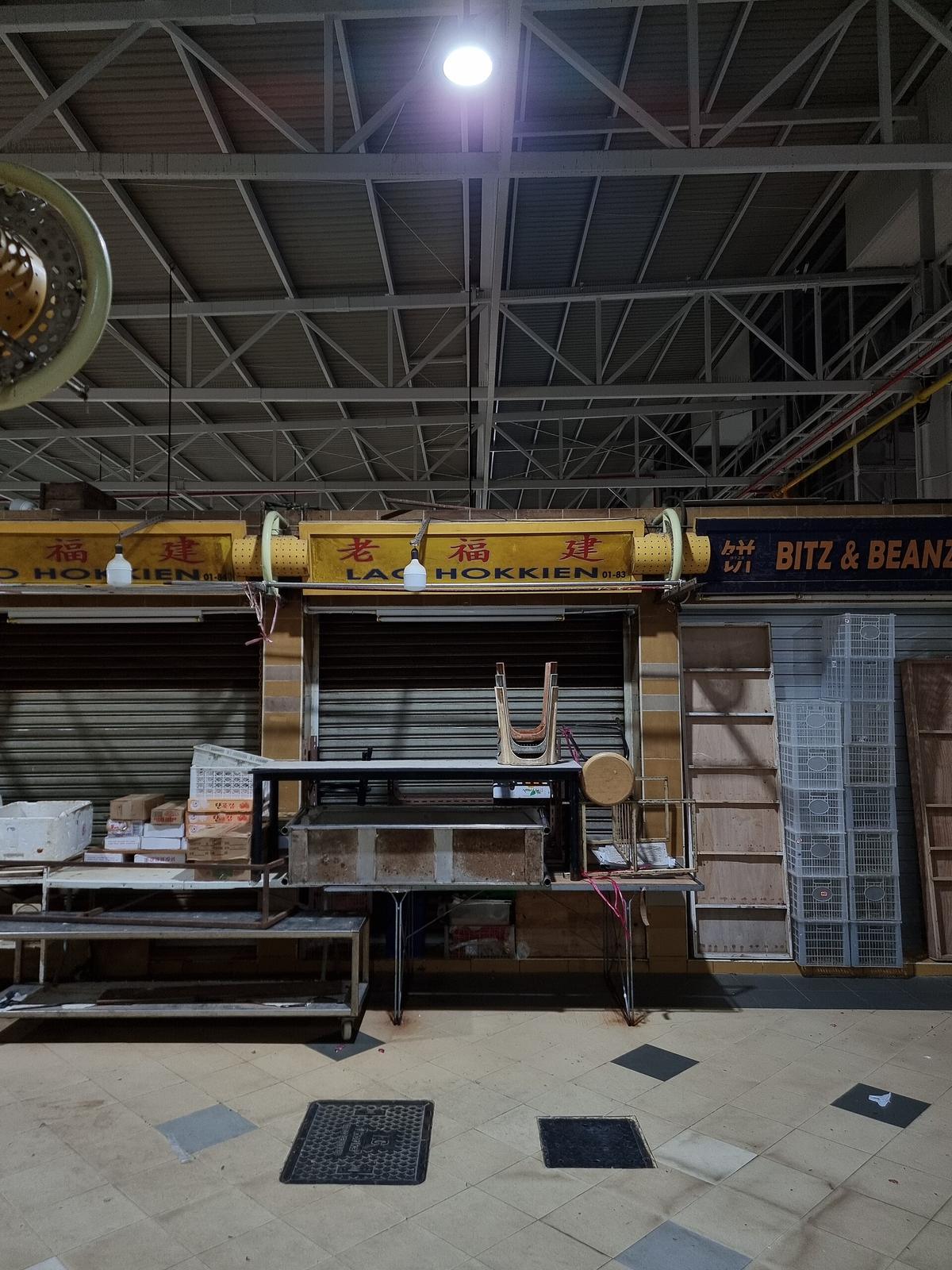
Hawker centre operating hours run from 7am to 10pm, but individual stalls set their own schedules. Some open only for breakfast from 6am to 11am, some only for lunch from 11am to 2pm, some only for dinner from 5pm to 10pm. Many stalls close one day a week, often Monday or Tuesday. A centre that looks half empty at 3pm is not dying; it is between shifts. The failure case is arriving at 2.30pm expecting a full lunch spread. Plan to eat between 11am and 1pm for lunch and between 6pm and 8pm for dinner.
Checking a Stall's Schedule
Lau Pa Sat has select stalls that operate 24 hours, but most do not. Check the stall front for a handwritten sign listing opening times. If none is displayed, ask.

How to Read a Stall Licence Plate and Certifications
The Licence Plate
Each stall displays a licence plate above or beside the stall front in the format of a letter prefix followed by digits, such as A 01. This plate identifies the stall for the National Environment Agency, which manages all 119 centres.
Halal, Vegetarian, and Award Certifications
Halal certified stalls display a green and white certification logo issued by MUIS, the Islamic Religious Council of Singapore. Vegetarian stalls often mark themselves with the Chinese character zhāi (斋) or the words Vegetarian in English. Some use a green leaf symbol or the phrase No Meat, No Garlic, No Onion for Buddhist vegetarian cooking. Michelin starred or Bib Gourmand stalls display a sticker or framed certificate at the stall front. Hill Street Tai Hwa Pork Noodle held one star as of 2023. Liao Fan Hawker Chan in Chinatown Complex held one star in 2016 but has since relocated and lost that rating. Multiple stalls receive Bib Gourmand recognition each year, revised annually.
How to Order at the Drinks Stall
The drinks stall has a vocabulary of its own. For coffee: kopi is coffee with condensed milk; kopi O is coffee with sugar and no milk; kopi C is coffee with evaporated milk and sugar; kopi kosong is coffee with no sugar and no milk; kopi siew dai is coffee with less sugar; kopi ga dai is coffee with more sugar; kopi peng is iced coffee with condensed milk. For tea: teh is tea with condensed milk; teh O is tea with sugar and no milk; teh C is tea with evaporated milk and sugar; teh kosong is tea with no sugar and no milk; teh siew dai is tea with less sugar; teh peng is iced tea with condensed milk. For Milo: Milo hot with condensed milk; Milo Peng iced; Milo Dinosaur iced with an extra spoonful of undissolved Milo powder on top. Say these words in any order and the stallholder will understand. Pointing at the menu board also works. Pay first, then take your drink.
What to Do When a Stall Has a Long Queue
A long queue at a hawker stall means the food is worth the wait. Join the back. Do not block the stall front. Have your cash or phone ready before you reach the counter. Stallholders do not take orders from people who are still deciding. If you cannot decide, step aside and let the queue move.
When you reach the front, state your order clearly, point at the menu if necessary, and hand over the exact change. Many stalls do not give change for a SGD 50 note. Keep small notes and coins in a separate pocket. If the stall gives you a buzzer, stay within earshot. Buzzer range is about 20 metres. If the stall calls your name or order number, listen for it. A busy hawker centre at lunch is loud enough that you will miss your call if you are not paying attention.
Who This System Suits and Who it Does Not
The hawker centre operating manual suits first time visitors who want a clean, orderly introduction to street food culture. It suits travellers who can handle a queue, carry small cash, and understand that a tissue packet is a binding contract. It does not suit anyone who expects a waiter to appear, who wants to linger for two hours over a single drink, or who resents the requirement to clear their own table. If you are a shoestring backpacker on a SGD 30 a day budget, the prices still work, but the sanitised, rule bound environment may feel sterile. If you seek raw, unpolished street life, the hawker centre is the opposite of that experience. For everyone else, the mechanics are simple, the system is fair, and the only failure is trying to bend it.
Read next
-
 Singapore eSIM, Tourist SIM Cards and Free Public Wi-Fi Compared
Singapore offers eSIMs, 100GB tourist SIM cards from S$12 at Changi, and free public Wi-Fi. The real essential is downloading Grab before you land, because setup requires an SMS code.
Singapore eSIM, Tourist SIM Cards and Free Public Wi-Fi Compared
Singapore offers eSIMs, 100GB tourist SIM cards from S$12 at Changi, and free public Wi-Fi. The real essential is downloading Grab before you land, because setup requires an SMS code.
-
 Singapore Hotels by Type and Budget Not by Neighbourhood
Singapore hotels sorted by property type and price band, skyline towers, shophouse boutiques, family chains, and transit sleepers, with honest notes on what S$400 actually buys here.
Singapore Hotels by Type and Budget Not by Neighbourhood
Singapore hotels sorted by property type and price band, skyline towers, shophouse boutiques, family chains, and transit sleepers, with honest notes on what S$400 actually buys here.
-
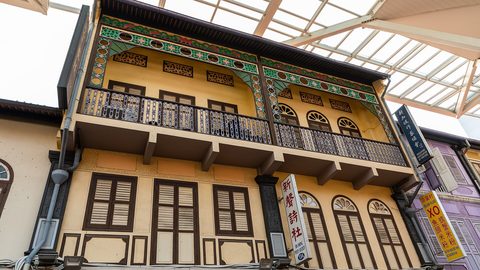 Where to Stay in Singapore for Neighbourhood Character Not Just a Bed
Compare Singapore's neighbourhoods by the experience of waking up there, hawker breakfasts, shophouse streets, or skyline views, not by distance to a landmark the MRT erases.
Where to Stay in Singapore for Neighbourhood Character Not Just a Bed
Compare Singapore's neighbourhoods by the experience of waking up there, hawker breakfasts, shophouse streets, or skyline views, not by distance to a landmark the MRT erases.
-
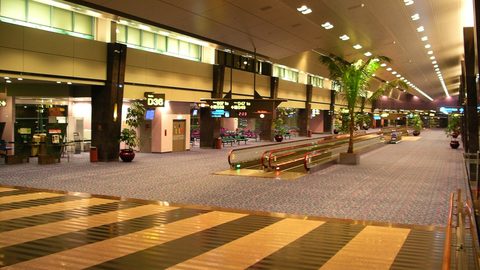 Flying Into Changi Airport Singapore and Making the Stopover Work
Changi Airport turns a Singapore stopover into a free mini-trip. How long you need to clear immigration, eat a hawker meal, and still make your connection.
Flying Into Changi Airport Singapore and Making the Stopover Work
Changi Airport turns a Singapore stopover into a free mini-trip. How long you need to clear immigration, eat a hawker meal, and still make your connection.
-
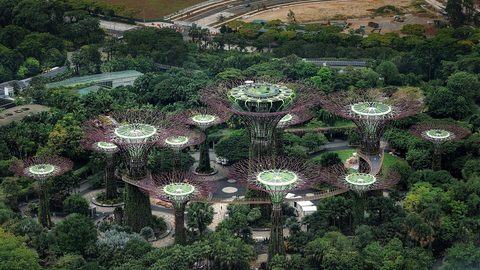 Singapore Things to Do With Only Three Days and Brutal Midday Heat
Hard calls on which Singapore sights earn limited days: Gardens by the Bay and Botanic Gardens are non-negotiable, Sentosa is skippable, and everything bends around the 11am-to-3pm heat.
Singapore Things to Do With Only Three Days and Brutal Midday Heat
Hard calls on which Singapore sights earn limited days: Gardens by the Bay and Botanic Gardens are non-negotiable, Sentosa is skippable, and everything bends around the 11am-to-3pm heat.
-
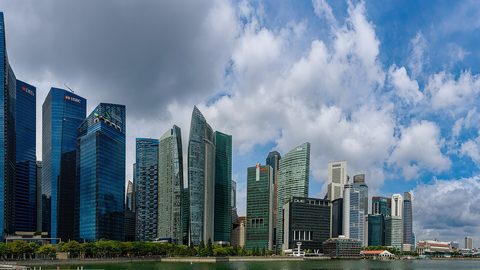 Best Time to Visit Singapore When One Degree From the Equator
Singapore sits one degree from the equator so temperature barely shifts, plan around monsoon rains, Chinese New Year hawker closures, haze season, and F1 hotel price spikes instead.
Best Time to Visit Singapore When One Degree From the Equator
Singapore sits one degree from the equator so temperature barely shifts, plan around monsoon rains, Chinese New Year hawker closures, haze season, and F1 hotel price spikes instead.
-
 Gardens by the Bay
-
 Marina Bay Sands
-
 Singapore Zoo and the Mandai parks