Carry Baht In Thailand And Avoid The ATM Flat Fee Trap
Thailand still runs on cash. Learn the ATM flat fee, why exchange booths beat banks, and the 7-Eleven 1000 baht note problem.
Carry Baht in Thailand and Avoid the ATM Flat Fee Trap
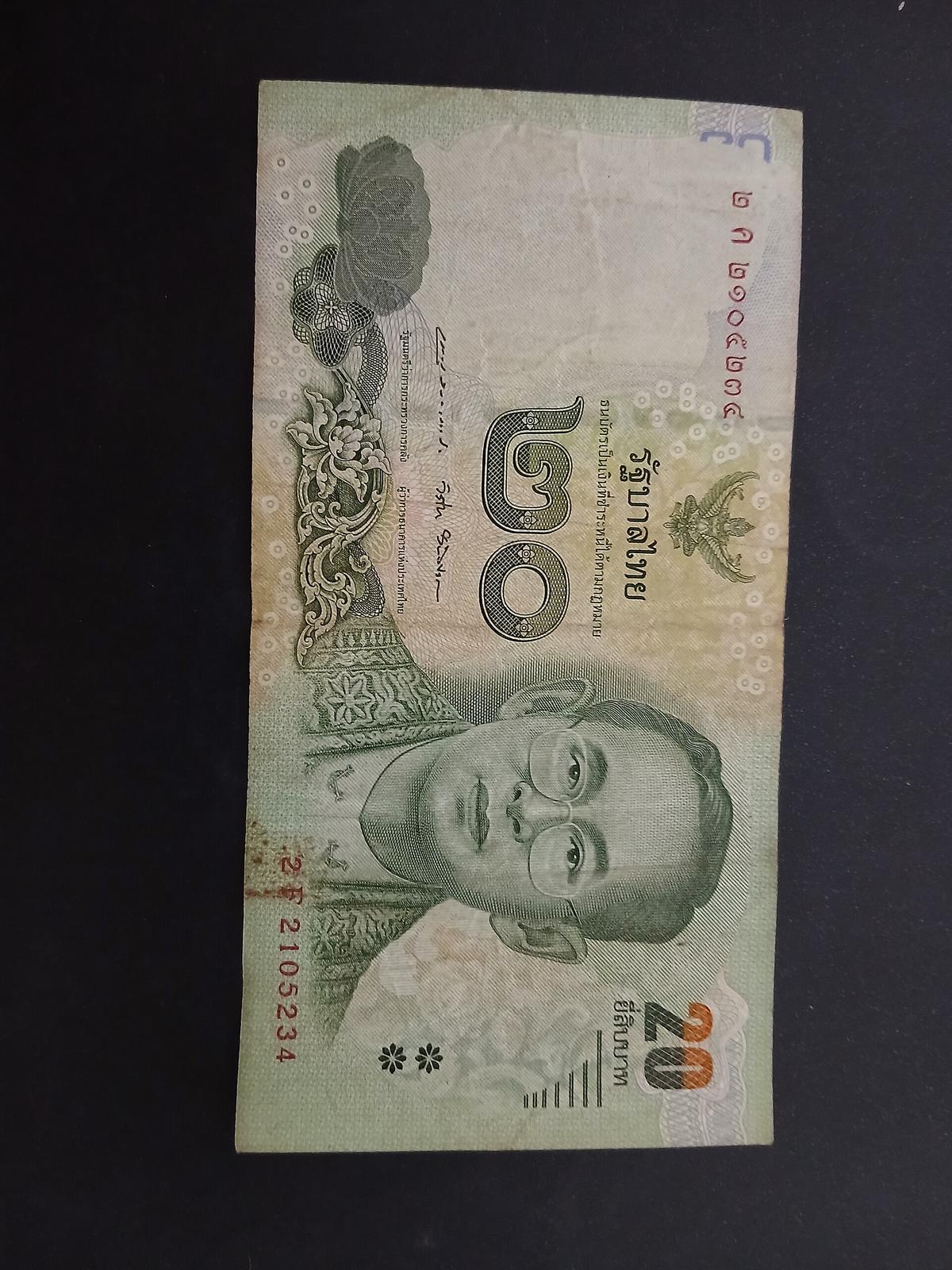
Most first time visitors assume they can rely on plastic everywhere in Thailand. That assumption costs you money from the first withdrawal. Thailand ATM fees are a flat 220 baht per withdrawal, applied by every Thai bank machine regardless of how much you pull out. Take out a small sum and the fee is a brutal percentage. Take out the maximum and that same fee shrinks to almost nothing. The math forces a single strategy: bring enough cash to minimise how often you touch an ATM.
The failure case is worse. At 1 a.m. in a Bangkok alley with a driver waiting for 60 baht in coins, no ATM near you accepts foreign cards, or the machine you find is out of cash. Thailand still runs on cash at the street level. Temples, markets, songthaews, longtail boats, and every 7-Eleven purchase require physical baht. Cards work at mid range hotels, chain restaurants, and mall food courts. Everywhere else expects notes. Plan for most of your spending to be cash.
.jpg)
Thailand ATM Fees: Why the Flat Rate Changes Everything
Withdraw The Maximum Every Time
The 220 baht fee applies to every withdrawal from Thai bank ATMs: Bangkok Bank, Krungsri, Kasikornbank, and SCB. Your home bank adds its own foreign transaction fee on top, usually 1% to 3% of the amount. To minimise the damage, withdraw the maximum per withdrawal. Limits vary by bank. Bangkok Bank allows 25,000 baht per withdrawal. Krungsri allows 30,000 baht. Kasikornbank and SCB both cap at 20,000 baht. Withdraw the highest limit your card allows and then do not use another ATM for days.
Always Choose Baht
Dynamic currency conversion is a second trap. When the ATM screen asks whether you want to be charged in your home currency or in baht, always select baht. Choosing your home currency triggers the machine operator's exchange rate, which is 4% to 6% worse than the market rate. The same rule applies at card terminals in shops and restaurants. Select baht every time.
Carry a backup card from a different bank, kept separate from your main wallet. Thai ATMs eat cards that are left in the machine, and getting a replacement sent to Thailand takes a week if it happens at all. Two cards from different issuers covers the scenario where one is swallowed or blocked.
Thailand Exchange Booth vs Bank: the Rate Gap
Use SuperRich, Not The Airport
If you arrive with foreign cash, exchange booths beat bank counters by 1% to 3% on major currencies. The difference is consistent for USD, EUR, GBP, and JPY. The best known booth is SuperRich, operating under an orange branded storefront. A competing green branded chain called SuperRich Thailand offers similar rates. Both are found in major tourist areas, near BTS stations, and in central shopping districts. Airport exchange counters and bank branches inside the terminal offer the worst rates on the entire trip, typically 3% to 5% below the SuperRich rate.
You need clean, undamaged, unmarked foreign notes. Older series US dollar bills are often rejected. Do not fold or staple notes before handing them over. Bring notes in denominations of 50 and 100 for USD and EUR; smaller denominations trade at a worse rate. Exchange enough cash at your first SuperRich visit to cover three or four days, then exchange again when you pass another branch. Carrying one week of spending in cash is safe. Carrying two weeks in a single place is not. Split your cash between your day bag and your accommodation safe.
Late Night Arrival Strategy
If you arrive late at night, the airport exchange booth is your only option. Take the hit on a small amount, just enough to reach your hotel by taxi and buy a meal. Do the bulk exchange the next morning at a SuperRich branch in the city.
Thai Baht Cash Rules: What You Actually Need Every Day
Denominations And Transit
Carry a mix of denominations. 100 baht and 50 baht notes cover most street purchases. 20 baht notes are essential for small items and for paying tuk tuk drivers who never have change. Coins feed BTS ticket machines and MRT ticket machines, both of which reject banknotes larger than 100 baht in many stations. Keep a separate coin pouch for transit.
Tipping And VAT Refunds
At sit down restaurants with a service charge, 10% is added automatically at mid range and upscale properties. Check the bill before adding a tip. Tipping is not obligatory. Round up a taxi fare or leave small change at a casual restaurant. Do not tip street vendors.
VAT in Thailand is 7%. The VAT Refund for Tourists scheme allows a refund on purchases of 5,000 baht or more in a single day at participating stores. The refund is processed at desks before security at Suvarnabhumi Airport, Don Mueang Airport, Phuket Airport, and Chiang Mai Airport. The administrative fee reduces the net refund, so do not plan your budget around recovering the full 7%.
7-Eleven 1000 Baht Note Problem: a Daily Friction You Must Know
Thailand has more 7-Eleven stores per square kilometre than almost any country on earth. They are your default for water, snacks, phone top ups, and emergency toiletries. Every purchase is cash only. The problem: before 9 a.m., 7-Eleven cannot break a 1,000 baht note for small purchases. Pay for a 20 baht bottle of water with a 1,000 baht note and the cashier will refuse the sale or ask you to buy something else to make up the difference. This rule exists because the store does not have enough small change in the morning till.
Carry 20 baht, 50 baht, and 100 baht notes for morning purchases. If you only have large notes, buy something worth at least 200 baht or wait until after 9 a.m. when the change float has been replenished. This applies at every 7-Eleven in the country, not just in Bangkok. The same rule often applies at small street stalls and taxi queues. Your 1,000 baht note is useless for the first purchase of the day.
Thailand Cash Only Places: Where Plastic Fails Entirely
Where Cards Are Useless
These places accept only cash and will not take a card under any circumstances:
- Temple entry fees: Wat Pho, Grand Palace, Wat Arun, Doi Suthep, and Sukhothai Historical Park all charge cash only at the gate.
- Street food everywhere: Yaowarat at night, boat noodles at Victory Monument, and every roti sai mai stall in Ayutthaya expects cash.
- Songthaew and tuk tuk rides: No card reader, no app payment, no exception.
- Longtail boat charters: Fixed per boat rate, cash in hand before boarding.
- Most market stalls: Chatuchak Weekend Market with 15,000 stalls accepts cash only.
- Smaller island ferries: The 45 minute ferry to Koh Larn from Bali Hai Pier costs 30 baht cash only.
- Train tickets: Third class trains to Ayutthaya and Kanchanaburi take cash at the station counter.
Grab And QR Payments
Grab ride hailing accepts card payment through the app, but you need a local phone number to register. Buy a tourist SIM at the airport, AIS or TrueMove, for around 300 baht for 8 days of unlimited 5G data. Without a local number, the Grab app will not let you create an account, and you default to cash only taxis and tuk tuks.
PromptPay and Thai QR payment systems are not available to visitors without a Thai bank account. Some tourist e wallets now support Thai QR through partner schemes, but the coverage is inconsistent and unreliable. Do not plan around them. Assume that if you do not have cash, you cannot buy what you need.
Common Questions
Should I bring USD cash to Thailand or just use ATMs?
Bring a mix. Carry 200 to 300 USD in clean, undamaged notes as your backup. Exchange at a SuperRich booth for the best rate. Use ATMs for the rest, but withdraw the maximum per withdrawal to spread the 220 baht flat fee across the largest amount. Never use the airport exchange for more than a small initial amount.
How much Thai baht should I carry per day?
Budget 1,000 to 1,500 baht per day for a mid range traveller eating street food and using public transit. Budget more if you eat at sit down restaurants, take taxis, and pay temple entry fees. Add cash for any longtail boat trip, which costs 1,000 to 2,000 baht per boat regardless of passenger count.
Will my foreign debit card work at Thai ATMs?
Yes, at any ATM displaying the Visa, Mastercard, or Cirrus logo. Bangkok Bank, Krungsri, Kasikornbank, and SCB machines all accept foreign cards. The machine charges 220 baht per withdrawal. Your home bank charges its own fee separately. Notify your bank before travel to avoid a block on the first withdrawal.
Can I get Thai baht before I leave home?
Yes, but the exchange rate at your home bank is usually worse than what SuperRich offers in Thailand. Order a small amount from your home bank to cover the first day only. Exchange the rest after arrival. Avoid ordering large amounts from home; you lose 3% to 5% compared to the in country rate.
Why do Thai ATMs charge 220 baht when other countries charge less?
Thai banks set the fee for foreign card withdrawals as a flat service charge. It is not unique to Thailand; similar flat fees exist in Cambodia, Vietnam, and the Philippines. The fee covers the network cost and the currency conversion processing. It does not change based on the amount withdrawn, which is why withdrawing the maximum per withdrawal is the only way to reduce the effective cost.
Read next
-
 Thailand eSIM Costs Per Gigabyte And Which Network Covers The Islands
Compare Thailand eSIM options by cost per gigabyte and check AIS versus TrueMove coverage for the Andaman islands before you land.
Thailand eSIM Costs Per Gigabyte And Which Network Covers The Islands
Compare Thailand eSIM options by cost per gigabyte and check AIS versus TrueMove coverage for the Andaman islands before you land.
-
 Best Time To Visit Thailand Depends On Which Coast You Choose
Thailand has two opposite monsoons. Match your travel dates to the Andaman coast, Gulf coast, or northern Thailand for dry weather.
Best Time To Visit Thailand Depends On Which Coast You Choose
Thailand has two opposite monsoons. Match your travel dates to the Andaman coast, Gulf coast, or northern Thailand for dry weather.
-
 Thailand Transport Guide Flights Sleeper Trains Buses And Ferries
Compare Thailand domestic flights, sleeper trains, buses, and ferries so you can move between provinces without losing a full day.
Thailand Transport Guide Flights Sleeper Trains Buses And Ferries
Compare Thailand domestic flights, sleeper trains, buses, and ferries so you can move between provinces without losing a full day.
-
 Thailand Visa On Arrival Rules And What Happens If You Overstay
Thailand visa on arrival rules, how long your entry stamp lasts, and the daily overstay fine you want to avoid at BKK.
Thailand Visa On Arrival Rules And What Happens If You Overstay
Thailand visa on arrival rules, how long your entry stamp lasts, and the daily overstay fine you want to avoid at BKK.
-
 Thailand Safety Scams To Avoid And The One Thing That Kills Tourists
Thailand has low violent crime but a large scam economy and one thing that kills tourists every year. Know the risks before you go.
Thailand Safety Scams To Avoid And The One Thing That Kills Tourists
Thailand has low violent crime but a large scam economy and one thing that kills tourists every year. Know the risks before you go.
-
 Thailand Daily Budget At Three Levels And The Island Price Gap
See what a day in Thailand costs at three budget levels and why island prices run far higher than Bangkok or Chiang Mai.
Thailand Daily Budget At Three Levels And The Island Price Gap
See what a day in Thailand costs at three budget levels and why island prices run far higher than Bangkok or Chiang Mai.
-
 Phuket
 is a sprawling island of extreme contrasts. Choosing the right beach area matters more than any other decision you will make.
Phuket
Phuket is a sprawling island of extreme contrasts. Choosing the right beach area matters more than any other decision you will make.
-
 Krabi
Krabi is a province, not a beach town. The provincial capital sits 15km inland on a muddy river estuary and works best as a transit base, not a place to linger.
Krabi
Krabi is a province, not a beach town. The provincial capital sits 15km inland on a muddy river estuary and works best as a transit base, not a place to linger.
-
 Bangkok
 is a humid, chaotic city of contrasts where golden temples sit beside glass malls and street-food stalls line air-conditioned metro stations. Here is where to begin.
Bangkok
Bangkok is a humid, chaotic city of contrasts where golden temples sit beside glass malls and street-food stalls line air-conditioned metro stations. Here is where to begin.