Pattaya Food: Eating Through the City's Russian, Indian, German and Korean Kitchens
Pattaya food goes far beyond Thai street eats, with genuine Russian, Indian, German, and Korean kitchens run by resident communities in specific neighbourhoods.
Pattaya Food: Eating Through the City’s Russian, Indian, German and Korean Kitchens
Forget the idea that you fly to Pattaya for Thai street eats and nothing else. That gets it backward. Pattaya has the widest range of authentic non-Thai food of any Thai resort city. The reason is its resident expat populations: Russians in Pratumnak, Indians off Second Road, Germans and Brits running bakeries and pubs, Koreans operating BBQ joints. Thai food is the foundation, but the cuisines that make Pattaya distinct arrive from kitchens that serve people who live here, not tourists passing through.
A first timer who eats only on Walking Street or the Beach Road photo-menu spots misses the point. The best restaurants in Pattaya sit in residential soi, inside mall food courts, and along Naklua’s old fishing pier. You need a plan and a willingness to leave the neon behind.
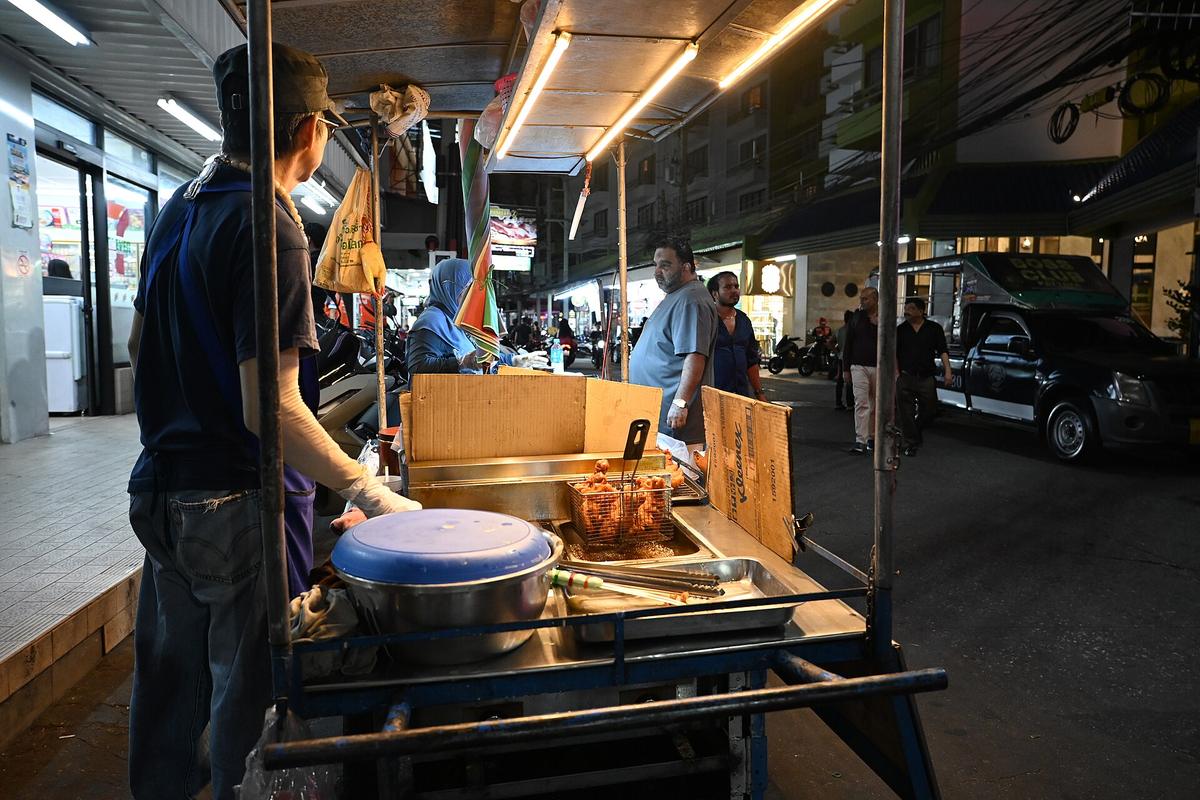

Best Restaurants in Pattaya: Where the Locals Actually Eat
Central Festival Food Court
The phrase “best restaurants in Pattaya” means different things depending on whether you ask a German engineer living on the Darkside, a Russian family on Pratumnak Hill, or a Thai family from Naklua. The common thread: none of them eat on Pattaya Beach Road or Walking Street unless it is 3 a.m. for boat noodles.
Start at Central Festival’s food court. It is cheap, good, and gives you a controlled introduction: pad thai for 60 THB, a fruit shake for 40 THB, air conditioning, clean tables.
Soi Buakhao And Thepprasit Market
Soi Buakhao and adjoining sois hold the city’s highest concentration of Thai food. Isaan dishes are available at nearly every corner stall. Jomtien Beach Road barbecue vendors set up after sunset, and deckchair food delivery brings fresh prawns and squid straight to your towel on Jomtien’s sand. Thepprasit night market, operating Friday through Sunday, is where Thai families shop and eat: grilled meats, som tam, sticky rice, cold beer in a plastic cup for 40 THB.
Pattaya Non-Thai Food: Russian, German, Indian and Korean Kitchens
Russian Food In Pratumnak
Pratumnak Hill holds Pattaya’s Russian community. The restaurants here serve genuine domestic expat food, not tourist bait. Russian borscht arrives deep red, with a dollop of sour cream and a side of dark bread. Pelmeni, boiled dumplings filled with minced pork or beef, come with vinegar and melted butter. A bowl of borscht costs 120 to 180 THB. Pelmeni portions run 100 to 150 THB. Look for the places with Cyrillic menus and tables of Russian families, not English signage aimed at package tourists.
Indian Food On Second Road
The concentration of curry houses and tandoori kitchens near the Second Road intersection with Soi 13 and Soi 15 is genuine. These places cook north and south Indian dishes for Indian expats and Thai Muslim residents. A full tandoori chicken runs 200 to 300 THB. Butter chicken and garlic naan for two costs under 500 THB. The dining rooms are fluorescent lit and unpretentious. The flavours are sharp and specific, not the sweetened versions aimed at Western palates.
German Bakeries And British Pubs
German bakeries dot Jomtien and the stretch between Central Pattaya and the Darkside. They sell proper rye bread, pretzels, apple strudel, and sausage rolls. A loaf of sourdough costs 80 to 120 THB. British-run pubs scattered across the Darkside and along Soi Buakhao serve Sunday roasts and full English breakfasts for 200 to 350 THB. Pattaya’s breakfast culture is unusually developed relative to other Thai cities: you can eat eggs, bacon, baked beans, and toast at a dozen cafes within a five-minute walk of any hotel in Central Pattaya.
Korean BBQ
Korean BBQ joints cluster near Central Festival and around the condos on Second Road. You grill pork belly and beef brisket on a tabletop burner while side dishes arrive in small bowls: kimchi, pickled radish, bean sprouts. A set for two runs 600 to 900 THB. These places serve the Korean expat and tourist crowd that visits Pattaya from Seul on direct charter flights.
Naklua Seafood Market Pattaya: Live Fish, Cooked in Minutes
The Naklua Pier Stalls
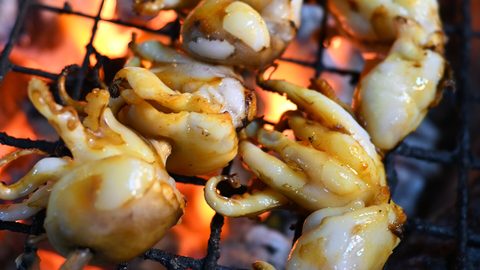
Naklua seafood market is the correct answer when someone asks where to eat. The stalls line the old fishing village pier north of Central Pattaya. You pick your fish, prawns, crab, or squid from a live tank. The vendor weighs it, prices it per kilogram, and cooks it within minutes. A whole snapper grilled with salt and chilli comes to 300 to 500 THB. Sit at a plastic table under a corrugated roof. The beer is cold. The fish was swimming ten minutes earlier. The total for two people with two large dishes and drinks lands under 1,000 THB.
Bang Saray And Koh Larn
If Naklua feels too far, head to Bang Saray village restaurants, 20 minutes south by songthaew. They operate the same per-kilogram live-tank system. Koh Larn, accessible by the 45-minute, 30-THB ferry from Bali Hai Pier, gives you prawns and squid grilled on the sand at Samae Beach. The Koh Larn coral reefs make the snorkelling decent between December and April, but the grilled catch is the reason to go.
| Location | Style | Price For Two | When To Go |
|---|---|---|---|
| Naklua Seafood Stalls | Live tank, grilled on site | 600–1,000 THB | Late afternoon, before sunset |
| Bang Saray Village | Live tank, grilled on site | 600–900 THB | Weekday lunch to avoid crowd |
| Koh Larn Samae Beach | Grilled on sand | 500–800 THB | Ferry departs 07:00, return by 17:00 |
| Pattaya Beach Road | Photo menu, pre-cooked | 1,200–2,000 THB | Skip entirely |
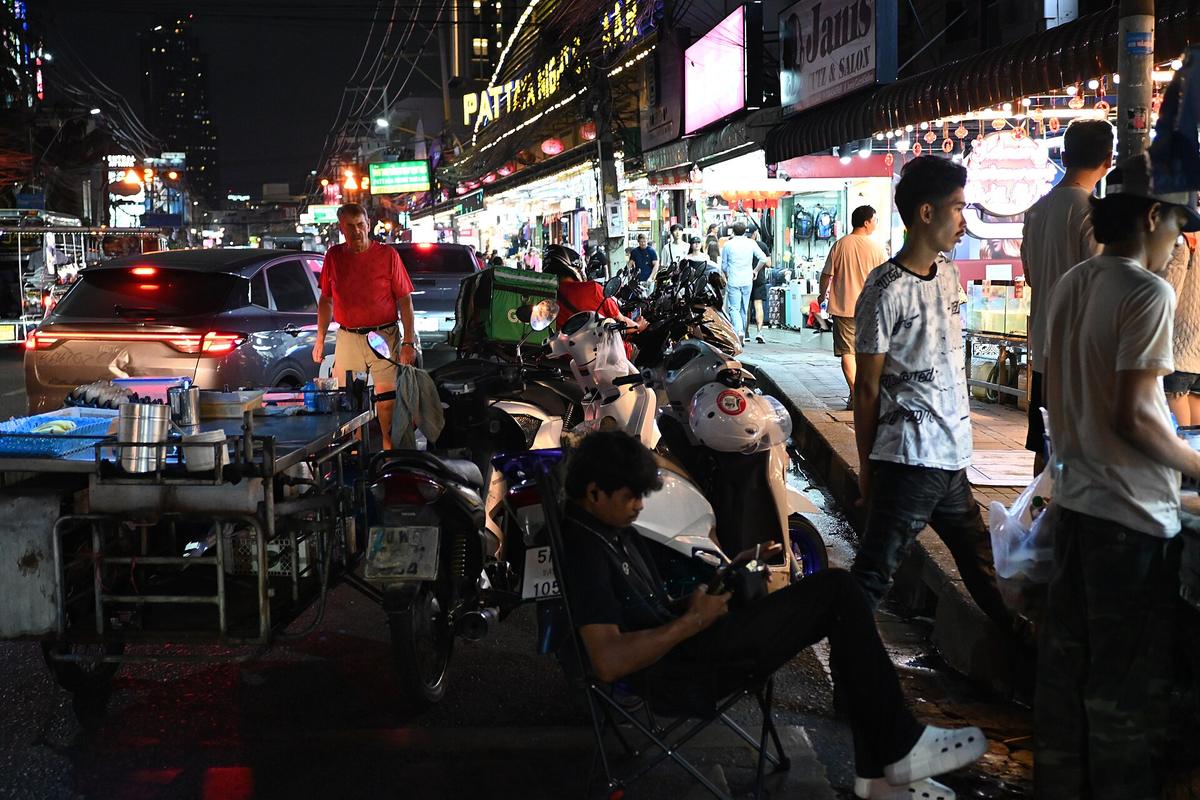

Walking Street Boat Noodles and Late-Night Eats
After Midight On Walking Street
Walking Street late-night boat noodles are the exception to the rule about avoiding tourist food. After midnight, small stalls set up along the southern end selling intense, small-bowl soup with pork or beef, dark broth, and a handful of bean sprouts. A bowl costs 40 THB. Order three or four. The stalls stay open until the bars close, roughly 3 a.m. or later. This is the only food worth eating on Walking Street itself.
Other Late-Night Options
For eats after 1 a.m., the Soi Buakhao vendors and the 7-Eleven on every block become your backup. Thepprasit market closes by 11 p.m. Naklua stalls shut by 8 p.m. If you are out past midnight and hungry, the boat-noodle stalls or a khao man gai vendor near the Second Road intersection are your options. Pattaya-style khao man gai, boiled chicken rice with a stronger fermented soybean dip than the Bangkok version, is available until 1 a.m. at a few spots on Soi 6 and Soi Buakhao.
Pattaya Indian Food Second Road: a Curry House Walk
Pattaya Indian food on Second Road is concentrated in a three-minute walk between Soi 13 and Soi 15. The restaurants here are small, with eight to twelve tables, a tandoor oven visible from the street, and a menu nailed to the outside wall. Curry houses serve the Indian expat community that lives in the condos on Second Road and Soi 15. A chicken tika masala, garlic naan, and rice costs 350 THB. The biryani comes with raita and a hard-boiled egg for 180 THB. Lunch sees tables of Indian construction managers and shop owners. Dinner brings Thai Muslim families. This is not the Indian food from a Bangkok food court: it is cooked to the spice level the residents demand.
The One Thing Most Travellers Get Wrong About Eating in Pattaya
The biggest friction point is believing the main Pattaya Beach is where you eat seafood and swim. The water quality is poor. The sand is narrow. The seafood restaurants on Beach Road charge double what Naklua charges for worse fish. Instead of wasting a day on a subpar stretch, take a 10-THB songthaew to Wong Amat beach for swimming or a 30-THB ferry to Koh Larn for grilled seafood on sand at Samae Beach. The beach-road seafood warning exists because too many first-timers pay 1,500 THB for a plate of frozen prawns while standing three metres from a live-tank market that costs half as much fifteen minutes north.
Common Questions
What is the best area for non-Thai food in Pattaya?
Pratumnak Hill for Russian food (borscht, pelmeni), Second Road for Indian curry houses and tandoori, Central Festival surrounds for Korean BBQ, and the Darkside or Jomtien for German bakeries and British pub food.
Where do Thai locals eat in Pattaya?
Thepprasit night market (Friday to Sunday), Soi Buakhao for Thai street eats, Naklua seafood stalls for grilled fish, and the Central Festival food court for air-conditioned, cheap, good meals.
Is the seafood on Pattaya Beach Road worth eating?
No. The photo-menu restaurants on Pattaya Beach Road charge tourist prices for pre-cooked seafood that has been sitting out. Go to Naklua or Bang Saray for live-tank, per-kilogram pricing.
What can you eat after midnight in Pattaya?
Walking Street boat-noodle stalls (40 THB per small bowl, open until 3 a.m.), khao man gai vendors on Soi Buakhao until 1 a.m., and 7-Eleven for basics. Thepprasit market and Naklua close by 8 p.m.
Read next
-
 Pattaya Hotels Worth Booking in an Oversupplied Market
Pattaya hotels deliver remarkable value because the market is oversupplied. Find the best mid-range and luxury properties by price band and type.
Pattaya Hotels Worth Booking in an Oversupplied Market
Pattaya hotels deliver remarkable value because the market is oversupplied. Find the best mid-range and luxury properties by price band and type.
-
 Where to Stay in Pattaya by District and Travel Style
Where to stay in Pattaya depends entirely on the district. Compare Central Pattaya, Jomtien, Wong Amat, and Pratumnak for noise, beach access, and value.
Where to Stay in Pattaya by District and Travel Style
Where to stay in Pattaya depends entirely on the district. Compare Central Pattaya, Jomtien, Wong Amat, and Pratumnak for noise, beach access, and value.
-
 Pattaya Flights Are Rare Getting There From Bangkok or U-Tapao Instead
Pattaya flights are rare. Most visitors arrive via the 143 THB bus from Suvarnabhumi Airport or a minibus from U-Tapao, not a direct flight into the city.
Pattaya Flights Are Rare Getting There From Bangkok or U-Tapao Instead
Pattaya flights are rare. Most visitors arrive via the 143 THB bus from Suvarnabhumi Airport or a minibus from U-Tapao, not a direct flight into the city.
-
 Pattaya Things to Do That Are Worth Your Days Here
Pattaya things to do ranked honestly: the Sanctuary of Truth, Koh Larn island, and Nong Nooch earn full days, but the city beach does not make the cut.
Pattaya Things to Do That Are Worth Your Days Here
Pattaya things to do ranked honestly: the Sanctuary of Truth, Koh Larn island, and Nong Nooch earn full days, but the city beach does not make the cut.
-
 Best Time to Visit Pattaya Month by Month for Weather and Crowds
The best time to visit Pattaya is November to February for dry sunny days, but month-by-month trade-offs in crowds, hotel rates, and monsoon rains matter.
Best Time to Visit Pattaya Month by Month for Weather and Crowds
The best time to visit Pattaya is November to February for dry sunny days, but month-by-month trade-offs in crowds, hotel rates, and monsoon rains matter.
-
 Getting Around Pattaya by Songthaew Without Getting Overcharged
Getting around Pattaya is cheap and simple once you understand the songthaew fixed-route system and how to avoid the private charter overcharge trick.
Getting Around Pattaya by Songthaew Without Getting Overcharged
Getting around Pattaya is cheap and simple once you understand the songthaew fixed-route system and how to avoid the private charter overcharge trick.
-
 Sanctuary of Truth
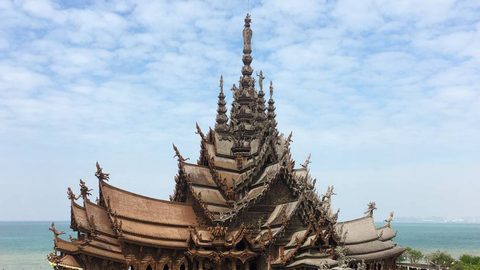
The Sanctuary of Truth in Pattaya is a 105-metre hand-carved wooden temple built without nails, perched by the sea in Naklua, and the city's best attraction by a distance.
Sanctuary of Truth
The Sanctuary of Truth in Pattaya is a 105-metre hand-carved wooden temple built without nails, perched by the sea in Naklua, and the city's best attraction by a distance.
-
 Koh Larn
 is the clear-water island half an hour by 30 THB ferry from Bali Hai Pier, offering the beaches people imagined Pattaya would have, with grilled seafood on Samae Beach.
Koh Larn
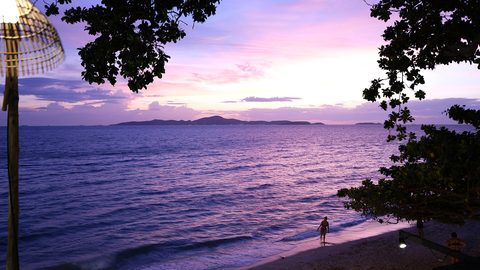
Koh Larn is the clear-water island half an hour by 30 THB ferry from Bali Hai Pier, offering the beaches people imagined Pattaya would have, with grilled seafood on Samae Beach.
-
 Thailand Travel Guide From First Timers To Island Hoppers
A realistic Thailand travel guide covering regions, seasons, and pacing so you avoid the classic Bangkok Chiang Mai island mistake.
Thailand Travel Guide From First Timers To Island Hoppers
A realistic Thailand travel guide covering regions, seasons, and pacing so you avoid the classic Bangkok Chiang Mai island mistake.