Bangkok Food, Where a 20 THB Bowl of Boat Noodles Justifies the Whole Flight
Bangkok's food is the best reason to come. From 20 THB boat noodles at Victory Monument to Jay Fai's Michelin-starred crab omelette, here is where and what to eat.
Eating in Bangkok, the Best Reason to Come, from Boat Noodles to Crab Omelette
Most visitors treat Bangkok food as a pleasant side benefit, something to fill the gaps between temples and shopping. That gets it exactly backwards. For anyone who cares about eating, Bangkok is not a city that happens to have good food. It is a city built around food, where a 20 THB bowl of boat noodles justifies the whole flight. The single discipline that gives the city its texture is its street food. Skip the generic night market. Go straight to the alley that stacks bowls, the shophouse that takes weeks to book, and the mango stand that sells only during a four-week window.
Boat Noodles at Victory Monument: the 20 THB Stacking Game
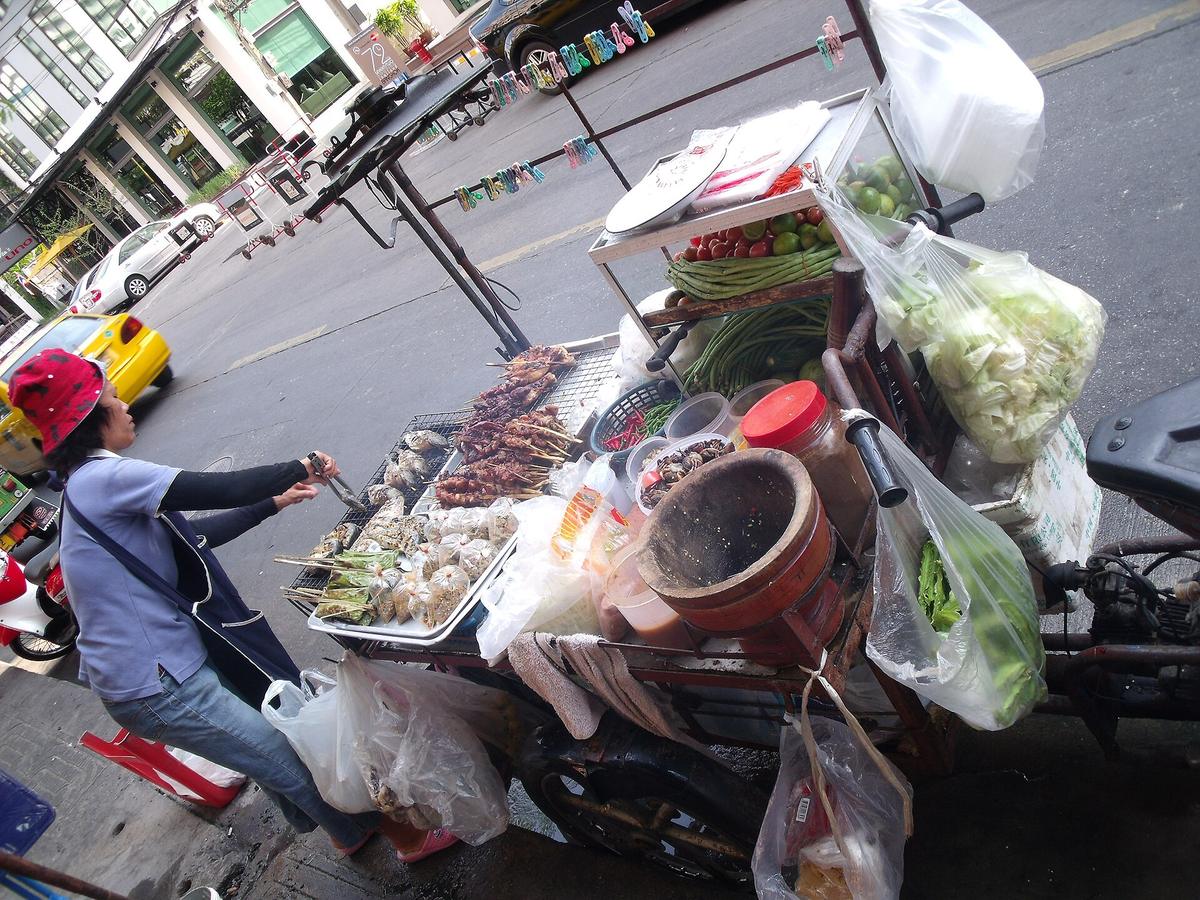
Boat noodles at Victory Monument are the purest version of the Bangkok food promise: a tiny bowl, dark broth, and a price low enough that you order six. The alley off the Victory Monument BTS station is lined with stalls that have been serving kuay teow reua for decades. Each bowl holds 100 to 150 millilitres. Eat standing or on a plastic stool. Push the empty bowl to the side and signal for another. The standard price per bowl runs 15 to 25 THB. Do not plan to eat anywhere else that afternoon. A stack on the table that reaches five or six bowls is normal.

Jay Fai Crab Omelette: the 1,000+ THB Street Food That Requires a Strategy
Jay Fai is the only Michelin-starred street food stall in Bangkok, a designation it has held since 2018. The crab omelette costs 1,200 to 1,500 THB, which is twenty times what most Bangkok street food costs. The queue before the star was long. After the star, it became a system: arrive by 08:00, write your name on a clipboard, and wait two to four hours for a seat. There is no shortcut. Book weeks ahead or commit to the wait. Jay Fai wears ski goggles over a gas burner and folds fresh crab into a wok by hand. That is what you are paying for.
If the Queue Is Too Long
The stalls around Thip Samai serve hoy tod at 60 to 120 THB, a crispy oyster omelette that is best after 10pm.
Yaowarat Chinatown Street Food Soi 11: Kuay Jab and the Late Night Alley
Yaowarat Road runs roughly 1.5 kilometres through Bangkok Chinatown, and its peak hours run 18:00 to midnight. At Soi 11, the rolled rice noodles called kuay jab sit in a peppery broth with crispy pork and offal. The stall is unmarked. Find it by following the queue that spills onto the soi. The broth is dark, the noodles are rolled tight, and the bowl costs 50 to 80 THB.
Build the Full Yaowarat Route
Start at the corner of Charoen Krung Road where Prachak Pet Yang has been roasting duck in a century-old shophouse since before the skytrain existed. Order half a duck, 200 THB, and eat it with the sweet dark sauce on the table. Walk east toward the gold shops. By 21:00 every alley fills with flat-top grills and plastic tables.
Mango Sticky Rice at Mae Varee: the April to May Window
Mae Varee on Thonglor Road sells mango sticky rice year round, but the dish peaks during Nam Dok Mai mango season from April to May. In season, the fruit is fragrant, fibreless, and sweet enough to justify the 250 THB price tag. Out of season, the mango comes from an import chain and the price drops, but the taste drops too. Mae Varee wraps each order with fresh coconut cream and toasted sesame. Eat it standing on the footpath. A seasonal portion at an ordinary stall costs 60 to 150 THB. Mae Varee charges more because they only use the premium cultivar.
Outside the Mango Window
Skip Mae Varee and order mango sticky rice at Or Tor Kor Market instead, where the air-conditioned produce hall also sells durian sticky rice for the same price range.
What Makes Bangkok’s Food Scene Different from Every Other City
The Michelin Guide Bangkok edition launched in 2017. The 2024 entries count 69 Bib Gourmand awards for dishes under 1,000 THB and one starred stall. That ratio is not accidental. Bangkok's best eating happens on the footpath, and the footpath is everywhere. A food court in a Siam mall charges 40 to 100 THB per dish and takes prepaid cards. A stall in a Thonburi soi charges the same range in cash. The quality is near equal. The difference is the audience: food courts serve office workers, stalls serve the neighbourhood. Both are correct.
The Four Food Systems
The city supports four distinct food systems: the pavement stalls, the night markets like Jodd Fairs and Srinakarin Train Night Market, the Chatuchak Weekend Market section 6 food zone for Isaan and Southern Thai dishes, and the late-night congee at Jok Prince on the Michelin Bib Gourmand list. Each system operates on its own schedule. Jodd Fairs opens at 16:00 until midnight. Srinakarin runs Thursday to Sunday, 17:00 to 01:00. Khao kha moo costs 50 to 100 THB. Pad krapow with rice costs 50 to 80 THB. Som tam costs 40 to 80 THB. Moo ping skewers cost 10 to 20 THB with a portion of sticky rice at 10 to 15 THB extra.
Know Your Regions and Your Chilli
The regional breakdown matters. Isaan food uses sticky rice as the staple starch. Southern Thai cuisine relies on fresh bird's eye chilli in the curry paste, making it the spiciest regional cuisine in Thailand. Prik nam pla, fish sauce with sliced bird's eye chillies, sits on every table. Ordering "mai phet" will still get you residual chilli heat in most dishes. "Phet nit noi" means a little spicy. "Phet mak" means very spicy. Start at phet nit noi and add prik nam pla yourself to adjust.
Bangkok Street Food Guide Dishes: the Stall-Specific List
A street-food dish list written without addresses is useless. You need the stall name, the cross street, the price, and the failure option when that stall is closed or sold out. Below are the dishes that define the city, tied to the single place you should order them.
Boat Noodles at Victory Monument Alley
Go to the alley behind the Century Movie Plaza. The bowls are 20 THB. Eat six. If the queue is too long, any stall in the alley serves the same broth with the same blood noodle. The dish was originally served from boats on the canals. The broth uses pork blood, cinnamon, star anise, and dried chilli. The stalls close by 15:00 if they sell out before then. Arrive before 13:00.
Jay Fai Crab Omelette on Maha Chai Road
The omelette costs 1,200 to 1,500 THB. Book two weeks ahead. No booking and the wait exceeds four hours? Skip to the square at Thip Samai for hoy tod at 60 to 120 THB. It is not the same dish but it scratches the same itch: crispy, oil-fried, full of seafood.
Kuay Jab at Yaowarat Soi 11
Soi 11 runs off Yaowarat Road about halfway down the strip. The stall is the one with the longest queue. Order kuay jab, rolled noodles in black peppery pork broth. Price 50 to 80 THB. The stall runs out of noodles by 22:00. Eat there first, then walk the rest of Chinatown.
Mango Sticky Rice at Mae Varee
Soi Thonglor 55, at the mouth of the street. 250 THB during Nam Dok Mai season. Out of season mangoes are not worth the premium. Buy from Or Tor Kor Market for 60 to 150 THB instead.
Roast Duck at Prachak Pet Yang
1415 Charoen Krung Road, near the Si Phraya intersection. 200 THB for half a duck. Sold out by 19:00 on weekends? Order takeaway and eat it on the steps of Wat Pho if the shophouse is full.
.jpg)
The Practical Side of Eating on Footpaths
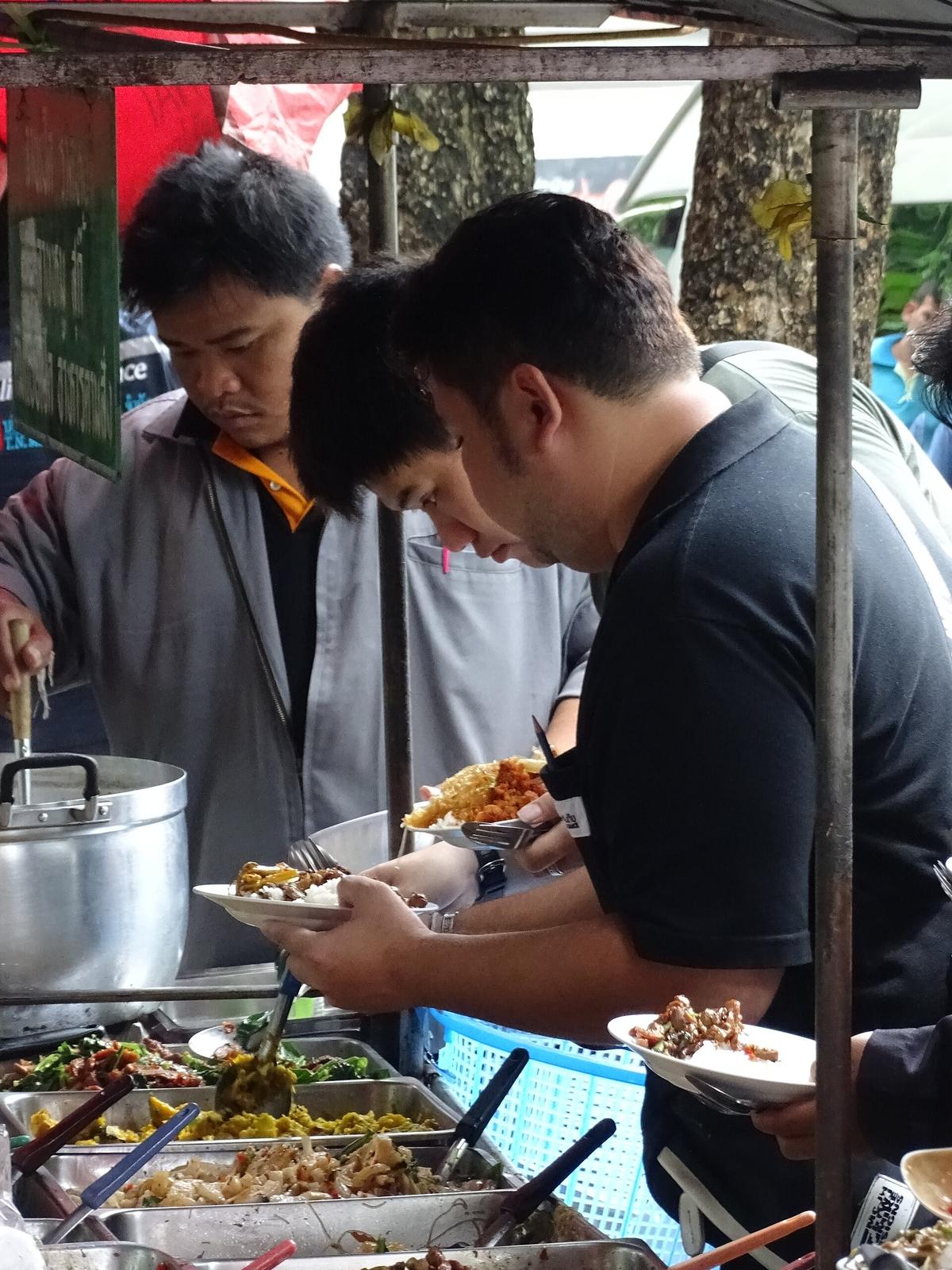
Bangkok street food is eaten on footpaths that are broken, narrow, and often blocked by parked motorbikes. That is part of the experience but it requires minimum competence. Wear shoes you can kick off at a low table. Carry cash in small denominations: 100 THB notes are the most useful. The ice in your drink is commercially produced tube ice from filtered water and is safe. The tap water is not potable. Drink from bottles or the ice in a 10 THB cup from a stall that looks busy.
Vegetarian Eating Demands Precision
The word "jay" means strict vegan: no garlic, no onion, no egg, no dairy. The word "mangsawirat" means vegetarian but may include egg and dairy. During the nine-day Jay festival, which follows the lunar calendar in September or October, yellow flags with the red "เจ" character mark jay stalls across the city. That is the easiest window for a strict vegan to eat street food in Bangkok.
Should You Book Michelin Bib Gourmand Stalls or Avoid Them?
The 69 Bib Gourmand entries in the 2024 guide create a problem. Many were affordable before the guide listed them. Now some, like Jok Prince for congee or the stalls around Banglamphu, have queues that stretch the wait past the worth of the dish. The rule: if a stall appears in the Bib Gourmand guide and you can arrive at opening, go. If you arrive at peak dinner hour, the queue is a sign that the stall is now a tourist attraction, not a neighbourhood spot. Eat at the unlisted stall next door instead. It will cost the same 50 to 80 THB and you will eat faster.
The One Thing That Trips Up Food Travellers in Bangkok
The single error that sinks a food trip to Bangkok is staying only near Khao San Road or a Sukhumvit shopping mall and concluding that the city is either a backpacker party zone or a generic mall city. That misses every canal-side community, every Chinatown alley, and every neighbourhood like Ari or Thonburi where the food culture is self-contained and unreplicated. Bangkok demands that you move between districts by BTS Skytrain and MRT subway. Carry a Rabbit card for the BTS and a separate MRT card for the subway. The two systems do not share a ticket and transferring requires exiting one station and walking to another. That friction is the price of eating where the locals eat. Pay it. The 20 THB bowl at the end of the journey is worth the train change.
Frequently Asked Questions About Bangkok Street Food
How many Michelin starred street food stalls are in Bangkok?
One: Jay Fai, awarded one star in 2018 and still active in 2024. The Michelin Guide Bangkok edition was first published in 2017. Check the current edition for updates, as the count may shift.
What is the best time to eat street food in Bangkok?
Late afternoon to midnight for most stalls. Yaowarat peaks from 18:00 to midnight. Boat noodle alleys sell out by 14:00. Hoy tod is best after 22:00. Plan your route around the stall's closing time, not your hunger.
Is it safe to eat street food in Bangkok?
Yes, if you eat where the queue is long and the food is cooked to order. Ice is commercially filtered. Tap water is not safe. The highest risk is a stomach that cannot handle chilli, not hygiene.
How do I pay for street food?
Cash only at stalls and night markets. Food courts use prepaid cards or cash coupons. Keep 100 THB notes for stalls. Tuk tuk drivers and taxi drivers quote in cash; never use card at a street stall.
Read next
-
 Bangkok Hotels by Property Type and Price Band From Budget to Riverside Luxury
Bangkok hotels sorted by property type and price band, from riverside infinity pools to boutique stays under 3,000 THB in Ari, with neighbourhood-by-neighbourhood guidance.
Bangkok Hotels by Property Type and Price Band From Budget to Riverside Luxury
Bangkok hotels sorted by property type and price band, from riverside infinity pools to boutique stays under 3,000 THB in Ari, with neighbourhood-by-neighbourhood guidance.
-
 Where to Stay in Bangkok — Which District Actually Fits How You Travel
Choosing where to stay in Bangkok shapes your entire trip. This district-by-district comparison matches your travel style to the right neighbourhood, from Ari's indie calm to Yaowarat's street-food density.
Where to Stay in Bangkok — Which District Actually Fits How You Travel
Choosing where to stay in Bangkok shapes your entire trip. This district-by-district comparison matches your travel style to the right neighbourhood, from Ari's indie calm to Yaowarat's street-food density.
-
 Flying into Bangkok and Getting from Two Airports into the City
Bangkok has two airports with completely different arrival experiences. Step-by-step from baggage claim to BTS platform for both BKK and DMK, with costs in baht.
Flying into Bangkok and Getting from Two Airports into the City
Bangkok has two airports with completely different arrival experiences. Step-by-step from baggage claim to BTS platform for both BKK and DMK, with costs in baht.
-
 Things to Do in Bangkok — What Is Worth Your Days and What to Skip
Bangkok's best sights ranked and argued, from the Grand Palace complex to the forensic oddities at Siriraj Medical Museum, with honest advice on what to skip.
Things to Do in Bangkok — What Is Worth Your Days and What to Skip
Bangkok's best sights ranked and argued, from the Grand Palace complex to the forensic oddities at Siriraj Medical Museum, with honest advice on what to skip.
-
 Best Time to Visit Bangkok — Month by Month With the Tradeoff Each Carries
Bangkok month by month: November to February brings dry heat and peak prices, April means Songkran soaked chaos at 40°C, and mid-October monsoons flood streets in hours.
Best Time to Visit Bangkok — Month by Month With the Tradeoff Each Carries
Bangkok month by month: November to February brings dry heat and peak prices, April means Songkran soaked chaos at 40°C, and mid-October monsoons flood streets in hours.
-
 Getting Around Bangkok — The Mode You Choose Decides How Much Day You Lose
Bangkok's BTS and MRT do not share a ticket, river ferries stop by 6pm, and meter taxis refuse fares after dark. This guide saves you the hours that bad transit choices cost.
Getting Around Bangkok — The Mode You Choose Decides How Much Day You Lose
Bangkok's BTS and MRT do not share a ticket, river ferries stop by 6pm, and meter taxis refuse fares after dark. This guide saves you the hours that bad transit choices cost.
-
 Grand Palace
 survival: the strict dress code that turns visitors away, the online booking that skips a 90-minute queue, and the 'closed today' scam at the entrance.
Grand Palace
Grand Palace survival: the strict dress code that turns visitors away, the online booking that skips a 90-minute queue, and the 'closed today' scam at the entrance.
-
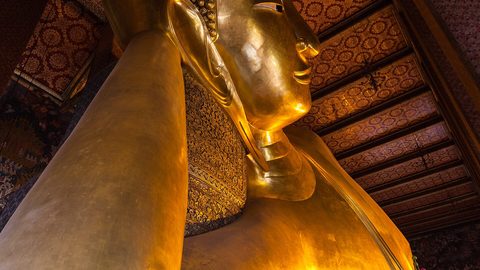 Wat Pho
 houses a 46-metre reclining Buddha and Thailand's most respected massage school in one temple compound. How to see both without rushing either.
Wat Pho
Wat Pho houses a 46-metre reclining Buddha and Thailand's most respected massage school in one temple compound. How to see both without rushing either.
-
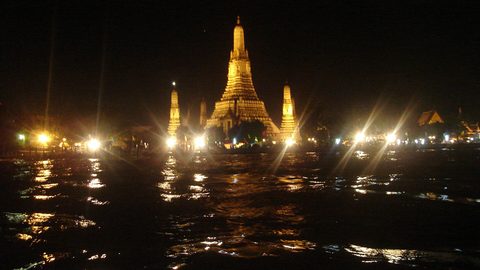 Wat Arun
 photographs best at dusk from the far river bank, not the temple grounds. The ferry crossing, the steep prang climb, and timing it before the boats stop.
Wat Arun
Wat Arun photographs best at dusk from the far river bank, not the temple grounds. The ferry crossing, the steep prang climb, and timing it before the boats stop.