Which Power Plugs and Voltage Thailand Uses in Hotels and Airbnbs
Thailand uses 220 volts with hybrid Type A and C sockets. American polarized plugs often fit loosely, so bring a universal adapter.
Which Power Plug Fits a Thai Wall Socket?
You plug your phone charger into a Bangkok hotel outlet, and the two flat pins sit so loose the charger drops out by its own weight. Then you try a socket in Chiang Mai and the same plug sparks. That socket is a hybrid. It has two flat parallel slots (Type A, the American shape) and two round holes underneath (Type C, the European shape). The catch is that many hybrid sockets lack the third hole for an earth pin, and the flat slots are often shallower than a US socket expects.
Your charger works if it has two pins that are the same width (non polarized). If your plug has one blade wider than the other (polarized, common on US hair dryers and older laptop bricks), that wider blade will not fully seat in the shallow Thai slot. The plug sits cocked, makes poor contact, heats up, and drops out. A true Thai standard plug is Type O, defined in TIS 166-2549, with two round pins and a third earth-pin slot. But you will rarely find Type O sockets outside buildings constructed after 2008. What you find is the hybrid socket.
Voltage: 220 V at 50 Hz, and Why That Burns Your Hair Dryer
What Works Without A Converter
Thailand runs on 220 V and 50 Hz. Your phone and laptop charger has a label showing an input range of 100-240 V and 50/60 Hz. That device works on Thai voltage with only a pin-shape adapter. No voltage converter needed. The problem is anything that heats or moves: hair dryers, curling irons, electric kettles, travel irons. A 110 V hair dryer plugged into 220 V without a step-down converter will blow its heating element in under 10 seconds. You will smell burnt plastic, and the device is dead.
Buy The Right Adapter
Buy a plug adapter in Thailand for 50 to 150 THB at any 7 Eleven, Big C, Tesco Lotus, MBK Center, or a street market. Do not buy one at your departure airport for 300 to 800 THB equivalent. The adapter changes pin shape only. It does not change voltage. If your device does not accept 220 V natively, you also need a step-down converter. A travel converter rated for at least 1600 W will handle a hair dryer. A cheap 50 W converter will not.
Hotel USB Sockets
Newer hotels built or renovated after 2015 often include USB-A sockets built into the wall or bedside lamp. USB-C sockets are becoming more common but are not standard. Check the bedside unit before you unpack your charger block.
What Happens with a Grounded Three-Pin US Plug (Type B)
The Earth Pin Problem
A US Type B plug has two flat blades and a round earth pin below them. That earth pin is the problem. Many hybrid Thai sockets have no earth-pin hole. Even if the socket has flat slots and round holes, the space where the earth pin would go is often a solid plastic face. The plug will not enter. If the socket does have a hole for the earth pin, it is often a Type B-compatible hybrid, but those are common only in buildings put up after 2008. Older buildings, including many budget guesthouses in Thonburi and older shophouse conversions in Bangkok Old City, use Type A-only or hybrid-without-earth sockets.
Your Workaround
The workaround: carry a Type B-to-Type A adapter that gives you a two-pin flat plug, or a short two-pin power strip that accepts your three-pin plug. A European Schuko plug (Type F, two round pins with side earth clips) will not fit a hybrid socket either. You need an adapter.
Island Power Spikes
For expensive electronics on the islands, Krabi, Koh Lanta, and Koh Phangan experience voltage spikes during generator switchover after monsoon power cuts. Surge protection on the islands is unreliable. Use a surge-protected power strip for your laptop and camera chargers. Power cuts are common on islands from May through October; Bangkok sees scheduled maintenance cuts only and they are rare.
| Plug Type | Pin Shape | Fits Hybrid Thai Socket? | Needs Adapter? |
|---|---|---|---|
| Type A (US two-pin) | Two flat parallel pins, same width | Yes | No |
| Type A (US polarized) | One blade wider than the other | Partial, fits loosely and may spark | Advisor removes risk; use non-polarized plug |
| Type B (US three-pin) | Two flat pins + round earth pin | No on older sockets; some newer sockets accept it | Yes, to Type A or Type C adapter |
| Type C (Europlug) | Two round pins, 4 mm diameter | Yes | No |
| Type F (Schuko) | Two round 4.8 mm pins + side earth clips | No, pins too thick | Yes, to Type C adapter |
| Type O (Thai standard) | Two round pins + earth slot | Some newer sockets accept it | Check socket; may need adapter for older hybrid |
Power Bank Rules for Thai Domestic Flights
You can carry a power bank in your carry-on luggage. You cannot put it in checked baggage on any Thai domestic flight. The limit is 100 Wh without needing airline approval. Above 100 Wh up to 160 Wh requires approval from the airline before you fly. Above 160 Wh is forbidden. Most power banks list mAh, not Wh. Convert with this formula: Wh = mAh x voltage / 1000. A 20,000 mAh power bank at 3.7 V equals 74 Wh, which is under the 100 Wh limit and does not need approval.
The exact rules per airline, set in 2024 and subject to annual revision:
- Thai Airways: max 20,000 mAh or 100 Wh in carry-on, no checked baggage
- AirAsia Thailand: max 100 Wh, carry-on only
- Bangkok Airways: max 100 Wh, spare batteries in carry-on only
- Nok Air: max 100 Wh, no power banks in checked baggage
- Thai Lion Air: max 100 Wh, carry-on only
- Thai VietJet: max 100 Wh, carry-on only
Check the airline's website before flying, as limits can change each year. The Civil Aviation Authority of Thailand publishes the current rule in force.
Who This Power Information Matters for and Who Can Ignore it
This matter for anyone carrying US-pattern plugs with a polarized wider blade, anyone arriving from a 110 V country with a hair dryer or kettle, and anyone staying in older guesthouses in Thonburi or budget homestays on the islands. You need an adapter and possibly a voltage converter.
It does not matter for travellers from the UK, Australia, or Europe whose devices accept 100-240 V and who already use round-pin plugs (Type C, Type G, or Type I). Your main risk is forgetting that the country runs 220 V and that island power cuts can spike. The most common mistake: buying only a plug adapter and plugging a 110 V hair dryer directly into a 220 V socket, then watching the smoke rise in the first three seconds.
Common Questions
I have a US two-pin plug, one blade is wider than the other. Will it work in Thailand?
It may fit, but it will sit loose and can spark or fall out. The polarized plug's wider blade does not seat fully in shallow Thai hybrid sockets. Buy a non-polarized adapter (both blades the same width) for 50-150 THB at any 7-Eleven.
Can I charge my phone with just a USB cable in Thailand?
If your hotel was built or renovated after 2015, it likely has USB-A sockets in the wall or bedside lamp. Check before unpacking your charger. USB-C sockets are not yet standard.
Do I need a voltage converter for my laptop in Thailand?
No. Every laptop charger accepts 100-240 V, 50/60 Hz. Check the label on your power brick. If it says 100-240 V, you only need a plug adapter.
Will my European two-pin round plug work in Thailand?
Yes. Type C (Europlug) fits Thai hybrid sockets without an adapter. If your plug has the side earth clips of a Schuko (Type F), it will not fit the round holes in a hybrid socket. Use a Type C adapter.
What happens during a power cut on an island?
Power cuts are common May, October on the Andaman coast islands (Koh Lanta, Koh Phi Phi, Koh Phangan). Sockets may spike voltage when generators switch on. Use a surge-protected power strip for your laptop and camera.
Can I check my power bank in my suitcase on a Thai domestic flight?
No. Power banks are prohibited in checked baggage on all Thai domestic flights. Carry them in your hand luggage. The limit is 100 Wh without airline approval.
Where can I buy a plug adapter after I arrive in Thailand?
Any 7-Eleven, Big C supermarket, Tesco Lotus, MBK Center in Bangkok, or any street market. Cost: 50-150 THB. Do not buy at your departure airport for 300-800 THB.
Read next
-
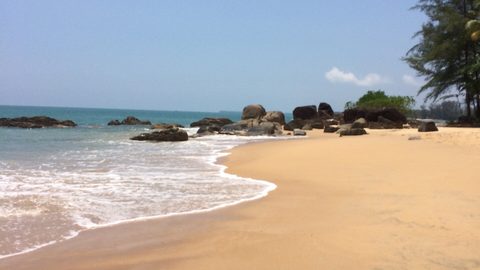
 Thailand eSIM Costs Per Gigabyte And Which Network Covers The Islands
Compare Thailand eSIM options by cost per gigabyte and check AIS versus TrueMove coverage for the Andaman islands before you land.
Thailand eSIM Costs Per Gigabyte And Which Network Covers The Islands
Compare Thailand eSIM options by cost per gigabyte and check AIS versus TrueMove coverage for the Andaman islands before you land.
-
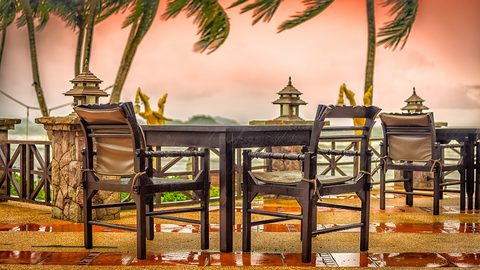 Best Time To Visit Thailand Depends On Which Coast You Choose
Thailand has two opposite monsoons. Match your travel dates to the Andaman coast, Gulf coast, or northern Thailand for dry weather.
Best Time To Visit Thailand Depends On Which Coast You Choose
Thailand has two opposite monsoons. Match your travel dates to the Andaman coast, Gulf coast, or northern Thailand for dry weather.
-
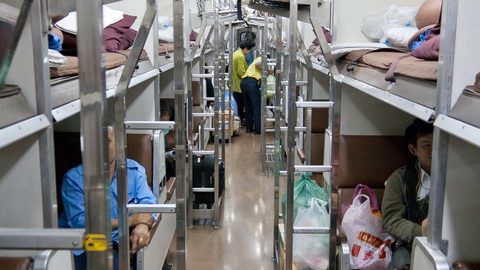 Thailand Transport Guide Flights Sleeper Trains Buses And Ferries
Compare Thailand domestic flights, sleeper trains, buses, and ferries so you can move between provinces without losing a full day.
Thailand Transport Guide Flights Sleeper Trains Buses And Ferries
Compare Thailand domestic flights, sleeper trains, buses, and ferries so you can move between provinces without losing a full day.
-
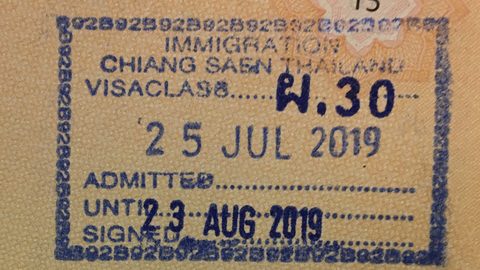 Thailand Visa On Arrival Rules And What Happens If You Overstay
Thailand visa on arrival rules, how long your entry stamp lasts, and the daily overstay fine you want to avoid at BKK.
Thailand Visa On Arrival Rules And What Happens If You Overstay
Thailand visa on arrival rules, how long your entry stamp lasts, and the daily overstay fine you want to avoid at BKK.
-
 Thailand Cash Rules ATM Fees And Why Exchange Booths Beat Banks
Thailand still runs on cash. Learn the ATM flat fee, why exchange booths beat banks, and the 7-Eleven 1000 baht note problem.
Thailand Cash Rules ATM Fees And Why Exchange Booths Beat Banks
Thailand still runs on cash. Learn the ATM flat fee, why exchange booths beat banks, and the 7-Eleven 1000 baht note problem.
-
 Thailand Safety Scams To Avoid And The One Thing That Kills Tourists
Thailand has low violent crime but a large scam economy and one thing that kills tourists every year. Know the risks before you go.
Thailand Safety Scams To Avoid And The One Thing That Kills Tourists
Thailand has low violent crime but a large scam economy and one thing that kills tourists every year. Know the risks before you go.
-
 Phuket
 is a sprawling island of extreme contrasts. Choosing the right beach area matters more than any other decision you will make.
Phuket
Phuket is a sprawling island of extreme contrasts. Choosing the right beach area matters more than any other decision you will make.
-
 Krabi
Krabi is a province, not a beach town. The provincial capital sits 15km inland on a muddy river estuary and works best as a transit base, not a place to linger.
Krabi
Krabi is a province, not a beach town. The provincial capital sits 15km inland on a muddy river estuary and works best as a transit base, not a place to linger.
-
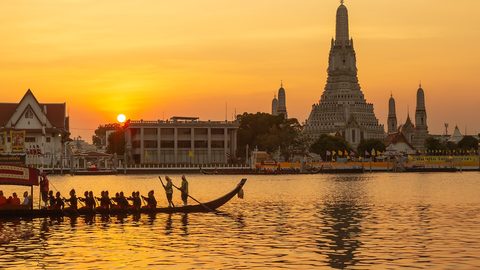 Bangkok
 is a humid, chaotic city of contrasts where golden temples sit beside glass malls and street-food stalls line air-conditioned metro stations. Here is where to begin.
Bangkok
Bangkok is a humid, chaotic city of contrasts where golden temples sit beside glass malls and street-food stalls line air-conditioned metro stations. Here is where to begin.