Navigating the Tokyo Imperial Palace, Public Gardens and Restricted Inner Grounds
The Tokyo Imperial Palace splits into free East Gardens, a strictly booked inner grounds tour via Kikyomon Gate, and permanently sealed private areas—knowing the difference is essential.
.jpg)
Navigating the Tokyo Imperial Palace, Public Gardens and Restricted Inner Grounds
The confusion about the Tokyo Imperial Palace is specific and solvable. You can walk into the East Gardens for free any day except Monday and Friday, you must book the inner grounds tour through the Imperial Household Agency in advance or apply by post, and the private residence of the Imperial Family is permanently sealed to every visitor. That is the map. Everything else is detail.
- East Gardens Admission: ¥0 (free), walk-in, no reservation required
- East Gardens Closed Days: Mondays and Fridays (or Tuesday if Monday is a national holiday; or Wednesday if Monday and Tuesday are both holidays). Exception: open daily during cherry blossom season and autumn foliage season.
- East Gardens Token System: Plastic admission token issued at gate, returned at exit. Tokens are limited; entry closes when tokens run out.
- Inner Grounds Tour Fee: ¥0 (free)
- Inner Grounds Tour Booking: Advance reservation required via Imperial Household Agency website or postal application
- Inner Grounds Tour Schedule: Tuesday to Saturday, twice daily (morning and afternoon). 75 minutes, 2.2 km route.
- Public Opening Days (No Booking): January 2 (New Year's Greeting) and February 23 (Emperor's Birthday). Free entry, no reservation.
- Palace Buildings Interior: Not open to the public
- Total Grounds Area: Approximately 1.15 km² (115 hectares)
The East Gardens: Walk In, Walk Out, No Booking
The East Gardens are the only part of the palace you can visit without a reservation. Walk up to the Otemon Gate (the main entrance) any day except the closure days, collect the plastic admission token handed to you at the gate, and enter. The token system exists because the site cannot handle unlimited crowds: when the tokens run out, entry stops. Arrive before 10:00 on a weekend or during peak foliage to guarantee a token.
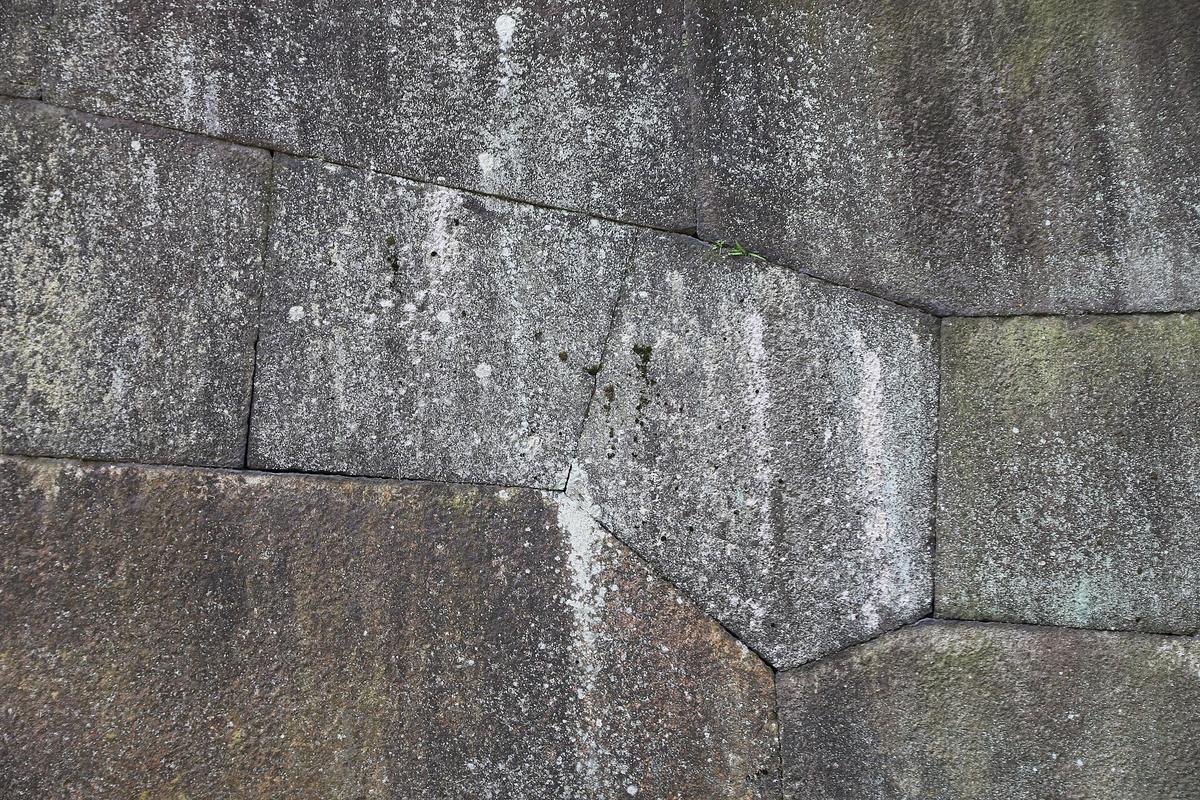
The gardens cover roughly 210,000 square metres, which is the area of about 30 football pitches. You are walking across the former Honmaru and Ninomaru enclosures of Edo Castle, and the evidence is still in the ground. The stone foundations of the old castle buildings are visible in the Honmaru area, laid out in the same grid as the original structures. The most substantial remnant is the stone base of the five storey castle keep, the tenshu. It stands 11 metres high, a granite platform that once supported a tower destroyed in the 1657 Meireki fire. Nothing above the base survives. What you see is a plinth for a building that no longer exists.
The Keep Base and the Tokugawa Legacy
The tenshu base is the single most important object in the East Gardens, not because it is impressive in the way a standing castle is impressive, but because it forces you to reconstruct the scale of Edo Castle from negative space. The original keep was the tallest in Japan. Today the platform sits in a broad lawn, surrounded by the moat system and the modern palace buildings beyond the inner walls. Stand on it and face west. The inner grounds are directly ahead, hidden behind the moat and the stone walls. You are as close to the Imperial Family's residence as a member of the public will ever get.
Getting There and Getting Out
Enter through Otemon Gate from the Otemon side of the moat. Exit through the Hirakawamon Gate or the Kitahanebashimon Gate. The walk from entrance to exit, if you take a direct line, takes about 40 minutes. Take one hour if you stop at the teahouse, the former Ninomaru garden, and the Suwano Chaya rest house. The gardens close at 16:00 (entry stops at 15:00) from October to February, and at 17:00 (entry stops at 16:00) from March to September. Check the Imperial Household Agency website for the exact seasonal hours.
The Inner Grounds Tour: Booking, the Kikyomon Gate, and What You Actually See
The inner grounds tour is free, but you cannot just show up. You must book through the Imperial Household Agency website or apply by postal application. The tour runs Tuesday to Saturday, twice daily, morning and afternoon. Each tour lasts 75 minutes and covers a 2.2 kilometre route. The guide is a staff member of the Imperial Household Agency, not a commercial operator, and the tone is formal, precise, and dense with dates and names.
The Kikyomon Gate Procedure
Your booking confirmation will specify the Kikyomon Gate as the meeting point. Arrive 20 minutes early. The gate is on the eastern side of the inner moat, a short walk from the Otemon Gate. You will be checked in against a list. The agency does not accept digital confirmations on a phone screen alone; bring a printed copy of your booking confirmation or have it downloaded and zoomable. Late arrivals are not admitted. The tour departs on time and the gate closes behind the group.
The tour route takes you past the main palace building (the Kyuden, where official state functions are held), the Imperial Household Agency building, and the inner moats. You do not enter any palace building. Interior access to the palace buildings is permanently closed. You walk the outer perimeter of the compound, see the facade of the palace from a distance of about 50 metres, and receive commentary on the architecture, the history of the Edo Castle moats, and the role of the agency. The Fujimi Yagura, a surviving castle watchtower, is visible from the route. The tour ends back at the Kikyomon Gate.
January 2 and February 23: No Booking Required
Twice a year the inner grounds open without a reservation. On January 2 (the New Year's Greeting) and February 23 (the Emperor's Birthday), the public can enter through the Nakamon Gate and walk freely up to a designated viewing area in front of the palace. No token, no tour, no booking. Expect queues of one to two hours. Arrive before 07:00 to get through in under an hour. The inner grounds close at 14:00 on both days.
The Outer Moat Circuit, Nijubashi Bridge, and What Never Opens
The outer moat circuit is a paved path that runs the full perimeter of the palace, roughly 5 kilometres. It is the most popular running loop in central Tokyo. One lap is exactly 5 kilometres. You will see runners, cyclists, and walkers on it at any hour from dawn until late evening. The path is flat, well maintained, and follows the moat on both sides, passing under the major gates and across the stone bridges. No booking, no fee, no gate. You can start anywhere on the loop and stop anywhere.
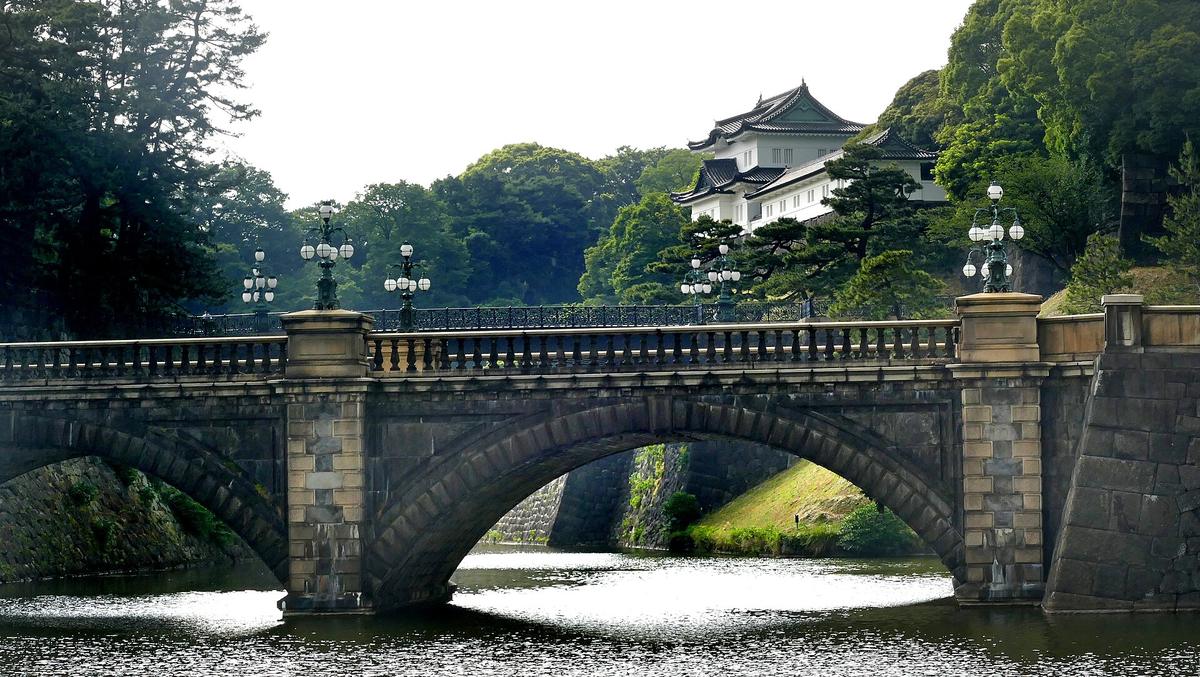
The Nijubashi bridge is not a single bridge. It is two bridges in sequence: the stone Meganebashi (Spectacles Bridge) at the front, named for the double arch that reflects in the water like a pair of spectacles, and an iron bridge behind it. You cannot walk across either. The view from the Kokyo Gaien plaza, looking through the main gate toward the two bridges, is the standard postcard angle. Arrive at 08:30 on a weekday to have the plaza to yourself.
The Private Residence: Permanently Sealed
The Imperial Family lives inside the inner grounds. The residential compound is located in the Fukiage Gardens, west of the palace buildings. It is not visible from any public path, from any tour route, or from the East Gardens. No aerial photography is permitted over the compound. The Imperial Household Agency does not acknowledge requests to view it. You will not see the residence. Manage this expectation before you arrive: what makes the palace interesting is not the glimpse of a private life, but the controlled, layered system of access that governs one of the largest palace grounds in the world. The stone foundations, the moat circuit, the precise rules of the tour, and the silence of the East Gardens on a winter morning are the actual experience. The private residence is a blank space on the map, and that blankness is itself the point.

Common Questions
Do I need to book the East Gardens?
No. The East Gardens are walk-in only with no reservation required. You collect a plastic token at the gate and return it when you exit. The only risk is that tokens run out on busy days, so arrive before 10:00 during cherry blossom season or autumn foliage.
How do I book the inner grounds tour?
Book through the Imperial Household Agency website or apply by postal application. The tour is free. Bookings open one month in advance and fill quickly for weekends and public holidays. You will be assigned a specific date and time slot. Bring a printed confirmation to the Kikyomon Gate.
Can I enter the palace buildings?
No. Interior access to all palace buildings is permanently closed to the public. The inner grounds tour walks around the buildings but does not enter them. You see the facade, the moats, and the watchtowers from outside.
What days are the East Gardens closed?
Mondays and Fridays. If Monday is a national holiday, the gardens close on Tuesday instead. If Monday and Tuesday are both holidays, they close on Wednesday. The gardens are open daily during cherry blossom season and autumn foliage season. Check the Imperial Household Agency schedule for the exact dates each year.
Is the Nijubashi bridge open to walk on?
No. You cannot walk across either of the two bridges. The view is from the Kokyo Gaien plaza, looking through the main gate. The stone Meganebashi bridge and the iron bridge behind it are part of the inner grounds and are not accessible to the public.
Can I run around the palace moat?
Yes. The outer moat circuit is a paved path of about 5 kilometres. One lap is exactly 5 kilometres. No fee, no reservation, no gate. You can start anywhere on the loop. It is flat and well maintained, and popular with runners at all hours.
What happens if I arrive late for the inner grounds tour?
You will not be admitted. The tour departs on time from the Kikyomon Gate and the gate closes behind the group. The Imperial Household Agency does not accommodate late arrivals. Arrive 20 minutes early with your printed booking confirmation.
Read next
-
 Tokyo Hotels by Type and Budget from Capsules to Luxury
Tokyo hotels organised by type and price band, from efficient capsule pods to full-service luxury towers, to help you book the right room.
Tokyo Hotels by Type and Budget from Capsules to Luxury
Tokyo hotels organised by type and price band, from efficient capsule pods to full-service luxury towers, to help you book the right room.
-
 Where to Stay in Tokyo by District and Travel Style
A comparison of Tokyo's major districts to help you choose the right base for your travel style, whether you want calm or chaos.
Where to Stay in Tokyo by District and Travel Style
A comparison of Tokyo's major districts to help you choose the right base for your travel style, whether you want calm or chaos.
-
 Narita or Haneda for Tokyo and What That Airport Choice Costs You
Narita or Haneda for Tokyo: compare door-to-district time, transfer cost, and what the wrong airport choice eats from your trip.
Narita or Haneda for Tokyo and What That Airport Choice Costs You
Narita or Haneda for Tokyo: compare door-to-district time, transfer cost, and what the wrong airport choice eats from your trip.
-
 Things to Do in Tokyo That Are Worth Your Limited Days
A curated list of Tokyo's highest-impact sights and experiences, from immersive art to quiet backstreets, to help you prioritise your days.
Things to Do in Tokyo That Are Worth Your Limited Days
A curated list of Tokyo's highest-impact sights and experiences, from immersive art to quiet backstreets, to help you prioritise your days.
-
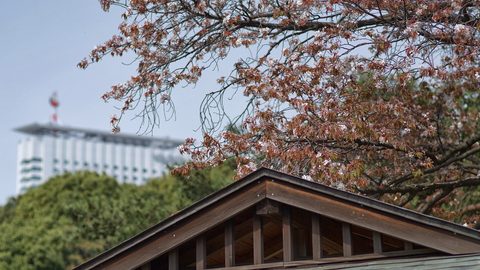 Best Time to Visit Tokyo Month by Month Tradeoffs
A month-by-month guide to visiting Tokyo, laying out the trade-off between weather, crowds, price, and what's actually open.
Best Time to Visit Tokyo Month by Month Tradeoffs
A month-by-month guide to visiting Tokyo, laying out the trade-off between weather, crowds, price, and what's actually open.
-
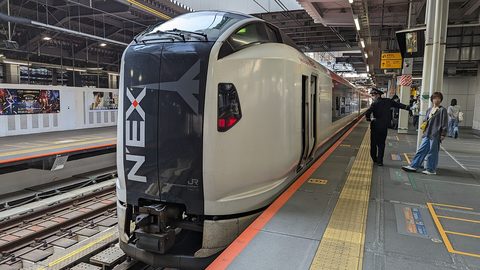 Getting Around Tokyo by Train Airport Transfers and IC Cards
A practical guide to Tokyo's rail network, covering airport transfers, IC cards, and how to avoid the station navigation mistakes that eat your day.
Getting Around Tokyo by Train Airport Transfers and IC Cards
A practical guide to Tokyo's rail network, covering airport transfers, IC cards, and how to avoid the station navigation mistakes that eat your day.
-
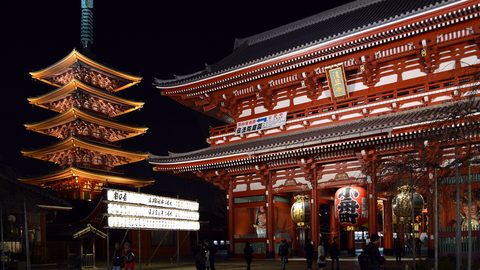 Senso-ji
 is free and never closes, but the experience at 6am with empty Nakamise stalls is nothing like the 11am crush under Kaminarimon. Here is when to go and what you get at each hour.
Senso-ji
Senso-ji is free and never closes, but the experience at 6am with empty Nakamise stalls is nothing like the 11am crush under Kaminarimon. Here is when to go and what you get at each hour.
-
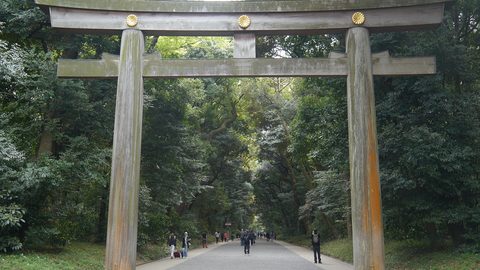 Meiji Jingu
The Meiji Jingu visit changes completely depending on which torii gate you enter. One drops you from Harajuku noise into sudden forest, the other builds quiet slowly from Yoyogi.
Meiji Jingu
The Meiji Jingu visit changes completely depending on which torii gate you enter. One drops you from Harajuku noise into sudden forest, the other builds quiet slowly from Yoyogi.
-
 teamLab
 Borderless and Planets are two different Tokyo venues with separate booking systems. Borderless tickets at Azabudai Hills sell in timed slots and the maze has no fixed route.
teamLab
teamLab Borderless and Planets are two different Tokyo venues with separate booking systems. Borderless tickets at Azabudai Hills sell in timed slots and the maze has no fixed route.