Choosing Beijing Museums Beyond the National Museum Queue
Which Beijing museums deserve a half-day, what to book in advance, and where to go when the National Museum is full.
Choosing Beijing Museums Beyond the National Museum Queue
The single most useful fact on this page is also the one most visitors learn too late: the National Museum of China is free but holds only 8,000 daily slots, requires a real-name reservation with your passport number 1 to 7 days ahead, and closes Mondays. If you arrive without that booking, you are not getting in. That queue on the east side of Tiananmen Square is for people who already have tickets. There is no walk-in bucket. The question this page answers is not which institution is most famous. It is which one earns a half day of your limited Beijing itinerary, and what to do when the headline act is booked solid.
The National Museum: Worth the Planning Friction
What You Get for the Effort
Book the National Museum if you care about a single building containing the arc of Chinese civilisation from Peking Man to the present. The permanent halls are vast. Signage in English is good enough that you can move without a guide. The "Ancient China" exhibit alone can take three hours. But book it as part of your Forbidden City morning, not a separate trip. The institution sits on the east side of Tiananmen Square, a five-minute walk from the Forbidden City south gate. Arrive when doors open at 09:00, leave by 12:30, cross the square, and enter the Palace Museum by 13:00. You can do both in one day.
How the Reservation System Works
The friction is real. You need the official WeChat account or website, a passport number, and a reservation window of 1 to 7 days. Peak-season slots vanish within hours of release. The daily cap of 8,000 is published by the institution on its own site and the figure is revised annually. If you miss the window, do not queue. Walk away immediately and use one of the alternatives below.
The Capital Museum: the Fallback That Beats the Headline
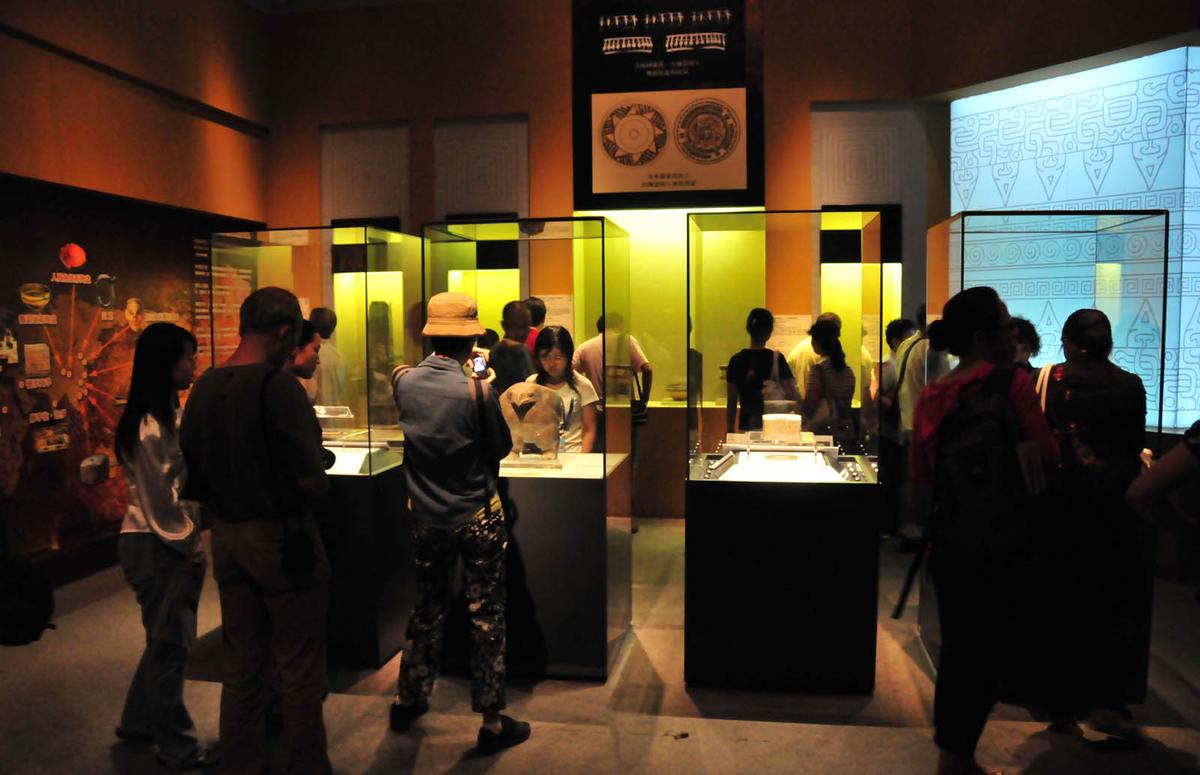
The Capital Museum is the better institution for Beijing itself. Its permanent exhibition "The Story of Beijing" runs from prehistoric settlements to 1949, and its signature collection of bronze ritual vessels from the Yan state (Western Zhou to Warring States) is dramatically lit, labelled in clear English, and never crowded. Walk in with your passport on the same day. No advance booking. Same-day entry is available outside peak holiday weeks. The venue is in Xicheng, a 15-minute taxi from the Forbidden City or 30 minutes on metro Line 1 to Nanlishi Lu station.
Schedule this one for your second or third day, not your first. It pairs naturally with a morning at the Temple of Heaven, since both sit on the western and southern edges of the old city and share the same metro corridor. Budget 90 minutes for the permanent hall, 30 more for the temporary exhibitions. You will leave understanding why Beijing looks the way it does. The National Museum does not give you that.
The Palace Museum Galleries Most Visitors Miss
A surprising truth about the Forbidden City: most visitors walk through the central axis, photograph the halls, and exit the north gate without buying the two supplemental tickets that sit inside the complex. The Treasure Gallery (10 CNY) and the Clocks Gallery (10 CNY) are in the northeastern and eastern sectors of the Palace Museum. The Treasure Gallery holds Qing imperial jewellery and ritual gold. The Clocks Gallery holds 18th- and 19th-century European and Chinese mechanical clocks, many from the personal collection of the Qianlong emperor. Both have good English labelling. Both rank among the most satisfying experiences in Beijing because they are small, specific, and nearly empty compared to the crowds on the main axis.
You must have the Palace Museum general admission ticket booked in advance. Real-name booking only, no walk-ins, 60 CNY peak season, 40 CNY off-peak. Once inside, buy the supplemental tickets at the entrance to each space. Cash or WeChat Pay. Never buy them from third-party vendors outside the gate. The entire visit adds 60 to 90 minutes to your Forbidden City day.
The Poly Art Museum: Four Heads and a Corporate Elevator
The Poly Art Museum is the strangest institution on this list. It occupies the 9th floor of the Poly Plaza office tower in Dongzhimen, a 20-minute walk from the Lama Temple. You take a corporate elevator up past floors of insurance offices. At the top: four bronze zodiac animal heads from the Yuanmingyuan (Old Summer Palace) zodiac fountain clock, looted by British and French troops in 1860 and repatriated by Poly Group at auction between 2000 and 2003. The ox, tiger, monkey, and horse heads sit in a small, well-lit room alongside Shang and Zhou bronze vessels and Buddhist sculpture. Entry is 50 CNY. English labelling is good. Visitor numbers are low.
This one earns a half day only if you are already in the Gulou or Dongzhimen area and you care about the repatriation debate. It is a 45-minute visit at most. Do not travel across town for it alone. Pair it with a morning at the Lama Temple and a walk through the Confucius Temple and Guozijian, a 10-minute walk from Poly Plaza.
The 798 Art Museums: When Your Eyes Need a Rest from Emperors
The District, Not a Single Building
If you have been in Beijing for three days and the Forbidden City, the Great Wall, and the Temple of Heaven have left you with a mild case of imperial fatigue, spend a half day at 798 Art Zone in Chaoyang. The district itself is a former factory complex of Bauhaus-style buildings from the 1950s, now filled with contemporary spaces, independent bookstores, and courtyard cafes. The major art institutions here, UCCA Center for Contemporary Art, M Woods, and the various clusters, rotate their exhibitions frequently. No single recommendation holds for long. The value of 798 is the walk itself: free entry to the zone, open-air sculpture installations, and the chance to see what Beijing's creative class is making and showing.
Do not treat 798 as an institution in the traditional sense. Treat it as a district where some buildings happen to charge entry (20 to 60 CNY depending on the exhibition) and others do not. Go on a Saturday morning when the crowd is light. Avoid Monday. The entire zone is near empty then.
Pair It with the Railway Museum
The China Railway Museum Dongjiao site is a 10-minute walk from the north edge of 798 and holds 60-plus locomotives and carriages, including Mao Zedong's personal train. Entry is 20 CNY. English labelling is limited, but trains are trains. A morning at 798 and an hour at the railway collection fills exactly a half day.
The Museum for Architecture Nerds (And Nobody Else)
Beijing Ancient Architecture Museum sits inside the Temple of Agriculture in Xicheng. Its single must-see object is an original Ming dynasty caisson ceiling from Longfu Temple, dated 1452, suspended in the main hall. The ceiling is a three-dimensional lattice of dougong brackets with a dragon painted at the apex. It is genuinely beautiful. The rest of the collection, models, roof tiles, construction techniques, is small, Chinese-dominant in labelling, and finished in 60 to 90 minutes. Entry is 15 CNY.
This one earns a half day only if architecture is your primary reason for being in Beijing. For almost everyone else, the combination of limited English and the time cost of getting to Xicheng makes it a skip. If you are determined to see the ceiling, combine it with a visit to the nearby Capital Museum. They are 10 minutes apart by taxi.


| Museum | Time Needed | Booking Required | Best Paired With |
|---|---|---|---|
| National Museum of China | 3 hours | Advance, 1-7 days | Forbidden City (south gate) |
| Capital Museum | 2 hours | Walk-in with passport | Temple of Heaven |
| Palace Museum Treasure & Clocks Galleries | 1.5 hours | Palace Museum ticket required | Forbidden City main axis |
| Poly Art Museum | 45 min | Walk-in with passport | Lama Temple / Confucius Temple |
| 798 Art Zone + Rail Museum | 3 to 4 hours | Walk-in (some galleries charge) | Lunch in a 798 courtyard |
The Monday Problem and the Booking Trap
Monday Closures Are Absolute
Every institution on this list closes Mondays, except on public holidays. That is a hard rule. If you plan a Monday museum day, you have none. Use Monday for the Great Wall, the Summer Palace, or a hutong walk instead.
Walk-In Versus Reservation-Only
The booking trap is subtler. The National Museum and the Palace Museum require advance, real-name, passport-numbered reservations. The Capital Museum, Ancient Architecture Museum, Beijing Planning Exhibition Hall, China Railway Museum, and Poly Art Museum do not. They accept walk-ins with your physical passport. This distinction determines your entire strategy. If you arrive in Beijing without any advance bookings, your options are the free walk-ins (Capital Museum) and the paid walk-ins (Ancient Architecture, Planning Exhibition, Railway, Poly). The advice is harsh but honest: the National Museum of China is not a fallback. It is the reward for good planning.
The Planning Exhibition Hall: a One Trick Pony That Delivers
Beijing Planning Exhibition Hall near Qianmen contains a 302-square-metre, 1:750 scale model of central Beijing. The model covers the entire old city inside the Second Ring Road. Stand on the elevated viewing platform and you can orient yourself to the Forbidden City, the Drum Tower, and the Temple of Heaven in a way no map or app achieves. Entry is 30 CNY. English labelling is moderate: key exhibits are labelled, detailed panels are Chinese only. Visit time is 45 to 60 minutes.
This is the last entry on the list because it serves one purpose: spatial orientation. Go here on your second day, not your first. The model makes the rest of your Beijing days more efficient because you finally understand where things sit in relation to each other. But it is not a place you linger in.
Read next
-
 Beijing Hotels by Price Band and Property Type
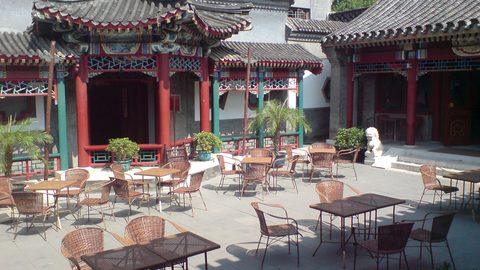
Beijing hotels split into hutong courtyards, international chains and functional business towers. Here is what each price band actually buys you.
Beijing Hotels by Price Band and Property Type
Beijing hotels split into hutong courtyards, international chains and functional business towers. Here is what each price band actually buys you.
-
 Where to Stay in Beijing by District and Travel Style
Dongcheng puts you beside the Forbidden City, Chaoyang beside the nightlife. Here is how Beijing's districts compare for different travellers.
Where to Stay in Beijing by District and Travel Style
Dongcheng puts you beside the Forbidden City, Chaoyang beside the nightlife. Here is how Beijing's districts compare for different travellers.
-
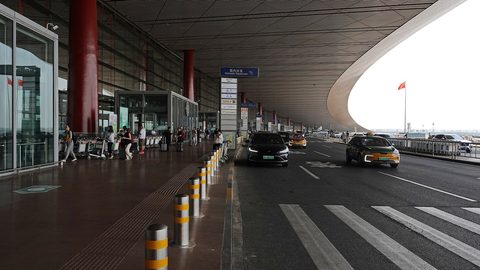 Beijing Flights PEK vs PKX Which Airport Actually Works for You
PEK or PKX? What each Beijing airport costs you in time, money, and logistical friction depending on where you are staying.
Beijing Flights PEK vs PKX Which Airport Actually Works for You
PEK or PKX? What each Beijing airport costs you in time, money, and logistical friction depending on where you are staying.
-
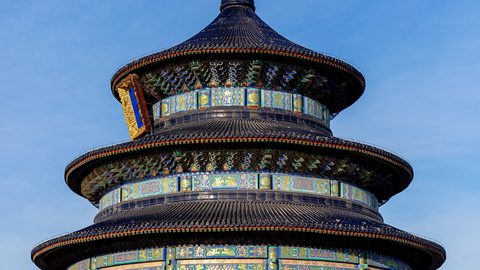 Beijing Things to Do Worth Your Limited Days
The Forbidden City and Great Wall are essential, but Beijing's meaning lives in temple courtyards, hutong lanes and food streets. Here is what earns your days.
Beijing Things to Do Worth Your Limited Days
The Forbidden City and Great Wall are essential, but Beijing's meaning lives in temple courtyards, hutong lanes and food streets. Here is what earns your days.
-
 Best Time to Visit Beijing, Month by Month Tradeoffs
April and October bring blue skies and queues, July brings heat, January brings empty sites and hazardous air. Here is Beijing month by month.
Best Time to Visit Beijing, Month by Month Tradeoffs
April and October bring blue skies and queues, July brings heat, January brings empty sites and hazardous air. Here is Beijing month by month.
-
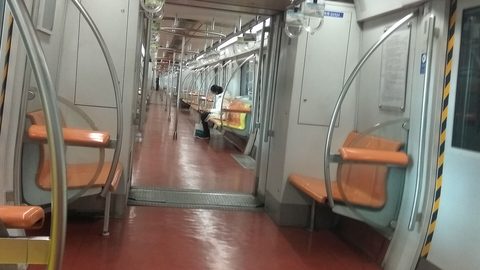 Getting Around Beijing Without Losing Half Your Day
Beijing's metro is clean and cheap but stops early, and taxis rarely speak English. Here is how to move around without burning half your day.
Getting Around Beijing Without Losing Half Your Day
Beijing's metro is clean and cheap but stops early, and taxis rarely speak English. Here is how to move around without burning half your day.
-
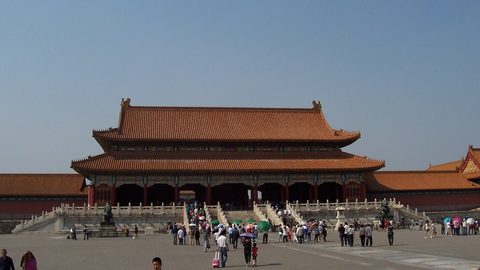 Forbidden City
 tickets require booking seven days ahead on WeChat with a passport. Here is the route to take once you are inside to avoid wasting the visit.
Forbidden City
Forbidden City tickets require booking seven days ahead on WeChat with a passport. Here is the route to take once you are inside to avoid wasting the visit.
-
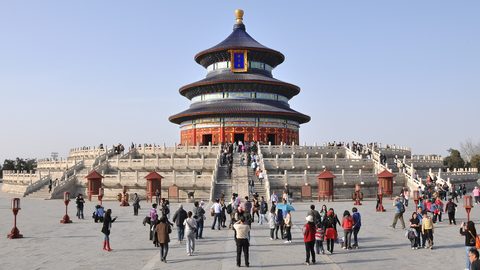 Temple of Heaven
The Temple of Heaven park matters as much as the temple. Morning tai chi, choirs, and card players make it a Beijing ritual worth a full morning.
Temple of Heaven
The Temple of Heaven park matters as much as the temple. Morning tai chi, choirs, and card players make it a Beijing ritual worth a full morning.
-
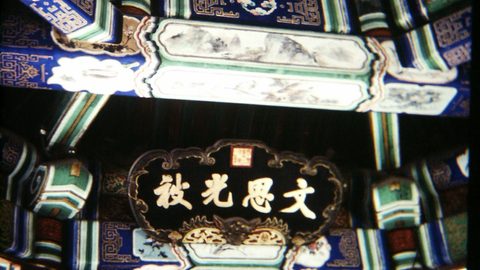 Summer Palace
The Summer Palace is vast and the wrong entrance adds an hour of walking. Use the East Palace Gate and plan for at least four hours.
Summer Palace
The Summer Palace is vast and the wrong entrance adds an hour of walking. Use the East Palace Gate and plan for at least four hours.